
TRADITIONAL ACTIVISM ONLY TAKES US SO FAR. THIS AFTER-HOURS EVENT SHOWS HOW ART CAN BRIDGE THE GAP
This year’s Take Back the Night (TBTN): After Hours event went beyond the traditional modes of activism, using art as a vehicle for cultural intervention.
TBTN events respond to a political climate where gendered violence and extreme misogyny are rising by taking up space for survivors to heal, and push back against oppressive forces. The U of O contingent of the international TBTN movement opted to create a safe space for artists to share their ability to imagine alternatives to grim realities. This free event supported students in increasing their capacity to advocate for themselves and their communities, while also prioritizing their leisure.
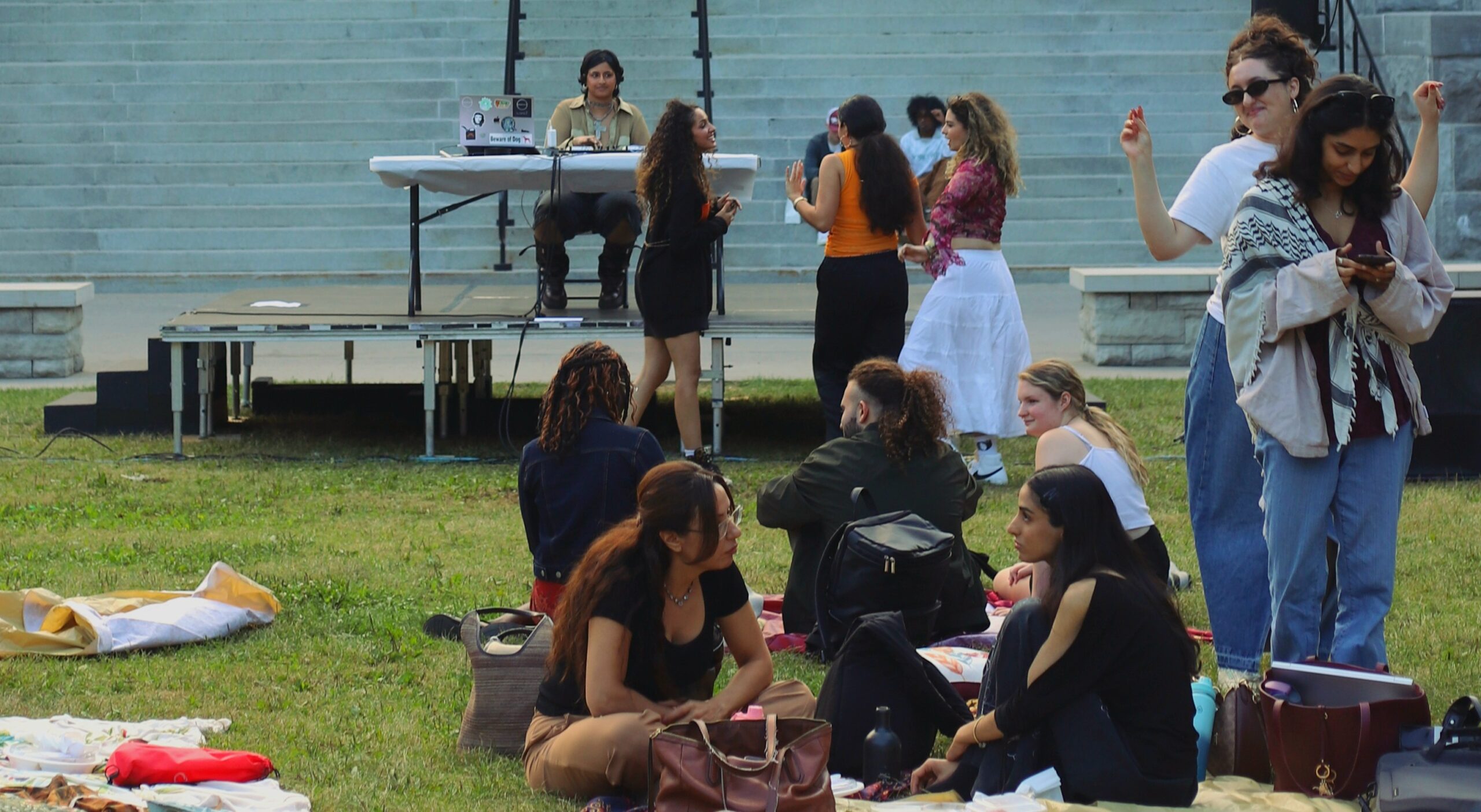
Photo: Bhoomi Dahiya/Fulcrum.
TBTN events started in the early 1970s, taking place globally to combat the international sexual violence pandemic. This “preventable pandemic” has been bred by harmful gender ideologies that foster attitudes of sexual entitlement and the subhuman characterization of women. From marches and protests to this after-hours art crawl, TBTN events carve out space for survivors whose voices have been purposefully silenced in institutional contexts (e.g. courthouses) rooted in patriarchal biases.
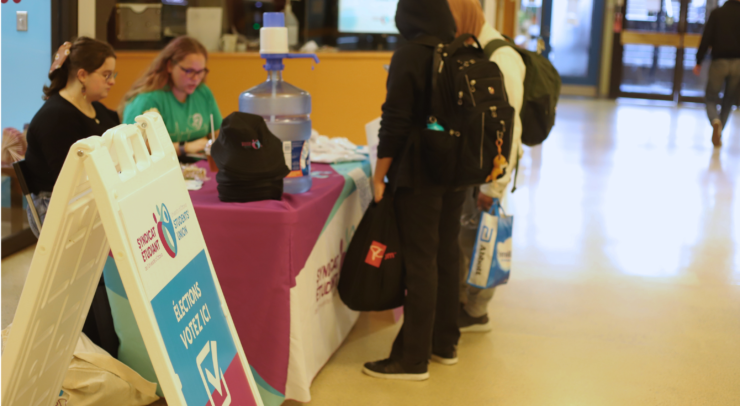
On the eve of the new school year, TBTN, co-hosted by the University of Ottawa Students’ Union (UOSU) and the Feminist Resource Centre, built on the event’s legacy by reclaiming Tabaret lawn as theirs for the evening. From 4-7:30 p.m., the lawn was transformed into a hub for advocacy where feminist artists, organizations, collectives, and performers reoriented the conversation from lamenting traumas to celebrating joy and understanding. The art crawl was the defining feature of the event.
Although art has always been integral to social movements, its potential has been overshadowed by the more conventional methods of activism. While protests and petitions are important, event organizer and UOSU advocacy commissioner, Alex Stratas, feels these methods pose their own accessibility limitations. Alex puts these limitations into perspective by noting that it is hard to advocate for housing rights when you are in the middle of a conflict with your landlord, and how similar constraints affect survivors of sexual assault. She says, advocacy needs to start with incorporating artists and leisure. Above all, to connect people to vital resources, you need to meet them where they are.
In many ways, the night echoed the sentiments of warrior poet Audre Lorde, who famously asserted: “caring for myself is not self-indulgence, it is self-preservation, and that is an act of political warfare.”
Art and creativity were at the core of the evening’s emphasis on radical self-care and community building. Art is uniquely positioned to offer a nuanced perspective on social problems because of the nature of artistic expression itself. The meaning behind artworks is rarely singular and objective. Often, the meaning changes throughout the creative process and alongside the piece’s cultural context. The iterative process of art represents the flexibility and reciprocity that genuine advocacy needs.
The openness of pieces to broad interpretation celebrates difference in a world that tends to favour homogeneity. It is impossible to stop this flow of interpretation, and likewise, art enables a conversation with no end.
Of these artworks, one in particular, entitled “Tangled Blossoms,” embodied the night’s objective of utilizing artistic expression to inspire solidarity among survivors. This striking painting by second-year student Nellie Dadabaeva depicts vibrant flower petals bleeding into and dancing with one another amidst a background of darkness. Dadabaeva says the petals symbolize the “lived experiences of women who have suffered domestic abuse, and explores how connection amongst survivors can be a source of strength, and a means of healing.” Her work highlights how joy is possible “when survivors with shared experiences are united, and darkness can no longer define them.” The array of petals beautifully depicts the community element that is needed in the fight against gendered violence.
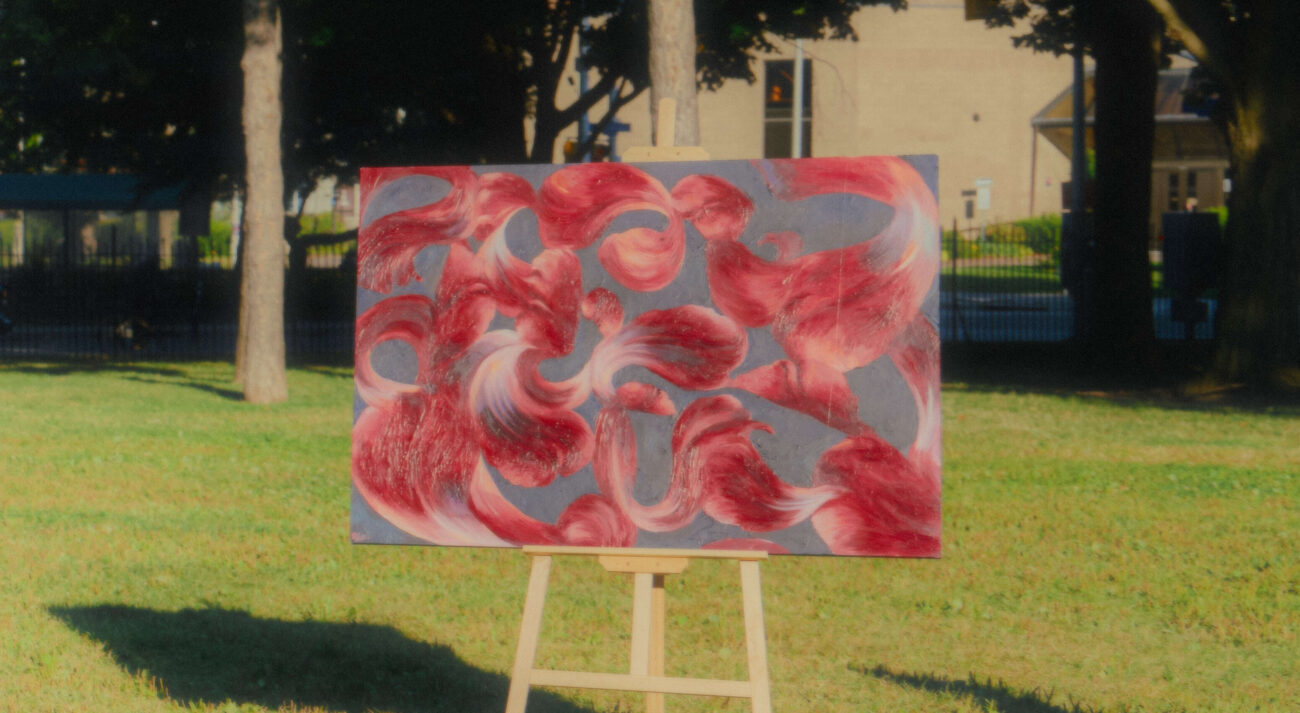
Photo: Pavel Nangfack/Fulcrum.
Throughout the night, this creativity seeped out of the canvases and characterized the lawn itself as Stratas aimed to “creatively imagine wellness.” Stratas says she hopes students see the “free music, free food, free space, and community support offered at the event, and take that and speak out against the things that are happening in their lives.” While federal policy under prime minister Mark Carney drastically cut funding to public services and welfare programs under the guise of efficiency, events like TBTN showcased the benefits of investing in community care.
Communities need unconditional spaces to thrive. Consequently, TBTN: After hours gave U of O students a safe ‘third place’ with no financial barriers to access. The initiative approached gendered violence from an intersectional perspective that highlights how economic instability affects survivors’ ability to access resources. In this environment, resources ranged from pamphlets by organizations such as Planned Parenthood Ottawa, Project Agape, and the RISE Centre to the healing powers of contemplative artworks.
The vulnerability of the pieces on display at TBTN laid a foundation for meaningful advocacy and community mobilization by showing survivors of sexual violence that they are not alone. The evening highlighted local women by spotlighting business owners, independent performers, and collectives, such as Hysterica, that are redefining norms in favour of a more creative and inclusive world. As a pilot project for the broader culture of advocacy which Alex Stratas is setting out to create over the course of the 2025-2026 school year, TBTN: After Hours has certainly set the bar for the types of community-building initiatives that are forthcoming on campus.