CHROMAQUEER OFFERS A RETROSPECTIVE ON THE STRUGGLES AND TRIUMPHS OF QUEER COMMUNITY, BLENDING HISTORICAL INSIGHT WITH CONTEMPORARY ACTIVISM
The new Ottawa based film festival, ChromaQueer, premiered at the Arts Court in Byward Market. The weekend long film festival featured over 25 events in its program, with film screenings, poetry readings and live theatrical performances to highlight queer artists and look back at historical struggles. With a diverse array of content, many of the projects I experienced seemed to reflect on, and attempt to revitalize a radical tradition for queer activism alongside authentic portrayals of the diversity of human sexuality.
ChromaQueer’s Saturday event began with a screening of Cherub. The film centers on Harvey, a reserved and lonely straight man, whose quiet existence is upended when a visit to a sex shop leads to the discovery of an erotic magazine titled Cherub, dedicated to the admiration of plus-sized men. The narrative’s setting of a pre-smartphone era helps establish Harvey’s feelings of quiet loneliness and brings an empathic tone as we watch Harvey grow. The film’s extended silent scenes leave the audience alone with their thoughts, facilitating a shared state of vulnerability and introspection alongside Harvey.
The event continued with From the Bar to the Parade, three back-to-back programs about social justice. First, the short-film Truxx, which showed the real-life police raiding of Montreal gay bars in 1977. Dubbed Canada’s “Stonewall moment” due to its cultural significance and the ensuing wave of protests and activism, the Truxx raids were one of the largest mass arrests of civilians in the country. The second screening was a short animated film, entitled Gay Alien Shame Parade (GASP!). The short uses a colourful art style and campy aesthetic, contrasting with the subject matter, which chronicles the legal hurdles experienced by queer Canadians, as well as the history of the criminalization of homosexuality.
Following the two screenings, the audience was treated to a panel featuring two activists, from Transformative Justice, and a lawyer who defended clients unjustly targeted during the Truxx raids. Transformative Justice (TJ), as I learned, is an alternative to the current state-sponsored criminal justice system. A council of TJers can boycott and banish a perpetrator if they don’t show enough remorse. The event, however, devolved into a match highlighting the limitations of TJ, with some audience questions critical of the framework. One of the panellists explains that TJ essentially needs the willing participation of the perpetrator and is ineffective sans the consent of the abuser. An audience member criticized TJ for placing too much of a burden on victims to act as detective and lawyer in a council of amateur jurists.
Next, I joined a screening dubbed Queer/Sex/Work, which features a few historical videos from the 1970s and early 1990s about sex workers and how they deal with their struggles. In the last video of the screening, we saw a candid and unedited street interview from San Francisco. It follows activist Carol Leigh as she interviews two gay-male sex workers going about their day in a metropolitan environment.
By showing actual sex workers going about their day, the audience is reminded about the humanity of sex workers, demonstrated by genuine conversations about systemic struggles and also annoyances, like how recessions affect the cost of sex work. These struggles are seen by the audience as the sex workers go about their normal day, and are spoken about in the same way a barista would bring up frustration with their work, reinforcing the program’s idea that sex work is real work. Additionally, they talk about the joy created in the client-worker encounters. These authentic details are often missing from conversations about sex work, which seem to frame sex workers exclusively as a victim, as opposed to individuals with agency.
Like many events at ChromaQueer, Queer/Sex/Work is a historical reminder of the past to contextualize the present and inform modern day struggles. The short archival films feature struggles from the recent past, highlighting the systemic and interpersonal abuses experienced by sex workers acting in an illegal and unregulated framework, while navigating the new and lethal risk of HIV. This program ends up celebrating, but also putting into a historical perspective, the slow progress decriminalization of sex work in Canada towards a decriminalized framework and legal grey area.
Next, I moved on to San Francisco Sexual Babylon, another collection of short-films, historical footage and rarely seen pet projects. The showing featured a look back at experimental hippie communes that seemed to quietly disappear along with the counter-cultural movement of the 1960s and 70s as a whole. The audience is treated to a glimpse at how some Americans lived around the anti-war and hippie movements, in a rejection of traditional values. The look back at anti-establishment communes shows how some Americans chose to embrace risks, as well as artistic and sexual experimentation during various counter-cultural movements.
The longest and most notable film of this program was The Place Between Our Bodies, a candid and visceral depiction of gay male sexuality. Erotic and explicit, the film is an uncensored view of one man’s sexual hunger as a single gay man in a metropolitan city. Our protagonist later falls in love and we see a further exploration of erotic and romantic sexual love.
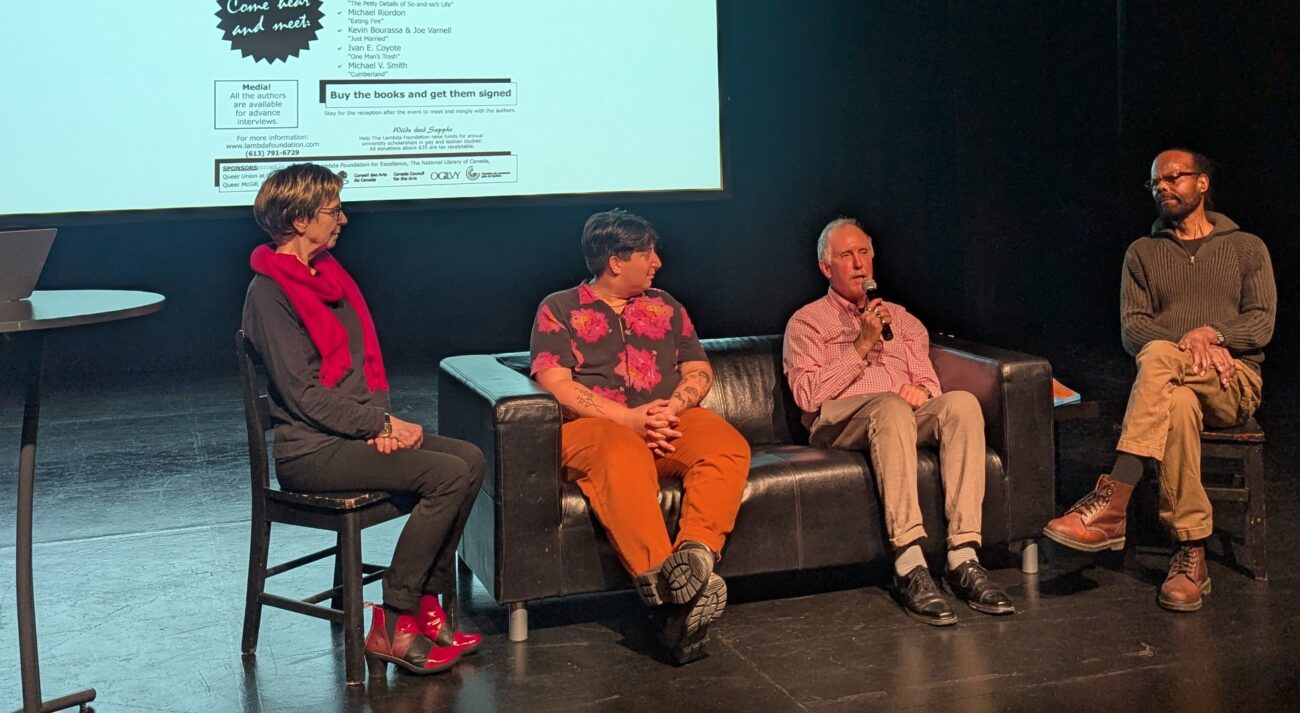
Sunday night at ChromaQueer brought back Wilde about Sappho, a queer poetry reading organized by the Lambda Foundation. The literary readings began in 1991 and became a yearly event as part of the Lambda Foundation for Excellence, a nonprofit with the aim of recognizing political and social achievement in the LGBT community. This year’s Wilde About Sapho was the first to return in 18 years. Four Canadian authors and poets got together for a literary recital and luncheon event as part of the final day of ChromaQueer.
Many of the readings involved older queer authors reflecting on their involvement in queer resistance movements and their past lives, whether in a memoir or in fiction. Donna Sharkey, a nonfiction writer, recounts her experience as part of “proudly disobedient” radical lesbian feminist organizations.
Sharkey asserts that the young should not view advancement in social justice as a linear and inevitable progress. “There is no positive narrative in terms of social change, political action and our rights”. She looks back on her activism during the 70s as an “exciting” and “very radical period of time.” She notes the expansion of the lexicon used by activists as an advancement, improving the precision of discussions and helping individuals identify themselves.One development Sharkey mentions is the increased awareness of intersectionality and how other factors such as class and race, should not be overlooked, as they partly were in activist communities of her youth. She contrasts these advancements with cautionary signals, such as the “egregious sexism” of the online manosphere.
Another panelist, Eli Tareq El Bechelany-Lynch, suggested that young people need not “reinvent the wheel” when looking to enact social change. Bechelany-Lynch personally looks at apartheid South Africa as a framework to enact transformative change. Indeed, many of the authors that inspired the panelists, such as W.E.B. Du Bois, come from another radical tradition, mainly the Black civil rights movement. Wilde About Sapho helped emphasize the need for a dialogue around comprehensive social activism.
Through a diverse array of events, ChromaQueer provided a platform for queer artists and activists to share their stories, reflect on the past and celebrate progress made, while at the same time acknowledging the struggles experienced. By contextualizing the present in a historical lens, ChromaQueer effectively highlights the struggles and triumphs of the queer community in North America. The use of archival films that might otherwise be lost to a general audience helped serve as a reminder of the radical history of gay and queer activism, and the program presented diverse interpretations of how that history will shape current struggles and activism.
As queer issues become, in contradiction, both more mainstream and under attack, events like ChromaQueer provide a valuable platform for queer voices to be heard, and for the community to come together to celebrate their history, resilience, and diversity.