Once treated as an embarrassing corner of the internet, fanfiction has reshaped how younger readers interact with stories.
There was a time when talking about fanfiction felt like admitting to a very specific kind of crime. You had to know someone was safe before revealing just how deep into fandom you actually were.
Now? AO3 references are basically internet vocabulary. Fanfic recommendations are all over TikTok. People openly talk about their favourite ships. You can make a joke about being sold to One Direction at a concert, and somehow everyone knows exactly what you mean. Fanfiction isn’t exactly underground anymore. Actually, reading fanfiction can feel culturally fashionable.
Fifty Shades of Grey, famously originating as Twilight fanfiction, helped push that shift into mainstream crowds. What was essentially erotic wish fulfillment for a specific audience became a bestselling series and a three-film franchise (all released on Valentine’s Day). More recently, Manacled, a popular Harry Potter fanfiction, was reworked into the traditionally published Alchemised. Fanfiction has become increasingly difficult to separate from the publishing world around it.
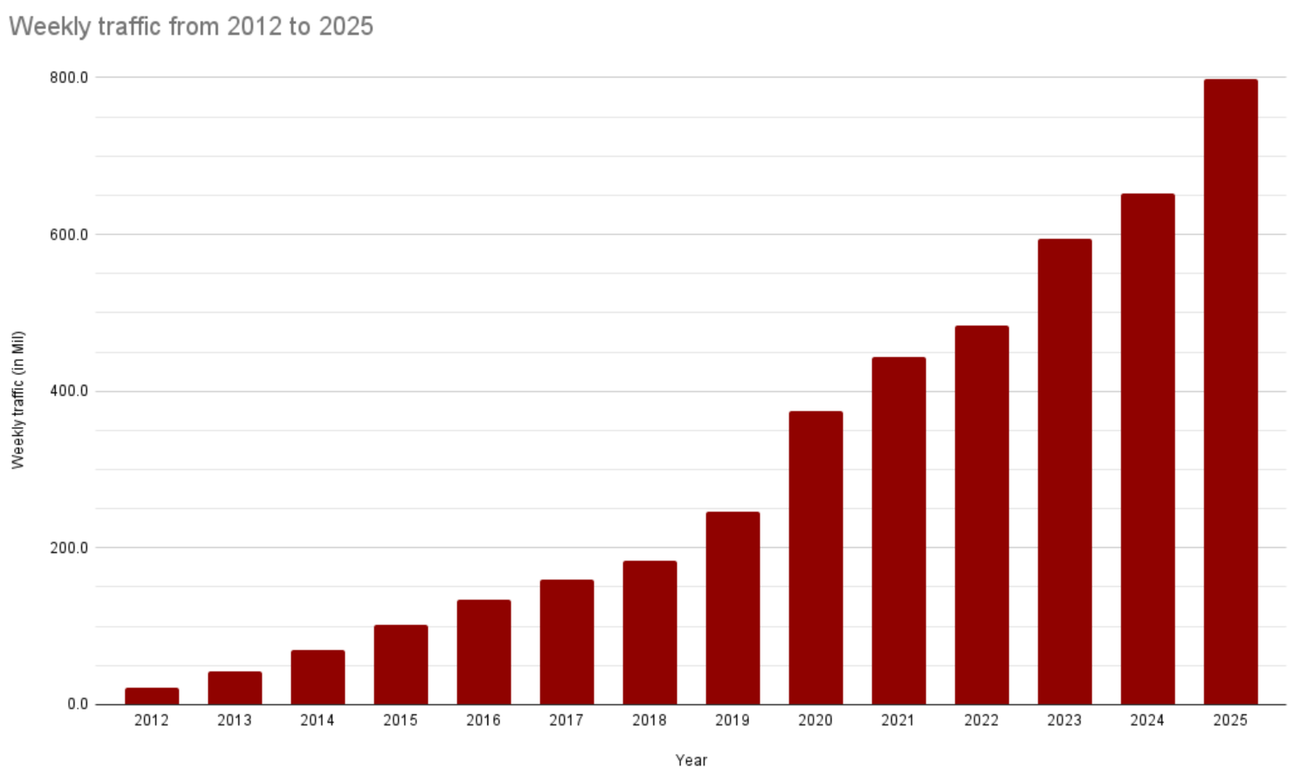
AO3’s growth reflects just how much fanfiction consumption has expanded. Weekly traffic grew to hundreds of millions by 2025.
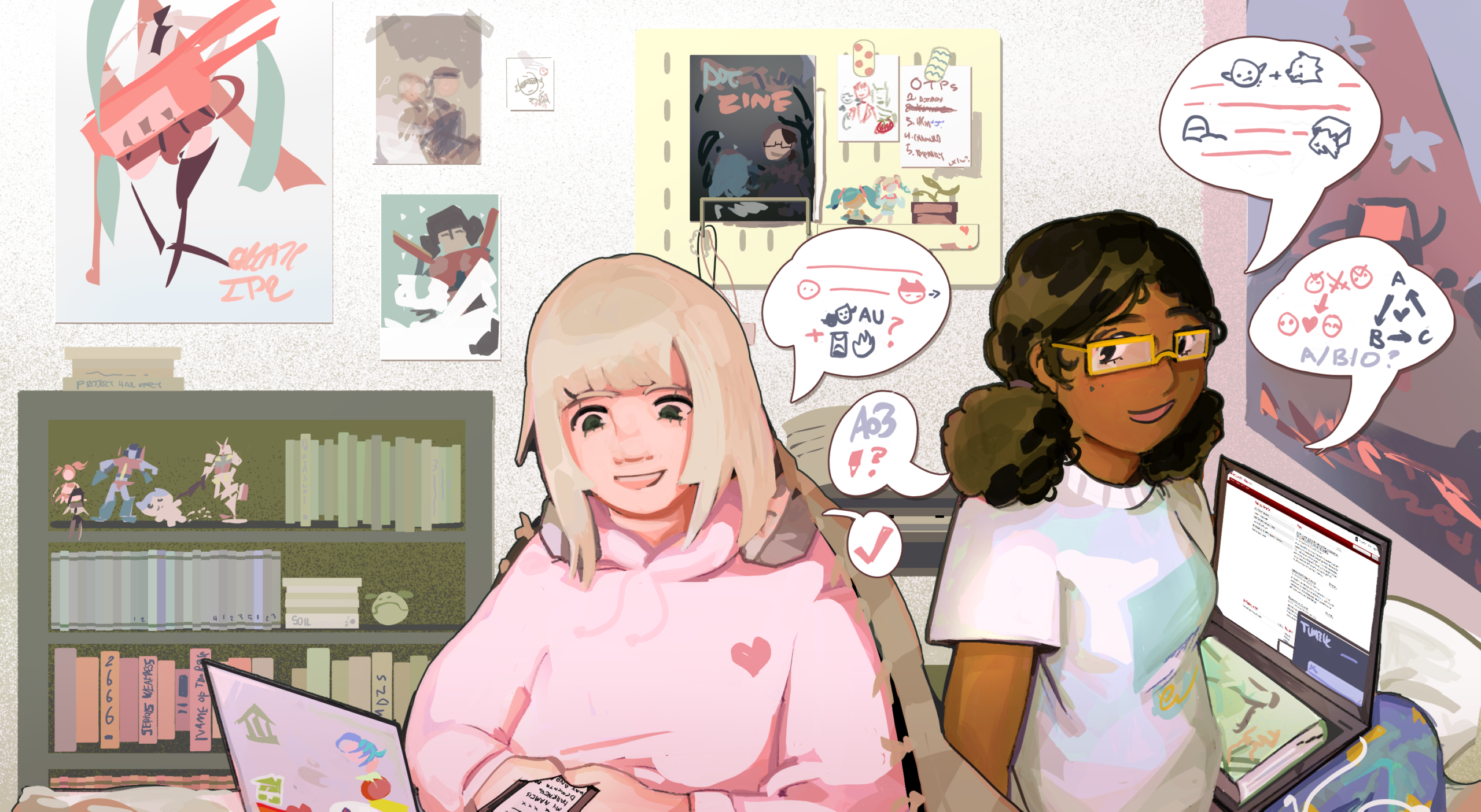
Becoming mainstream only explains part of fanfiction’s appeal. It also reveals the way readers have become trained to interact with fiction itself. Fanfiction allows readers to stay with characters they already know while reimagining them into new stories, relationships, and situations. Want a 7,000-word enemies-to-lovers, hurt/comfort, found family centered around hanahaki disease ending and a very specific character dynamic? You’ve got it.
That familiarity also lowers the initial investment of starting something new. For students exhausted by internships, jobs, lectures, and assignments, sometimes it is simply easier to curl up in bed and read about Satoru Gojo’s nightmares before sleeping.
Familiarity over discovery
This preference for something easier to immediately engage with isn’t unique to fanfiction. A 2024 study comparing 9,000 fanfics with 9,000 commercially published works found that readership in both groups was higher when stories were more readable, less grammatically complex, and more predictable. While less predictable fanfiction sometimes received greater appreciation, accessible stories tended to attract larger audiences.
The findings point to a distinction between what makes a story popular and what makes it particularly appreciated. While complexity can offer a more rewarding reading experience to some, it isn’t necessarily what attracts the widest audience. A story doesn’t have to be entirely original or unpredictable to capture readers’ attention, nor does familiarity prevent it from offering something meaningful. Instead, the research suggests that readers can value different qualities in storytelling, with accessibility playing a significant role in a story’s reach.
In other words, the appeal of accessibility isn’t unique to fanfiction.
Familiar structures and recognizable patterns can make a story more appealing, especially when readers are looking for entertainment rather than something that demands too much effort. These findings suggest that readers aren’t necessarily looking for the most complex or unpredictable stories, but ones they can easily engage with.
Fanfiction takes that accessibility a step further. Published fiction generally asks readers to discover things along the way, while fanfiction can begin with that connection already established. Rather than gambling 30+ dollars on a book and investing time into an unfamiliar world, readers can open AO3 and get hyper-specific about what they want.
That preference for familiarity is also visible in bookstores. Amanda Holmes, owner of Evermore Books, a local romance-focused bookstore, says customers often come in looking for books with similar “vibes” to something they have already read.
“Readers use tropes to find books they know they’ve enjoyed in past reads,” Holmes explained. Popular tropes like enemies-to-lovers and fake dating help customers find familiar experiences, while others, such as accidental pregnancy, help them identify storylines they would rather avoid.
This doesn’t necessarily mean readers are unwilling to explore new stories. “By using tropes, we can recommend new books to readers that they might not have otherwise picked up,” Holmes said.
Sarah Brouillette, a professor of English at Carleton University whose research includes publishing studies and creative industries, similarly sees this specificity less as readers becoming unwilling to try something new and more as a way of dealing with an overwhelming amount of content.
“It’s a way of controlling what would otherwise seem to be a totally impossible amount of content,” Brouillette said. With millions of books competing for attention, tropes and tags give readers a way to narrow their options before investing their already limited time into something. “It’s the way that your daily life is structured that’s leading you to familiar comforts,” Brouillette explained. “It’s not because you’re inherently unable to deal with new stuff.”
For readers of fanfiction, this control extends beyond choosing the next story. Readers can revisit characters, explore alternate endings, or build an entirely different story out of a seemingly inconspicuous detail. Familiarity becomes a starting point for something new.
What familiarity gives us
Fanfiction’s low stakes and often anonymous environment give amateur writers room to experiment with styles, genres, and characters without the expectations of traditional publishing. That community also changes who does some of the work traditionally associated with publishing.
Professor Brouillette noted that platforms such as Wattpad and AO3 give authors an opportunity to build an audience, gain feedback, and develop a portfolio for publishers.
There is a less romantic side to that system. For authors, writing only becomes part of the process. They are expected to advertise, build lasting relationships with an audience, and identify trends to keep up with. On apps like Instagram and TikTok, readers become crucial since their recommendations can turn books into viral successes. For authors who want to spend quality time developing their stories, this can create pressure.
Still, it is comforting to observe younger audiences being so invested in the stories they read. Fanfiction turns that attachment into participation. Readers can explore different perspectives through familiar characters, share interpretations with other people, and stay connected with a work long after its official ending.
That freedom does not guarantee quality. A lot of fanfiction is infamously terrible. Some stories have questionable grammar, bizarre pacing, and plots that seem to have been constructed entirely around getting from one dramatic scene to the next. Despite that, readers are willing to overlook those flaws when a story delivers exactly what they came for. If they are already invested in a character’s life, they often know exactly what relationships, tropes, and endings they want. In those cases, the quality of the writing can become secondary to getting that specific experience.
What’s interesting is how those expectations have started appearing outside of fanfiction.
Tropes are nothing new to published fiction, but fanfiction makes them exceptionally explicit. On AO3, readers can search for exact relationships and ignore stories that don’t check those boxes. That same language has increasingly made its way into how books are marketed: “Enemies to lovers.” “Found family.” “One bed.” “Slow burn.” “Morally grey.”
Professor Brouillette observed a shift in genres such as young adult (YA) and romance specifically, where publishers have adopted internet trope-based terminology. “People expect to see some indication on the outside of the book of what tropes are in the book,” she noted.
Holmes has noticed the same shift in how romance books are sold. With the rise of BookTok and Bookstagram, she believes marketing has become increasingly reliant on categorizing books based on their tropes. But she questions whether that’s necessarily a bad thing.
“People often turn to romance for escapism, comfort, and the promise of a happily-ever-after,” Holmes affirms. As she explains, those labels are less about reducing a story to a checklist and more about making it easier for readers to find what they want.
The concern isn’t the existence of tropes, but what happens when stories are increasingly expected to advertise themselves through them.
When every book has to be reduced to its most marketable tropes, there is a risk that stories start being written backwards. Instead of writing a story and then figuring out how to describe it, authors can feel pressure to write what can be described most easily or crammed with as many marketable tropes as possible.
Brouillette’s research suggests that this is already happening in some corners of publishing. In her work on Amazon self-publishing, she has found authors who begin their books with keyword research, using tools to identify niches and tropes that might make their work easier to market. As Brouillette put it, writers increasingly have to prove, “Oh, I can play the game. I know how to market. I know how to be successful.”
That ability to build an audience can become the very thing that gets them a book deal. With writers also competing against an enormous amount of content, including AI-generated books, being an author increasingly means being an entrepreneur too.
But fanfiction’s influence on publishing is only one complication that comes with transforming existing stories.
There is also the question of who those stories and characters belong to in the first place. A lot of authors are protective of their work and view fanfiction as misrepresentation or plagiarism. Real person fiction (writing stories about real living actors or public figures) raises a different ethical concern of discomfort or harassment altogether, particularly when stories about living actors or public figures become sexual or graphic.
These complications don’t erase what makes fanfiction appealing in the first place. Fanfiction’s popularity goes beyond the decline of the stigma surrounding the fandoms. It reflects a generation of readers becoming comfortable with interacting with fiction on their own terms.
That freedom can produce creative, unique, and bizarre work, but its influence now extends beyond fandom spaces. The language and expectations of fanfiction have started shaping how stories are discovered, marketed, and read.
Stories don’t have to end when the book does, and increasingly readers don’t expect their relationship with them to either.