“SMASHED,” “RAILED,” “SCREWED,” AND NOW “CRACKED,” WHY IS OUR SEXUAL LANGUAGE SO VIOLENT, AND DOES THIS TREND REALLY STOP AT WHAT WE SAY?
Language doesn’t just describe our realities; it simultaneously constructs and is constructed by our surrounding cultures. This is why seemingly harmless slang words like “cracked” serve as red herrings for the broader problems which they reinforce.
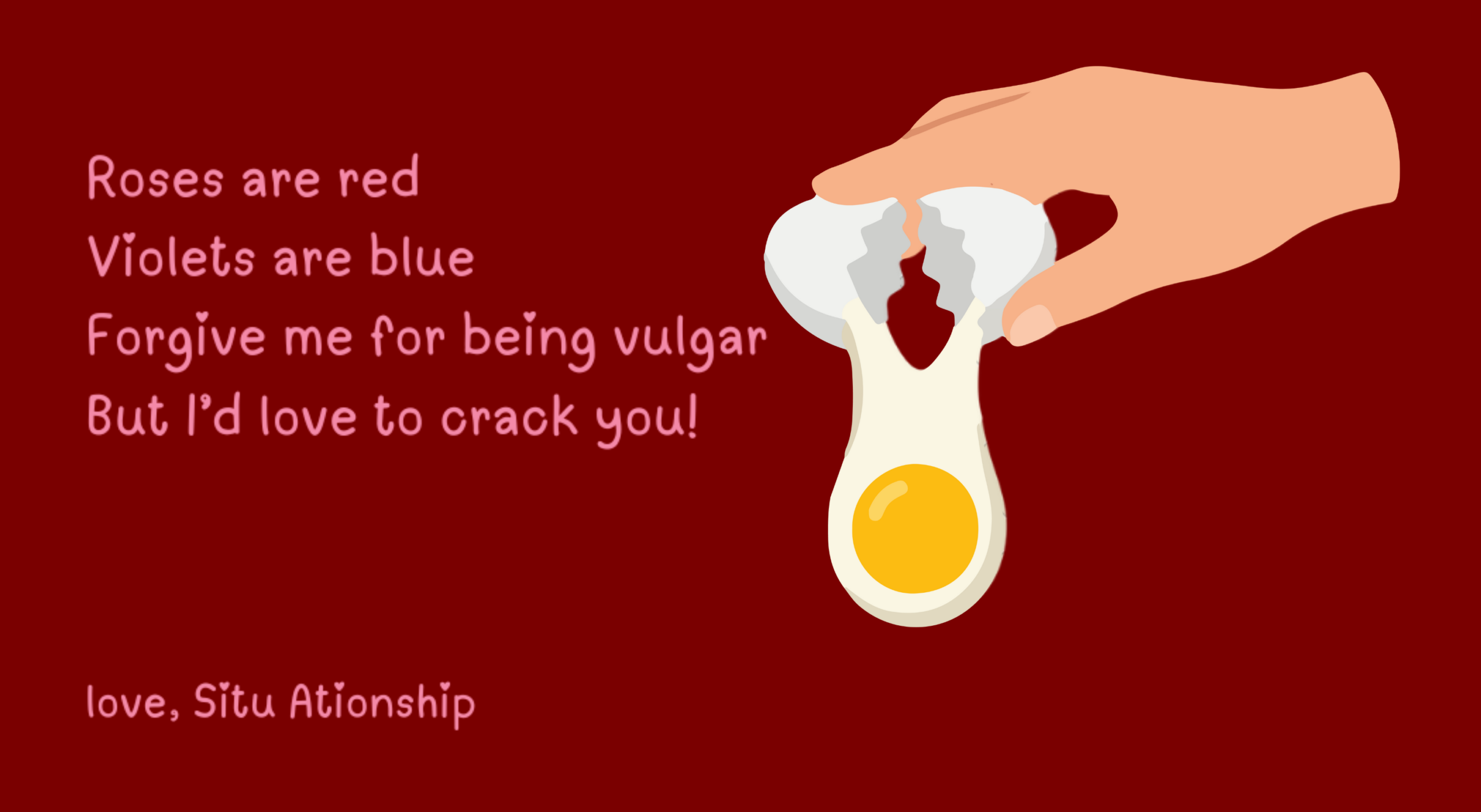
So what does it mean to “crack” something? Oh, apologies, I meant crack “someone.” I forgot we were talking about people. To crack something is to break it open, to claim what is inside, and to permanently destroy the shell in which the object of your desire was contained. (Sorry, “body”, not shell). Hold on, are we talking about sex or making breakfast?
How we talk about intimacy matters. In their 2022 paper “Language of violence: Do words matter more than we think?”, Doctor Leah Carey Tatebe and other trauma surgeons argue that “emotional expression can be related to mental and physical health and…be a marker of specific diagnoses.” While the scholars aren’t the first to point out the correlations between things like absolutist word use and anxiety, depression, and suicidal ideation, their argument that an individual’s language “can serve as both an indicator and a tool for targeted interventions” is interesting.
If all the mainstream words for having sex correspond to destroying something in their everyday use, there is a problem. Words like “crack” signal how intimacy is devalued, bodies are objectified, and sex is equated to conquest. Tatabe’s article uses case studies to prove that changing how we speak can improve our health, but it also highlights how we cannot “alter language without acknowledging and addressing the systemic, community, and individual factors that built a person’s foundational language structure.” If this crude language is an indicator of a societal sickness, what exactly are we suffering from?
Patriarchy.
In 1997, Robert Jensen defined patriarchal sex as “fucking.” He writes,
To fuck a woman is to have sex with her. To fuck someone in another context…means to hurt or cheat a person. And when hurled as a simple insult (“fuck you”) the intent is denigration and the remark is often a prelude to violence or the threat of violence. That we live in a world in which people continue to use the same word for sex and violence, and then resist the notion that sex is routinely violent and claim to be outraged when sex becomes overtly violent, is testament to the power of patriarchy.
It’s time we stop feigning surprise when violent speech proliferates violent actions. Resistance to changing and being critical of what we quickly internalize as the new normal is leaving us all dissatisfied with our relationships.
At a time when new expressions are rapidly being invented on social media and spreading like wildfire due to their lack of substance, targeted intervention means resisting groupthink. As Bell Hooks said, “No [one] who does not actively choose to work to change and challenge patriarchy escapes its impact.” This Valentine’s Day, keep the patriarchy out of your love life. Three’s a crowd.
XO,
It really is that deep ♡