La Haine comes to Ottawa’s ByTowne theatre on September 21st and 22nd. Don’t miss Mathieu Kassovitz’s portrayal of a decaying society with jarring similarities to your own.
Thirty years after Mathieu Kassovitz shocked the cinematic world with his unflinching portrayal of police brutality in French banlieues (suburbs), the 98-minute black-and-white epic returns to the screen at ByTowne Cinema and remains as relevant as ever. For two nights only, you can watch the classic film shed light on the vicious cycle of violence.
If you’re on the fence about buying a ticket and supporting a local theatre, maybe these iconic quotes and symbols from the film will change your mind.
The Ticking Clock
La Haine is a “social time bomb.” The film chronicles 24 hours in the lives of three young Black, Jewish, and Arab men. Every second counts as these characters weave through the city of Paris and confront the looming threat of violence that awaits ethnic minorities at the hands of the police. The regular cuts to a ticking clock keep the audience on edge and awaiting catharsis. Overall, the film takes a firm yet sympathetic stance on civil disobedience by contextualizing the aims of the Paris protests, and framing the ‘riot cops’ as a militia aimed at the citizens they swore to protect, all while highlighting how “la haine attire la haine,” “hate attracts hate.”
“How you fall doesn’t matter. It’s how you land.”
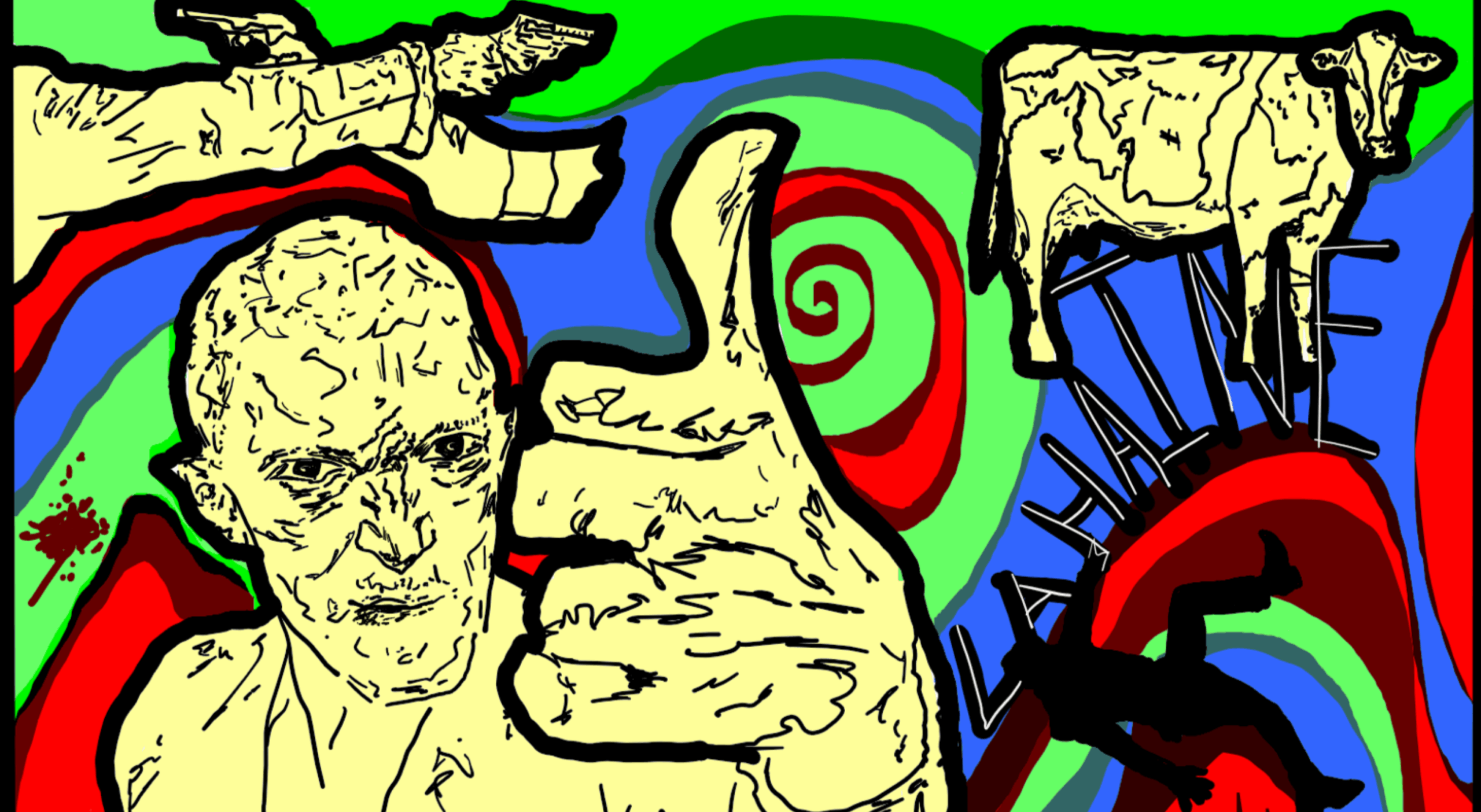
There are only a handful of opening scenes as iconic as La Haine’s. The oldest of the 3 men, Hubert, sets the tone for the film by starting with a bittersweet joke. A man falls down a skyscraper, and as he passes each floor, he reassures himself, saying: “So far so good, so far so good, so far so good. How you fall doesn’t matter. It’s how you land.” The quote speaks to the tension that defines the entire movie and takes on a different meaning in its final scenes. Is there a way to stop the freefall and avoid a fatal impact? Kassovitz laments that “the same joke at the end is a society that falls.”
The Cow
The cow stands as the most elusive symbol in the movie. The most impassioned of the three young men, Vinz, insists he saw a cow at the previous night’s riot. Throughout the film, Hubert and Saïd laugh off Vinz’s hallucination, but for the audience who saw the spotted creature alongside Vinz, it’s harder to dismiss. Luckily, being thirty years late to the debate has its perks. Since the film’s release, Kassovitz has clarified that the cow is a subtle nod to his grandfather, who often said “the old anarchist motto: ‘Mort aux vaches’, ‘Death to the cows’.” In this context, ‘cow’ is a derogatory term for ‘police’. The hallucination symbolizes the constant surveillance the protagonists are under and its alienating psychological toll. As the skies are polluted by the sound of police choppers, Vinz and the others are constantly looking behind their shoulders.
La Haine is both enriched by, and transcendent of, its historical context. As the systemic injustices and racial tensions portrayed in the movie persist in real life, the universality of its themes maintains importance. Amidst increased police budgets, instances of police brutality, and the violent suppression of protests in Ottawa, the film offers a distorted reflection of our contemporary society.
Career-defining performances by Vincent Cassel, Hubert Koundé, and Saïd Taghmaoui, and the breathtaking cinematography by Pierre Aïm, make Kassovitz’s social thriller an absolute must-watch.