When I tell people I’m going to draw nude models, they’re usually a bit taken aback
In a culture where bodies are constantly scrutinized, sexualized, and shamed, the artistic practice of life drawing can sound terrifying even when you’re not the one posing. However, for over 50 years, the model-run Sandy Hill Life Drawing sessions have worked to change that by offering artists and models a safe, affordable place to practice their crafts.
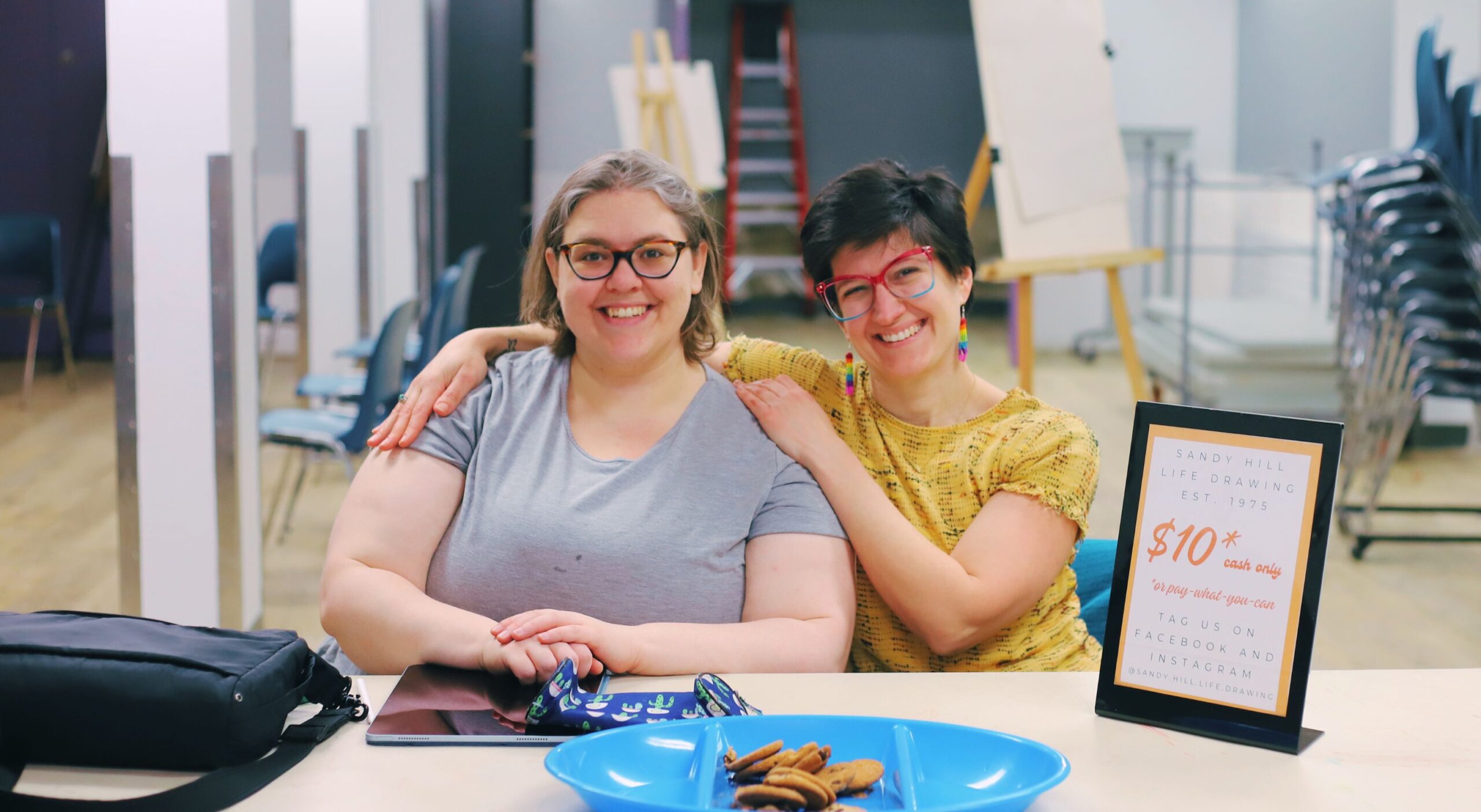
The sessions run every Wednesday from 7 to 9 p.m. at the Sandy Hill Community Centre, giving full-time professionals and students the chance to regularly carve out time for artistic expression. When you walk in, you’re usually greeted by lifelong friends, Arden Usin and Jessica Ruano, who have been active in Ottawa’s local arts scene for decades. Alongside model Jorge Zamorano, the pair took over Sandy Hill Life Drawing when founder Dan Northcott retired in 2024.
Ruano and Zamorano’s modelling backgrounds shine through in the program’s curation, which makes this community stand out amongst artist-run life drawing groups.
Emphasis is placed on humanizing models by sharing short biographies with artists beforehand, and supporting people who model for a living by balancing the number of professional and new models each year. These organizational details subtly manifest in the excitement of each Wednesday evening as the model’s personality weaves together with their dynamic movements, and is received with curiosity, attention, and patience on the artist’s canvas.
Ruano explains how “we wanted to highlight how each model is unique in their own way, and that you don’t have this anonymous person in front of you that you’re drawing. They have a whole life that is separate from what you see on the platform, which is relevant, and can also inspire art.”
I once attended a session where Ruano was modelling and was surprised when she started speaking to the audience halfway through. She turned the serene energy in the room on its head by encouraging artists to ask her questions. Opening the door to curiosity and connection, she spoke about everything from her studies at the U of O to the local food spots she’d been trying out. As she spoke, I felt inclined to put my pencils away and switch over to my more colourful oil pastels. To this day, that’s my most memorable session.
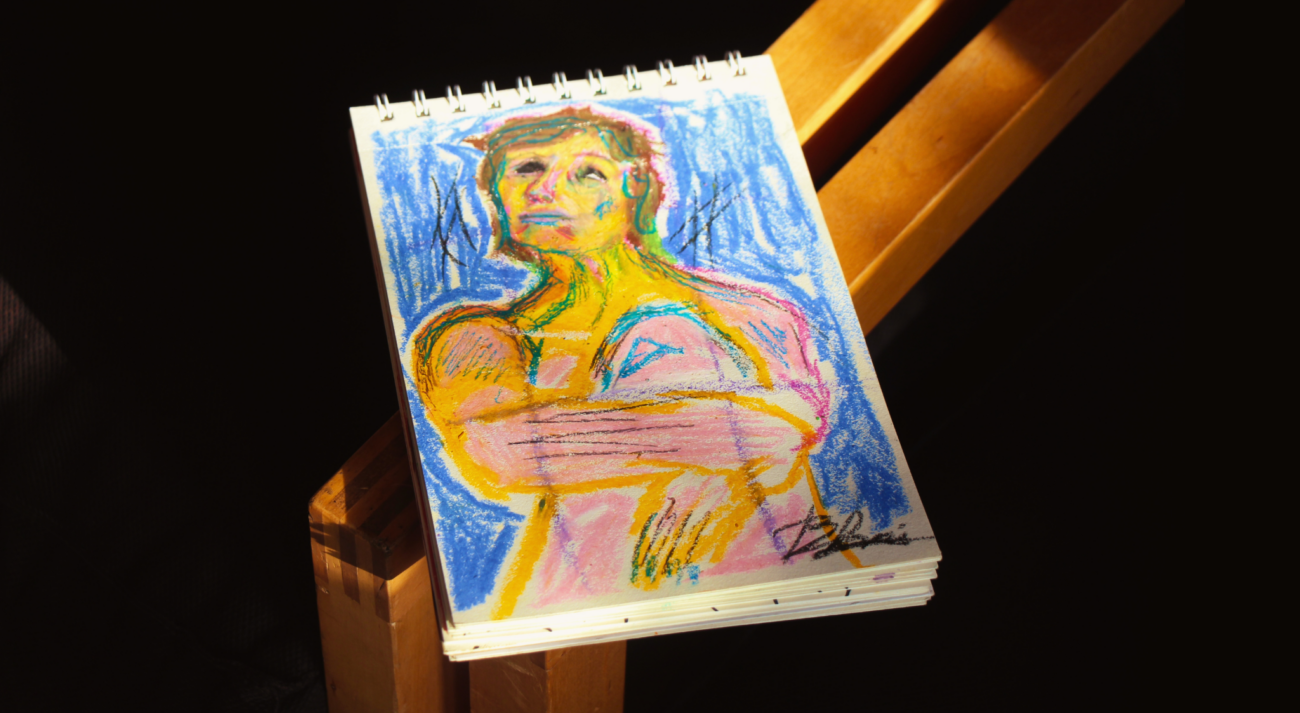
She says, “There was this idea that in classical modelling that you should only speak to the instructor, and there should be no interaction with the model, but there’s a risk of seeing somebody as an object in that way.” This culture of dehumanization and objectification is something many organizers are actively working to dismantle.
Ruano adds, “In a lot of the environments I find myself in, there’s this very natural tendency towards respect for the model, and even though there’s a person who’s nude in front of you, it’s not sexualized.” Noting that, this is “quite refreshing in a world where what you’re wearing can dictate how people see you, and if they sexualize you.”
Life drawing can help you cultivate more than just artistic skills if you’re open to it. Over time, attending has helped me normalize and destigmatize nudity.
When I spoke with Ruano, she told me how “it’s refreshing to not have your brain go to that place of judgment,” and I couldn’t agree more. To start seeing the contours of the human body as places where light and shadows meet feels like a breath of fresh air in a world where physical appearance often defines your worth. Paired with the community element that brings artists out of isolation, this internal growth can be really impactful by changing how you relate to yourself and others.
With minimal barriers to access, the sessions act as a genuine community space which are few and far between these days. “The important thing for us was for it to be affordable,” says Ruano. “We say $10, but if someone shows up with a toonie, or forgets their money, we’ll say just bring it next week. As long as we make enough to pay the model, we’re good.” The organizer noted that so far, this has never been a problem, and that “we pay better than most series because we can.”
The PWYC and drop-in model allows for a broad demographic of art students, retirees and sometimes even high schoolers who come with their parents. “As long as people are happy to be there, then we’re happy to have them,” says Ruano.
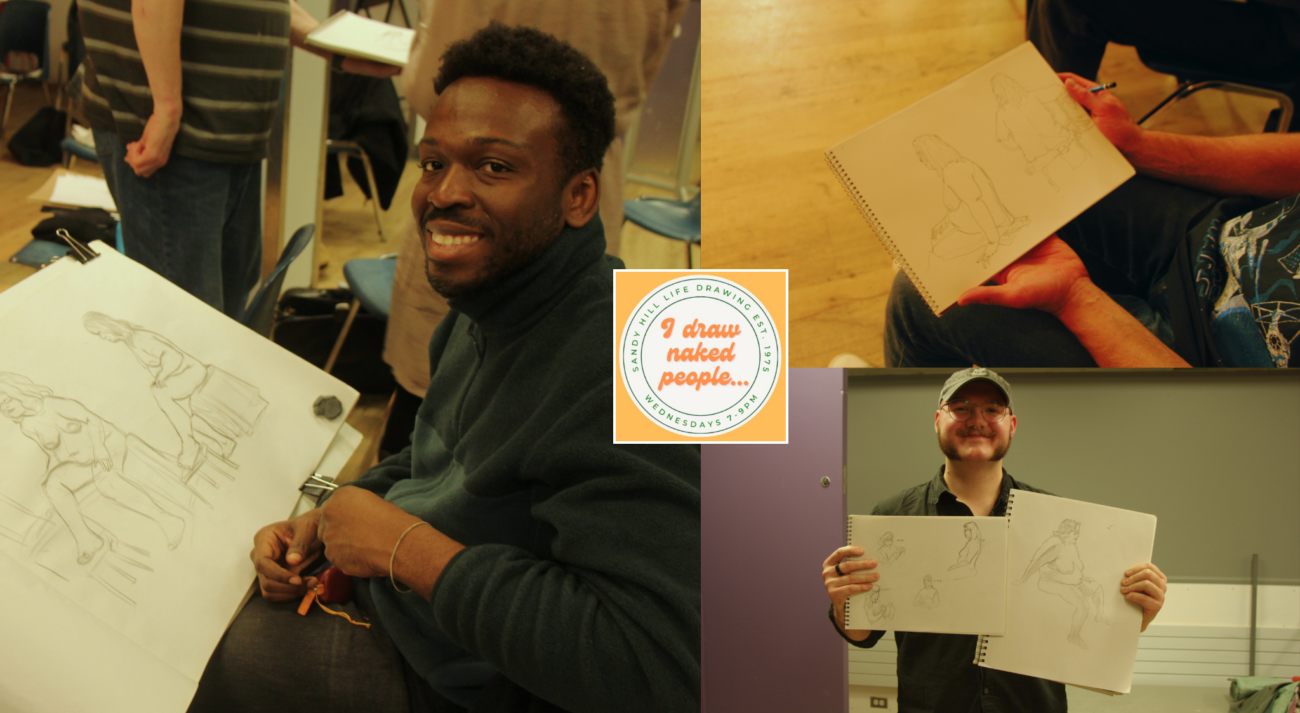
Composite photo: Bhoomi Dahiya/Fulcrum. Logo: Sandy Hill Life Drawing/Provided.
Similarly, she explains that their model coordinator, “Jorge, does a great job of mixing it up. He makes sure the models who rely on this gig get the gig, and we always bring in a few new people who we think have potential.”
Ruano adds that “we’re also aware of the importance of diversity to have all different types of body types, ethnicities, and genders up on the platform, so that the artist gets to have the experience of drawing all kinds of people.” She notes that this is “useful for artistic practice, and also just as a humanity practice.”
With pre-COVID-19 attendance of up to 50 people per session, and present-day attendance ranging from 20 to 30 people, the sessions are going strong under the trio’s leadership. “It’s a great place to practice, it’s like a jam session, really, so you can just have that attitude and come on by,” says Ruano.