FROM HUMOROUS SOCIAL MEDIA SKITS TO A LOCAL CONTEST IN OUR VERY OWN CONFEDERATION PARK, THE ‘PERFORMATIVE MALE’ TREND REDEFINED OUR RELATIONSHIP WITH PERFORMANCE AND SOCIAL COMMENTARY. SADLY, FOR THE WORST.
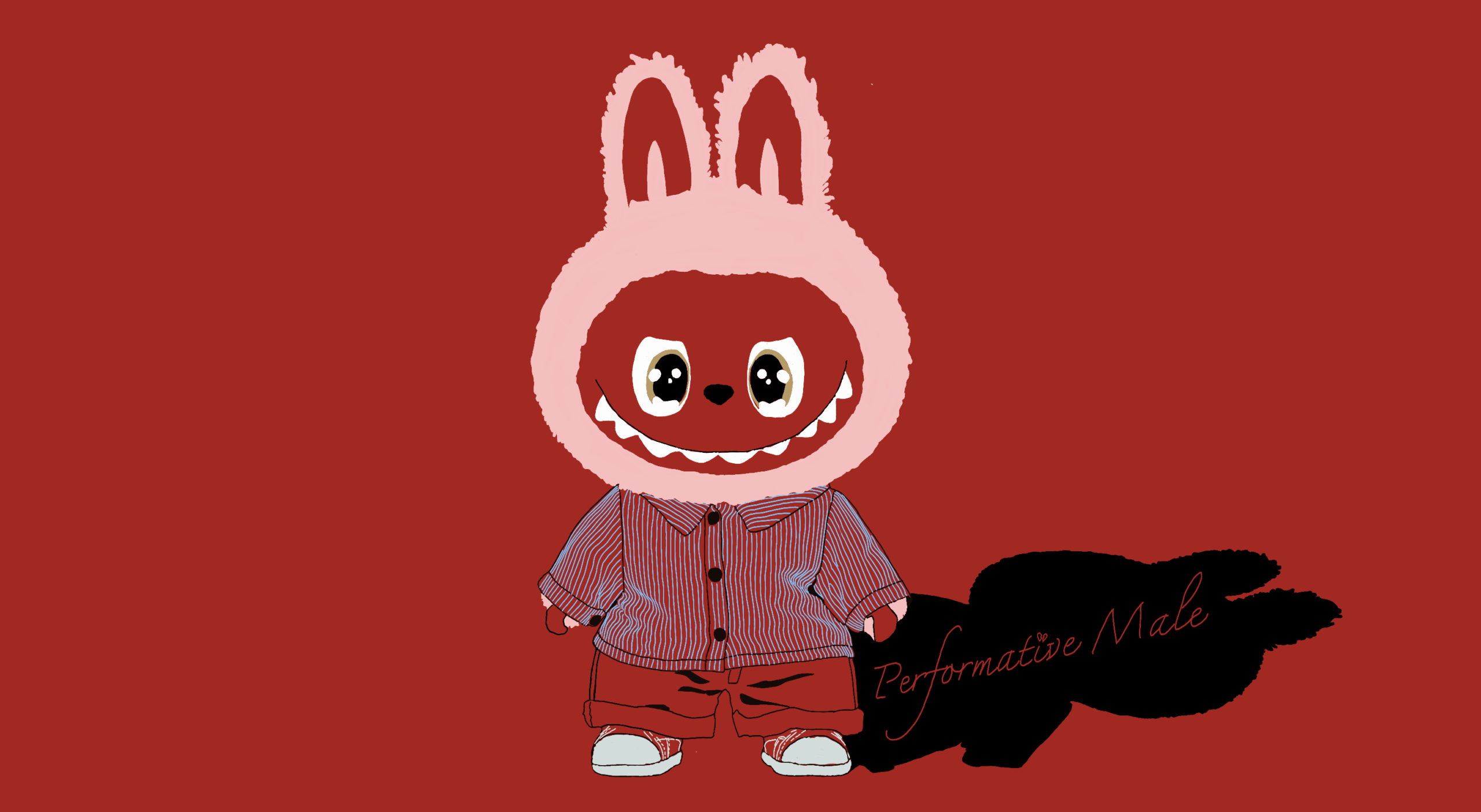
Have you met this man before?
A tote bag, filled to the brim with vinyls from Clairo and Beabadoobee, with no record player in sight. An outfit containing the essential button-up shirt, loose jeans and a simple pair of loafers. An overpriced matcha drink-variant in his right hand, and, the “pièce de résistance”: a feminist piece of literature, most notably, ‘all about love: new visions’ by bell hooks.
Our social media feeds have been bombarded with the repackaging of “male peackocking”; the social behaviour change, particularly in heterosexual and cisgender men, in pursuit of romantic or sexual attention. This trend revolves around the mockery of men who engage in this performance, inauthentically, adopting socially acceptable ‘feminine’ traits, interests, clothing and feminist talking points to appear approachable.
The satirical elements of the trend evokes laughter, states Mackenzie Po, the runner-up of Ottawa’s Performative Male contest, particularly from the men who participate in it: “The men and the masc[uline individuals were able to] make fun of [them]selves. They didn’t take themselves seriously at all.” But I can’t help but take a killjoy perspective as this trend may be causing more harm than amusement, affecting both the participants and audience.
For the audience, watching men engage in this trend may give a sense of relief. The trend gives the impression that the participants are aware of the headaches and issues many individuals have experienced at the hand of misogynist and patriarchal systems through ironic statements.
Elita Uch, the coordinator of the Feminist Resource Centre, recognizes the ironic nature of this trend, but questions the use of satire for social commentary. Uch elaborates her point through the example of the use of menstrual hygiene in the trend, as the participants carried pads and tampons with them, stating that women have gone through enough pain caused by a patriarchal society, concluding that menstrual pain is inherently misogynistic.
As humorous as that is, this comment not only superficially points out the normalization of misogyny in society, it also gives the illusion of sympathy for individuals’ very real struggles under an institutionally misogynistic world. Elita addresses the limits of the trends of social awareness, and wonders “where [these] period products go after [these events] are done? […], are [they] brandishing around for play? Or are [they] going to give it back to other friends? Or are [they] going to give it to a shelter?”
In other words, the satire found within the trend only brings attention to social issues on a surface level, disregarding the very real issue of menstrual hygiene products scarcity and the potential of social gatherings such as ‘Performative Male’ contests, to address social issues in a creative manner, using feminist concerns as a prop according to Uch.
For the participants, the ironic performance of the ‘Performative Male’ may seem exclusively independent from their genuine behaviours and expectations. However, from the nature of the definition of ‘performativity,’ performance not only describes our behaviours and expectations in society, but it shapes them as well.
Femi Salam-Alada, the event supervisor at the Feminist Resource Centre, addresses the concept of ‘performativity’ in the ‘Performative Male’ trend, as she notices that the trend can “start hedging to the territory of making fun of people” who participate authentically in activities now deemed ‘performative.’
Po conveyed a similar point, as he expressed the annoyance of being associated with the ‘Performative Male’ label. He mentioned that his new title has placed him “in a little bit of a box,” as his actions are questioned for their authenticity by his peers.
“[…] maybe I do [want to] read feminist literature outside in public, but now, I really don’t want to [be]cause I don’t want to be associated with that kind of man.”
Not only does this deter men who enjoy socially “feminine” traits, behaviours, and interests away from engaging in such activities in fear of seeming performative, but they also reinforce gender binary stereotypes, ostracizing and targeting anyone who doesn’t conform to them.
Whether you are an enjoyer of ‘Performative Male’ content, or you have participated in this trend through a local contest, it never hurts to look deeper into social trends, as they may reinforce systems of oppression instead of deconstructing them.