DELEGATES SAY MEETING WAS “INTIMIDATING, INACCESSIBLE, AND PERFORMATIVE.”
What are Public Delegations?
Public delegations offer Ottawa locals the opportunity to make their voices heard at city council and committee meetings. However, in recent years delegates have argued that voices critical of the Ottawa Police Services (OPS) Board are being marginalized and silenced, and in 2025, the Ontario Superior Court of Justice agreed.
In 2023, the Fulcrum reported that “a coalition of community groups and individuals filed a class-action lawsuit against the Ottawa Police Department on Aug. 9, for violating their freedom of expression during public consultation meetings.” The Browne et al. v. OPS Board lawsuit was decided in November 2025, as judge Sonya Notturno ruled that the OPS Board violated the Charter by going “‘the extra mile’ for speakers in line with its agenda.”
However, the ruling did not mandate that the by-laws change. Following the first hybrid board meeting since November 2022, many delegates are still dissatisfied with the state of the delegation process.
This comes at a time when the OPS has publicly admitted to having a sexual violence and harassment problem within its ranks, implemented controversial AI facial recognition technology in their new body cameras, and reported that “Black and Middle Eastern people are overrepresented in police use-of-force stats.”
First-time delegate, Keara Dean, and long-time delegates, Jeffrey Bradley and Sam Hersh, who were involved in the 2023 lawsuit, discuss their experience at the June 22 meeting in a Fulcrum exclusive.
Delegate Keara Dean: “It’s an abusive system built upon patriarchy and misogyny. It needs more than just me going and educating them.”
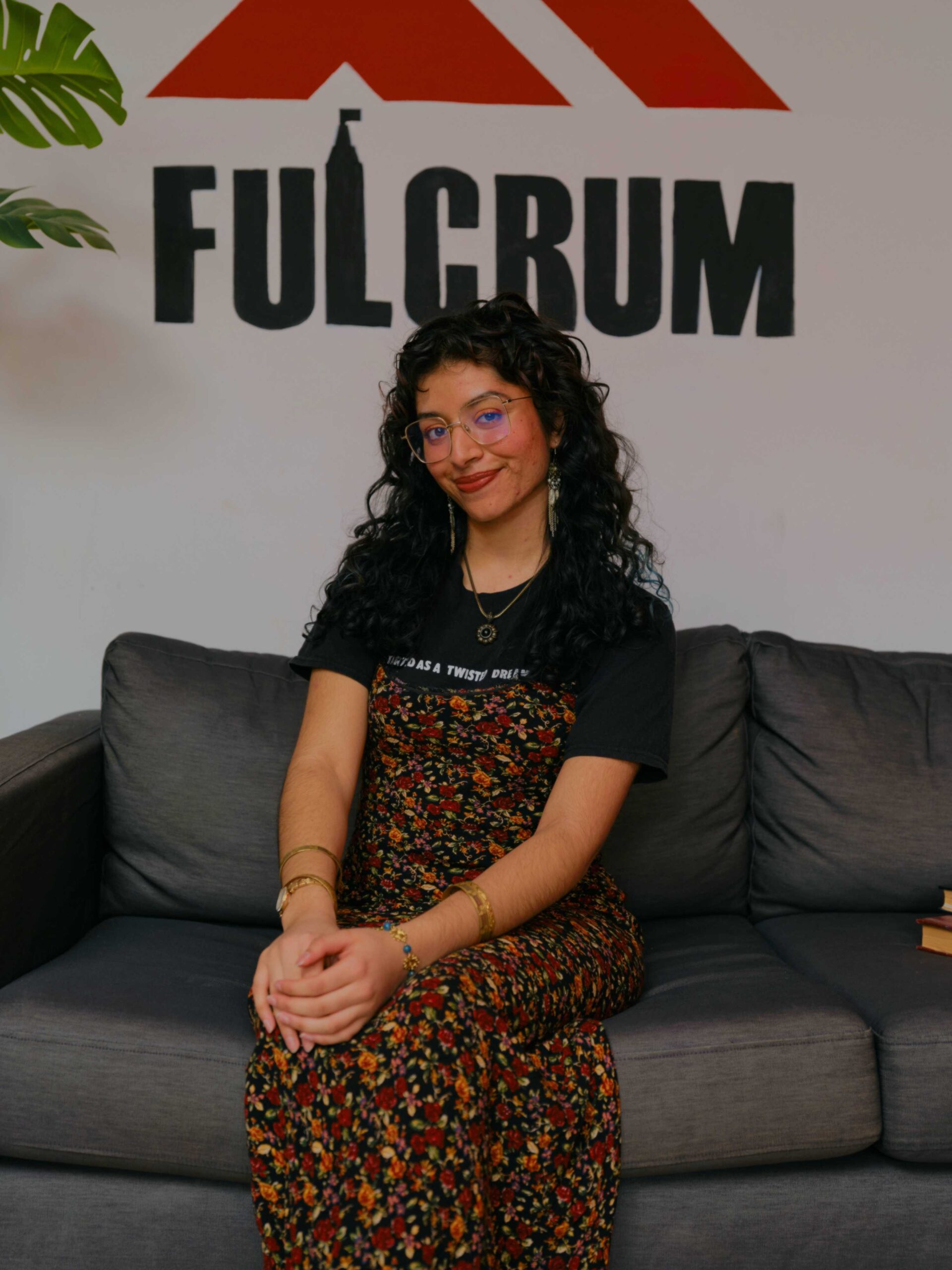
Social worker Keara Dean, decided to delegate after seeing a CBC report that featured victims in a recent AI deepfake investigation who felt the OPS’ treatment towards them was not trauma-informed.
Having had a similar traumatizing experience with the OPS in 2022, Dean wanted to explain to the Board that this behaviour is reflective of an enduring systemic failure within the OPS, and is not an isolated case of misconduct.
With public delegations limited to one hour (regardless of the number of speakers), Dean and the eight others each had five minutes to concisely articulate their points.
Dean recounted her experience reporting a historic sexual assault, where OPS officers told her it was her fault the case wasn’t reported since she said the wrong words (this was proven false). Dean also described legal documents being slid across the table to her while she was in an unsound emotional state.
Out of the day’s nine delegations, Dean’s testimony was just one of two which elicited any commentary from the Board or Police Chief Stubbs, raising concerns around board engagement.
Dean was troubled by Stubbs’ response as he focused on whether or not she ended up reporting, and then asked if her story could be used as a “learning moment” for officers. She told the Fulcrum she felt that Stubbs was not actively listening to the context she had provided around this being a bigger problem. Arguing that his focus on the end results of her individual case undermine the institutional reform she’s calling for.
Dean added that, “the investigator drove from Quebec City to get an organized date and time, my husband took off work so he could drive me, and the Ottawa Police did nothing. This had nothing to do with OPS making sure I was able to report it.”
As for Stubbs’ offer: “My thoughts around the whole performative piece of ‘would you like to tell your story in hopes of educating the members?’ was here we go again. Not only was I offered that before and then ghosted, but how is my story going to benefit your members unless we actually address the problem,” says Dean.
Dean says she “went into the meeting knowing that [she] should have no expectations from the police whatsoever,” but she wasn’t expecting to be in the hotseat either.
She said it was intimidating to be surrounded by uniformed officers as she expressed her concerns with the OPS. Especially after it was leaked that OPS officers are stalking women in real life by getting their information through confidential police databases.
“Delivering my message while knowing that this is something that came out recently made it a scary process,” says Dean.
Delegate Jeffrey Bradley calls on OPS Board to mirror the delegation process of other city committees
The Criminology professor at Carleton and the U and O says that allowing delegates to sign up the day of and speak without submitting a script is a crucial first step towards accessibility.
The OPS Board is the only municipal committee whose by-laws insist delegates submit written scripts three days in advance of the Monday meetings. Other committees allow delegations to sign up by email up to an hour before the meeting start time. Written submissions determine whether delegates are approved to speak and are meant to facilitate well-informed dialogue from board members. However, Dean, Hersh, and Bradley have expressed concerns over the lack of appropriate engagement from the Board.
Bradley was pleased to see the Board let some delegates “talk off their points, like they weren’t reading off a script” at the June meeting, given how deviations weren’t allowed in the past. Still, he notes that “it’s very inconsistent in how they apply the rules.” Adding that, “they used to never ask questions. Now they are, but they’re usually not very friendly.”
“They target particular people,” says Horizon Ottawa board member Sam Hersh.
Pointing to his interaction with member Michael Polowin he noted how: “He had my comment beforehand and was going through it methodically, like a prosecution.” Polowin is in fact a practicing lawyer who has “acted for some of the largest developers in Canada.”
Hersh voiced to member Polowin that “It’s this sort of lambasting of certain delegates that makes people less wanting to come out and speak out at these committees.” In turn, Polowin said “perhaps if delegates like you made more appropriate comments it wouldn’t be a problem.”
Dean was shocked to see how Polowin spoke to Hersh and noted that if she had been up next she wouldn’t have felt comfortable speaking. Rob McDonald, the community member that spoke following Hersh, opened his delegation with “I’m a little nervous so please be kind.”
Hersh contextualized the exchange by saying “there is personal history” between him and member Polowin due to Hersh’s years of public facing activism around municipal issues. Adding that, “what [he] says to a lot of people, who are nervous about speaking at meetings, or challenging councilors, is you’re an expert on your community because you live in it every day, and anything that you can bring to the table is relevant.”
Delegate Sam Hersh: “We have made a difference by speaking at these meetings in the past when it was more accessible.”
Pointing to public outcry against “no-knock raid” practices in 2020, Hersh says “if [delegating] wasn’t effective then [the board] wouldn’t be pushing back on us and limiting our speech.”
Adding that, “the police are getting away with things like the over budget $187 million police station in Barrhaven because less people are going to these meetings, and putting out information about it.” While grateful for organizations like COPOUT 613, an Ottawa-based collective dedicated to monitoring and conducting research into policing, Hersh says “that as long as we have these rules in place, it’ll be difficult to further scrutinize the police.”
Adding that, “This Board is supposed to be the mechanism that is the oversight of the police and a representative of us to the police. But what the Board has become is the representatives of the police to us.”
The Next OPS Board meeting is on July 27 at 4 p.m.
Momentum is picking up after the eventful June meeting and following Horizon Ottawa’s delegate call-out last month, Criminalization and Punishment Education Project (CPEP) Ottawa is hosting a free vegan BBQ outside City Hall on July 27. CPEP is calling for the resignation of officers found harassing and assaulting women, and encouraging locals to attend the next OPS meeting after the 3 p.m. BBQ.
Declaration of conflict of interest: The author of this article serves on the 2026-2028 Horizon Ottawa board alongside interviewee, Sam Hersh. For more information on how objective coverage was ensured by a third party, contact content@thefulcrum.ca.