“We just kept doing the work”
Founded in 1865, St. Alban’s is older than Canada and was the church of John A. MacDonald, a fact that the Reverend of the church, Michael Garner, has mixed feelings about.
In recent years though, their congregation has had fewer Prime Ministers and more students. Outside of Sunday sermons, students have used the Church for events, organizing round tables on accessible childcare on campus, through the Bernadette Childcare Coalition orChristian prayer services for Palestinians, held by the University of Ottawa Student Christian Movement. The Church itself is working behind the scenes with the Student Union’s ‘Fed-Up’ food insecurity campaign.
Beneath the chapel hall, is Centre 454, a homeless drop-in centre. Originally open from 1976 to 2000, the center had a brief relocation less than a kilometer away to Murray street, until its reopening, less than 400 meters away from Tabaret Hall, in 2012.
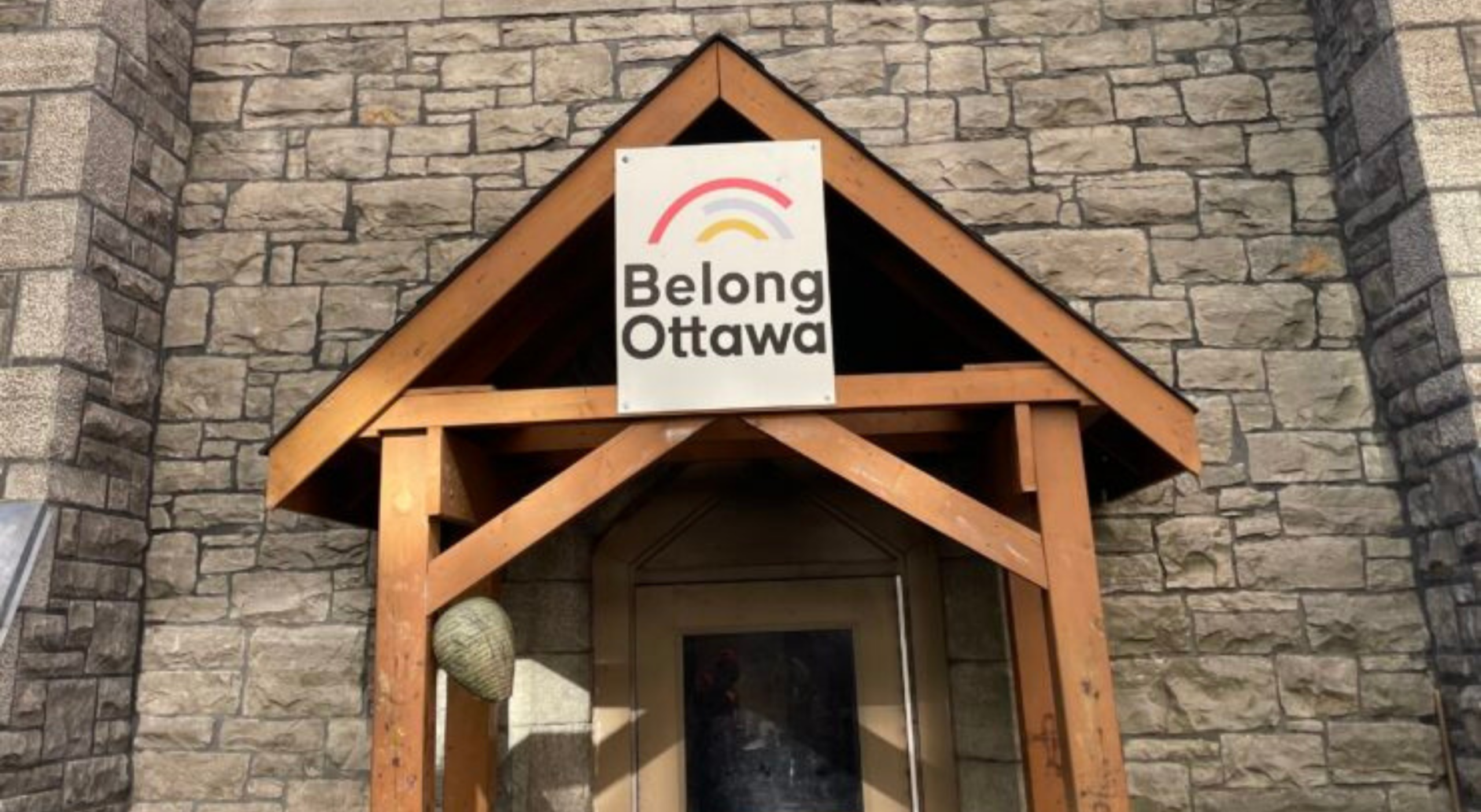
The Center, operated by Belong Ottawa, has aimed to provide companionship, emotional support, counseling programs, and practical support for “socially disadvantaged” community members. In doing so, Centre 454 has become a front in the war over what and how social services should be offered in Sandy Hill.
With campus so close to Centre 454, and students and professors populating Sandy Hill, campus has become another battleground in the debate over Centre 454’s place in the Sandy Hill community, especially in the face of a worsening homelessness crisis.
Things at Centre 454 have escalated, both in terms of inter-community tensions, and the crisis Centre 454 is hoping to address. Everyone the Fulcrum spoke to unanimously agreed that the burden of the drug epidemic has put places like Center 454 on the front lines of crisis response.
According to an October 2024 Point in Time survey, 2,952 individuals were homeless in Ottawa, a drastic rise since before the pandemic, while simultaneously, the average number of opioid deaths in Sandy Hill has reached 56 a year since 2020, a huge jump from pre-pandemic levels. The Fulcrum was told that in the past year, there have been 3,900 instances of crisis support, many being overdose responses, across Belong Ottawa’s three locations.
Shauna Young, Executive Director of Belong Ottawa, acknowledges that the opioid crisis has worsened conditions at the Center, but blames the increase in demand on the ‘smoldering’ unaffordability crisis Canadians are facing. As housing costs have risen, more and more people have been forced into the streets, and into Centre 454.
Rev. Garner agrees with this assessment, but also believes that the neighbourhood has always been a “difficult” area, citing the common drug use, prostitution, and encampments in the garden of St. Alban’s long before Centre 454 reopened in 2012. The Rev. told the Fulcrum that the Centre is “play[ing] less bingo, not to be trite… [and] doing a lot more life-saving interventions.”
Offering laundromats, hygienic resources, storage lockers, addresses to receive mail, and more, Center 454 aims to ameliorate the conditions of homeless people in the Sandy Hill and Rideau Street area. In the past year alone, Belong Ottawa served over 65,000 meals, offered 2,600 showers, and did 3,000 loads of laundry, with Centre 454 serving the most meals out of their locations.
Young says as affordability worsens, the Center’s users have grown beyond just the homeless: She has seen grandparents bringing their grandchildren during dinner, because they can’t afford groceries, and people with apartments using the showers or laundry, because they can’t afford their utilities.
While Centre 454 doesn’t track user demographics, Young said she wouldn’t be surprised if their users included U of O students.
A Community Divided
Some community members, citing “more than a decade of unanswered harm” due to “the continued operations from Center 454,” launched a petition to Relocate Center 454 from 454 King Edward Avenue in the summer of 2025. The anonymous petition, endorsed by over 550 individuals, calls for the suspension of City funding towards the center until the high concentration of service providers in Ward 12 is addressed.
In response, Maxx Cabajar, a fourth-year political science student, launched the “Defend not Defund Centre 454” campaign, calling for greater investment in addressing the root causes of homelessness.
The pro-centre petition has over 100 signatures which according to Cabajar, was driven by students. Maxx believes that Gee-Gees are “very sympathetic” to the drastic need for social services in Sandy Hill. He believes the calls for relocation stem from “misinformation” and a “poor understanding” of what the center provides to the community.
On the other hand, Calla Barnett; a PhD candidate, former part-time professor at the U of O, and former chair of Action Sandy Hill’s (ASH) Community and Social Services Committee, has been outspoken against the “over saturation” of social resources in Sandy Hill.
Barnett claims that there are too many service centres like 454 in the Sandy Hill area, leading to a higher density of users than a single area could support. She claims this oversaturation has only worsened by the drug epidemic and alleged behaviour of the social services providers towards neighbouring Sandy Hill residents.
“Centre 454 has been increasingly dangerous since the injection site opened. And it’s not their fault. They are not built to deal with the Fentanyl crisis. But after years of the Centre refusing to take responsibility for itself, after years of blaming the city, of pointing fingers, of saying yes and not doing anything — it’s too little, too late.”
Barnett is not the only University of Ottawa alumni and former ASH Board member involved in the debate. Mikaela Kennedy, a recent Political Science and Gender Studies graduate and former ASH board member, advocates keeping Centre 454’s current location open.
“I’m very concerned about how the relocation will impact people who rely on their services, and I’m not sure a relocation will yield the results that residents are hoping to see.”
Kennedy told the Fulcrum that during the midst of this debate, Centre 454 invited ASH board members to tour the site; despite this open offer, they were one of the few from ASH who toured, claiming less than half the board attended. Kennedy commented that the opposition to the center was ingrained in many members of ASH before they had visited the site, looked at the alternative petition, or engaged with the facts.
By the time Kennedy had shared the ‘defend’ petition with the ASH board, they believed it was a ‘moot point.’
According to Kennedy, the heavy anti-centre 454 presence on the board was leading to the ASH’s endorsement for the relocation. Members of the ASH Board, which has no student representation, were reportedly deeply frustrated by the ‘defend’ petition, accusing students of stirring the pot and getting involved in something that wasn’t their place.
Cabajar thought the lack of students on ASH and the attitude that students only caused trouble was part of the reason students didn’t get involved in organizations like ASH in the first place.
“The stereotype with students is that [they] are a more politically active group … but when it comes to involvement in community associations like ASH, [the minimal students who do get involved] often face a lot of pushback and stress from the older voices, [making] it very hard to change the culture.”
Ultimately ASH did not officially endorse either petition, though they circulated the ‘relocate’ petition in their newsletter. The Fulcrum was told that ASH decided not to move ahead, with the ASH Board allegedly being told by Councillor Stephanie Plante that the issue had been resolved with a supposed plan for the centre’s relocation.
Future of Centre 454
On Oct. 29, the Fulcrum visited Centre 454. Despite the morning chill, the courtyard was filled with people reading, while the inside was crowded with people eating breakfast, napping, and watching a movie on an old television mounted to the ceiling.
It felt quiet; a word that Centre 454 staff don’t like to use out of superstition.
When asked how Centre 454 responded to the petition, Belong Ottawa Executive Director Shauna Young, told the Fulcrum they hadn’t.
“We just kept doing the work,” she said.
Although Young was unaware that the ‘defend’ petition had been started by students, she said it made sense, students had regularly been supportive of Centre 454. Days earlier The Koi Foundation, a student club for medical students who like sportscars, dropped off hundreds of dollars worth of clothing, food, and other donations as part of their regular fall fundraiser.
The future of Centre 454 remains uncertain. Despite claims from ASH, and the original petition itself that Centre 454 was being relocated, it was confirmed that there are no active plans to relocate— though if the city decides to relocate them, the Centre is open to it.
Conversations between the City and Belong Ottawa regarding a potential relocation are reportedly in their early stages.
Throughout writing this piece, the Fulcrum heard persistent rumours that councillor Stephanie Plante was working with the University to replace Centre 454 with Bernadette Childcare Centre, which could not be confirmed. Numerous individuals across the spectrum of this issue said they felt like leadership from the councillor, and City was missing in this debate, with some pointing to town halls hosted in other wards around contentious issues like this, and the lack of anything similar in Sandy Hill. Councillor Plante did not reply to multiple requests for an interview about Centre 454 and her role in the debate.
“Ultimately” Rev. Garner told us as he wrapped up his interview “I want there to be no center. I want there to be no homeless shelters anywhere because people are housed, because people have the services they need. Ultimately the goal is that Centre 454 isn’t needed, [but] I think we’re a long way from that.”
If Centre 454 is relocating, it is likely to take years. In the meanwhile, it is open to all as the homelessness crisis in Ottawa continues to worsen.