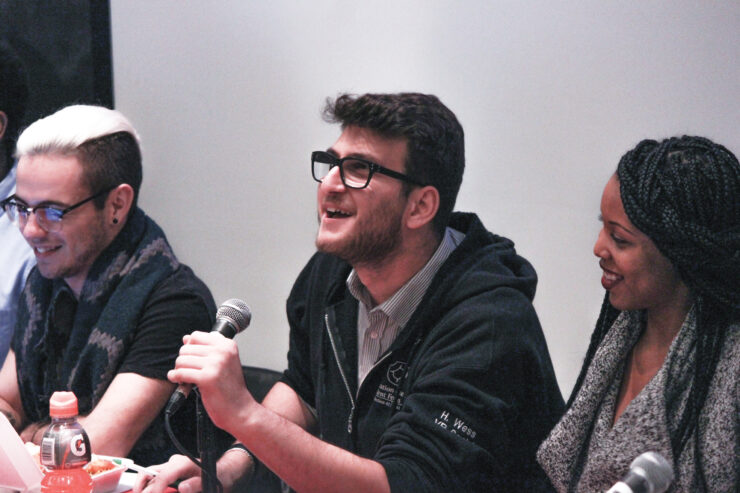
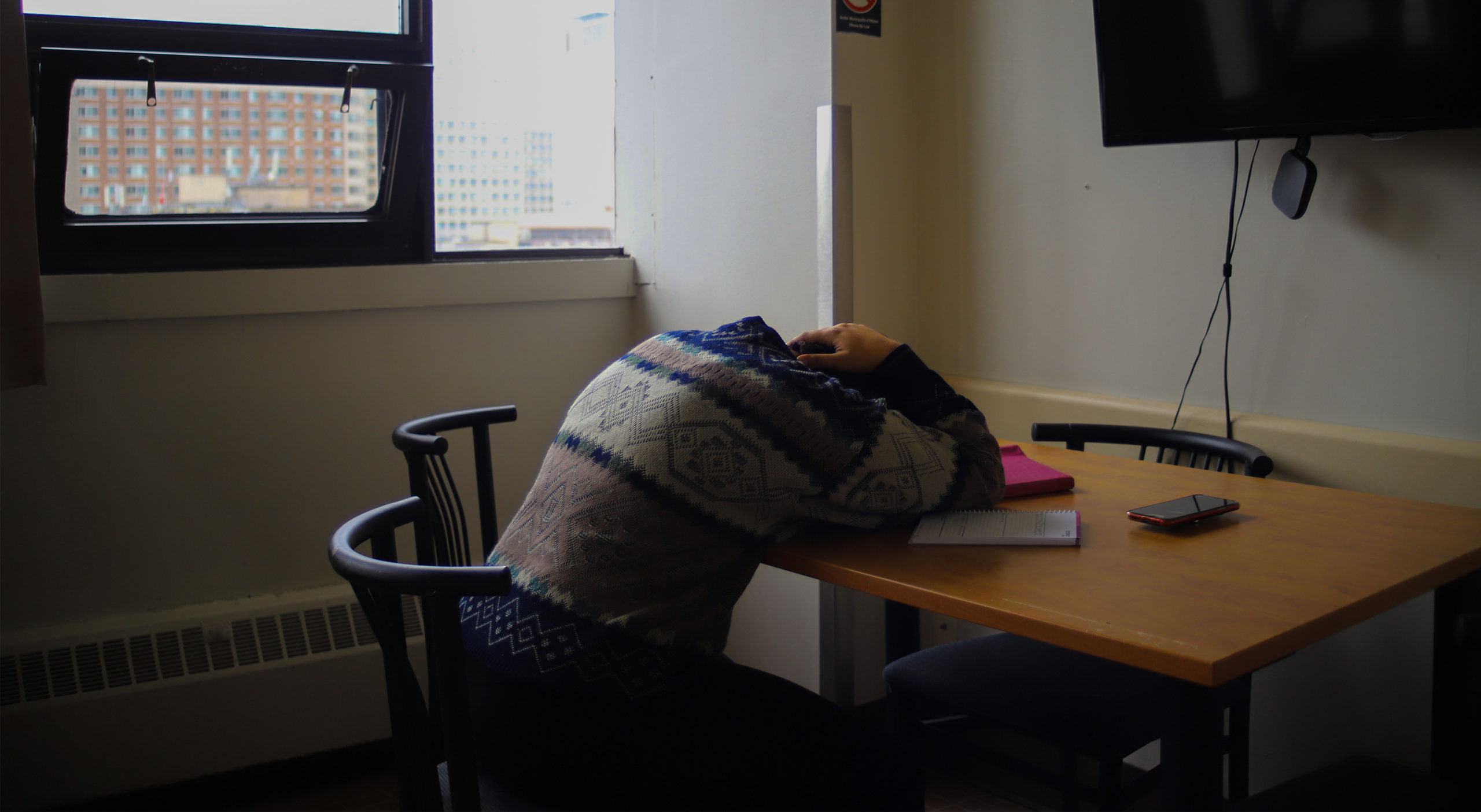
Student leaders discuss their struggles with mental health
Student unions in Canada are a unique tradition — the oldest student union in Canada (Queens AMS) dates back to before Confederation, and is older than any other student union in the anglophone world. The majority of campus foodbanks in Canada are administered by their union, and unions often have budgets in the millions,some in the tens of millions. Responsible for tens of thousands of students, student unions politics can feel existential. Student politics can be exceptionally draining on student leaders’ mental health.
Populating these student unions are ‘student politicians.’ Generally, students (or recent students) who have been elected by students to guide the operation and direction of the student union. It is a role that many find isolating.
“Your friend circle, basically everything just revolves around student politics.” Jawad Chowdhury, a former executive for the Memorial University Student Union told the Fulcrum. Chowdhury spent many years involved with campus politics, and described the experience as one that few people outside of student politics could relate to.
Damian Mikhail, outgoing president of WUSA agreed.
“I find that it’s harder and harder to find the time to do things for yourself. That includes seeing and visiting friends. It can be difficult to find the time. But even when you do find time, there is still that nagging conversation at the back of your head, where it’s like, you’re always thinking about work. Sometimes I’ll find that someone will be talking to me and I’ll be kind of spaced out thinking about WUSA.”
Beyond the isolation, Mikhail and Chowdhury say that their main concern was just how overwhelming the workload was, and the toll it took on them.
“I’ve heard of stories of people losing hair.” Mikhail said. “I’ve seen it. But like for me, I was lucky. Mostly I’m not as excitable; I’m just not as excited as I used to be.”
Chowdhury, for his part, claimed he actually did lose his hair.
Jovan Popovic is the former president of the McMaster Student Union, and the founder of Sleeve Advisory Group, a consulting firm for student unions. Recently at one of their conferences ,Sleeve held two sessions: one on finance and one on mental health management. Nearly everyone attended the mental health session.
“I completely understand why. It’s very common to see people overwhelmed, especially early within their terms.” Popovic said “It’s not an easy job to slide into. You come in, you take on all this responsibility. It’s very, very common for people to feel a sense of imposter syndrome where you’re coming into this role, you think you’re ready, and then all of a sudden you realize there’s this massive, steep learning curve. And it’s a thing of, ‘oh my goodness, how am I going to get through this? I thought I was prepared. Now I know nothing.’”
A survey conducted by the Fulcrum of student union executives and board members across Canada, including The University of Ottawa’s Student’s Union (UOSU), found similar stories.
One respondent claimed they had “never experienced burnout before student government.” While another student claimed that “The most significant impact on my mental health was my exhaustion levels.” They continued “This job takes all of my time, and makes it very difficult to take care of myself, maintain a social life, or entertain my hobbies because all my free time goes towards sleep.”
Chowdhury said the expectations for work were intense. “I remember, December 2022, Boxing Day, which happens to be my birthday, and a student and a professor had reached out to have me mediate a meeting on a case of plagiarism, I think. And I agreed to it. I just couldn’t deny it, right? So on my birthday, right after Christmas, when all my friends are having fun, I was at a support meeting.”
Many of the individuals surveyed reported that beyond exhaustion, their role had caused them immense anxiety, imposter syndrome, and suicidal ideation.
Despite the toll that many acknowledged the role had taken on their mental health, almost everyone the Fulcrum surveyed or spoke to said that the job had its good moments, whether it was the satisfaction of helping a student, or completing a project.
The job, one student wrote, can be “…incredibly contradictory actually. There are moments of pride, joy, and even feelings of being “high” on the movement that give you immense energy, but then there are moments of SEVERE frustration on levels I have never experienced before.”
Mikhail agreed with this assessment: “I’ll say that this job is so intense and …it can be a drain on your mental health, but it is also so fulfilling.”
Moving Forward
For future student leaders, Chowdhury says to find solidarity with other in the same situation across the country.
“I think when student leaders are together there’s also a lot of respect for each other, in terms of the work that they do.” It is easier to relate and build solidarity with people who understand your job, Chowdhury says.
Mikhail thinks that expectations for student leaders have to change.
“The reason why we make these changes and we have these conversations internally on mental health is because this is not how it should be. You shouldn’t have to sacrifice your whole life to make change, right? And so a conversation that I think we have to have, and advice that I always give, is don’t compare yourself to previous student leaders, and especially don’t set a standard that you need to hurt yourself, or your health to be a good leader.”
“That is not how it should work, and it’s not what makes a good student leader.”
With files from Bhoomi Dahiya
Editor’s note: This article was updated at May 13, 8:57 p.m. to redact a paragraph regarding Stephanie Ye-Mowe that was not adequately reflective of the situation leading up to her passing. The Fulcrum apologizes to all individuals personally affected by this oversight.