
BLACK HISTORY MONTH STUDENT ORGANIZERS SAY THE BURDEN OF SUSTAINING BLACK COMMUNITY ON CAMPUS STILL FALLS LARGELY ON STUDENTS
As the University of Ottawa marks Black History Month with panels, workshops and a large end-of-month gala, Black student leaders say the institution’s approach still leaves critical gaps — particularly when it comes to year-round recognition, decision-making power and material support.
While students acknowledge growing enthusiasm around February programming, some argue that Black History Month has become a concentrated moment of visibility rather than part of a sustained institutional commitment to Black students.
“I love the enthusiasm and the effort that is put into Black History Month,” said Marème Diongue, president of the Black Students in Leadership Association (BSLA). “But I also believe that we should be proud and celebrate our heritage and ourselves all throughout the year… why do we kind of forget about all of this the rest of the year, and other months?”
The BSLA has long organized its own Black History Month flagship event, Soulful Expression. However, this year the association made a strategic decision to merge its gala with two others on campus.
“We decided to collaborate not only with the EDI office, BSAC, but also RISE to kind of bring all of these big Black History Month galas that already existed and make one huge celebration,” Diongue said. “They’re all kind of targeting the same audience…why not put all three together and create something bigger and better?”
The joint event, themed Souls of Resistance, is framed by organizers as an attempt to foster community rather than claim comprehensive representation.
“One event cannot represent and reflect the entire community and diaspora that is the Black community,” Diongue said. She further explains, “It’s not one unique experience to be Black. Everyone experiences it in a different way.”
For leaders of other Black student groups, the challenge is less about the existence of programming and more about who shapes it.
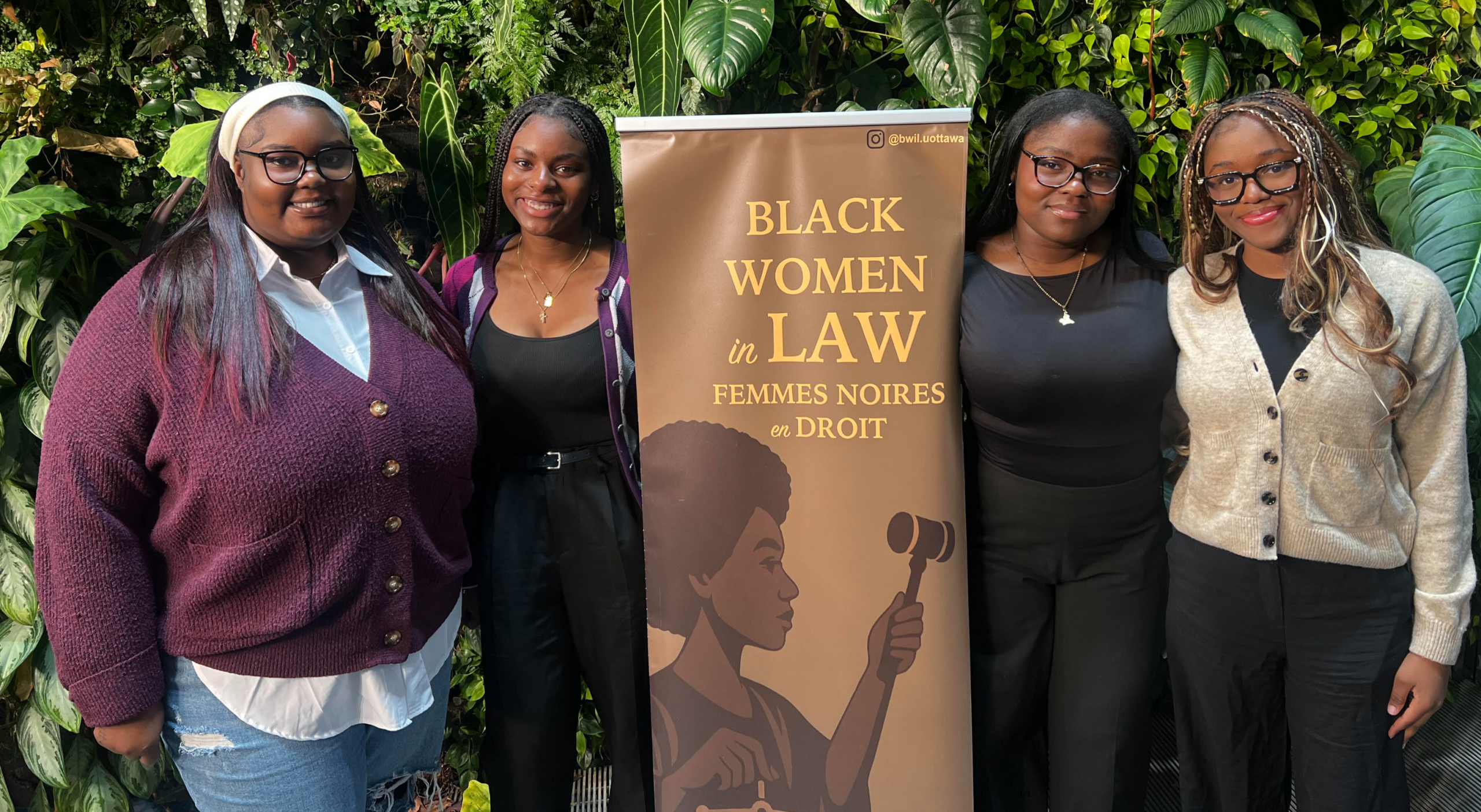
“I think the university, or even the UOSU, could do a better job at interconnecting all the clubs or represent these wide members of Black students,” Orlia Ngomsi, a first-year representative of the club, Black Women in Law (BWiL). “We could get ideas as to what these Black students actually want during the month,” she added.
The director of socials for BWiL, Faith Cisse, added that students often feel disconnected from university-led initiatives.
“I remember last semester, we hosted a fundraiser for breast cancer awareness, and we had issues even getting a table,” Cisse said. “We had to go up to a random classroom and drag a table down to the CRX main floor.”
For BWiL, the lack of logistical support signals a broader problem.
“I think the university definitely has a long way to go,” Cisse said. “We’ve had to take a lot of initiative and do a lot of things by ourselves since September for Black History Month related things.”
Both clubs also pointed to promotion as a missed opportunity.
“I think the university could promote events on their own official social media accounts.” Cisse said. She pointed to a recent ice skating event promoted by Marie-Eve Sylvestre — the president and vice-chancellor of the U of O — and said it would be encouraging to see official university representatives show the same kind of visible support for Black History Month.
Even when large events are organized, accessibility remains a concern.
“Whenever I see a cost on something, especially one that’s more than the $25 range, I kind of shy away from it,” Cisse admitted. “People like things that are accessible,” she added.
Diongue, said the BSLA’s collaboration with the university’s equity office and UOSU’s RISE centre came from mutual outreach, but stressed that meaningful inclusion must go beyond consultation.
“You know that an institution is doing well and is inclusive in its representation at the table and not just in its consulting,” Diongue said. “I would put more emphasis on priority on the Board of Governors being diverse.”
She added, “Are the people who are making the decisions…the people who are at the table… diverse and have different perspectives?”
Material support is another sticking point. Despite representing Black students across campus, the BSLA does not have a dedicated physical space. Neither does BWiL.
“You have a club like us who represents all of the Black people on campus…you would think we’d also have a space, right?” Diongue said.
She contrasted this with other clubs that do have offices, “Not to put any shade onto this group, but the ski and snowboarding club at the U of O, they have an office, right, which is great for them,” Diongue explained. “But just from a third-person perspective, this doesn’t look right… where are our priorities?”
Still, Diongue emphasized that her criticism is not meant to dismiss the university’s efforts.
“Sometimes things can seem to be a bit performative,” She said, acknowledging the attempts the university has made. “I do believe that, especially at the U of O, there is that spirit…to move and strive towards a better and more inclusive community.”
The next step is shifting from symbolic recognition to structural change.
“It should be more scattered throughout the year,” Diongue said. “The focus should be continuously uplifting and celebrating Black voices.”
Until then, Black student leaders say much of the work of sustaining Black community and culture on campus continues to fall on the students themselves — often with limited resources, little space and inconsistent institutional backing.
As Cisse put it, “We’ve had to take a lot of initiative… kind of by ourselves.”
For many, that reality undercuts the celebratory tone of February and raises a harder question: if Black history and Black students’ matter, why does meaningful support still feel seasonal?