
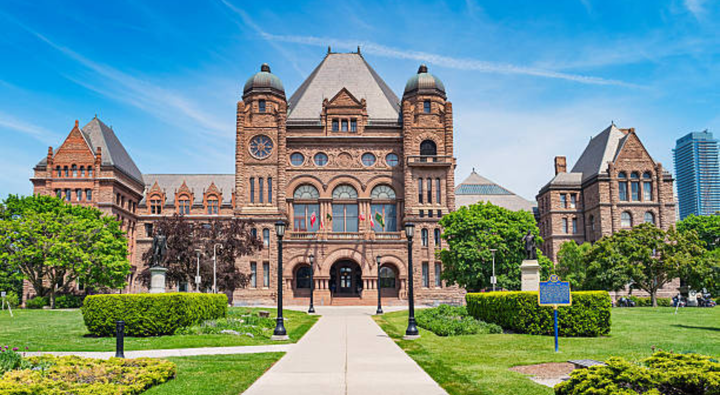
NEW GOVERNMENT LEGISLATION WILL RELLOCATE DECISION-MAKING POWER FROM ON-CAMPUS GROUPS TO THE PROVINCIAL LEVEL
Ontario has passed Bill-33, giving the provincial government stronger power over the regulation of student fees across publicly funded universities, such as the U of O. The provincial government now has the ability to determine acceptable student fees and their costs, as well as the ability to introduce broad opt-out mechanisms. Multiple campuses are expecting harsh cuts.
The decline in ancillary fees, commonly known as student fees, could jeopardize the U of O food bank, funding to 101-week, the U-Pass program, and other services offered by the University of Ottawa’s Student Union (UOSU).
UOSU president, Jack Coen, commented to the Fulcrum that student fees which support these programs “are not ‘extra,’ they are actively subsidizing provincial and municipal costs to maintain necessary support networks that students need.”
Prior to the legislation being passed, University of Ottawa students would vote through UOSU’s general assemblies and faculty referendums on the adoption of student fees and levies, their costs, and specific programs they will be allocated towards.
The University of Ottawa did not answer in time to comment on how campus-life will be directly impacted, however a a press release for the Council of Ontario Universities, raised “serious concerns for the postsecondary sector as [Bill-33] conflicts with governing legislation, increases administrative burdens, and fails to address the root causes of student access challenges.”
Despite calls from student groups and universities, the motion was passed earlier today in a vote of 74 in favour to 40 against.