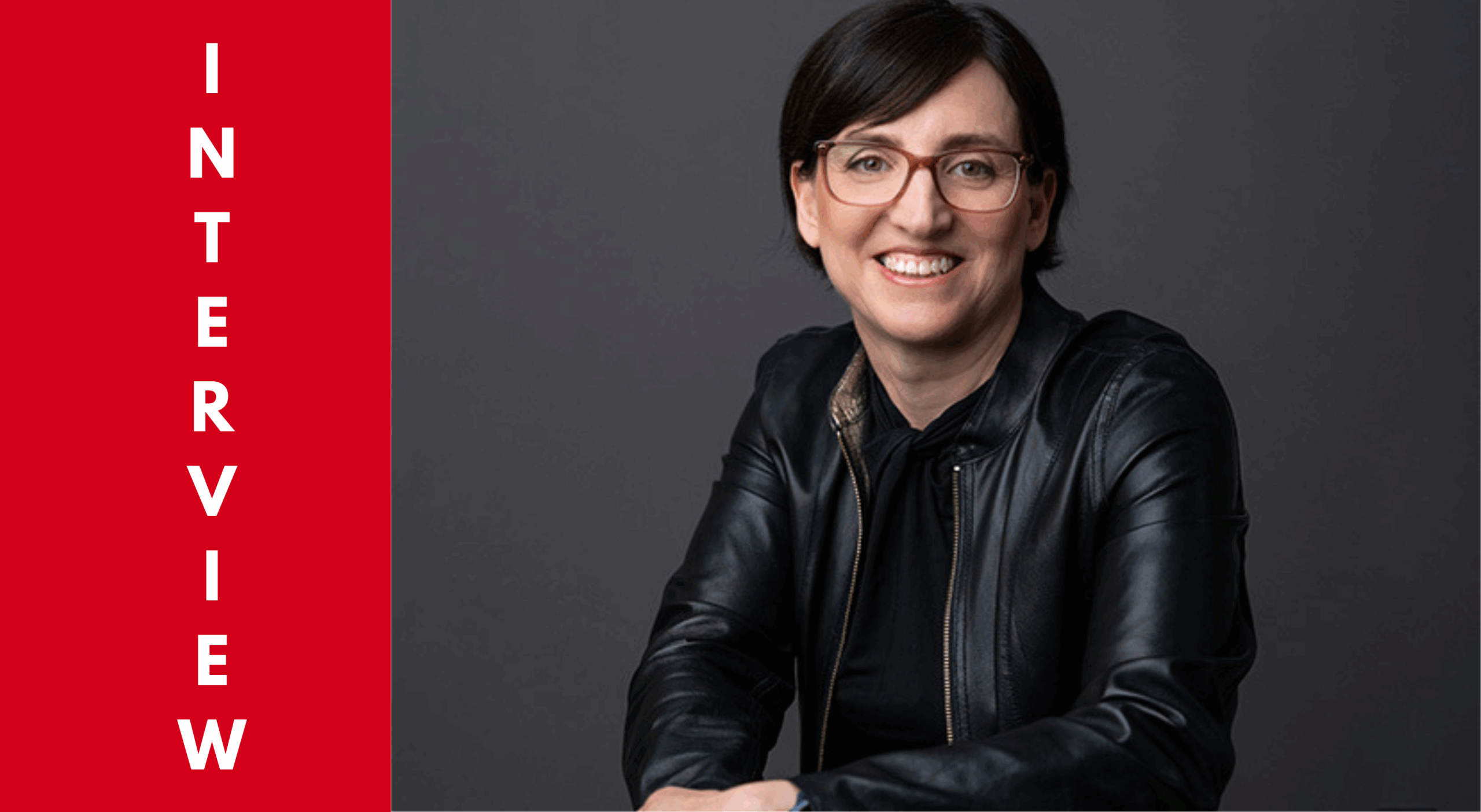
Marie-Eve Sylvestre, the president and vice-chancellor of the University of Ottawa sits down with the Fulcrum to discuss her vision in leading the university.
Jesse Robichaud, the university’s spokesperson, met me in the Tabaret Hall’s Rotunda on a warm September morning. We climbed the stone staircase together, and at the top floor, he swiped a key card to open a glass door. Behind it was a cluster of cubicles and closed offices, the kind of bureaucratic complex that felt more like a press secretary’s bullpen than a campus. At the left end, another door opened into the president’s office.
This was the first time since 2019 that a sitting president had granted the Fulcrum an interview. Marie-Eve Sylvestre’s predecessor, Jacques Frémont, had declined every subsequent request. So the Fulcrum news team drafted questions together, focusing on the biggest issues students are talking about: tuition, housing, protests, and divestment. I went in cautiously, unsure if Sylvestre’s “accessibility” would amount to anything more than a performance.
Her office was strikingly white: white couches, white walls, and without a stray paper in sight. On the coffee table, a small bowl of candy looked like the only decor in the room. Sylvestre herself seemed upbeat that morning and ushered both Robichaud and I to sit at the large oval table that, despite its size, couldn’t have taken up more than a fourth of the office.
With an exchange of pleasantries and Robichaud pulling out a notepad, pen, and his phone to audio-record, we began.
USE OF AI:
Kavi: “For the past two years, at least in my experience, each course and each professor has had their own AI policy. Do you think that we’ll see a centralized AI policy from the university [administration]?”
Sylvestre: “There’s a lot of changes and innovation in that area…There’s no denying that AI has transformed the way we teach. And so yeah, guidelines. But [at] the end of the day of course, faculty members are… remaining the masters of their courses.”
Kavi: “Some students who don’t use AI say that grading feels a bit unfair because students who do use AI are graded the same way as students who don’t…What would you say to students who feel pressured to use AI to keep up with their peers?”
Sylvestre: “It’s interesting, because in many ways, AI provides more accessibility, right? If you think about students for whom English or French is the second language. There are all sorts of support that comes with AI… So I think it’s fast evolving, but providing a lot of good tools for our students. And in many ways, I think professors will have to acknowledge that it’s there to stay, and organize their assessments and their courses around that.”
Takeaway: Sylvestre acknowledges the presence of AI in classes and how its role is evolving — for better and for worse — but avoided committing to a standardized policy. At the University of Ottawa, every professor will continue setting their own rules, with no regulation on the issue of fairness in grading.
TUITION:
Kavi: “The U of O’s fact books show that for the first time since 2015, enrolment of international students has decreased by around 1500 students. But now the federal government has capped permits. So how is the university planning to account for the decrease in tuition revenue from international students?”
Sylvestre: “First of all, I should emphasize how proud we are of our international community and how important it is to what uOttawa is, and that’s something that we need to continue advocating on the federal and provincial stage as well.
“Second thing I’ll say is it’s not only that there are caps, it’s [also] the messages that have been sent by our governments that are basically saying that international students are not that welcome anymore. And that message has gone a long way, and universities are just not getting the applications anymore, right? Canada’s moved from the first position to fourth in terms of attractivity worldwide for international students in like, a few months.
“But in terms of addressing [the decrease], we’ve seen an increase in domestic enrollment. So domestic students do not pay the same tuition fees as international students. But that’s also good news, you know? We have more domestic students, especially in STEM and Health Sciences. Education has also seen an increase in offers to domestic students.
“But yeah, I mean, we’ve been in this for at least four years trying to cope with the changes in the model. We’ve had a strict control over expenses. There was a temporary hiring freeze for faculty members. We’re also creating more revenue generating programs that are not only just to increase our revenues, but also to respond to needs, thinking about education as a lifelong cycle. And so the Professional Development Institute has put forward a lot of propositions. So that’s also a way to compensate.
But you know, in terms of infrastructure and buildings that we are creating, including student residences that are coming on campus, we have had to use different models because we just don’t have the funding. So in the past, we would fund it all. Now we have to partner with the private sector and, you know, find other arrangements for us to make it work.
“We have to be more creative, definitely, and maybe that’s coming in your questions. But you know, in terms of infrastructure and buildings that we are creating, including student residences that are coming on campus, we have had to use different models because we just don’t have the funding. So in the past, we would fund it all. Now we have to partner with the private sector and, you know, find other arrangements for us to make it work. So yeah, it forces us to be more creative, but it’s important that we continue advocating, not only for international students, not only for revenues, but for the, you know, the everything that they bring to this university in terms of research and education and diversity.”
Takeaway: Sylvestre was candid about Canada’s growing hostility towards international students, and emphasized the continual need in advocating against the policies put in place by Immigration, Refugees, and Citizenship Canada in 2024. Despite this, Sylvestre’s solutions of “creative revenue generation” and engaging in private partnerships signal that the financial burden will fall to students once again.
Kavi: “We’ve heard of the recent tuition hikes for Ontario residents and out-of-province students. What would you say to students who are concerned about the cost of living rising and at the same time the cost of tuition rising?”
Sylvestre: “So for domestic students, tuitions have not risen in six years. And I mean, of course, that’s a big issue for us, because everything has risen but tuition, and it’s just not even caught up to inflation.
“But housing is a big concern of ours, and that’s also why we decided to create this project to build 2500 new beds in the next four years. We’ve selected [a builder], and now we’re in the phase of negotiating with them… part of the negotiation will focus on affordable housing and making sure that we have quality housing, but also that it’s an affordable price for our students.
“Trying to raise fundraising to get more scholarships to students is also a way to alleviate that [financial burden].”
Kavi: “Would you say that the recent hikes are a response to decreasing revenue, or is it something that we’re going to see happen every year?”
Sylvestre: “Yeah, for certain programs. But just to be clear, what has happened is a catching up. So when tuition fees were frozen, the University of Ottawa was much lower than any other Ontario universities. So this is really the government allowing universities to catch up to the average of Ontario universities which we’re still, in some cases, like Telfer’s case, for example, we’re much lower. So really for us, we’re just not paying the cost of these programs. And it’s an issue if we can’t afford to provide those programs anymore.”
Kavi: “So as it is, with the current tuition for those specific programs, you couldn’t keep those programs running without raising the tuition costs?”
So, yes, the costs have been rising, salaries have been rising, but revenues have not.
Sylvestre: “Well, we have to make other decisions to compensate, but yes, in some cases it’s hard to make end[s] meets, because the salaries have increased quite significantly, especially after… the fact that Bill 124 was declared unconstitutional, and there was a raise in salaries and backup pay for many of the groups. So, yes, the costs have been rising, salaries have been rising, but revenues have not. And the government grant that we get has not risen in like 20 years. It’s remained the same, basically, which means it decreased. About 24 per cent of our revenue comes from the government at the moment; that’s the lowest it’s been in decades.”
Takeaway: Sylvestre pivoted quickly from the University’s commitment in building more beds to casting the U of O’s current tuition hikes as just “catching up” to the Ontario average. Additionally, she dodged the issue of if any of the affected programs are losing money. Despite these claims, the Fulcrum was not able to find evidence supporting her claim that when tuition fees were frozen, student fees are lower in costs in comparison to other universities.
RESIDENCES:
Kavi: “I heard that the university might be shutting down Friel and Rideau, while trying to rebuild the Brooks residence. Do you have any more information about what the university is planning to do to address the residence situation?”
Sylvestre: “For Friel and Rideau, I think we have some contracts with the residences here on Laurier and the idea would be to make sure that we have new residences built before [Friel and Rideau] are phased out. But those beds will still remain on the market. They’re not going to be perhaps at the same rate, or they’re not going to be student housing, per se, but they’re still going to be there for the community. So I think that’s going to also alleviate some of the pressure.”
Kavi: “Is it confirmed that we’re trying to rebuild Brooks?”
Sylvestre: “Yes, it’s going to be [ready to rebuild] in May or June, depending on how fast we can negotiate with the proponent, but we’re going to the Board of Governors for approval for that proponent, and then we’re starting our negotiation. And this is going to start in the spring.”
Kavi: “With the new residences being built, will the prices of those residences go up?”
So you know, there are going to be some compromises, and we’re not sure where we’re going to land, but that’s part of the values that we’re putting forward, that they remain affordable.”
Sylvestre: “Well, we’re definitely hoping, and again, this is going to be part of the negotiation, that we can keep the cost as low as possible. So you know, there are going to be some compromises, and we’re not sure where we’re going to land, but that’s part of the values that we’re putting forward, that they remain affordable.”
Takeaway: Housing that fits student needs — affordability, proximity to campus, and amenities offered — is consistently relevant for students. At the U of O, students have seen a long argued battle over subpar living conditions offered on campus, following discoveries of mould, pests, and broken appliances. Student discontent led to the closure of the Brooks and notable work being put into the LeBlanc residence. Sylvestre’s time commitment of spring 2026,is the most recent and precise update following the beginning of the Brooks saga’s in 2021.
WORKING WITH STUDENTS:
Kavi: “The role of President obviously includes collaborating with the Student Union. How do you plan to include student voices this year?”
Sylvestre: “’I’ve met with the UOSU president, and I’m meeting with the GSAED president, and they’re also coming to our executive committee a couple of times a year to, you know, just provide some input, give us some information and make some requests. I also intend to be very present. I’ve been since the start of the year, going to students club, meeting with students. I think, of course, students associations are key, and I’m a former member of student’s association when I was doing my studies, but it’s also important that we include all of the voices through student clubs.
“My vision is really of a university that is grounded in its ecosystem and its community, and students are, you know, at the heart of this community, and I’m hoping to launch a few projects that will build on student consultations.”
Kavi: “In the past, UOSU has felt sidelined in discussions regarding tuition. More specifically, they’ve thrown their support behind the RBC off campus movement and have publicly pushed back against the $60 deferral fee for students. How do you plan to go about compromising with the Student Union, and what will be your approach to actually listening to what students want?”
Sylvestre: “First of all, meet and listen. I think the dialog and the channels of communication always have to be open. Also, we have student representatives: students on the Senate, and wee have students on our board of governors. [Student presence is also at] the faculty level. There are students everywhere, as they should [be], I think, and so, and the deans will bring those voices back, as well [as] professors in some cases. There are many ways, I think, for those messages to come across, but definitely trying to have the channels of communication open.”
Kavi: “How do you feel about those two specific issues: the RBC off campus that students have been pushing for for a couple years now, and the $60 exam deferral fee?”
I’m also trying to see what are the obligations that the university has, and yes, we’ll see how that goes, but I’m certainly listening and understanding that there are some issues.
Sylvestre: “So on RBC, I’m only starting to understand the whole picture here. I’ve actually met, not only with Jack Cohen, but I’ve also, during the students fair, met with the club who’s been advocating. So I’m trying to understand the whole picture. I’m also trying to see what are the obligations that the university has, and yes, we’ll see how that goes, but I’m certainly listening and understanding that there are some issues.”
Takeaway: Sylvestre did not provide any specificity in her answers. I can tell that part of her response was strategic, as she used the phrase “university that is grounded in its ecosystem and its community” in a La Rotonde interview earlier this summer.
PALESTINE:
Kavi: “It’s been two months since your interview with La Rotonde, where you told them that you would familiarize yourself with the university’s investments and come up with your own stance on how to proceed with demands for divestment. So have you come up with a stance of your own yet? And when can students expect to hear decisions from the university regarding [divestment]?”
[I]t sure sounds like it’s a very complicated landscape in terms of investment, and it’s hard to always follow the money, because it’s always, you know, coming from one place to the other. So I think that all of that need[s] to be taken into consideration too when we are making our decisions.
Sylvestre: “Well, no, first of all, I have not done all of the work that I that I need to do in terms of understanding all the investments, but what I can say is, I understand the need for transparency, and I think some transparency has been provided in response to some of the concerns.”
“I also can tell you that we’re signatory to the UN Declaration on responsible investment, so that’s a big part of our commitment as well. But I guess the other piece that I will say, and you know, I’m not an expert. I’m from a legal background, but it sure sounds like it’s a very complicated landscape in terms of investment, and it’s hard to always follow the money, because it’s always, you know, coming from one place to the other. So I think that all of that need[s] to be taken into consideration too when we are making our decisions.”
Kavi: “Of course, the university’s complicity with the genocide in Palestine is at the top of mind for many students. Last year, Jacques Fremont refused to acknowledge the ongoing genocide, while at the same time hiring two Special Advisors on Anti-Semitism that identify as Zionists. It seems to a lot of students that the university has taken a side, especially in continuing partnerships with universities in Israel and investing in companies complicit in the genocide like Cisco.
“Investments aside, do you plan on changing the way the University has chosen to label the genocide? Will official communications call this a genocide instead of just a “situation in the Middle East”?”
So I’m not going to move into making a statement on any of those things that you’re referring to, and others as well.
Sylvestre: “So I think it’s important [that] universities are places of debate, of criticism and of citizenship, and I think they have to remain like that. And for me, as a President and for us as an administration, to take a position on any of those issues is actually preventing, I think, a free and open debate on campus. I think it’s my responsibility to put the conditions in place so those conversations are taking place, but it’s not for the university or administration to take an official position on any of those issues.
“So I’m not going to move into making a statement on any of those things that you’re referring to, and others as well. I think it’s a—I won’t say that it’s important that the institution remains neutral, because I don’t think universities are ever neutral—but it’s important that we provide the space so that every voice can be heard and feel free to express whatever they think about an issue.”
Robichaud jumped in to add, “In terms of Mr. Fremont, he was really focus[ed] on providing support to the students and ensuring there’s a respectful and empathetic atmosphere on campus, and ensuring that people feel that supports are there. So in terms of where the focus has been, it’s important to acknowledge that as well, in terms of serving the community here and in the statements that Mr. Fremont made, that was always very clear in those statements.”
Kavi: “A lot of students have not felt supported, especially as their families actively die in a genocide. I think certain things like our $60 exam deferral fee and all those [policies] compound for students who are facing crises back home with their families. There are professors and students who have talked to us about not feeling like there was academic freedom to take a stance on Palestine or call it a genocide. So how will you be actively promoting academic freedom and making sure that people can express their views in the classroom and outside the classroom?”
I think it’s important again, and that’s the very reason why I don’t think the university should be taking an official position on many of the debates that are going on in the world, so that we leave space for this conversation to be held.
Sylvestre: “I’m the former co-chair of the academic freedom committee, and we’ve done a lot of consultations and a lot of reports on that, and spoke to a lot of people on campus. And I think it’s always a question of place and time, and so, you know, of course, it’s not the same when there’s a classroom and the professor is in a position of authority towards their students, or whether it’s an examination, or it’s a conference, an academic conference, or just an event that happens here on public spaces. So I think we have to take into consideration the context, but within that framework, I think I’m actively going to promote and support academic freedom on this campus. I think it’s important again, and that’s the very reason why I don’t think the university should be taking an official position on many of the debates that are going on in the world, so that we leave space for this conversation to be held.”
Takeaway: Nearly two months after Sylvestre’s recognition of needing to learn the investments of the University, the task is still unaccomplished. She states that a portion of transparency has been granted, but the university’s rethoric and stance on the genocide in Palestine has remained unchanged.
PROTESTS:
Kavi: “Students will continue to voice their concerns on campus, and when they do protest about issues like RBC off campus, climate change, racism, Palestine, will they have your support when they do protest on campus?”
Sylvestre: “Freedom of association and freedom of speech are constitutional rights, and as long as you know those are done peacefully, with no violence, and that are respectful of you know the operations of the university and our mission, you know their students are free to to express their views. And I, actually, I think this is a place where students should learn to debate, express their views to you know, become citizens. And no, so absolutely, I encourage you know, respectful debate and peaceful protest.”
Kavi: “So if something like the [2024] encampment were to happen again, would we see a police presence?”
Is there a space for an encampment and people sitting in or occupying the space to the detriment of others? Probably not.
Sylvestre: “I think encampment is a bit different than protest. So what you were asking about was more, is there a space for protest and criticism and expression and freedom of association? Definitely. Is there a space for an encampment and people sitting in or occupying the space to the detriment of others? Probably not.”
Kavi: “So would you call the police?”
Sylvestre: “Well, we haven’t in the past. I think it’s a question of you know, having this dialogue, and I don’t think we should get to that point.”
Robichaud: “Police is responsible just for public safety in the city. So if you saw their presence during the encampment, these are public spaces, even though they’re private university territory.”
Sylvestre: “If there were any criminal acts or if there were any complaints from the public, then the police would be justified to come in anyway. I mean, they have jurisdiction over that.”
Takeaway: The 2024 encampment had brought significant attention to the University of Ottawa: for 71 days students protested on Tabaret Lawn, demanding the university to reform their social and economic involvement in the Palestinian genocide. Sylvester’s predecessor Jacques Fremont had condemned the encampment, calling it “an illegal occupation of spaces”, a stance reiterated by Sylvestre.
When the interview ended, Robichaud closed his notepad and escorted me out: through the cubicles, past another door, down the stairs, and out of Tabaret Hall. The entire exchange — from the exact 25 minutes I was given, to the carefully guided exit — felt as precise and managed as the answers I’d just heard.
On policy, Sylvestre was much the same as Jacques Frémont: tuition hikes framed as “catching up,” housing crisis responsibility shifted to private partners, divestment deferred, the word “Palestine” unsaid, and encampments unwelcome. What’s different is her willingness to be seen on campus, attending fairs, meeting student groups, and granting interviews. Whether that performance of accessibility turns into genuine listening is what remains to be seen.
With files from Isabelle Leahey Jay, Kyla Perry, and Azeeza Kagzi.