From a class project to a campus resource, the handbook now aims to centralize essential information for students across campus.
From navigating academic experiences to student life, the transition to university life can be overwhelming — especially for international students. The average international student experience involves attempting to understand unfamiliar academic systems, financial processes, and new lifestyles. While there are many available resources for international students, finding and keeping up with the right ones can be difficult. This is a problem that the International Student Handbook co-authors Oghenefejiro Mejire and Leen Demyati are all too familiar with.
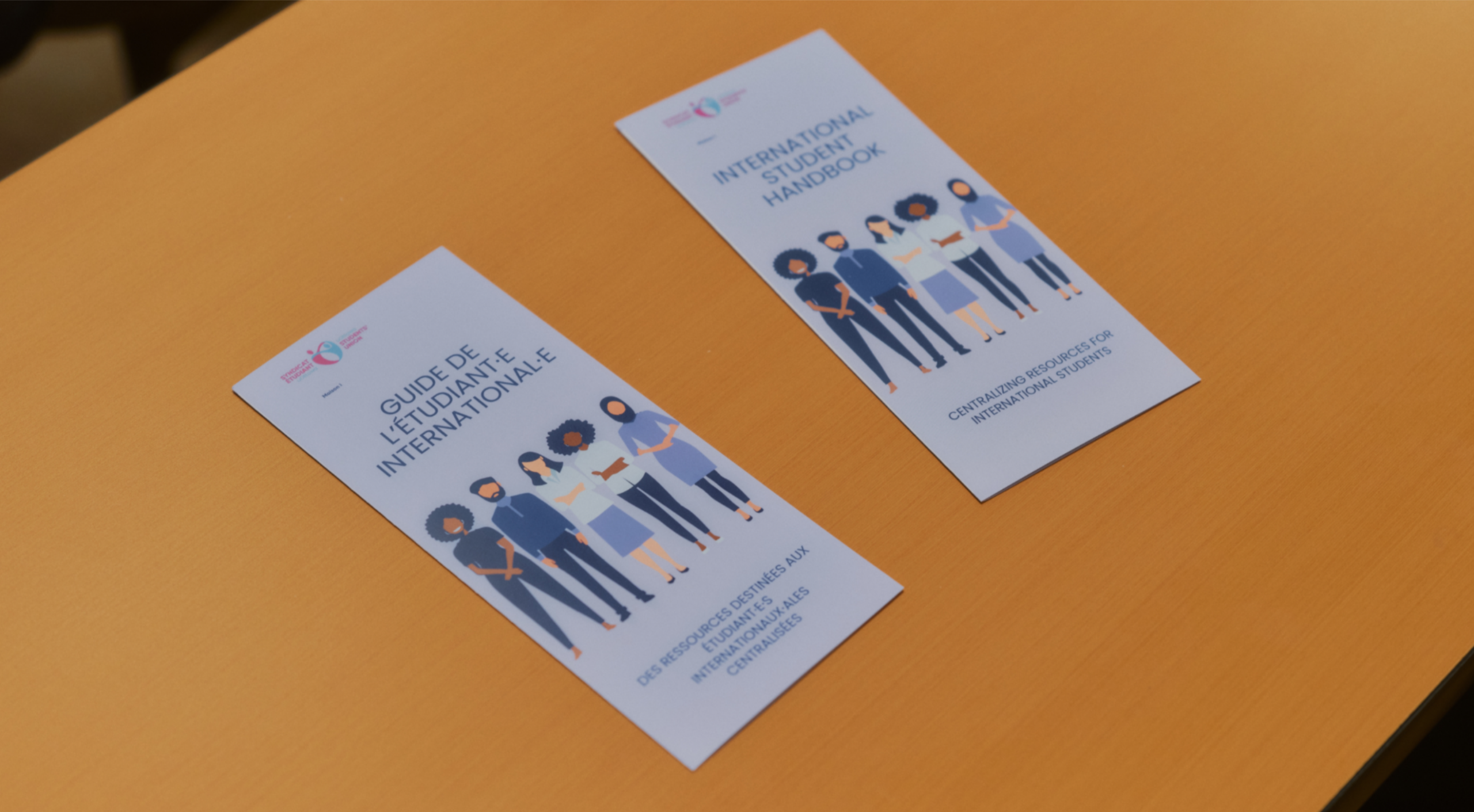
Mejire recognizes that the international student struggle isn’t due to a lack of resources, but a lack of an accessible, centralized source. The new International Student Handbook is a collaboration between the International House, the U of O International Students Association and UOSU that aims to make the transition to university life more accessible for students arriving from abroad.
Mejire and Demyati consulted a range of students and associations to create the digital resource and ensure its relevance for all students.
The handbook is currently available online through UOSU’s International House page on their website in both English and French. The co-authors plan to make it directly accessible to international students through emails and promotions from student groups.
The handbook covers topics ranging from arrival in Canada and housing to academics, employment, and health and wellness, while also offering practical advice on things like insurance, food access, and day-to-day living in a new cultural atmosphere. It will be updated and circulated annually so that students always have the most up-to-date information and support they need during their studies.
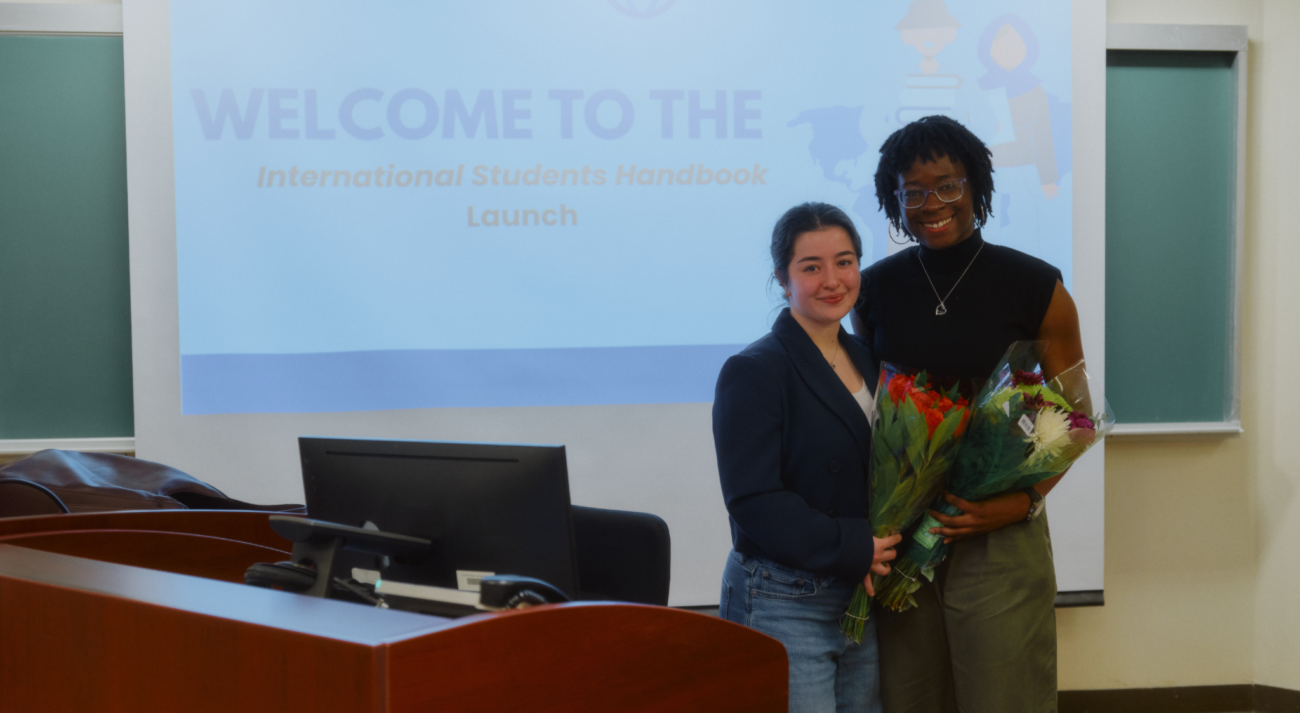
Oghenefejiro Mejire and Leen Demyati at the International Student Handbook launch on March 24th. Photo: Pavel Nangfack/Fulcrum.
When asked about how they came up with the idea for the project, the authors pointed back to a course they took prior — DVM 4330 with professor Nadia Abu-Zahra, a research project based course in international development and globalization. Their group of seven first approached the idea as a website that could regularly be updated to inform international students of available resources.
However, as the course came to an end, so did the international student handbook as a class project. With some students graduating and others losing interest in the project, the idea wasn’t picked up again until both Leen and Oghenefejiro connected with iHouse through another member of their class. Through their connection with Anaïs Rezaique, the iHouse coordinator at the time, the two were able to continue their project with added resources and began working at iHouse as well.
While Oghenefejiro and Leen researched and wrote the handbook, they received support conceptualizing and distributing the handbook. Collaborators included but weren’t limited to the UOSU communications team which aided with translation and design.
As a team they consulted international students in two focus groups and also distributed a feedback survey to incorporate advice from different student groups, including OPIRG, the Indigenous Student Association, RISE, and a range of mentoring centres. They wanted it to be a well-informed resource that would continue to be relevant for students, and have included a feedback survey at the end of their handbook for continual input.
As the authors strive to make the handbook a dynamic and community-driven resource, they have put an emphasis on their goal to collaborate with other groups to contribute additional information and promote the handbook. They are already in communication with U of O clubs and RSGs and are also open to collaborating with external organisations.
When The Fulcrum asked Mejire about the ultimate goal of the project, she stated that “it’s not about making you graduate at the top of your class, but making sure that if you don’t, it’s not because you didn’t know.” Their long-term goal is to have the handbook distributed to students upon admission. While gaps in services like childcare and healthcare persist, the handbook represents an effort to make the existing resources more readily available to students who need them most.