
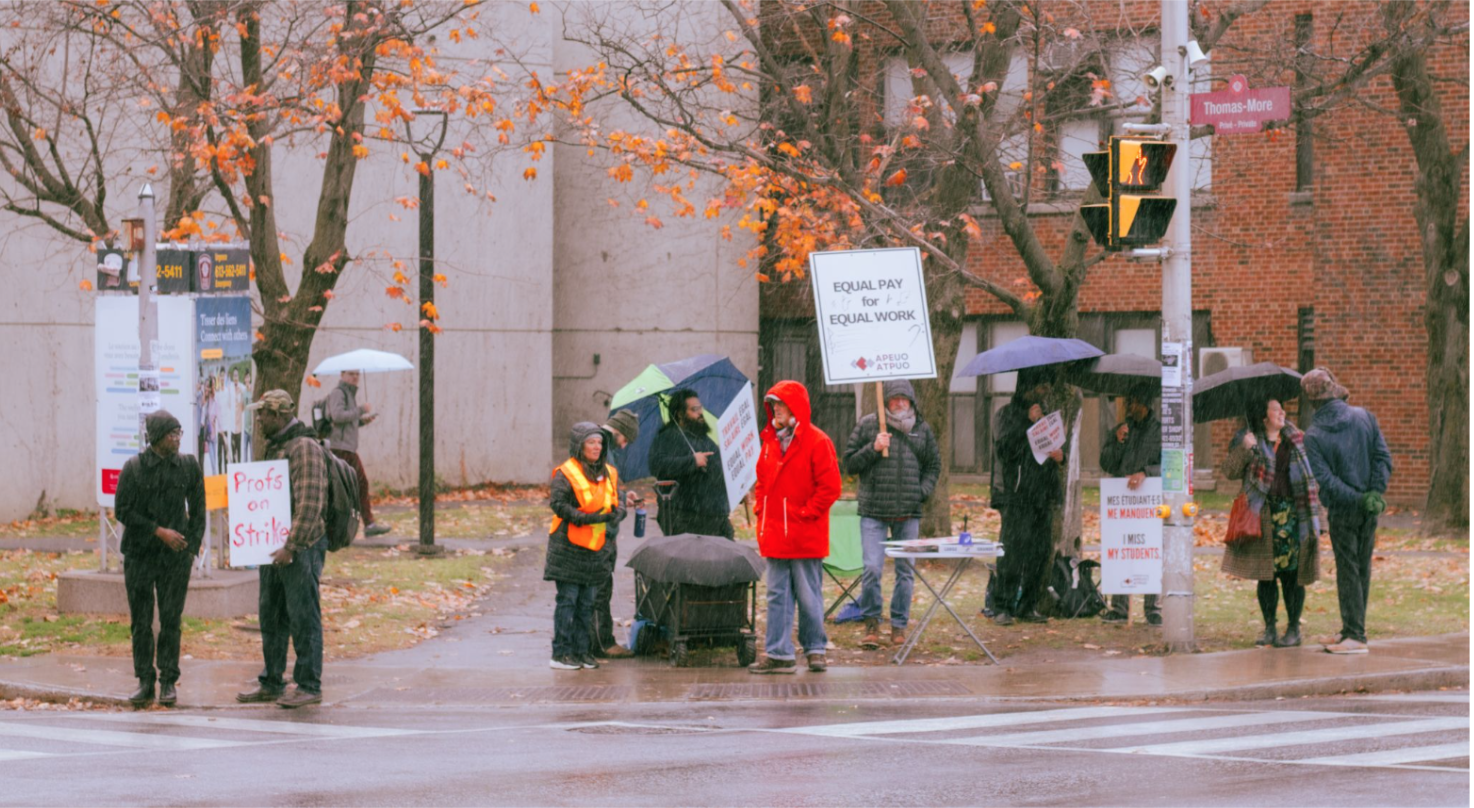
Teaching professor Boogaart has taught for 23 years in the Department of History at the University of Ottawa, including being appointed its first LTA. He is currently on strike.
For the first time in the University of Ottawa’s history, faculty are standing at picket lines instead of at the lectern. It’s more like a lockout, because when you’ve been working without a contract for over a year, and the administration refuses to offer any proposal until the strike deadline, and then insists on major concessions, your hand is being forced.
Teaching professors would prefer being with their students in the classroom. We didn’t want to interrupt your learning.
Like most teaching professors, this is not just my profession, it’s my passion. Touching young minds and watching you reach your full potential — it’s hard to beat, despite the long working hours.
On the picket line yesterday, many students expressed anger at the university administration for calling the ATPUO (Association of Teaching Professors at the University of Ottawa) “part-time professors.” I told them to ignore the contempt and deconstruct the lie.
Why would the administration refuse to refer to us by our proper name? I have taught six courses a year for over 15 years. Many teach less, some more, but the standard load for a tenured professor is four courses.
When you pull at the thread of the administration’s “part-time” lie, you start to unravel the darker truth upon which many Canadian universities are being reconstructed.
Channeling Tolstoy, we can say that every unhappy university is exactly alike in that its leaders sing from the hymnal of neoliberalism.
Indeed, if there is one positive outcome of this strike, it is that many students are discovering that there are two classes of professors on campus. Both have PhDs from top universities, but one group has tenure and is paid for their research. The other group teaches the unloved and large enrollment classes, has little job security, no vision care, subsidizes their own research, has no sabbaticals or opportunities for promotion, and might be paid less than half for teaching the very same course.
Most students are shocked to discover that so many of their professors are precariously employed and struggle to get by. Our average wage is less than what most students would accept for an entry-level job.
How can this be given that students pay a lot for their education?
If teaching professors who teach nearly half the students on campus only take up less than 5 per cent of the university’s operating budget, where do a student’s tuition dollars go?
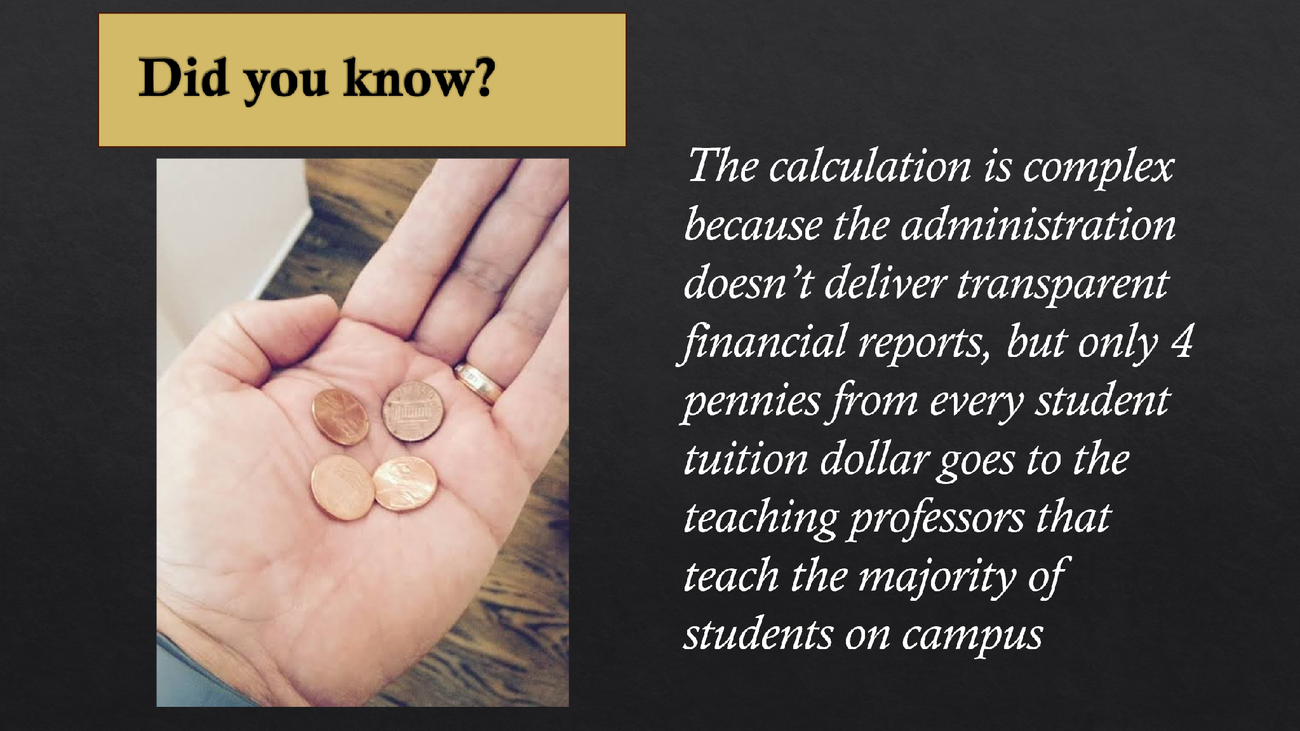
Findings from a fiscal analysis conducted by Matthew Kurtz. Image: Thomas Boogaart/ Provided.
Over the last three decades, there has been one area of the university budget that keeps expanding exponentially — the upper ranks of the administration. The University of Ottawa excels there, but it’s a shame that despite their hefty pay and platinum benefits package, they have failed to raise money like peer institutions.
Even smaller institutions like Mt. Allison have much larger endowments per student population. Additionally, given this massive investment in administration, why would the University of Ottawa keep hiring private consultants to streamline their business — isn’t that what they are being paid for?
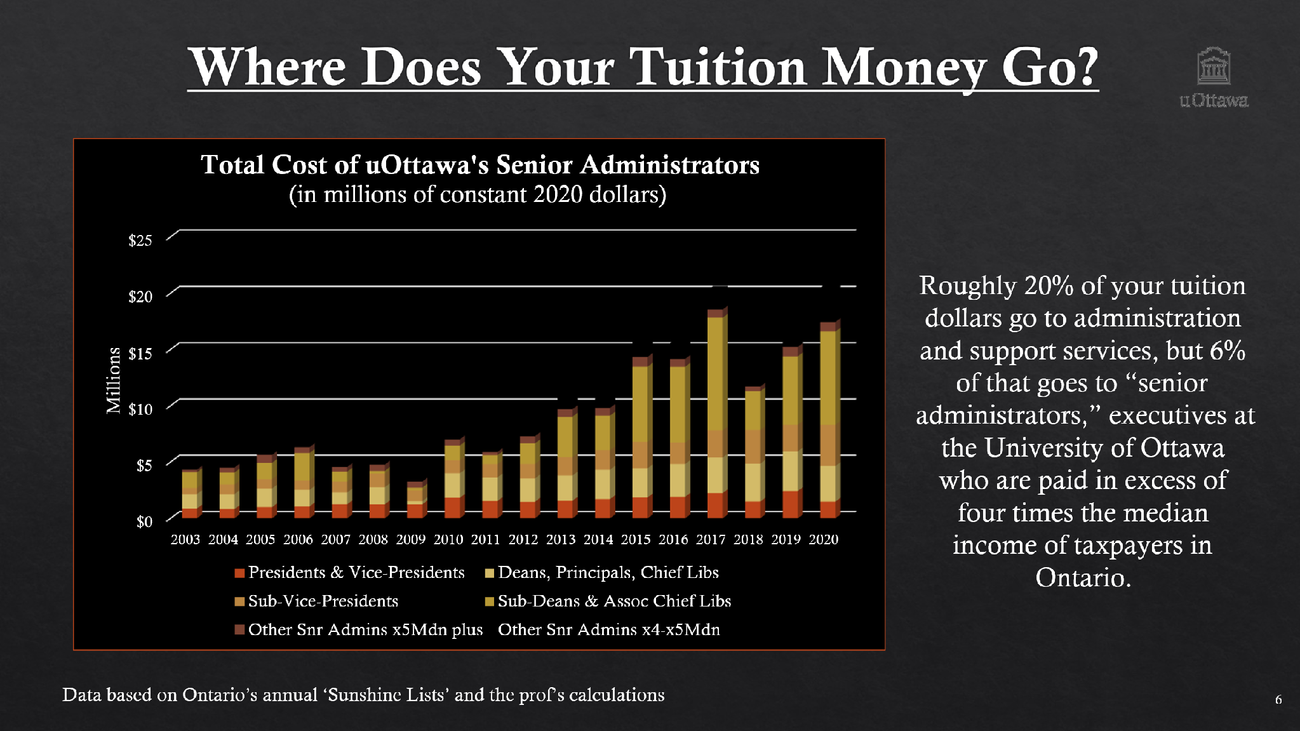
Findings from a fiscal analysis conducted by Matthew Kurtz. Image: Matthew Kurtz/ Provided.
Academic capitalism pays lip service to the idea of “higher education” as a marketing ploy. All while diverting tuition money and provincial grants slated for students from classrooms to real estate investments like the Brooks residence, American digital giants like Microsoft and Workday, and miscellaneous vanity projects that facilitate the promotion of its managerial elite.
In twenty years, I have seen the teaching assistants’ hours for a fully enrolled first-year survey course be cut in half. Is it any wonder that you receive less tangible feedback than preceding generations?
Last April’s “optimization” in the Department of History involved cutting 16 courses taught by teaching professors.
This reduced student course selection, increased class sizes, and pushed many experienced professors out onto the street.
Now the administration is encouraging tenured faculty and teaching assistants to scab.
The administration miscalculated in counting on its students to remain ignorant, silent, and passive. It’s heartening to see how, around the world, young people are waking up and making their voices heard by pushing back against a broken system that continually stacks the deck against them.
We can do better. We must do better.
Ending this strike can only be the first act in transitioning the University of Ottawa back into a public institution for higher learning.
Universitas comes from Latin and invokes the memory of the University of Paris. In 1229, students walked out and took an oath that they would not return until the institution put their education first. To ensure that, they appointed a “Rector,” not as a shill for neoliberalism, but to stand as their defender for an authentic education.
Over fifty years ago, in 1971, your forebears showed the administration who was boss, changed the curriculum forever, and forced their way onto the Board of Governors. I think this is one of these historic moments.
Students are realizing their agency, but it’s not enough to just tell the administration how you feel. Seize your agency. Join our strike and force the administration to formulate a real proposal. We can be back in the classroom by Friday.