
IBU begins first Ottawa cohort with two Master’s programs in Business Administration offered for half of U of O’s cost.
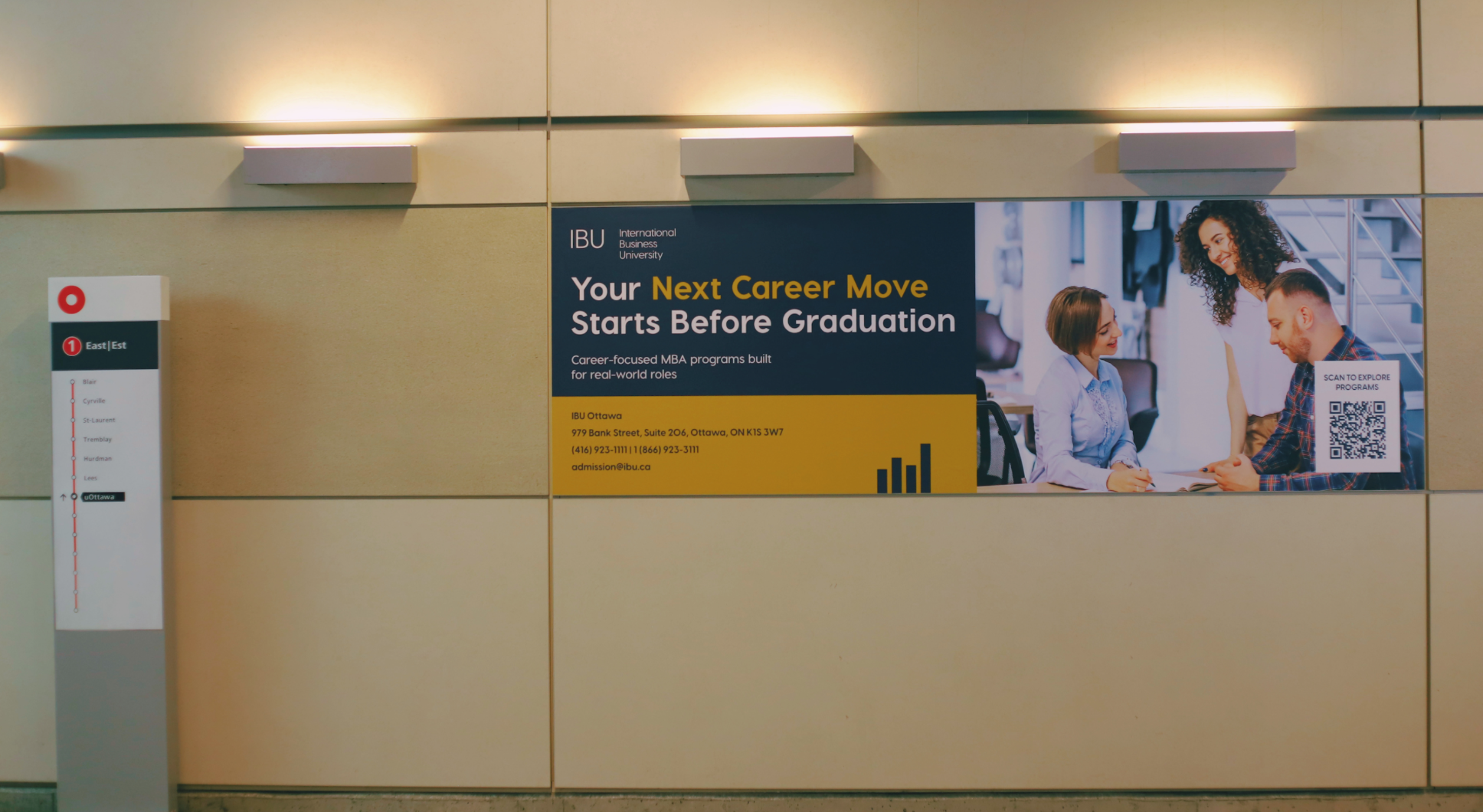
If you commute to campus, you’ve probably come across International Business University’s (IBU’s) ads at the uOttawa O-train Station. When asked about IBU, Telfer dean Stéphane Brutus told the Fulcrum, “I really don’t know much about it.” So, assuming you’re less tapped into Ottawa’s higher education scene than the Telfer dean, this article’s for you.
The private business university opened up at Lansdowne Park in January 2026, offering small 30-person class sizes, tuition deferment options, and flexible online delivery. However, with only six years of operational experience at its Toronto campus, a president who lost a vote of confidence at Algoma University, and no public regulation, how does it compare to U of O’s Telfer MBA?
Former Ontario Tech University president Tim McTiernan founded IBU’s Toronto campus in December 2020 against the dreary backdrop of the COVID-19 pandemic. The Ministry of Colleges and Universities licensed IBU to offer degrees for a seven-year term, after which they must renew their registration. For context, under the 1965 University of Ottawa Act, U of O has permanent authority to grant degrees. Six years later, McTiernan now serves on the board of directors, and there’s been no mainstream news coverage of IBU. So, let us be the first to say they have expanded to Ottawa, and it isn’t your traditional campus.
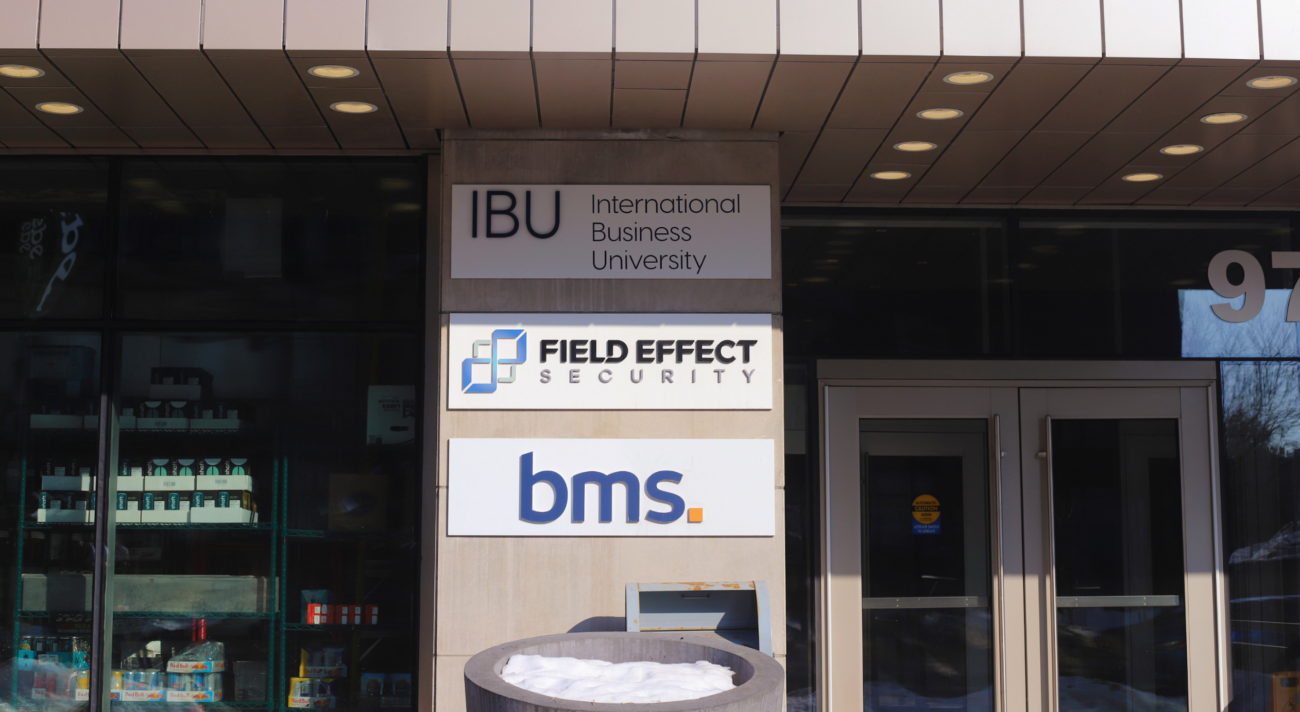
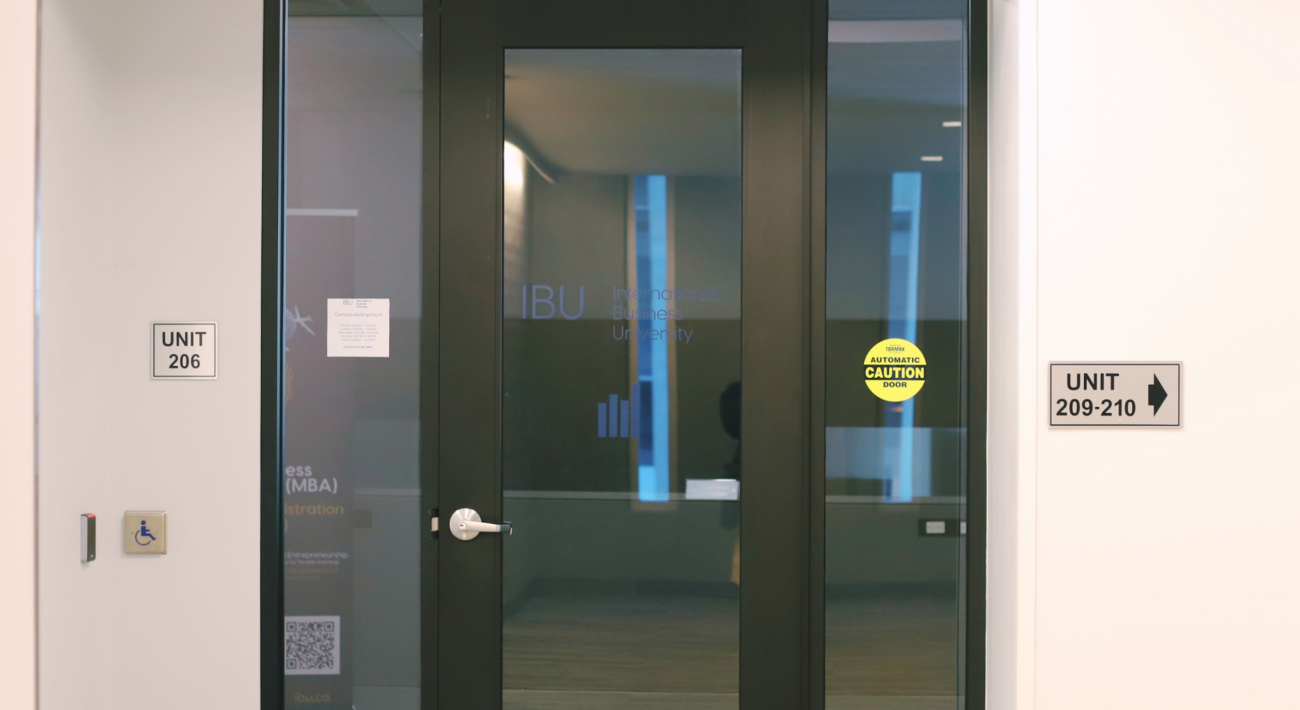



The Ottawa campus consists of a couple rooms on the second floor of a commercial building in Lansdowne Park and shares the floor with businesses like McCay Duff LLP and BMS Canada Risk Services Ltd. The campus is only open for a couple of hours each day, as the MBA is delivered entirely online, with optional in-person networking, and opportunities for synchronous sessions.”
The Fulcrum contacted both IBU and Telfer staff to discuss their MBA programs, and was only able to get in contact with U of O’s Telfer, as IBU failed to respond in time.
Dean Brutus noted that “given [IBU’s] lack of a track record, it is very hard to assess what they do and how well they do it.” In the meantime, Telfer MBA director Marc Tassé has provided what commentary he can on this development in Ottawa’s higher education landscape.
When asked about IBU’s Ottawa expansion, Tassé said that “they’re probably here because there is a demand for it, there might also be a need.” Adding that, “on paper it makes a lot of sense, but it’ll be interesting to see what they deliver.” So, what has been promised?
Accessible, affordable, and personalized programs
IBU offers two graduate-level programs. An MBA in Technology, Innovation and Entrepreneurship, and an MBA in Global Business Management. Accessibility is enabled through online delivery, the option for 100% tuition deferment, and IBU’s unique financial aid program, which offers its own loans and is not registered with OSAP. With numerous readily available grants and domestic tuition costs that drastically undercut Telfer’s $30,350 MBA price tag at the cost of $15 660, it’s fair to say IBU is the more affordable choice.
Personalization is more complicated given the trade-off between small cohorts and course options. Tassé wonders if “[IBU] has enough students to offer the courses they’re promising, especially the electives.” Additionally, he questions if 100% tuition deferment “can be sustainable in the long run.” Given that the major cost of a program is salaries, “how are they going to pay their faculty and their rent?” says Tassé.
Employment pathways
IBU emphasizes that its “career-ready” programs are designed to address the needs of employers and the future workforce. Tassé agrees that “curricula [need to] adapt to the demand from the workforce in the future,” which is why Telfer programs focus on emerging risks.
For example, Tassé says, “if we were to talk about supply chain, we’re not going to talk about the traditional things like making sure in your contract you agreed on specifications, time of delivery, etc. We talk about whether there are people in your supply chain that are directly or indirectly involved in human trafficking, modern slavery, and forced labour.”
That said, the director says “creating a program is not that complicated” and “all higher education institutes are doing the same thing.” “We know that our students want knowledge that is applicable to their jobs. Most of my students at the end of each class want to make sure they have one or two takeaways they can bring back to the office next week and apply,” says Tassé.
Where practicality is concerned, Tassé discusses IBU’s lax admission requirements, which don’t mandate job experience — a rarity for MBA programs. At Telfer, exceptions are occasionally made by the Senate, but Tassé says, “We want you to have management experience because it creates a better way of working with the cohort.” He added, “There are procedures that need to be followed, because otherwise, if I made a program just to graduate people and make money, that wouldn’t be fair.”
While employment is top of mind for most students, Tassé warns that no MBA can guarantee students a job.
“We’re a university, we’re higher education, we’re not a job placement agency,” says Tassé, but “when employers look at your degree and ask, was it a university that’s a diploma-mill or was it a serious university? For us, that always plays in our favour because of our triple crown accreditation.”
It all comes down to the employer’s risk tolerance. Tassé explains that “some employers prefer to hire students with whatever background they have and train them using their own technology. I know some employers that have developed their own AI agent, which employees have to use.” In cases like these, fast-tracking your MBA at an institution like IBU has its clear advantages.
Tassé continued, “Employers will wait to see who’s gonna graduate from this program, how good they will be, then they’ll make their assessment of whether or not it’s a serious program or a program that is there and meets the demand, but maybe not their demand.” Alumni networks, therefore, help students in a twofold way, by setting a precedent for employers and directly connecting students to opportunities. “Alumni are a big added value for our students,” says Tassé, “It’s their way of getting themselves a job.”
Regulations and reputations
At present, there’s only a handful of IBU alumni. However, IBU’s president is a notable name in Ontario’s higher education world.
President and Vice-Chancellor, Dr. Asima Vezina, was formerly president of Algoma University from 2017 to 2025, until she resigned after a vote of non-confidence from her faculty. She came to IBU weeks later and told CBC’s Jonathan Pinto that IBU was impressed with her work at Algoma’s Brampton campus. “What they shared with me is that…some of the skills and qualities that they [saw] in my presidency are something that they thought would be very good for them as they moved forward,” said Vezina.
A 2022 Auditor General’s report on Financial Management in Ontario Universities found that under Vezina, recruiters intensely targeted international students who barely met the admissions requirements until 90% of Brampton’s enrolment was international students. Algoma’s international undergraduate student graduation rate for 2022 was 55%, the university did not track whether international grads stayed and worked in the local economy, and enrollment increased by 900% over a three-year period without equal accommodations to student resources, housing, or faculty size.
For reference, the U of O factbook shows the international undergraduate student population in the Telfer 2022 cohort made up approximately 30% of total students.
As reported by Jonathan Pinto, “International students are a focus for [IBU].” So much so that rather than displaying program acceptance rates, the institution showcases visa acceptance rates as one of a few statistics on its website.
When Vezina came to Algoma, the university was saddled with debt. Under her leadership, Algoma had in-year surpluses throughout the 2016/17–2020/21 period and increased revenue by 34% during the period, with the largest contributor being International student tuition from the Brampton School of Business and Economics. Tuition from international students made up 76% of Algoma’s tuition revenue for all campuses combined in 2020-2021, according to the Auditor General’s report.
IBU’s not-for-profit model contrasts with what universities are often criticized for: operating as businesses first and centers for higher education second. As “Ontario’s first independent, not-for-profit university dedicated exclusively to business education”, IBU is promising a “teaching-oriented and student-centred” experience.
When the Fulcrum asked if “all additional revenue [has been] reinvested into its students and programs” as promised, IBU did not respond.
Private universities are less regulated than public ones, and this difference is even more pronounced in Ottawa’s context since Telfer has the triple crown of accreditations from the Association of MBAs (AMBA), Association to Advance Collegiate Schools of Business International (AACSB), and EQUIS. Only 1% of business schools worldwide hold the triple crown due to the intensive criteria, making it a notable testament to a program’s quality.
For example, Tassé explains that Telfer has to sustain certain student and faculty retention rates, conduct regular program reviews, and ensure professors are subject matter experts to maintain the triple crown. Only two Canadian Business schools hold this accreditation. Highlighting potential drawbacks to committing to substantial criteria and review, which limits a program’s flexibility. Private universities are also subject to review, as seen through the Auditor General’s reports, but they have to meet different standards to maintain certain accreditations.
However, Tassé adds that, public or private, “every university has to compete.” Still, he emphasizes that “it all comes down to the quality of your faculty.”
Presently, there is no clear distinction on IBU’s website about its Ottawa faculty. Brij Bali is the only confirmed Ottawa campus professor, based on his LinkedIn and an IBU Facebook post.
As for Dr. Asima Vezina’s reputation, Tassé says, “In the past, there were elements that could have us inquire about what [they’re] saying, but I strongly believe we need to give IBU a chance. On the other hand, the result will speak for itself.”