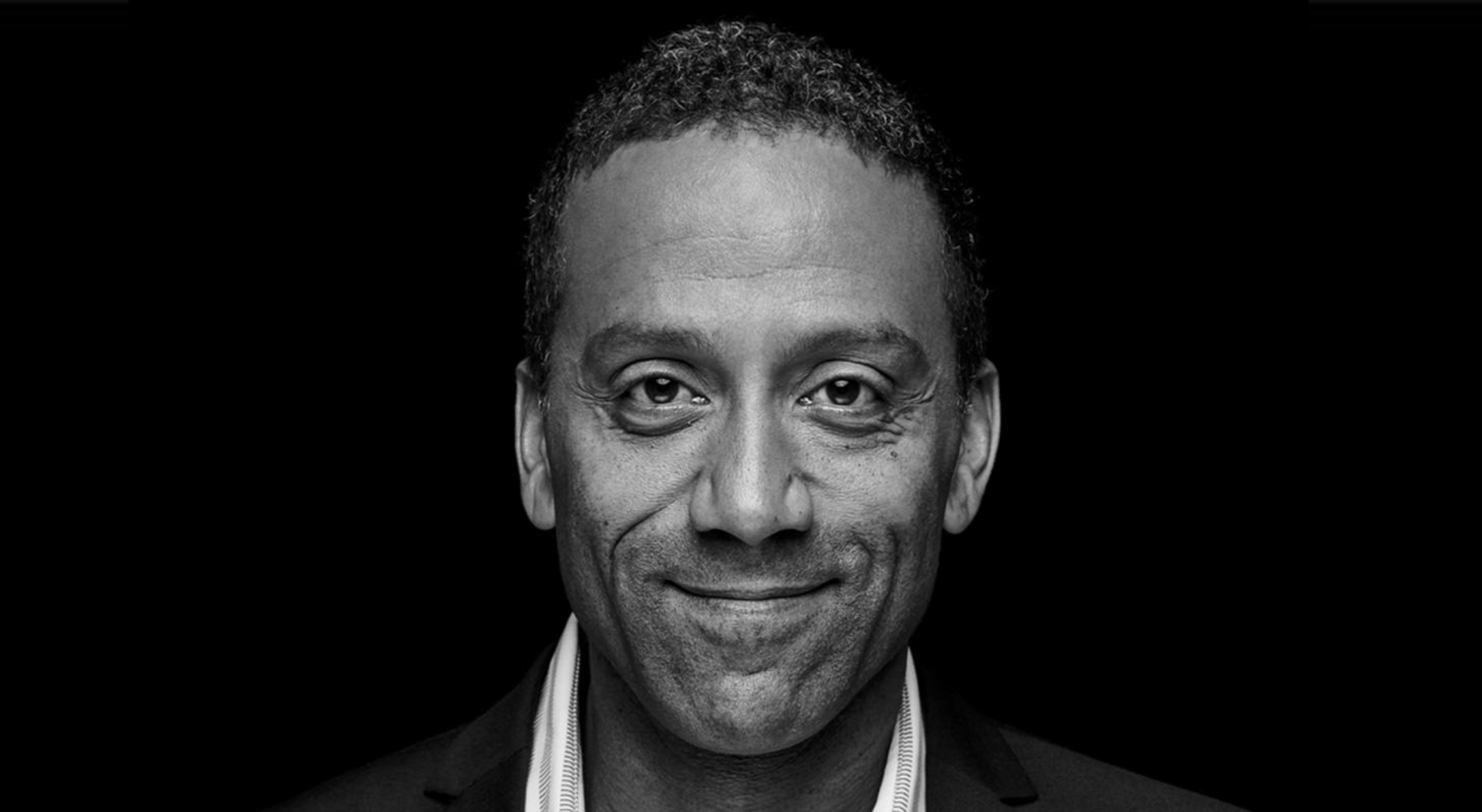
Stéphane Brutus is a name most Telfer students have heard at least once.
As the dean of the Telfer School of Management, he’s the person ultimately responsible for the direction of the faculty.
So, what keeps him up at night?
Basant (B): “What keeps you circling at night after busy days as a dean?”
Dean Brutus (DB): “Nothing… I actually sleep perfectly. I’ve always been able to fall asleep easily. My mom never had to chase me around to go to bed.”
Still, as the conversation went on, it became clear that sleeping well doesn’t mean there’s no pressure that the role brings.
“Well, if something does keep me up at night, other than losing a tennis game with my friends, it’s the financial situation universities across Canada face. If I could change one thing, it would be bringing in more money into schools in this country.”
B: “Do you ever have a moment where you think, ‘this is why I love this job’?
Dean Brutus: “What really hits home to me, in terms of the privilege that I have, is walking around and seeing the students. You walk into Demarais in September, there’s a buzz [students are excited to start school]… you walk into Desmarais now, and there’s a different type of feeling now, it’s [during] final exams. It’s like students are bearing down, and you can tell they’re really focused and they care. It’s all enthusiasm and fun, and seeing these students in these different moments and having the privilege of shaping these experiences are so important for me. I think it makes it all worthwhile.”
As stressful as the job may be, the part he can always happily come back to is the atmosphere in Desmarais.
His path to Telfer
Looking back some years, Brutus didn’t begin his career in business.
B: “Could you walk us through your career trajectory, starting from undergrad?”
DB: “My [undergraduate] schooling was done at Simon Fraser University. I did a master’s PhD at Bowling Green State University in Ohio, and a postdoc at the Center for Creative Leadership in North Carolina [all in psychology]. I spent most of my career at Concordia University, at the John Molson School of Business [as a faculty member and vice dean]. I’m [now] the Dean of the Telfer School of Management at the University of Ottawa. I’ve been the dean for five years now.”
Early in his career, Brutus admits he was not the person working the room. Naturally introverted, he didn’t gravitate toward networking events or introducing himself to strangers. Over time, he realized how many of his opportunities came from people he met along the way. Mentors and colleagues opened doors, and he realized stepping out of his comfort zone was definitely the way to succeed.
Being a dean was never a part of the plan. Coming from psychology rather than a business background and never having run a business, sometimes he worries about what he’s doing.
Beyond the title of dean
B: “Do you ever get imposter syndrome, even at this level?”
DB: “Sure, that doesn’t get away, right? But there’s a reason you’re in this room, doing this thing, so you belong, and that feeling goes away pretty fast.”
Despite the pressure, he trusts that the next step will come smoothly, just as it has throughout his career.
B: “What’s the most un-dean-like thing you do when you’re off the clock, and what do you do to unwind after a long day?”
DB: “I love playing video games. I’m piloting a spaceship right now. I’m flying to the moon with the Gemini spaceship. It allows me to escape and get out of my world and just travel without traveling. I love it. I like competition, and different sports have occupied me at different stages of my life.
DB: “If anything does keep me up at night, it’s when I lose a tennis game…stupid stuff like that.”
Leading the Telfer School of Management
B: “How do you cope with the constant pressure to balance student needs and faculty needs and institutional goals?”
DB: “Having been in the system for a long time, having a good understanding of the different stakeholders, priorities of students, faculty, and alumni, having experience [really helps]. Somebody needs to make some difficult decisions, right? So make sure you reflect and make sure you take time to think about what’s best in that particular situation, not to rush to judgment.”
DB: “Take your time and then make a decision, knowing that in many situations, you won’t make everybody happy, but you need to stand behind the rationale that led to the decision, so you can explain it. You can be transparent about it, and if people don’t understand it, which is always the case, like some constituents, will not be happy about the particular decision, well, knowing that you did your best, that you’re comfortable with the decision you made, and yeah, not everybody will be happy all the time, and that’s tough.”
B: “What do you think makes Telfer different from other business schools?”
DB: “I think we are the perfect size business school in the perfect size town. We’re not too big, we’re not too small. So we can provide students rich and diverse experiences. I don’t think there’s a lot of other schools that are that mid-range type of size, in a right size city. I think that’s really something we offer.”
B: “What do you hope your legacy will feel like at Telfer?”
DB: “I’ve really put a lot of focus on infusing experiential learning in the curriculum at all levels, undergraduate and graduate. And I think we’ve moved the needle quite significantly on that front. So I would love for me to be known as the dean who motivated or changed a bit the way education was done at Telfer, to keep it outside just the classroom. Of course, you need classes, but to really add a whole layer of experiential learning: case competitions, simulations, Co-Op, etcetera.”
DB: “I’m a big fan of the Gee Gees. It has nothing to do with business, but it has a lot to do with business, right? You learn cooperation, adversity, discipline, and managing a schedule. So all these things, even if you say, ‘well, what’s the relationship between [for example] swimming and business?’ Well, it carries over. What you learned in that contest carries over to business, right? So I’m a big fan of these extracurriculars, and especially since when I was a student, these things didn’t really exist. [We went] to class, and then that was it. And now I think we have the opportunity to provide a lot of these extracurriculars.”
As the interview comes to an end, Brutus says most students are eager to graduate, to move on to what comes next. But almost every alumnus he meets tells him, in retrospect, that their university years were some of the best of their lives.
DB: “I never look too far ahead. It’s always been one step at a time.”