BEGGING FOR A PLUMBING REPAIR? LANDLORD SHOWING UP UNANNOUNCED? FACING RENOVICTIONS? YOU’RE NOT ALONE -AND YOU CAN ORGANIZE.
Nearly 6 months ago, tenants in Sandy Hill organized to push back against a housing system they say has been long stacked in landlords’ favour. Formed in late March of 2025, the Tenants of Sandy Hill (TOSH) have spent months building tenant committees, blocking illegal eviction attempts, and pressuring landlords to complete long ignored repairs and maintenance.
Their work comes at a time when student renters are feeling mounting pressure, and the Ontario renting landscape is bleak. As the fall semester has arrived in full force at the U of O, housing instability remains a constant layer of concern.
Securing clean, safe, and affordable housing is an increasingly difficult endeavor. Though this endeavor doesn’t end with signing a lease. Students face ignored repairs, unkept buildings, and unresponsive landlords.
So what are students in Sandy Hill meant to do?
Sandy Hill builds collective power
Instead of waiting for systems they believe are failing them, the Tenants of Sandy Hill turned to building collective action. The Fulcrum first reported on the formation of TOSH in March, when founding members emphasized a vision of building collective tenant power.
In a recent follow-up interview with the Fulcrum, organizers Shivangi Misra and Patrick Mathisen said this mission remains unchanged.
Misra expressed how established accountability systems like the Landlord Tenant Board (LTB) have “gotten away with exploiting tenants and treating them with indignity and disrespect for far too long”, explaining how asserting tenant rights through those systems is ineffective when those rights cannot be fairly implemented.
“So what is the alternative then, if the law doesn’t work for us, if the politicians, the investors, are not working in our interest?” Misra asked. The answer is for tenants to get organized, create pressure, and force decision-makers to act in tenants’ interests, rather than “putting our faith in systems that have failed the working-class people in Ottawa.”
TOSH describes itself as not an advocacy group, but a union focused on organizing. Legal knowledge and reform have a role to play, they said, but collective action is their mission. Their recent initiatives have focused on carrying out this mission: building community, acting against injustice, and growing their organizing capacity.
Mathisen highlighted the role of tenant building committees, which allow tenants to work together to present a unified front when a landlord is acting unfairly. Connecting neighbours not only validates concerns, but can also speed up resolutions.
Misra pointed to a recent phone zap campaign, where all the tenants and neighbours called a landlord to protest a bad-faith eviction attempt.
Door-knocking has also been a major focus. “At this point, we have knocked on hundreds of doors, getting to know our neighbors, creating a community that we are not alone,” Misra said.
Organizers believe that collective action has ripple effects. When tenants in one building take a stand, others feel empowered to do the same, gradually shifting the standard for what behavior landlords can expect to get away with in Sandy Hill.
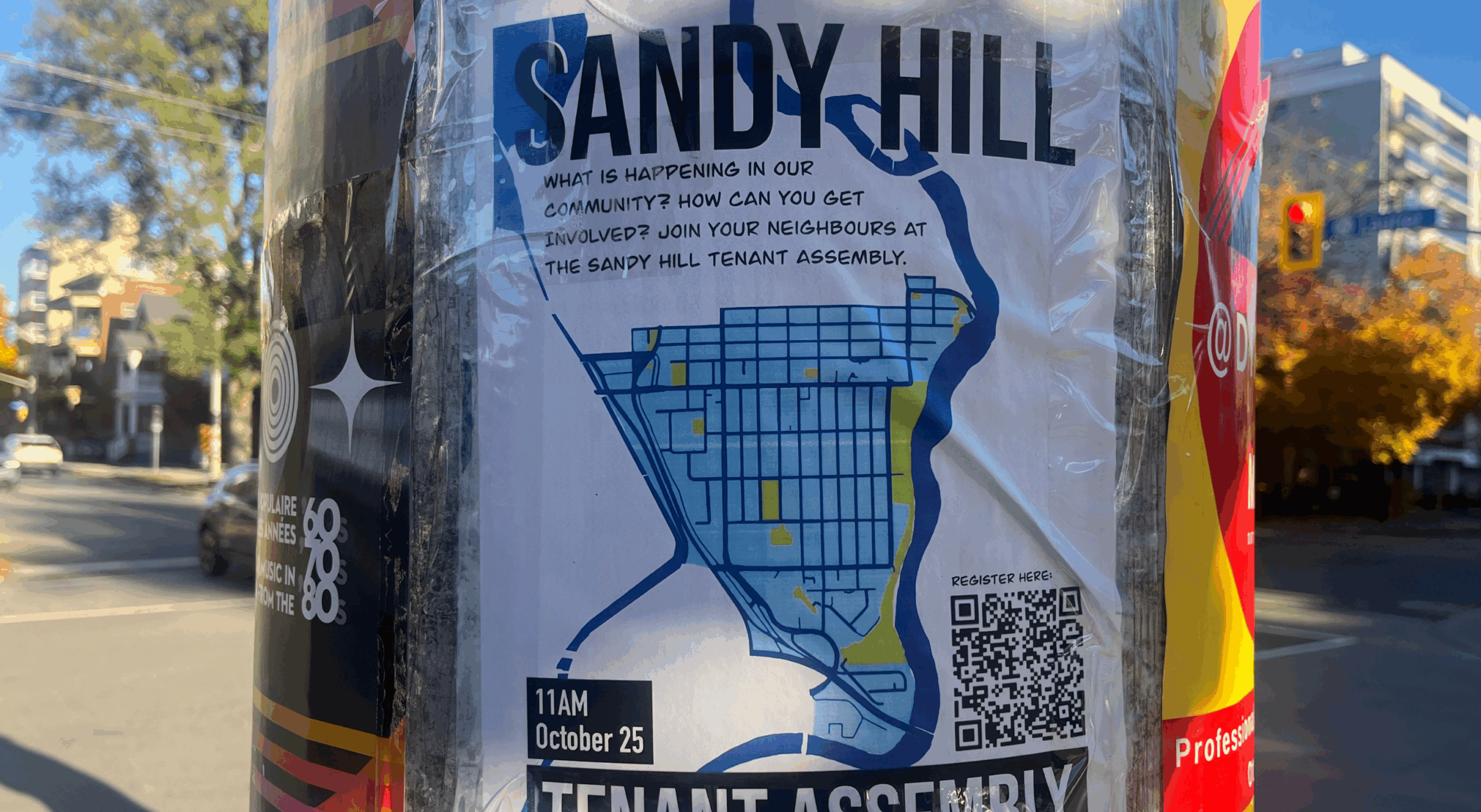
More recently, TOSH has been visible on campus. The group held a tabling session at the U of O, and talked to students about their rights as tenants. On Oct 25, TOSH had a tenant assembly in Sandy Hill, where they discussed issues of renoviction attempts, improper leases, and disrespect from landlords and property management.
Mathisen encouraged students to get involved, email TOSH directly for inquiries, and follow the unions upcoming initiatives. “We always need volunteers, even if people don’t want to join the union.”