U of O led the way on sustainability in 2010. In 2025, the campus could use a refill.
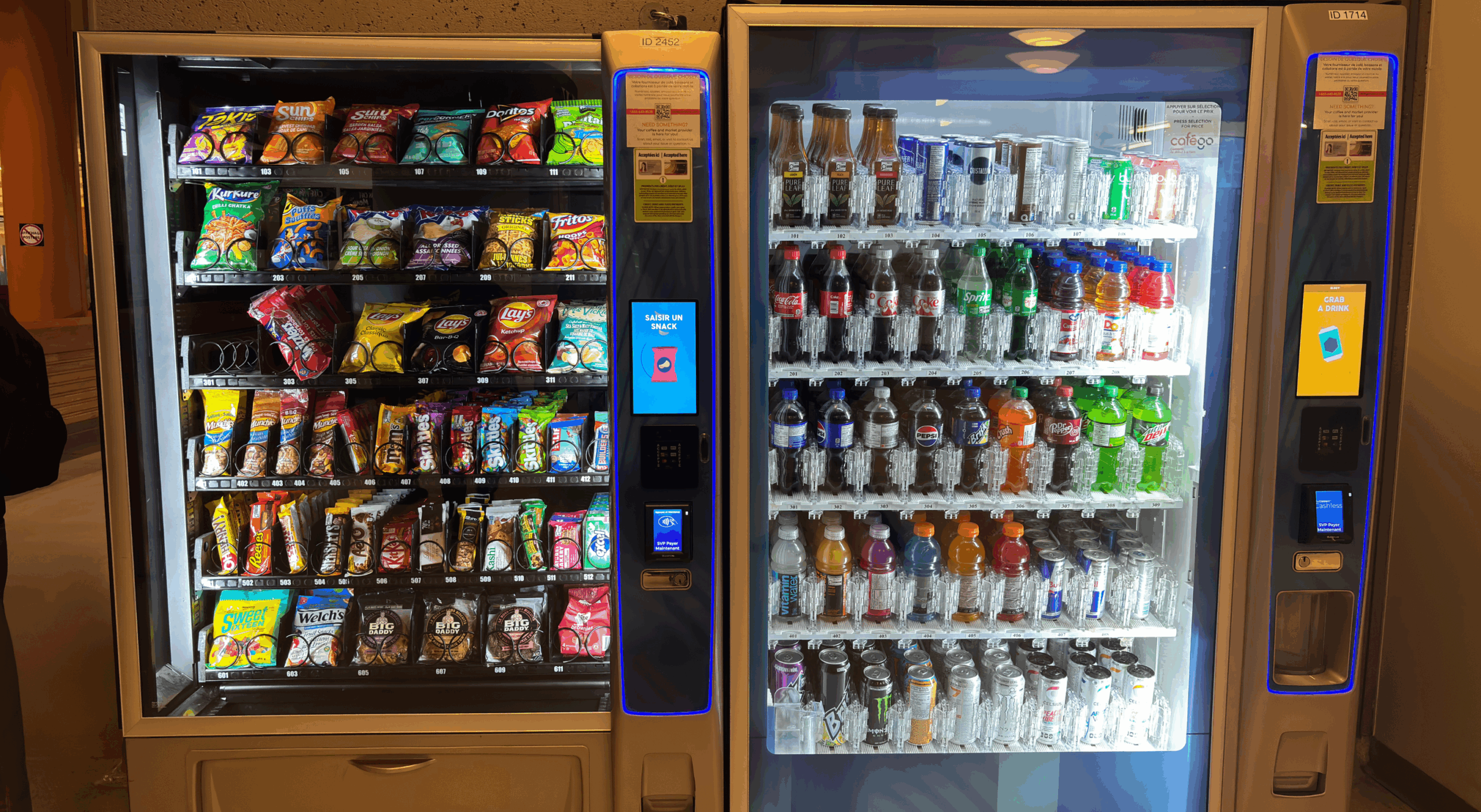
Every vending machine on campus has Gatorade, Red Bull, iced tea, and sparkling water. But somehow, not one of them sells actual water.
The University of Ottawa has not sold bottled water on campus since 2010. The decision, made under its Bottled Water Free Campus policy, was introduced to reduce plastic waste and promote sustainable water use. As the university explains on its sustainability website, “The University of Ottawa was one of the first universities in Canada to ban bottled water on its campus.” The policy encourages students to refill their reusable bottles at water fountains across campus. It’s a great idea, in theory, and the goal was commendable, but fifteen years later, student life has evolved, and this policy hasn’t evolved with it.
Bottled water might be banned, but vending machines across campus are still full of plastic bottles of soda, sports drinks, and energy drinks. It’s hard not to notice the contradiction, because if the goal is to cut down on waste, why is water the only drink that follows the “no waste” rule? It’s not that students don’t support sustainability— most of us do. But there’s a difference between being eco-conscious and being left without an option.
Sure, we have water fountains for our water bottles, but that’s not really the point. The policy assumes everyone always has a water bottle with them; not everyone does. Some forget, some lose theirs, and some can’t afford to replace the expensive reusable ones that have become the norm. For a campus that prides itself on inclusion, the expectation that every student is perfectly prepared all the time just isn’t realistic. And if the U of O wants to keep leading in sustainability, it needs to keep evolving. There’s room to do better, to update an old idea instead of clinging to it.
Sustainability only works when it makes sense for the people it affects. Access to water shouldn’t depend on whether someone remembered to pack their Stanley that morning. Many universities have already updated their systems with recyclable or refillable options, which is proof that being sustainable and being practical can coexist. When it started, the ban was a statement about leadership and responsibility. Fifteen years later, it feels more symbolic than practical.
Right now, on a campus full of vending machines and bottles of everything but water, we’re still thirsty.