
Canada can do better
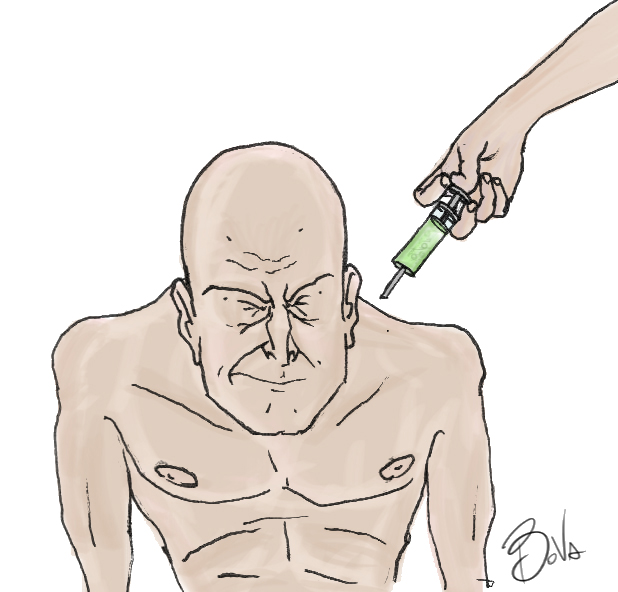
IT SEEMS LIKE every couple of years in Canada, the idea of legalizing assisted suicide rears its head. The renewed furor over this controversial issue is usually prompted by a particularly tragic case of a person wanting to end his or her life in response to extreme pain. While we can never hope to completely understand what such people are going through, we all sympathize with their pain. In cases like these, it can even seem cruel to deny their dying wish.
But in spite of all the emotions these cases can stir within us, there are still good reasons not to legalize assisted suicide. Chief among them is the problem of unscrupulous people abusing the system—killing people without obtaining proper consent, changing it from assisted suicide to homicide.
Few of us would stand for killing people on their deathbeds if they didn’t really want to be killed, but in jurisdictions with legal assisted suicide, we’ve seen case after case of abuse. Let’s face it: There are people who will take advantage of the death of a family member—assisted suicide simply gives them a deadly tool to do so.
Assisted suicide conveys a brutal message as to who our society really cares about. It tells the elderly, the weak, and those in pain that we are unwilling to foster their well being. Instead, we propose an easy alternative: Death. Easy for the rest of us, at least.
In the hubris of our youth, university students like ourselves might find it easy to support assisted suicide. But let’s not forget assisted suicide is the cynical alternative to putting effort into health and healing, whose sole advantage is ease and inexpensiveness for our financially strained health-care system.
A better alternative would be a serious investment in palliative care, which is in place to make the final days of the terminally ill as comfortable as possible. This would be more expensive and difficult than merely killing them—but isn’t spending worthwhile when human life is at stake? The terminally ill deserve loving, compassionate care from the rest of society, but even in Canada, too many do not have access to such treatment. We can and should expand programs that provide homecare, hospice care, and address the emotional needs of those at the end of their lives.
The course of dying is a difficult time, particularly when it’s an especially painful process. But it’s also a natural one: Many people on their deathbeds are comforted by the knowledge that when
they go, it’s because their time has come. Surrounded by a loving and concerned family, and provided with the best palliative care, perhaps few would decide to end their lives early.
In a society where we stood for assisted suicide, this time would be one of end-of-life politics and legal wrangling, where the person on their deathbed was made to feel as a burden. We can do better than that: Assisted suicide should remain illegal.
—Kelden Formosa



Where are your statistics? Where are your cases and cases of abuse of this system? Countries that do have assisted suicide or euthanasia don’t even have that many cases of it–in the Netherlands it counts for just over 1% of their death toll every year. So we’re talking about less than 1% of an issue here. And sure, every life matters, and I would say that one murder is too many, but are we really arguing that just because there is the potential for abuse of the system that we shouldn’t enact it?
There are risks. Absolutely. But I think the right to control over your own life is significantly greater than that risk. There is not a single country with legal euthanasia/assisted suicide/what have you that does not have very specific legislation about the situations in which this is acceptable. There are safeguards against abuse of the system by “unscrupulous” family members, if we did it right. And when they break through that system, like every other law-breaker, who is given opportunity through the ability to purchase guns in this country, or the ability to steal from store shelves because they exist and security is lapse, or whatever other hypothetical situation you want to put in here where the principle is the same–there are repercussions. People are going to break that law. That doesn’t mean we shouldn’t have them, or that we shouldn’t set up programs that can help people just because we know that less than one percent of the population can find away to abuse that system.
I’ve been pro-euthanasia since the ninth grade, when my family decided we had to put down our thirteen year old labrador retreiver because his quality of life was terrible. And it was sad, but it would’ve been sadder force forcing him to keep on though he could hardly see and barely walk. And the same was true ten months ago, when my grandfather was hospitalized with three different types of cancer. I would give a lot to not have watched that man degenerate to a shell of who he was. I would have loved to give him the gift of dying with dignity. I would have loved to have said goodbye to my grandfather and watched him go to sleep when he still knew who I was, instead of whispering goodbye every other day for three months because we never knew when he would pass, and knowing that he couldn’t see or hear anything any longer, so that the gesture was essentially empty.
Pallative care for my grandfather was present. He was lucky. But there is only so much you can do. My grandfather essentially faced the decision between being out of his mind on morphine or being in extreme pain constantly. And no increased level of pallative care could change that. His body was dying, and at the end it didn’t matter how often nurses came to change his pillows and move him around. He didn’t know anything, or anyone, and it killed my family to see him like that, knowing months before that he’d told us that, if he could, he would’ve ended it already.
And it’s not as if assisted suicide is “enforced” suicide. You’re not required to make the decision to end your own life. We’re not telling the elderly anything except that we respect their right to die with dignity, to die knowing the faces of their friends and family and in control of their bodies and minds. We’re telling them they have a choice, and that we’re not going to imprison them in physical cages if they don’t want to stay here anymore.
Legalizing assisted suicide WOULD create a better standard of care. People who are terminally ill and don’t want to live any longer would receive the care they wanted and be free from debilitating conditions that would ruin the remainder of their lives, and the few nurses and doctors we have could focus their resources on people who decide to receive the care THEY want.
I’ll happily latch on to the hubris of my youth. I think it makes me a great deal more compassionate, actually, in this issue. My family knows my views on this issue; for us, it’s almost the same as signing a DNR. I don’t want to live a life that is a hollow shell of myself. I don’t want to be forced to continue my existence because the medical system thinks that keeping my heart beating if I have three different kinds of cancer and dementia is a sign of “life.” There’s more to it than that.
Nicely Said!
^^ Thanks.
Hi Kate:
Thanks for your impassioned response. I encourage you to check out this essay (http://www.dredf.org/assisted_suicide/assistedsuicide.html), prepared by the Disability Rights and Education Fund, that presents the points I made more fully and with greater citation.
I must say, however, that I quite disagree with your notion that 1% of deaths doesn’t matter. As you noted, every human life matters. I don’t think you can just dismiss something as important as human life based on the relative rarity with which it occurs. Moreover, there is a profound moral issue with allowing society to give its OK to killing other people. Society has to better than the individual.
In a perfect world, you might be able to construct a system where people were really free to make up their own minds about when they live and die. That would pose its own problems, but it doesn’t matter because we don’t live in such a world.
We live in an imperfect world, and we have to recognize that its impossible to allow for legal assisted suicide without also having a huge number of abuses of the system.
Thanks again for your interest and passion!
A lot of the arguments presented in the article you cited here, particularly those related to cost of treatment, relate solely to the health care system that is present in the United States. The article even notes: “how can one compare the U.S. to a country that has universal health care?”
The article you have written is incredibly weak in that you do not back up your claims. Especially when you make claims such as “we’ve seen case after case of abuse.” Also, who are these “[m]any people on their deathbeds” who are comforted when they believe their “time has come”? Are you referring to fictional characters from movies and television programs?
Thanks for your feedback. I’m sorry you think the column I’ve written is incredibly weak.
You ask why I didn’t back up my claims in the column? There simply wasn’t enough space. Every piece has a space limit and I hit mine. I would have loved to write a longer piece, but the Fulcrum has lots of worthy articles to publish and a limited space for publishing.
Nonetheless, every claim I made in the column is solidly backed up by evidence. I’ve posted one such example of a source I relied on above (here it is again: http://www.dredf.org/assisted_suicide/assistedsuicide.html). The “case after case of abuse” claim comes directly from that paper – see the case of Kate Cheney for an example. The “time has come” claim relies on my extensive readings of various books written by those near the end of their lives, as well as books written by their contemporaries. This is in addition to the personal anecdotes from relatives experiencing these sorts of situations.
Finally, the American vs. universal health-care distinction is used in a very particular part of the argument made in the paper. The argument concerned the potential that American health insurance companies (HMOs) would use an assisted-suicide law to pressure people they insure to kill themselves for cost-savings. You’ll note I didn’t make that argument in my own piece, and that the distinction doesn’t really apply to the arguments I did make.
I hope that clears things up, and thanks again for your feedback!
I appreciate that you were willing to write such a controversial article, knowing full well that people would disagree. You are also luck that, that terribly compiled “coffee showdown” article took some heat off of this one.
Firstly it is the decriminalization, not legalization, of assisted suicide is a continuous struggle not something that haphazardly “rears its head”. You make it sound that no longer making assisted suicide a criminal offence is going to transform caring families into murders. The decriminalization of assisted suicide would be subject to very strict guidelines and regulation, only accessible to those who have been diagnosed with terminal or degenerative diseases. Now the title “assisting the suicidal” is misleading as you are claiming that those who wish to die in dignity are suffering from mental disorders. I agree with you in that palliative care should be invested in, for pain management, but it would be a pipedream to believe that palliative care is the answer. Easing pain is one thing, giving back someone’s autonomy is another. If a person can no longer live a physically/mentally dignified life, leave the bed, communicate with their loved ones, etc. Does it make sense for them to continue their own suffering and that of those around them? I think that is a personal decision that one should be allowed to make.
To be honest, having the power to control the location, time, place and audience of one’s death seems like the ideal way to die.