FROM TULSIDAS TO THE WHITE WHALE, INDIAN CLASSICAL DANCE THRIVES IN THE DIASPORA
All the best journalists knock on every dressing room door until someone opens it. I wasn’t shocked at the mess of makeup brushes, jewelry and flowers that were strewn across every flat surface. In the mirror, moms were pinning their daughters’ costumes in place, carefully attaching fake braids, and calling across the tiny room for each other’s assistance. This felt like home.
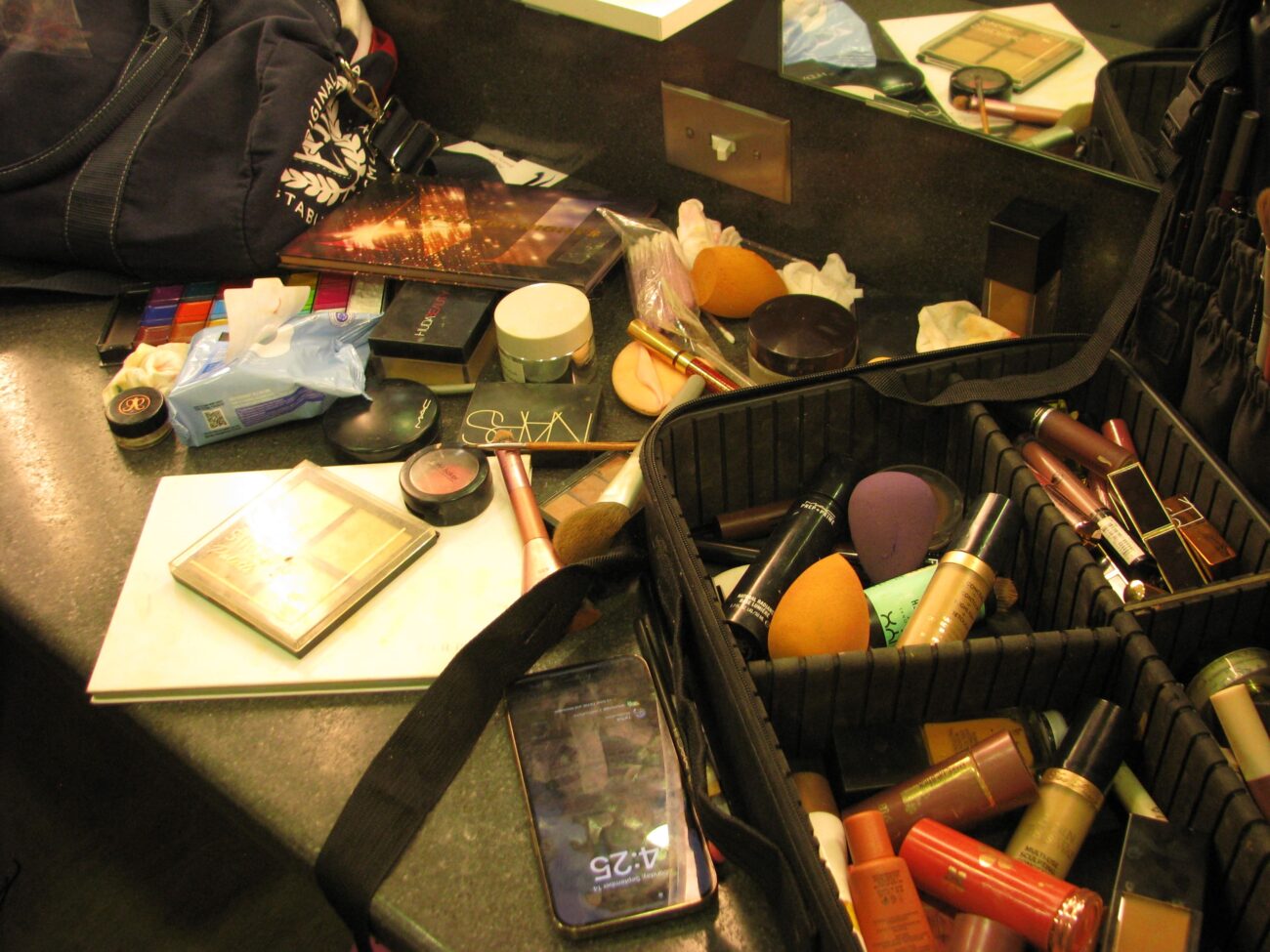
Makeup is scattered on a dressing room table. Photo: Kavi Vidya Achar / Fulcrum 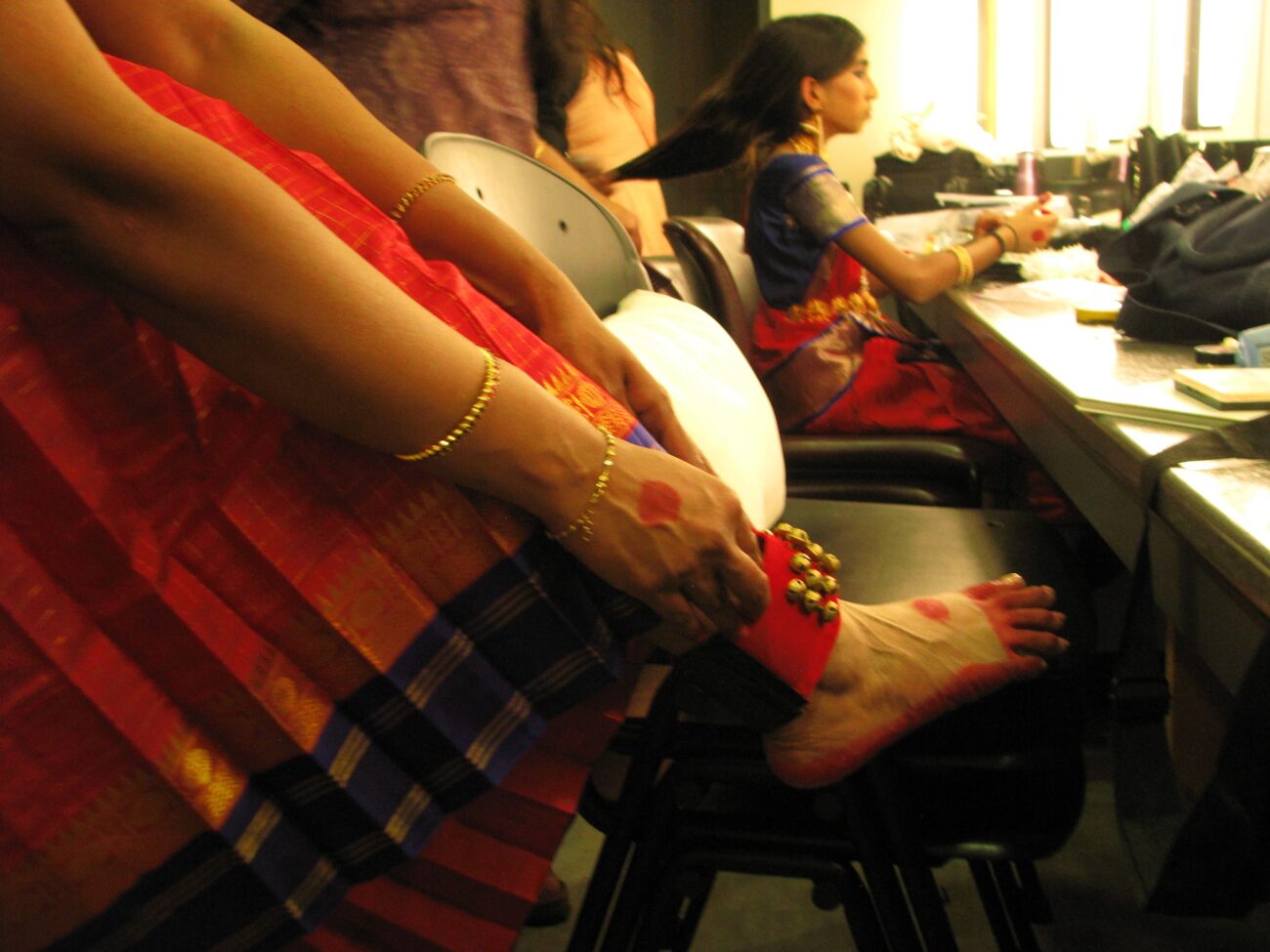
Dancer adjusts her anklets while another gets her hair done. Photo: Kavi Vidya Achar / Fulcrum 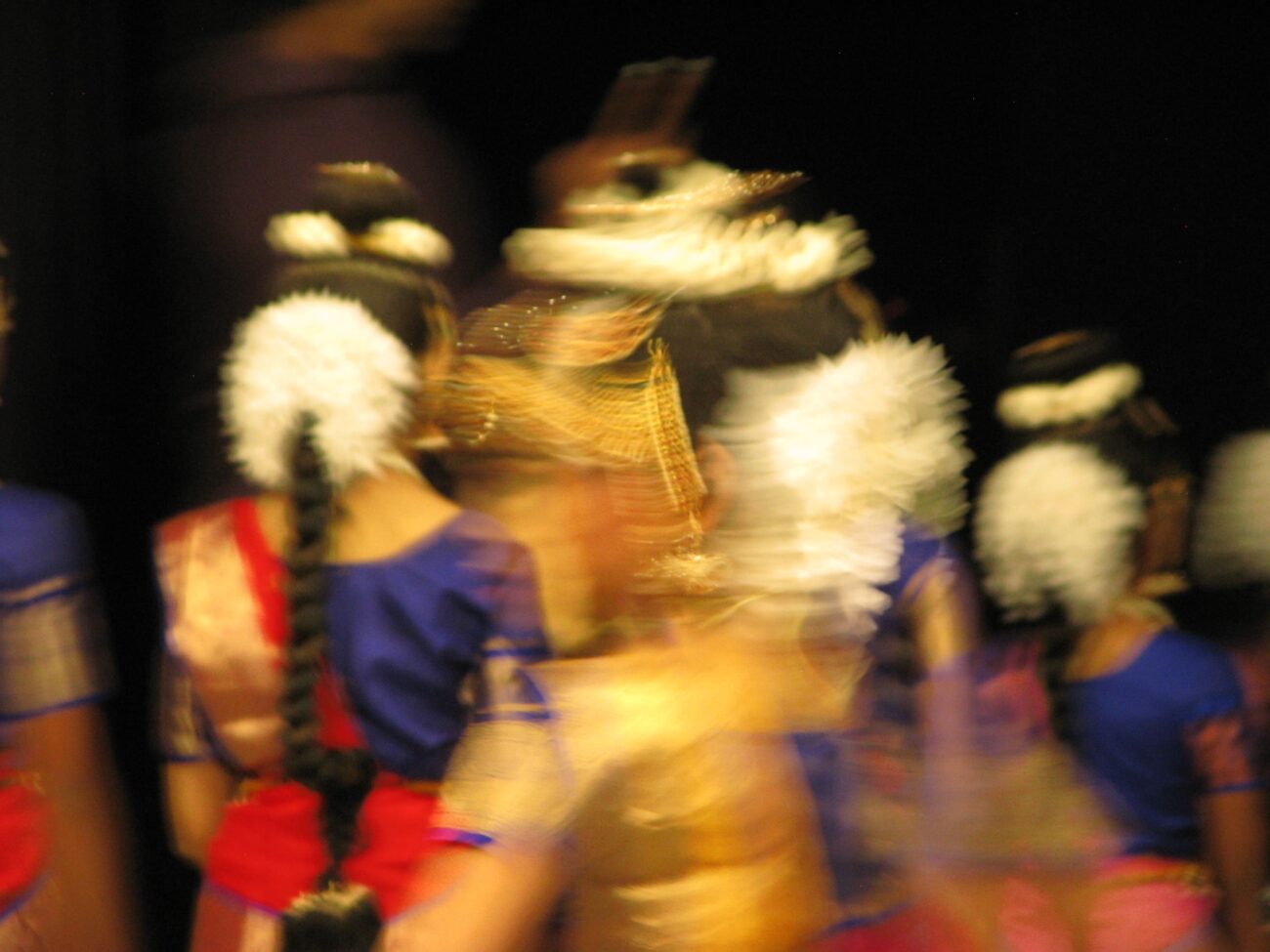
Young dancers wait for their cue, as they stand behind the stage curtains. Photo: Bhoomi Dahiya / Fulcrum 
Two Bharatanatyam dancers pose for a photo in the green room. Photo: Kavi Vidya Achar / Fulcrum 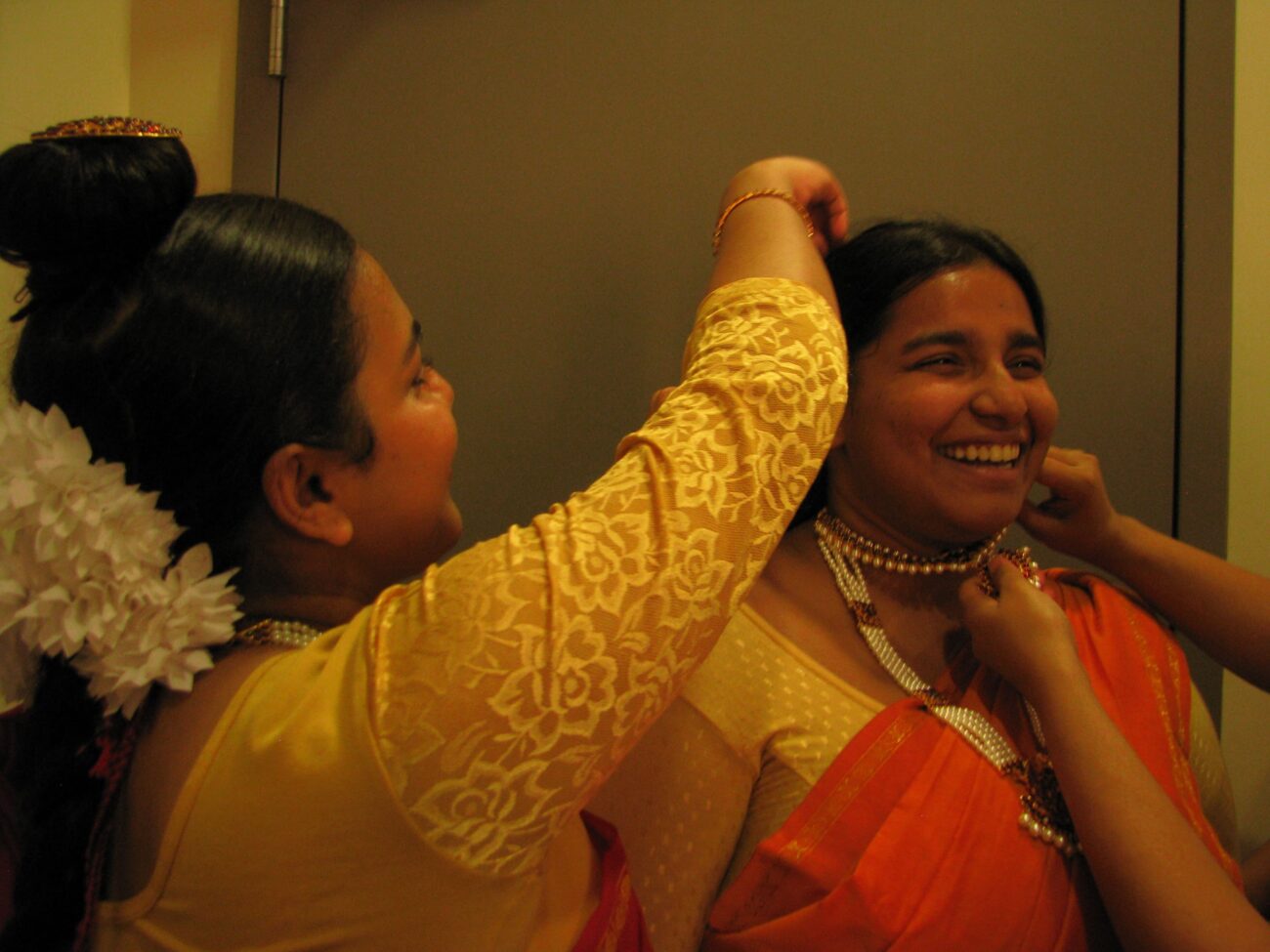
Dancers help each other get ready before the show. Photo: Kavi Vidya Achar / Fulcrum 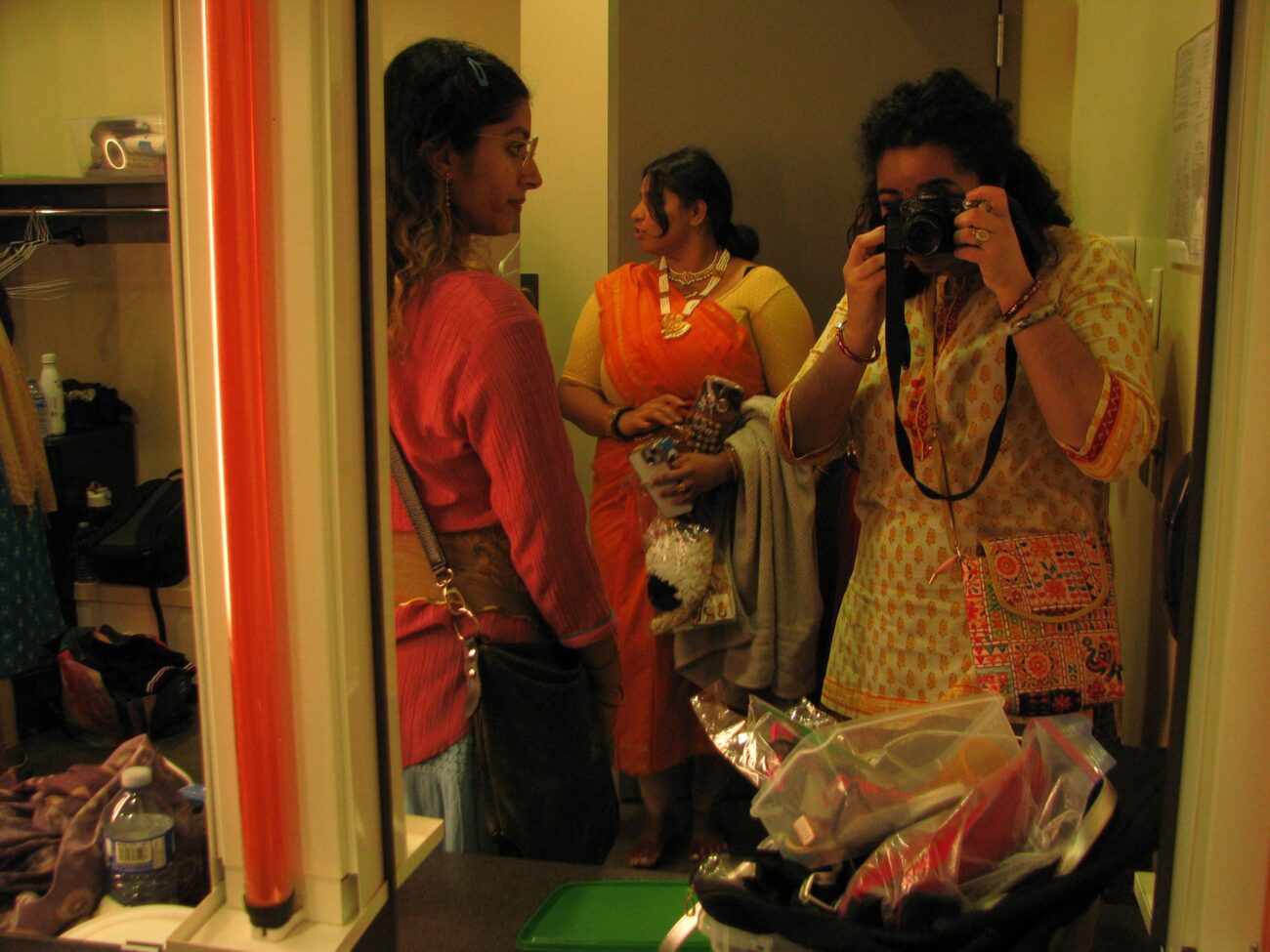
Bhoomi and Kavi in the green room a couple minutes before the show. Photo: Kavi Vidya Achar / Fulcrum
The chaos of missing bobby pins and sharpied-red alta staining every surface is only a slight glimpse into the world of being a Bharatanatyam dancer — a world which I’ve been a part of for over 16 years now. This was the first show I’ve ever attended in Ottawa, but as if on autopilot, I weaved through the crowd, asking, “Aunty, can I take a picture of you?” (In this world, everyone is “Aunty,” whether you’re blood-related or we’ve never met before.)
Even thousands of miles away from my stomping ground of the Bay Area, the scene is the same: a little girl sits in a chair, one aunty putting bobby pins in her hair, another kneeling to put red sharpie on her feet, and yet another aunty coaxing a brownie into her mouth because “You have to eat something or you’ll faint on stage.”
Today, it’s a brownie, but six years ago, it was a singular banana that my makeup artist forced me to eat under the threat of withholding setting spray. Dance culture is the same everywhere.
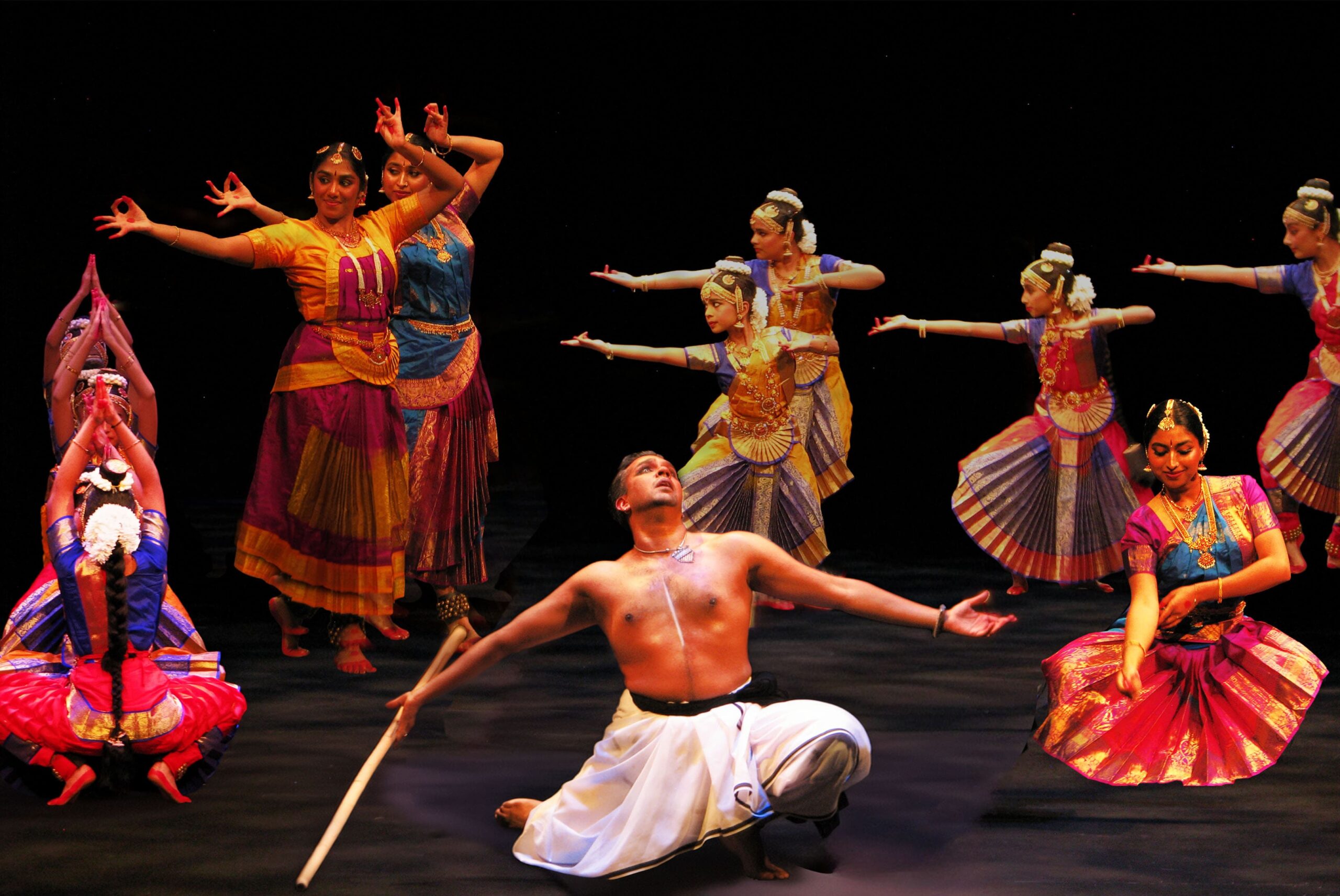
The show we were attending that evening was Pravāha, a combined Bharatanatyam and Kuchipudi performance presented by multiple dance schools across Canada and the U.S. Pravāha in Sanskrit means “continuous flow”, and the performance aimed to celebrate the timeless stream of South Asian dance, culture, and tradition.
And so, armed with a notebook (which was no match for the darkness of the theatre) and a camera from 2007, Bhoomi and I made our way to the back row to watch the show.
The first piece presented was the pushpanjali (transl. offering of flowers) called Mooshika Vahana in raga Nattai, choreographed by Stuti Mukherjee performed by Anagha, Anika G, Anika S, Deeya, Ishika, Manasvi, Medhya, Meera, Nabhanya, Nakshatra, and Nitara.
And as I expected, the nervous green room energy of these tiny dancers was nowhere to be found on that stage. They moved together with such a steady sense of rhythm that the whole piece felt seamless. What stood out to me most was their quiet confidence and bubbly energy, without the usual fidgeting or hesitation most dancers have at that young age. As an opening, the piece was beautifully charming: light, graceful, and the perfect way to set a welcoming tone for the evening.
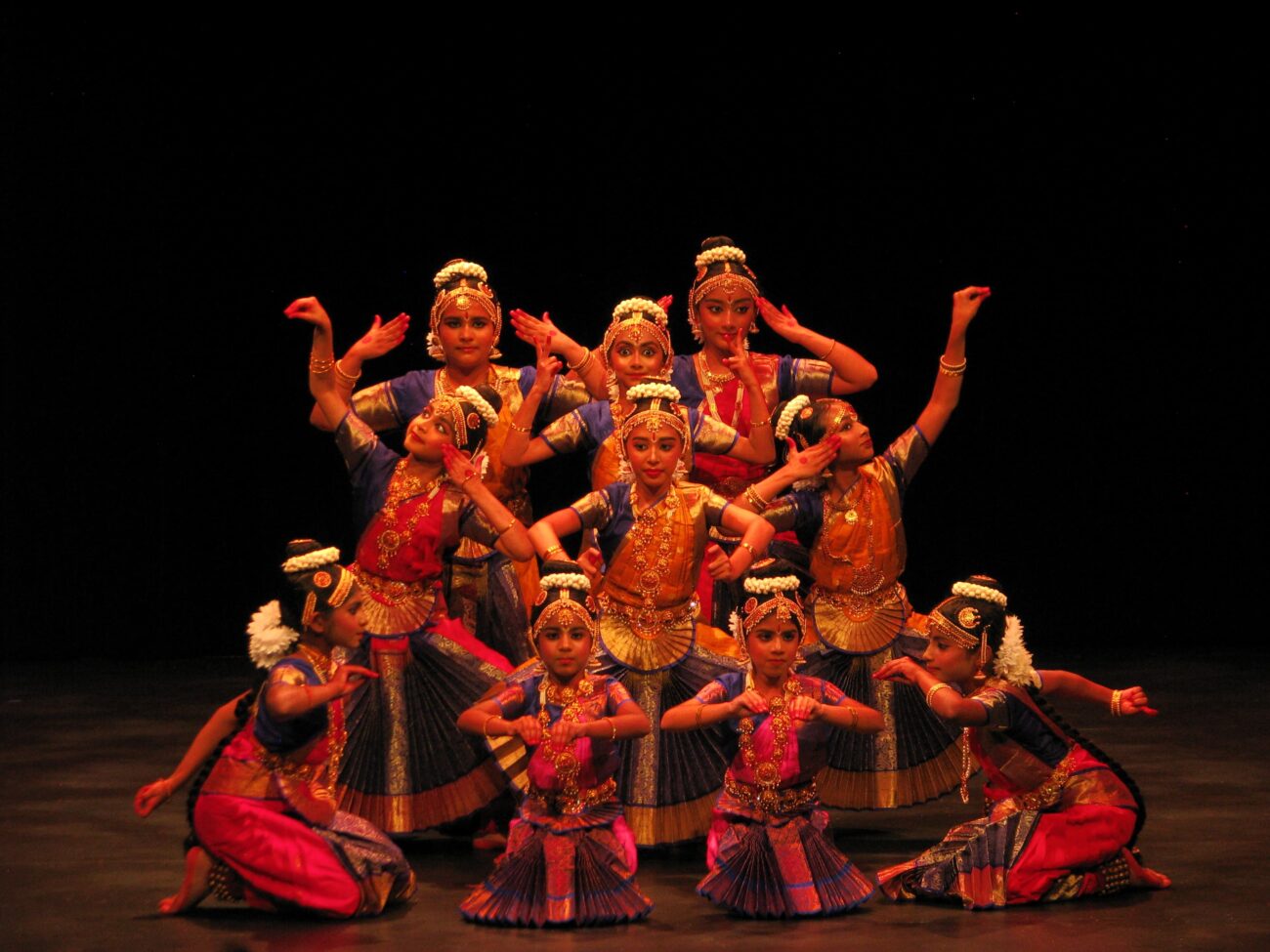
The group poses as the elephant God Ganesha, who sit atop a mouse. Photo: Kavi Vidya Achar / Fulcrum 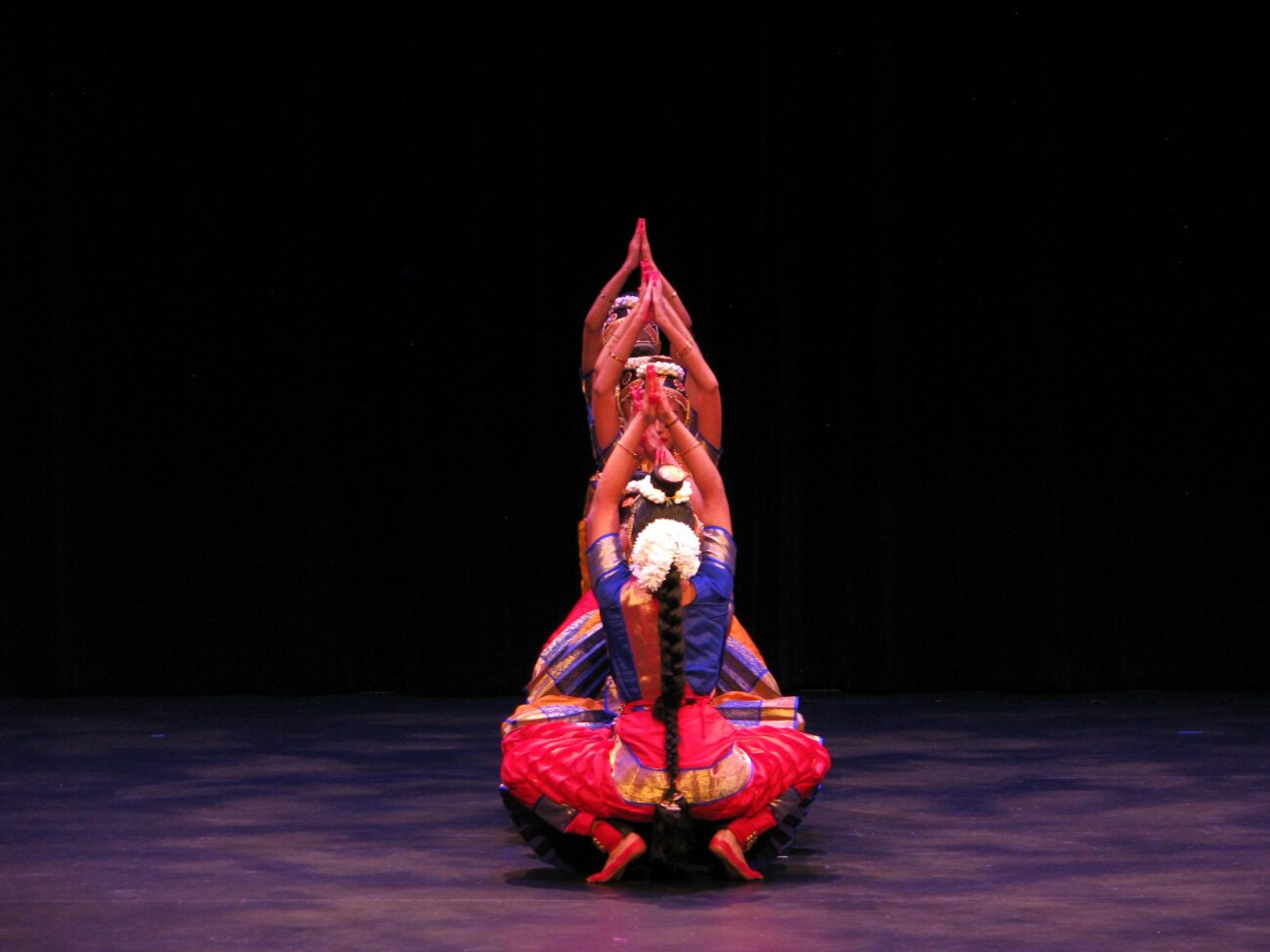
Photo: Kavi Vidya Achar / Fulcrum 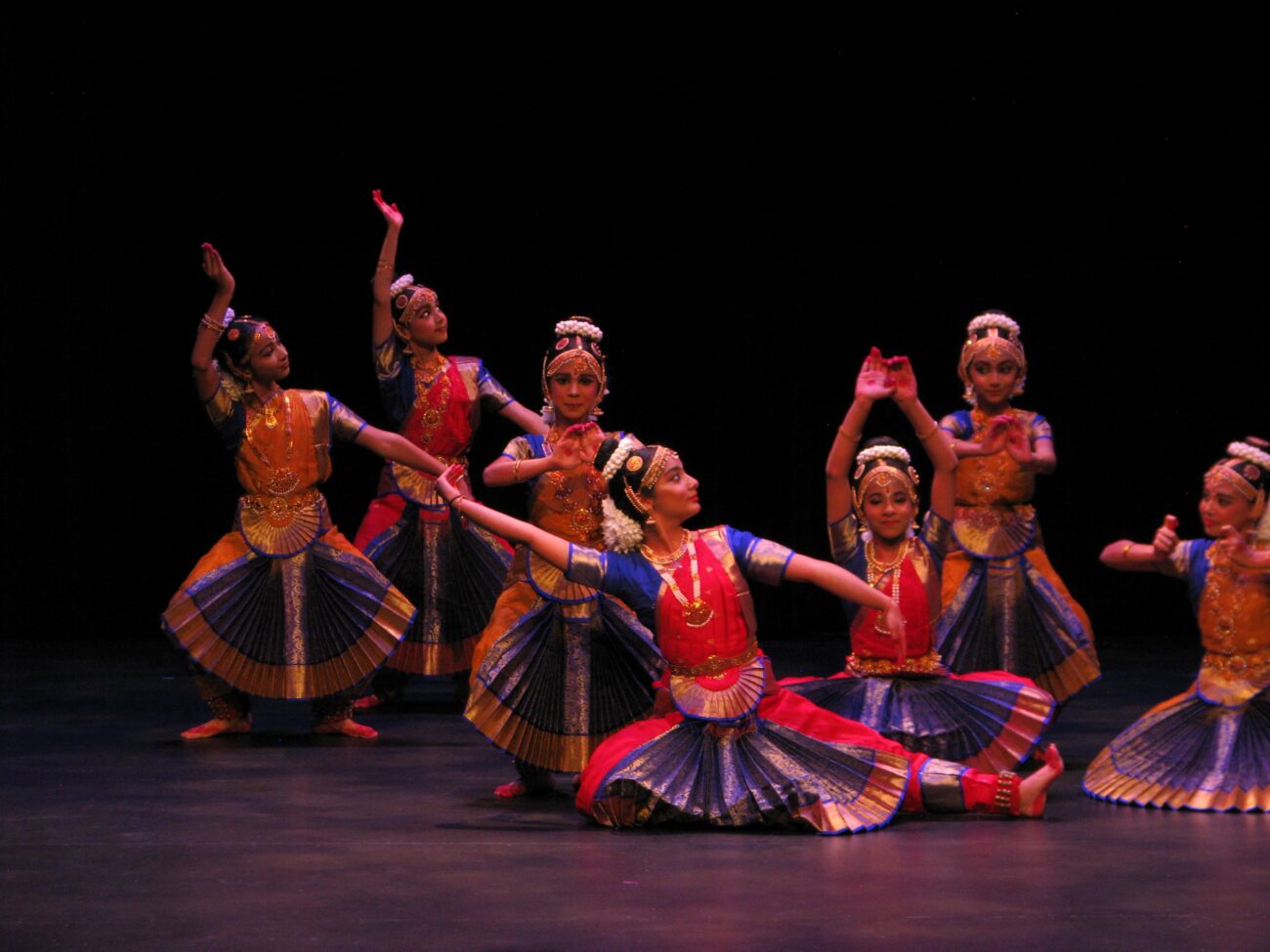
Center dancer poses as Vishnu, the God of preservation, while dancers around her pose as the snakes Vishnu sleeps on. These snakes symbolize the cosmic balance between creation and destruction. Photo: Kavi Vidya Achar / Fulcrum 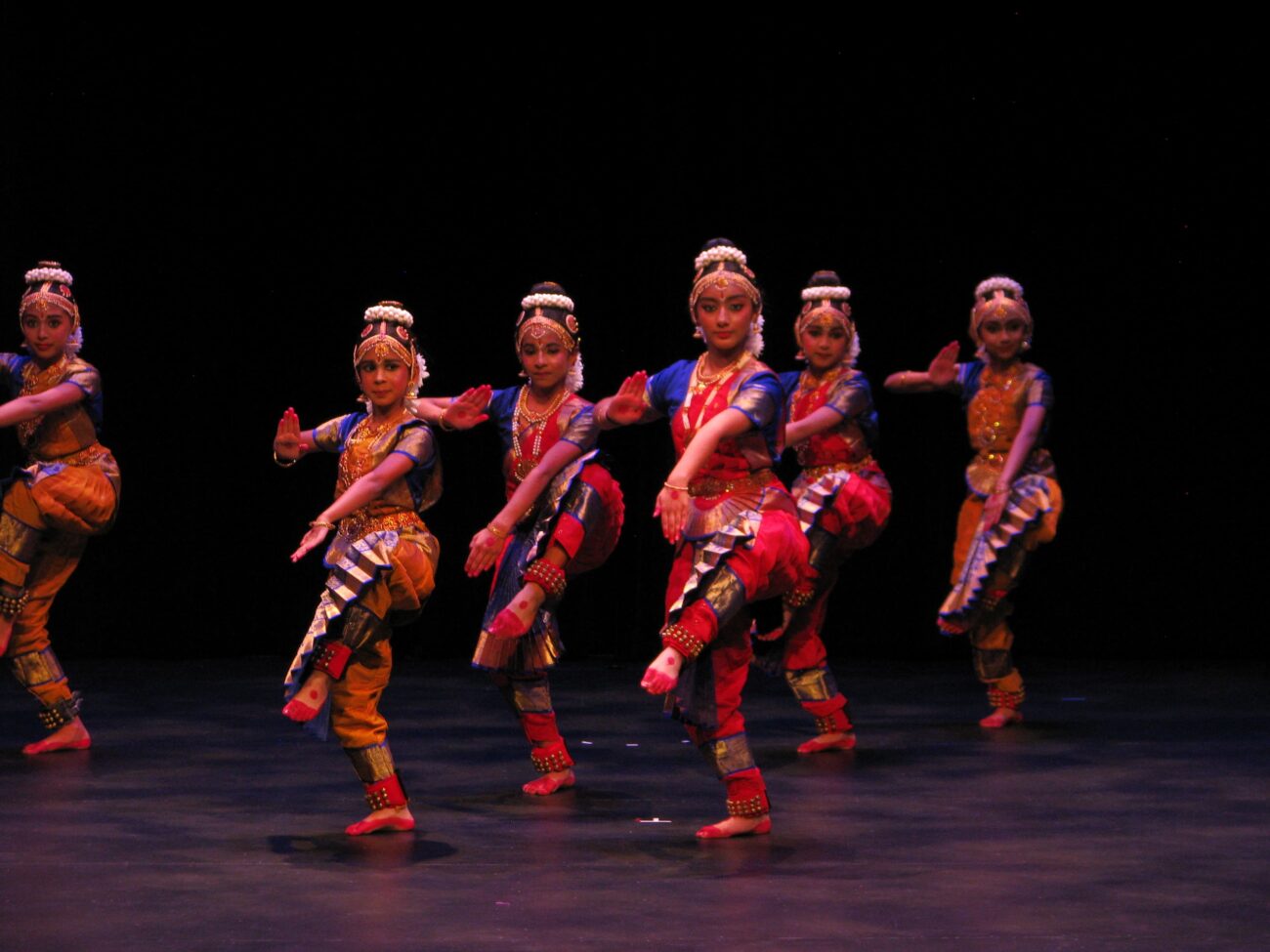
Dancers take the pose of Nataraja, the God of Dance. Photo: Kavi Vidya Achar / Fulcrum 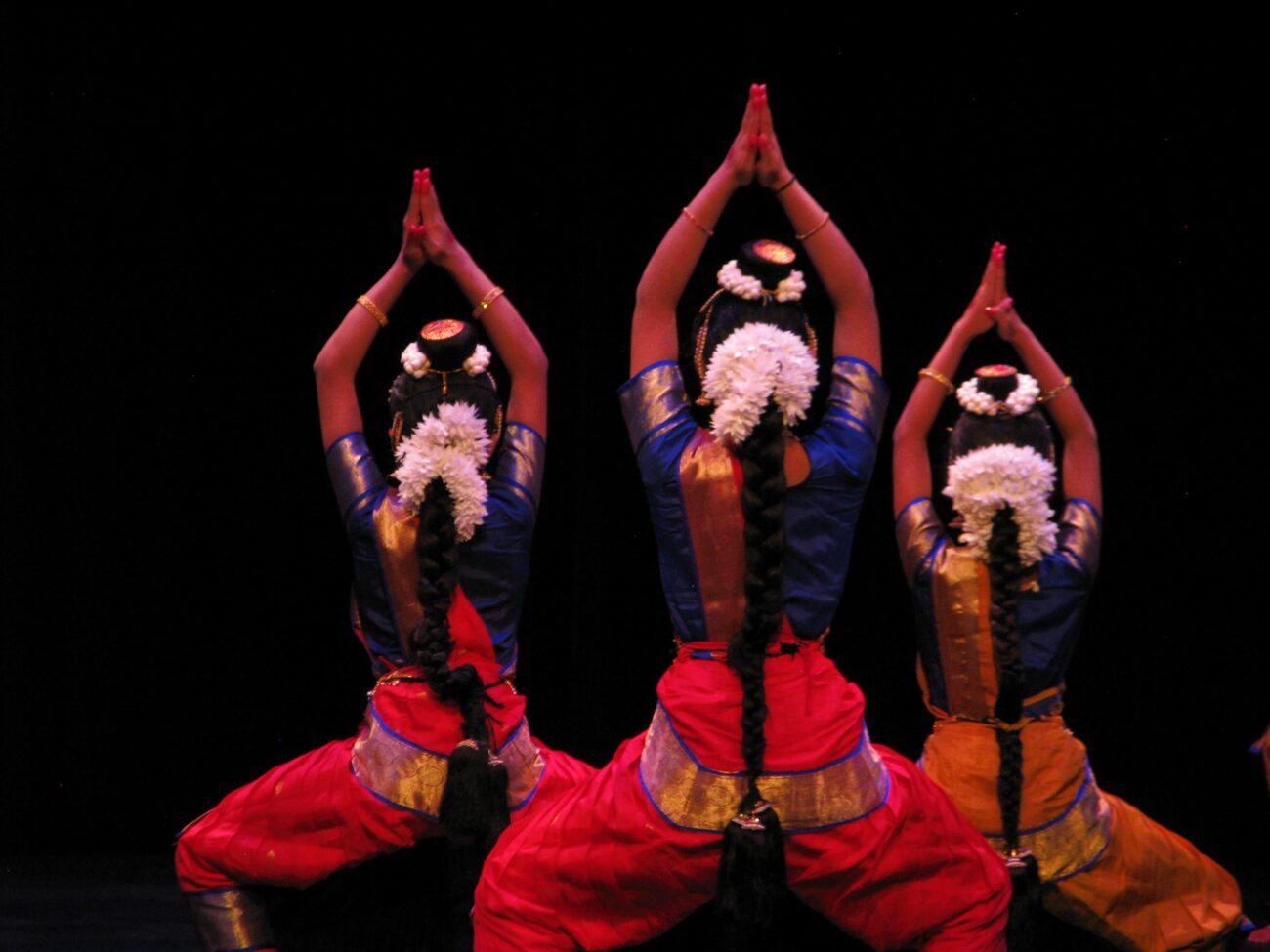
Photo: Kavi Vidya Achar / Fulcrum 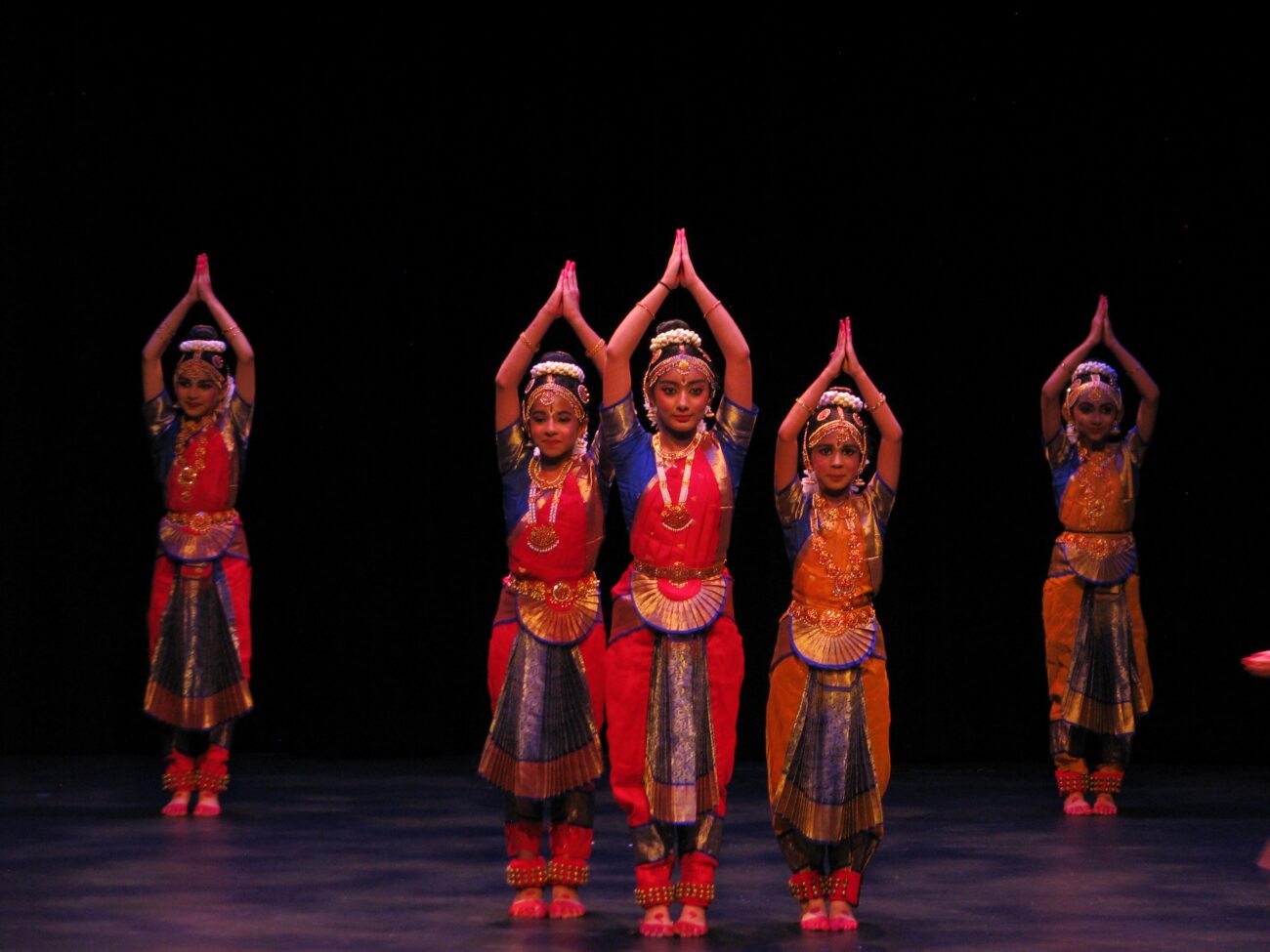
Photo: Kavi Vidya Achar / Fulcrum 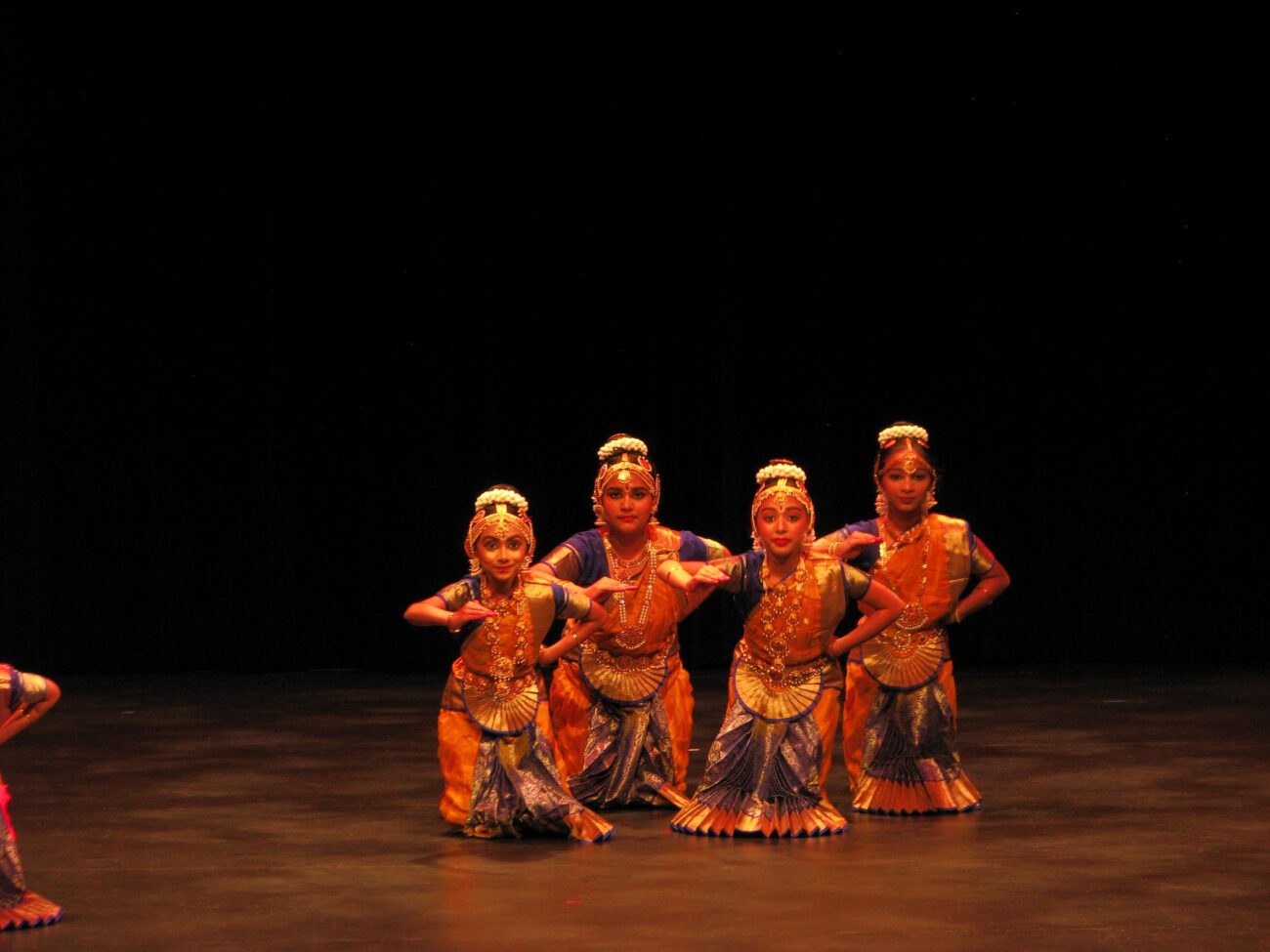
Young dancers pose as mice. Photo: Kavi Vidya Achar / Fulcrum 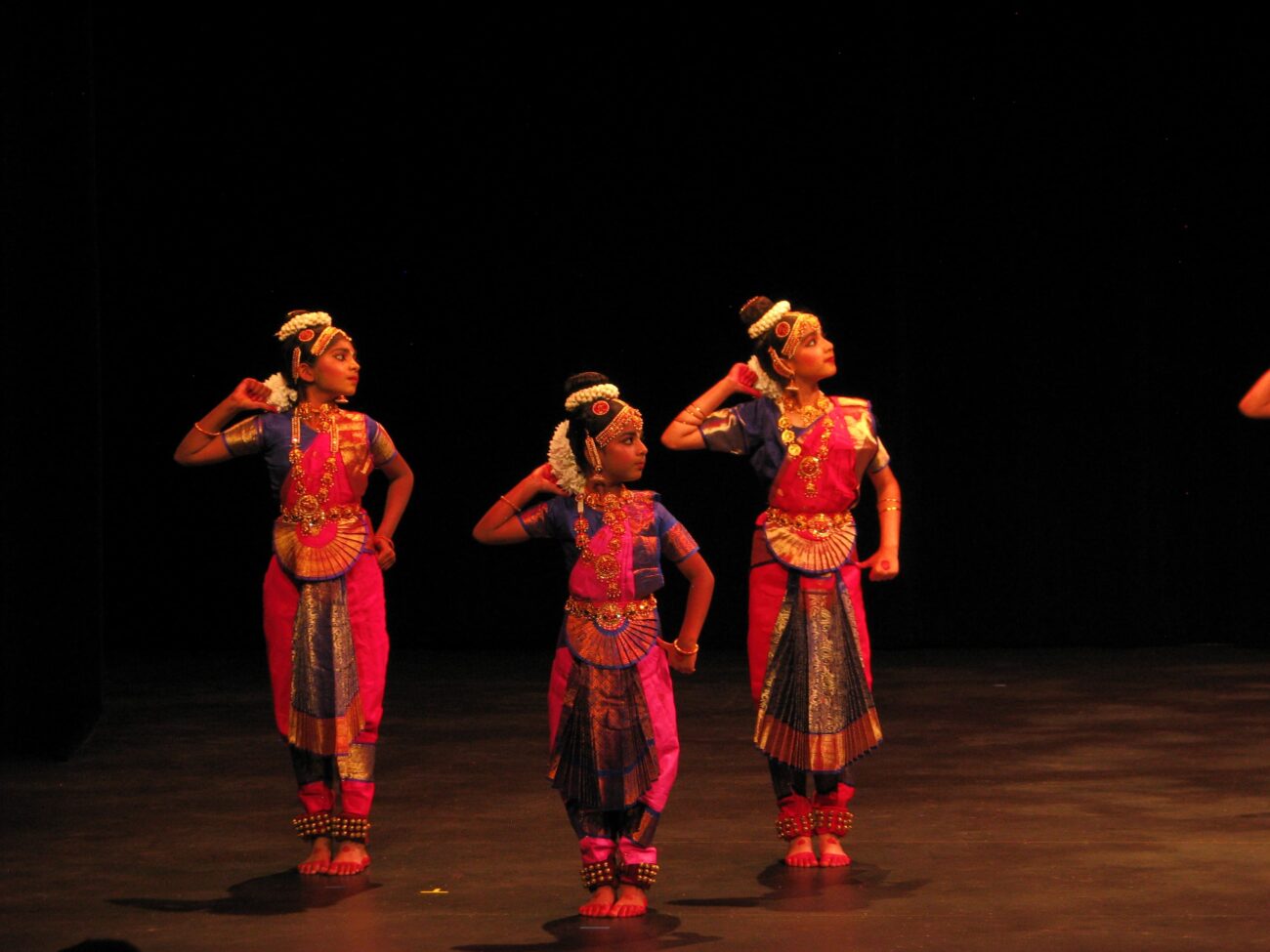
Dancers pose as scholars. Photo: Kavi Vidya Achar / Fulcrum 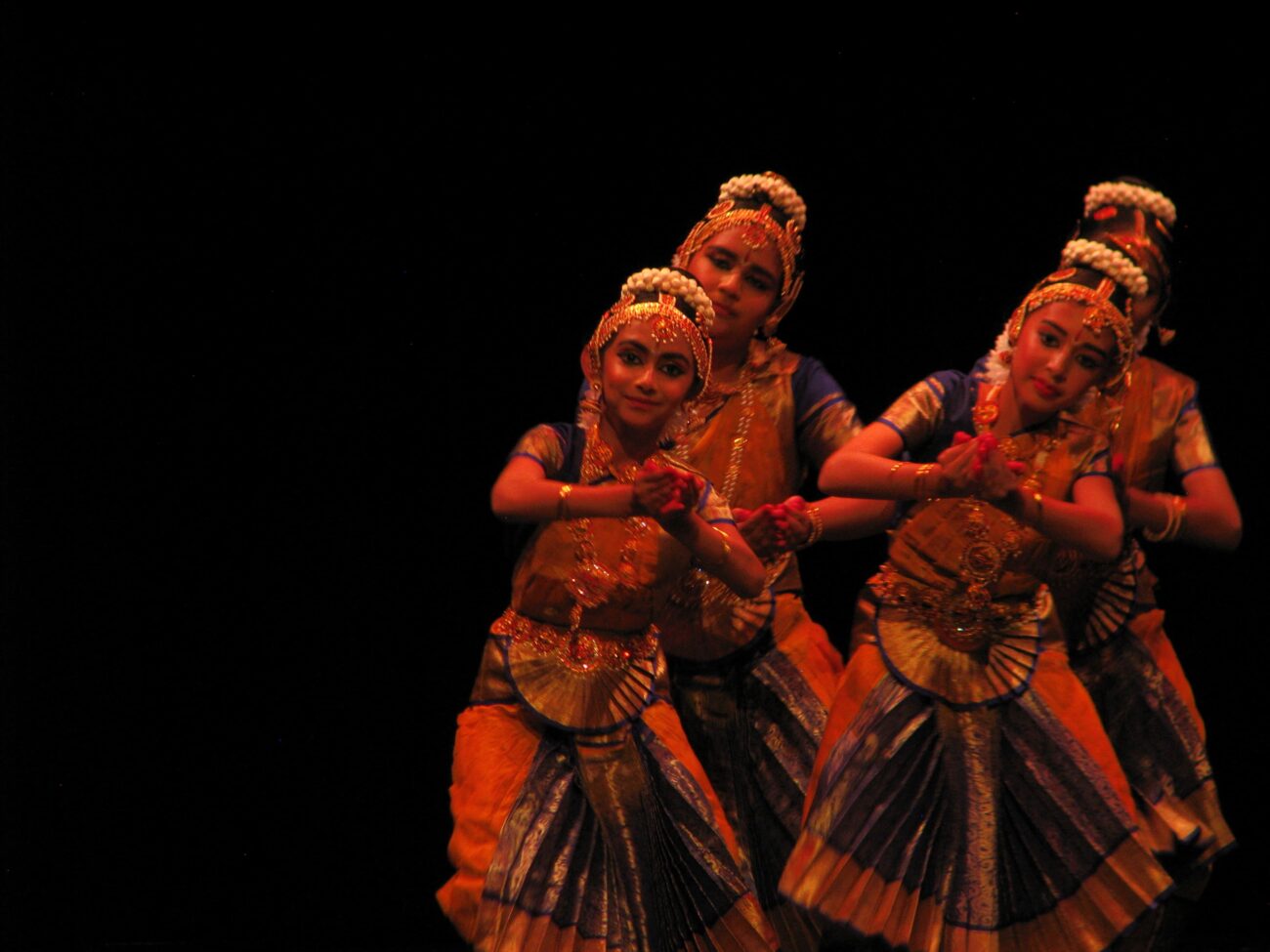
Young dancers hold flowers in their palms as an offering to God. Photo: Kavi Vidya Achar / Fulcrum
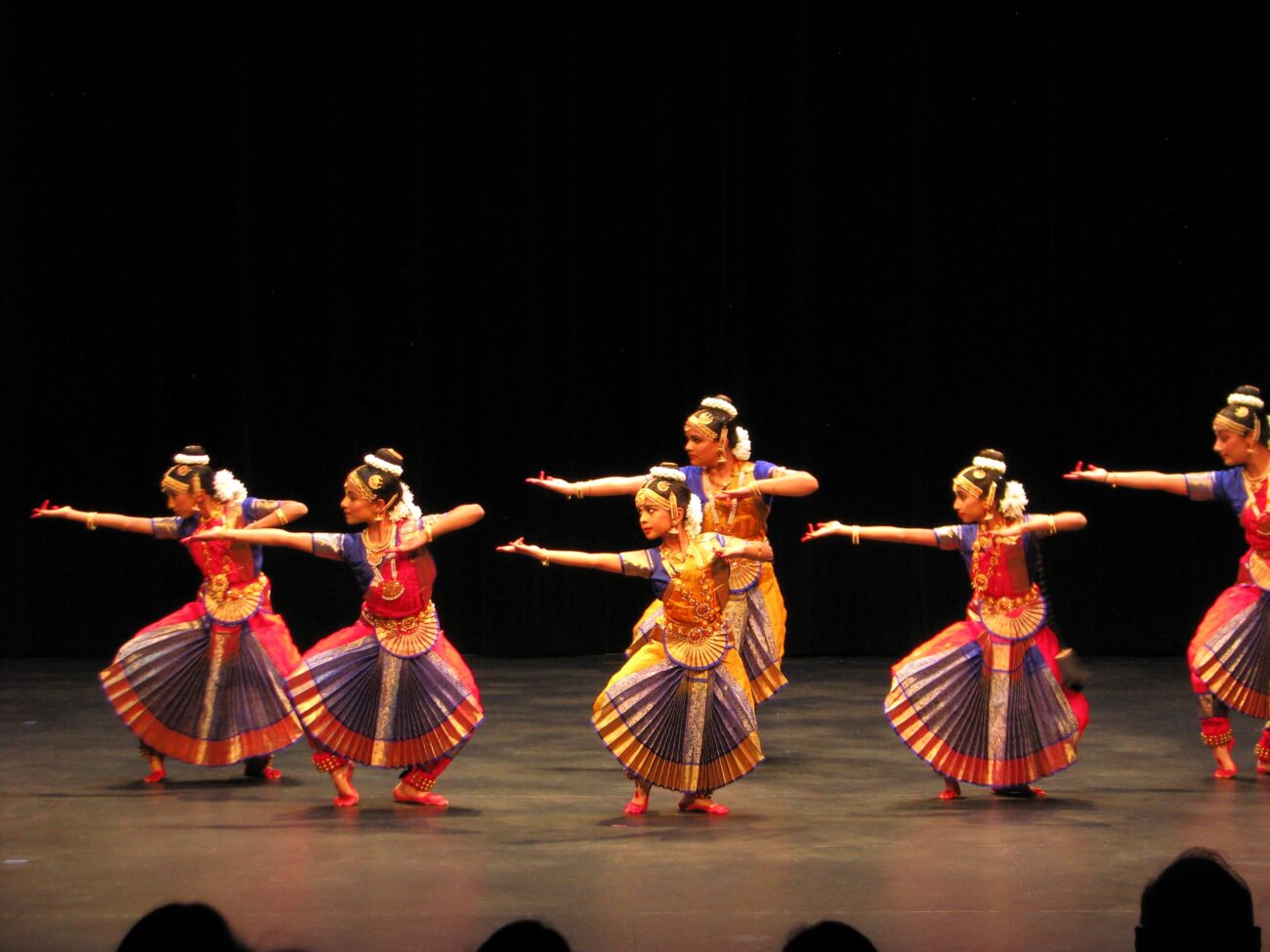
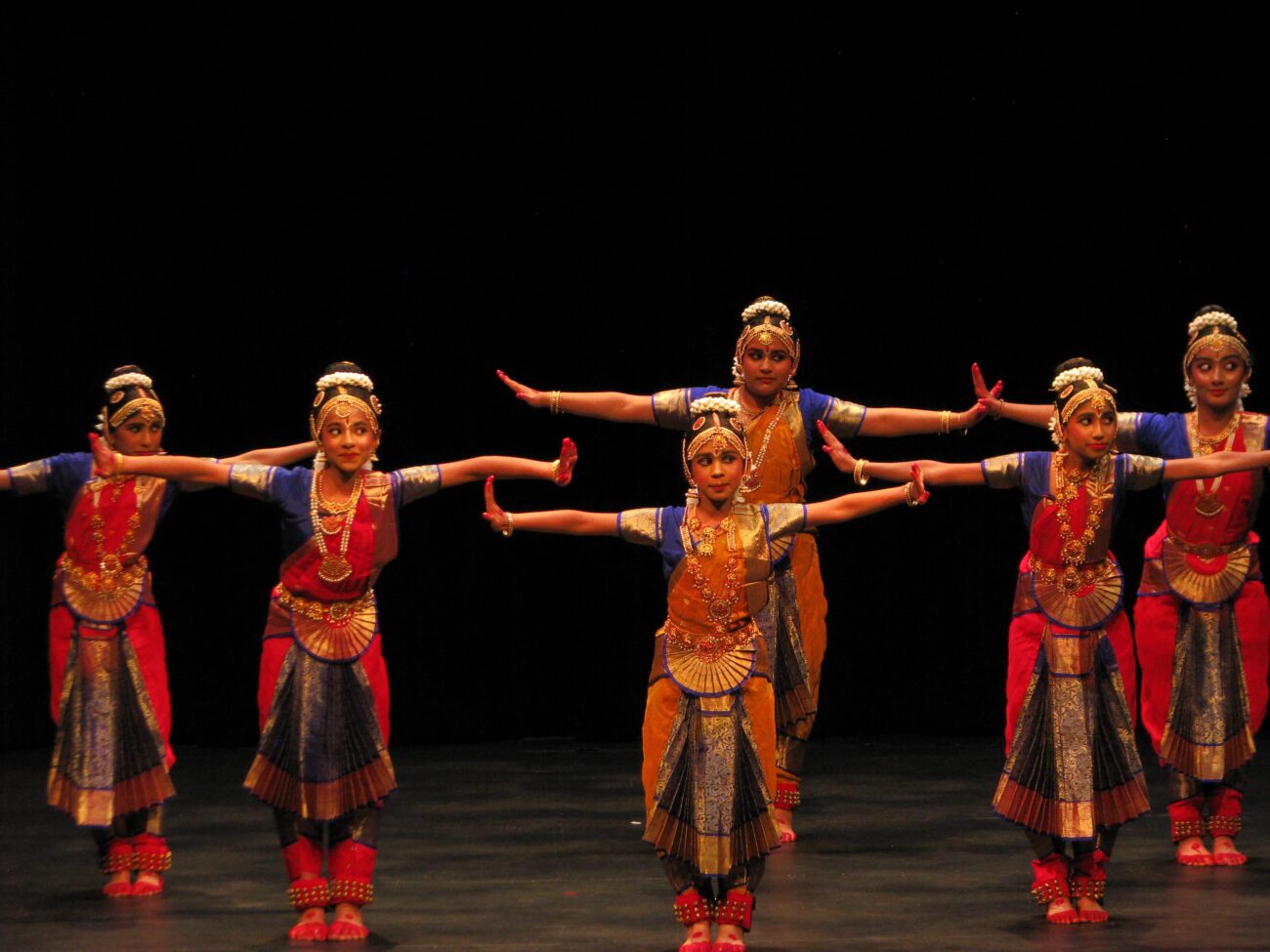
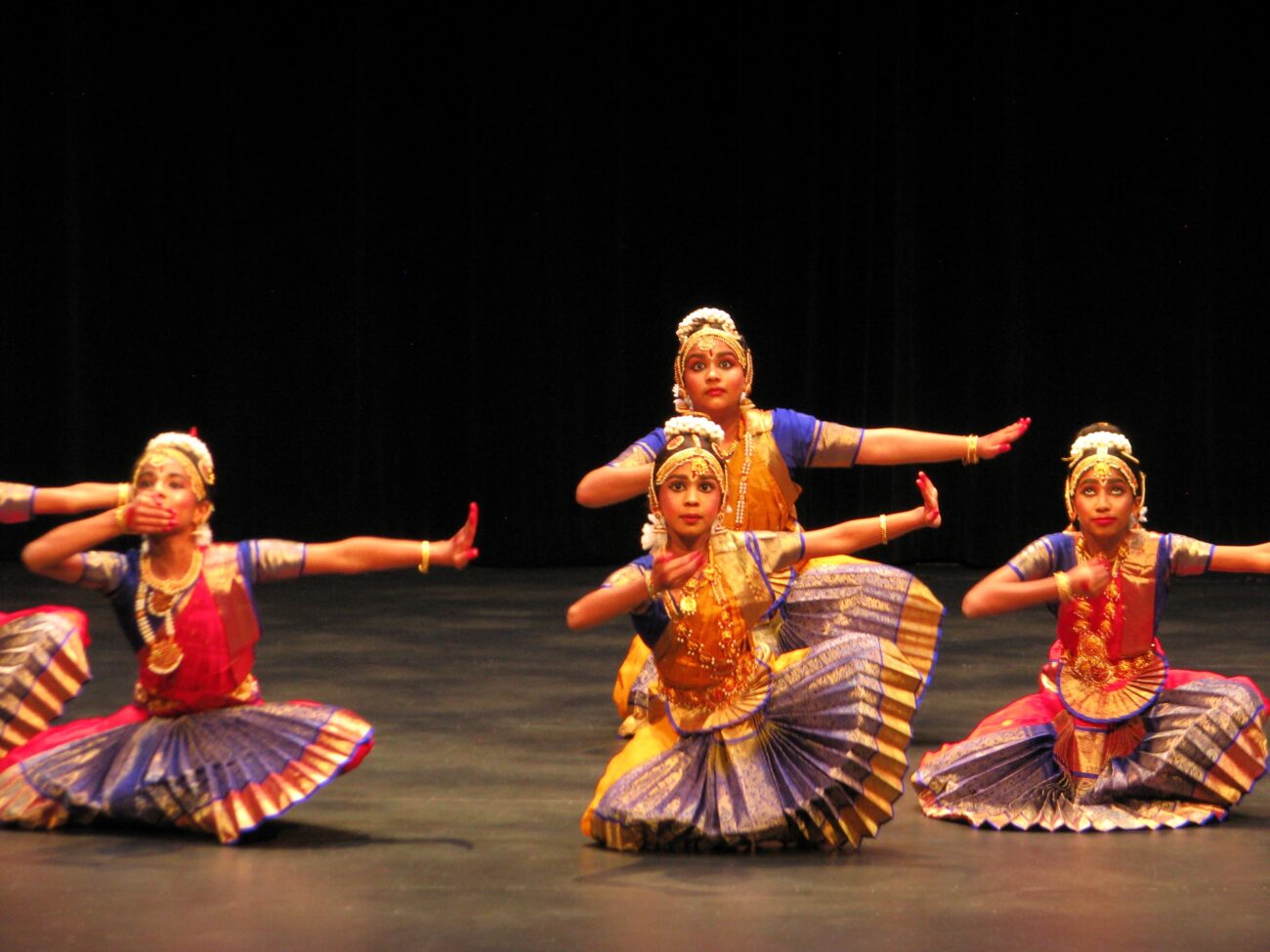
Although the rest of the show was amazing, the next piece was my highlight of the evening. The intermediate students of Kalagriha School of Performing Arts took the stage with a Tanjore quartet tisra ekam alarippu. Right from the opening beats, there was a sharpness to their adavus that instantly grabbed my attention. An alarippu is a technically challenging piece, where the slightest eye movements and head tilts count. If one dancer is even the tiniest bit out of sync, it becomes glaringly obvious to the audience.
I can count on one hand the number of times I’ve seen a group of young dancers pull this off at such a high level. Their timing was consistent from start to finish, and the precision in their movements showed how well they had rehearsed. The discipline of the piece came through clearly, and it was matched by a steady confidence that kept the performance engaging.
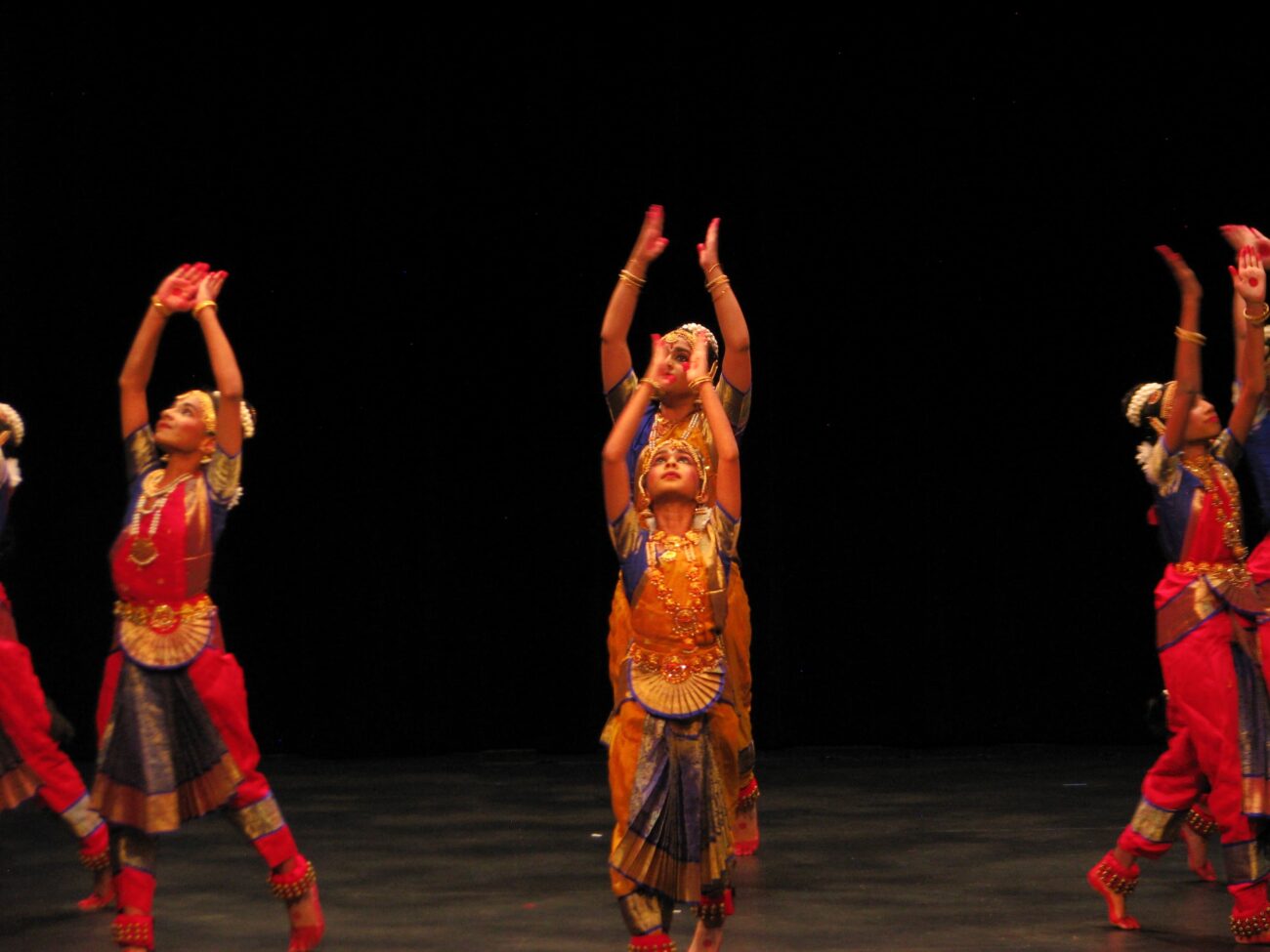
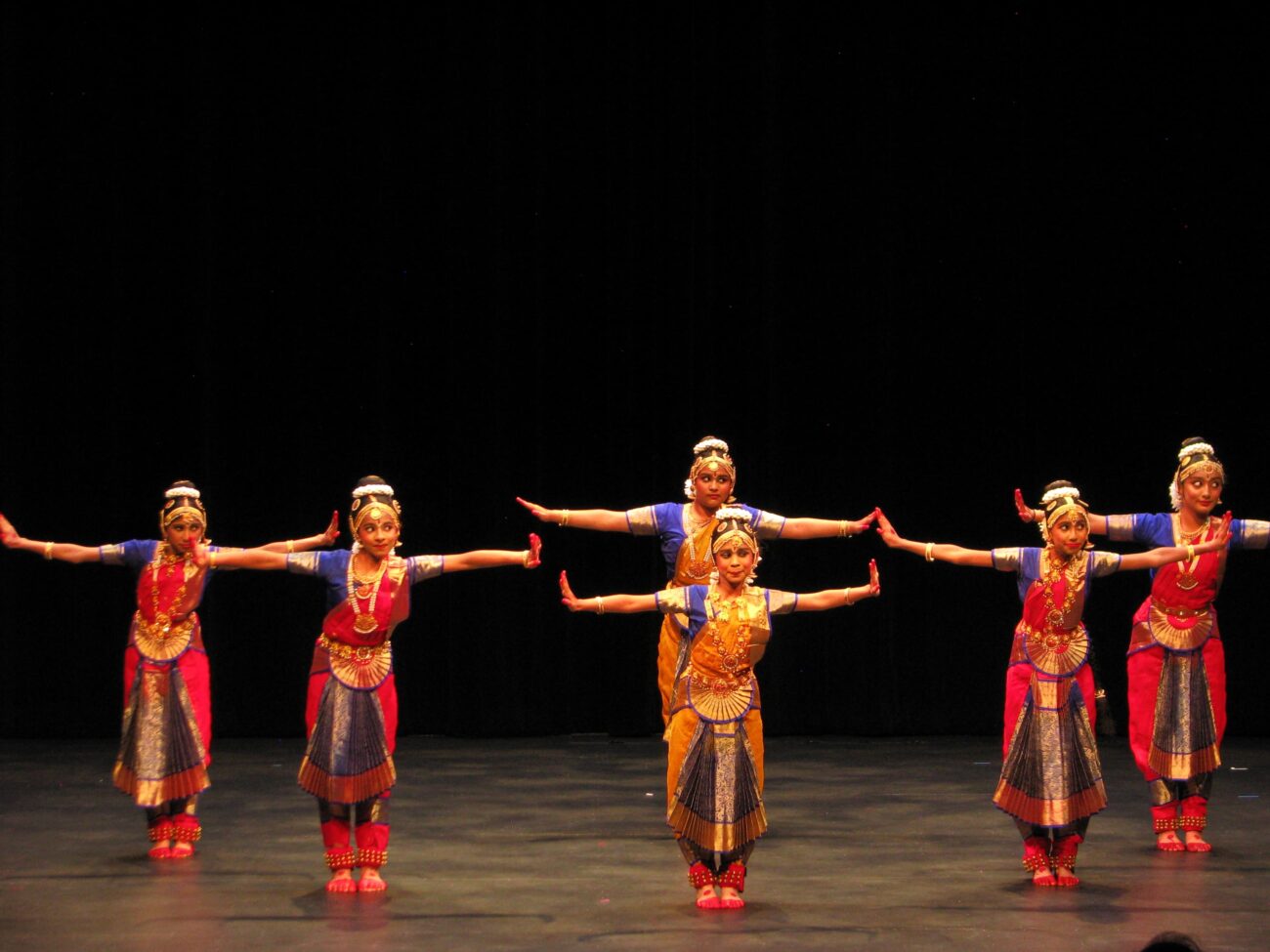
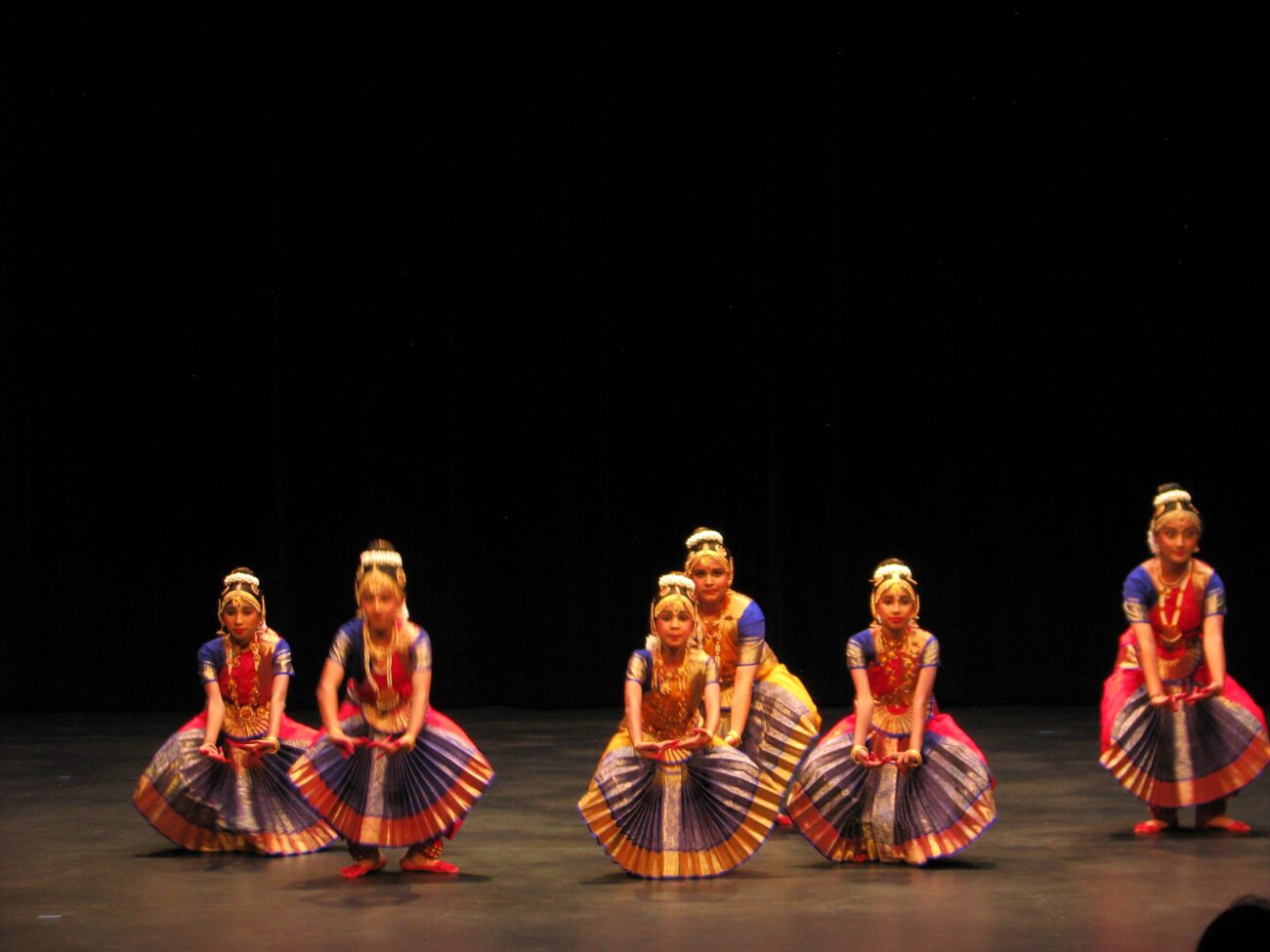
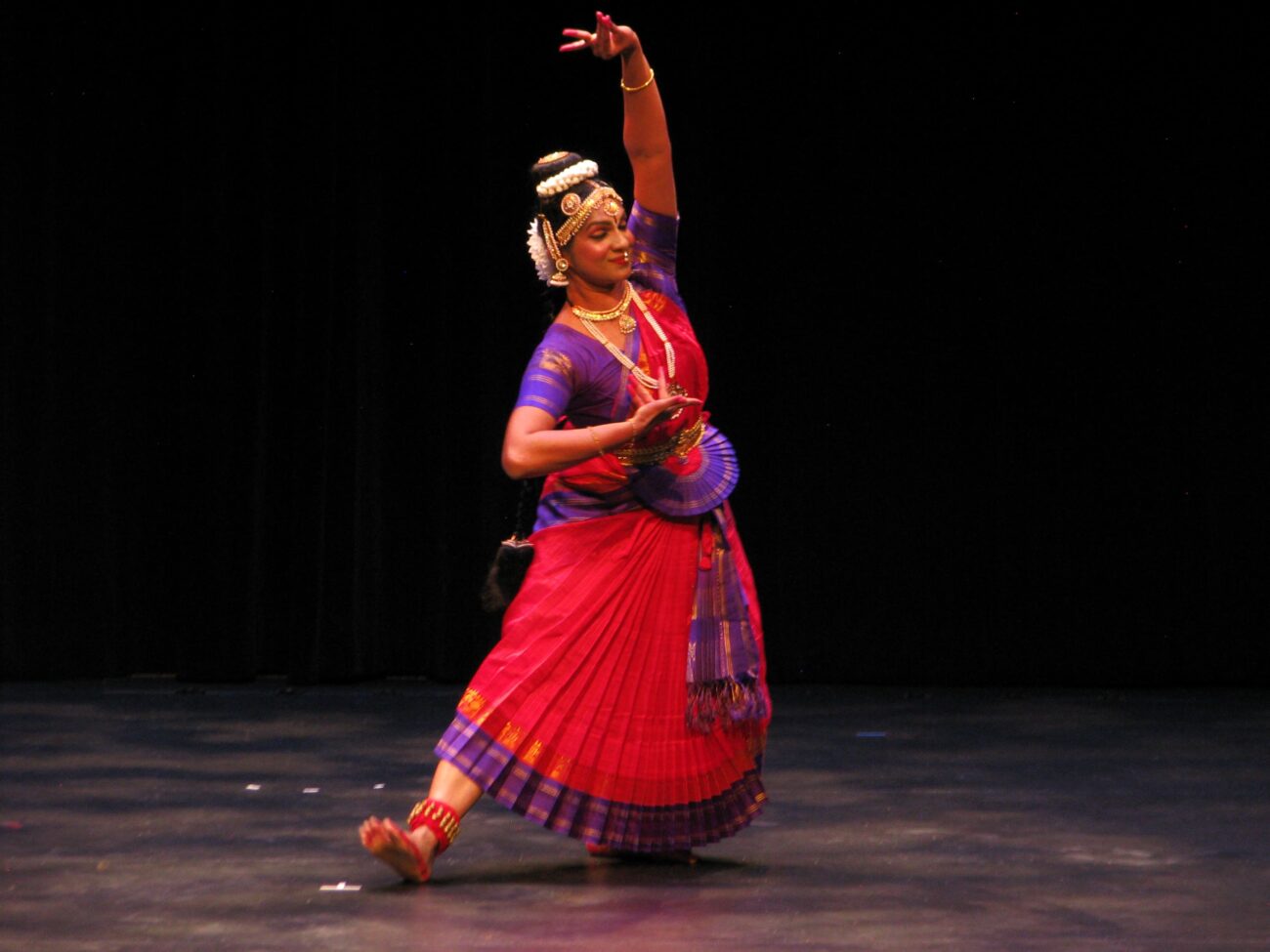
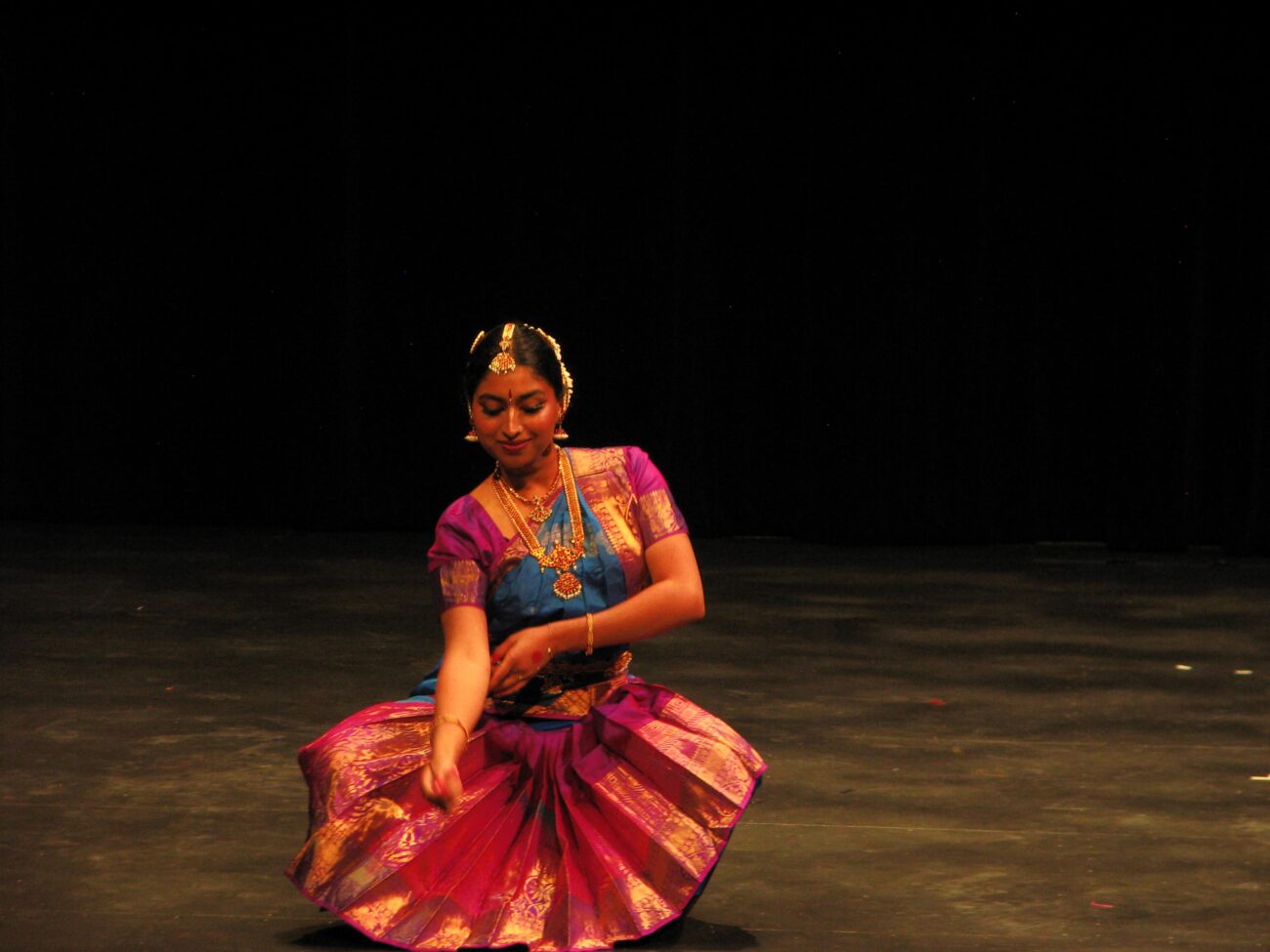
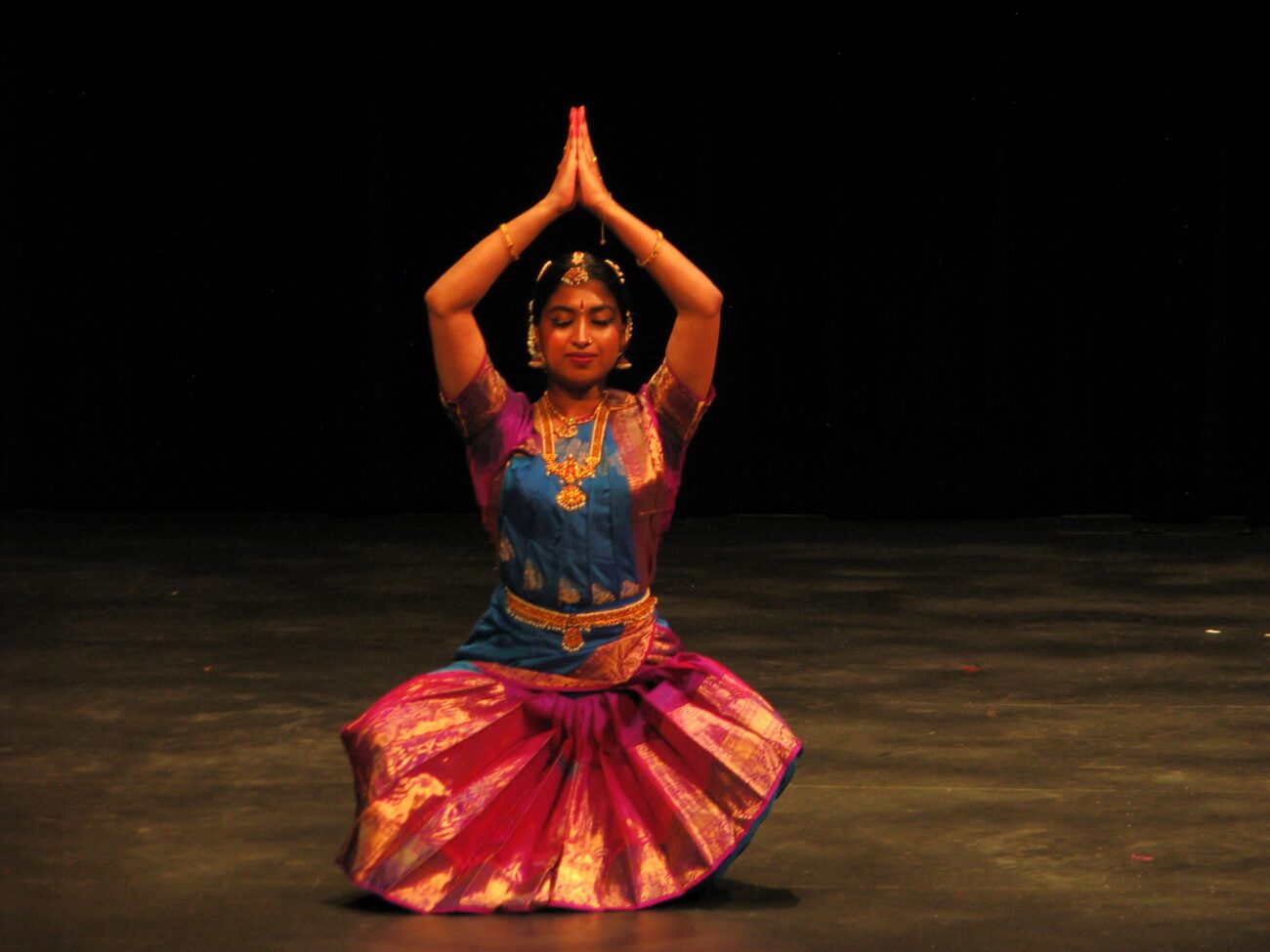
The next performance was by Aparna, an adult student of Kalagriha School of Performing Arts, who presented a jathiswaram in raga Arabhi and Adi tala. This piece was fantastic. The slower pace allowed the technical details to really stand out, and Aparna delivered with precision in every movement. Her body postures were balanced and symmetrical, showing strong control and training, and her flexibility gave the performance an elegance that was hard to miss. Her red and purple costume glittered under the stage lights. I was so enraptured by the performance that I realized afterward I had forgotten to take pictures for much of it. Aparna’s performance was a clear reminder that even without abhinaya (expressions), pure technique can hold the audience’s full attention.
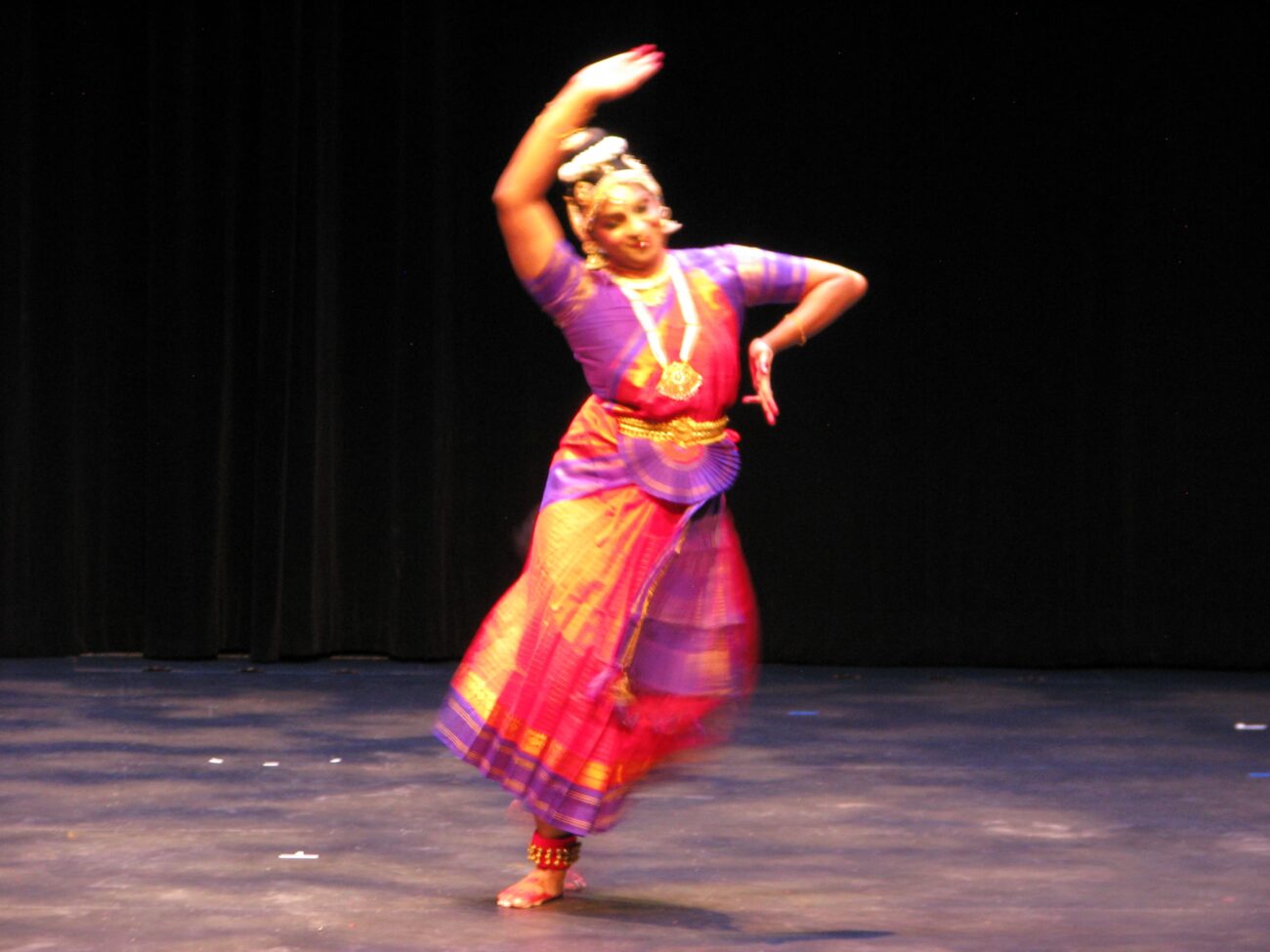
The next performance was by the Adhvaya School in Ottawa, presenting a Muralidhara Krishna kauthuvam in raga Arabhiand Adi tala, choreographed by Smt. Seena Nair and performed by Athulya, Syed, and Diya. Having performed this piece myself before (with a different choreography), I know how challenging it is to maintain both the rhythmic sharpness and the group coordination it demands. In this rendition, there were moments when the dancers were not fully in sync, which drew attention away from the choreography. That said, the costumes were striking and added vibrancy to the stage, especially the lime green and purple costume. Among the three, the dancer in that costume carried herself with particular strength and presence, which kept my eyes glued to her throughout.
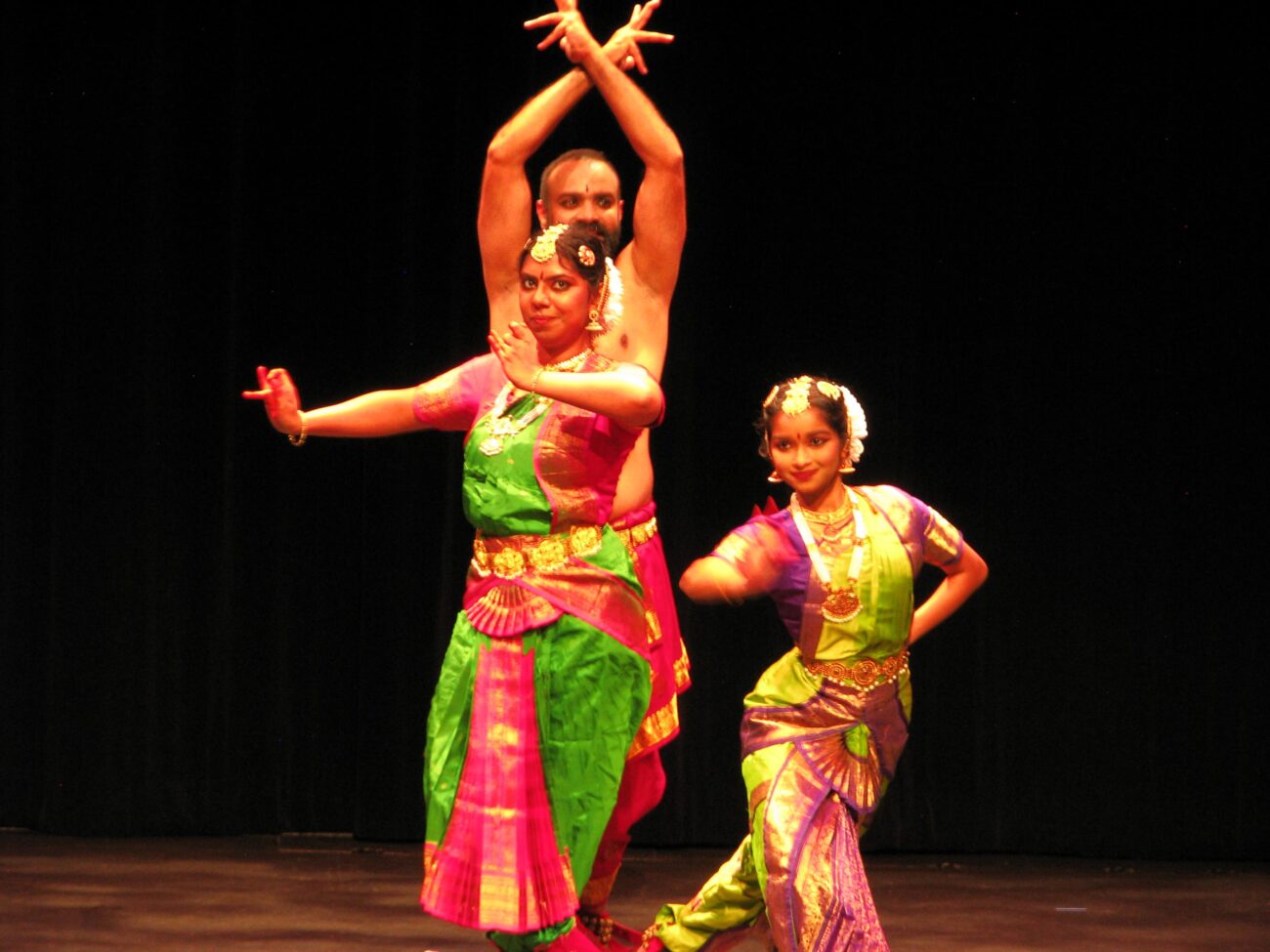
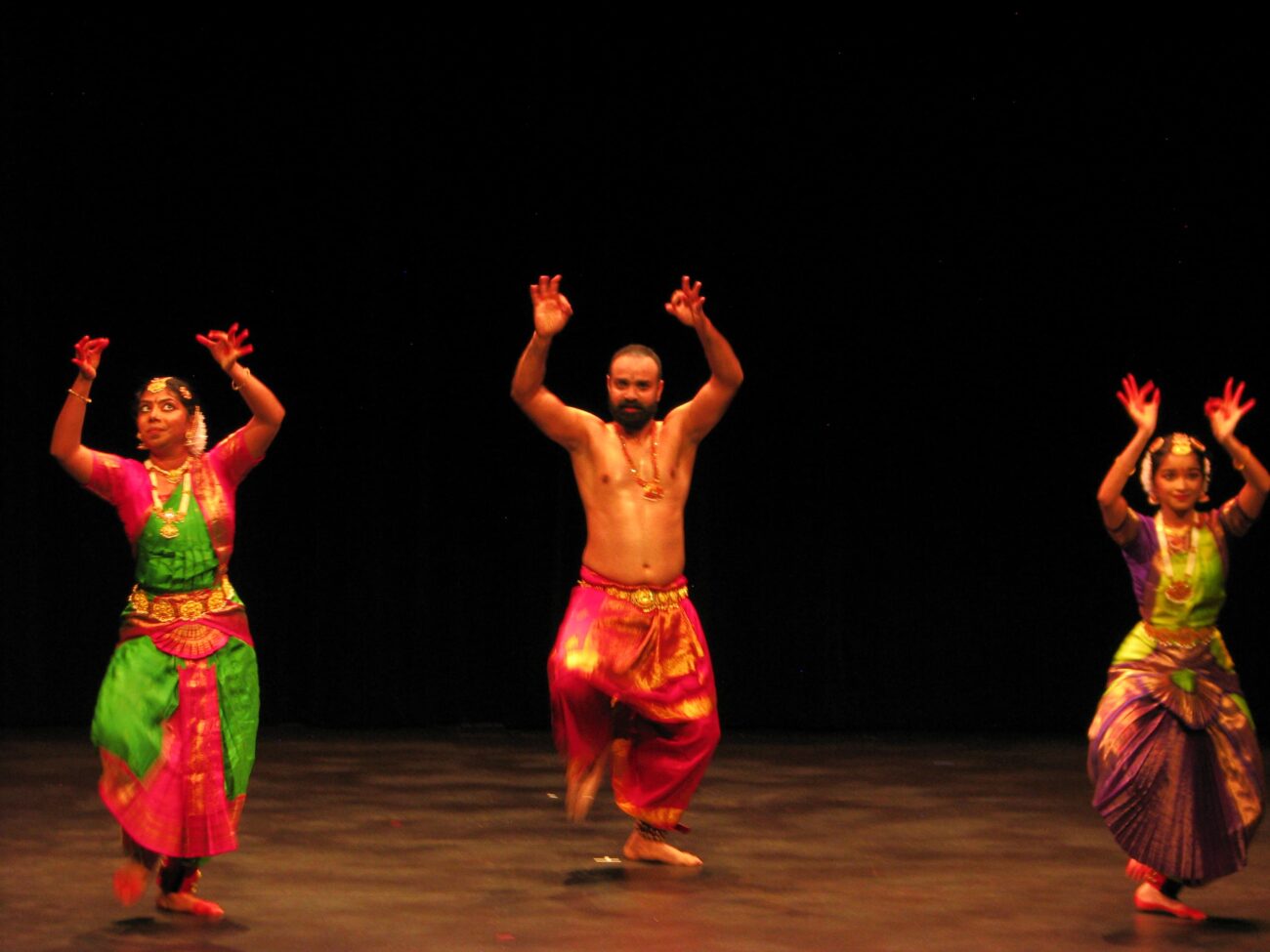
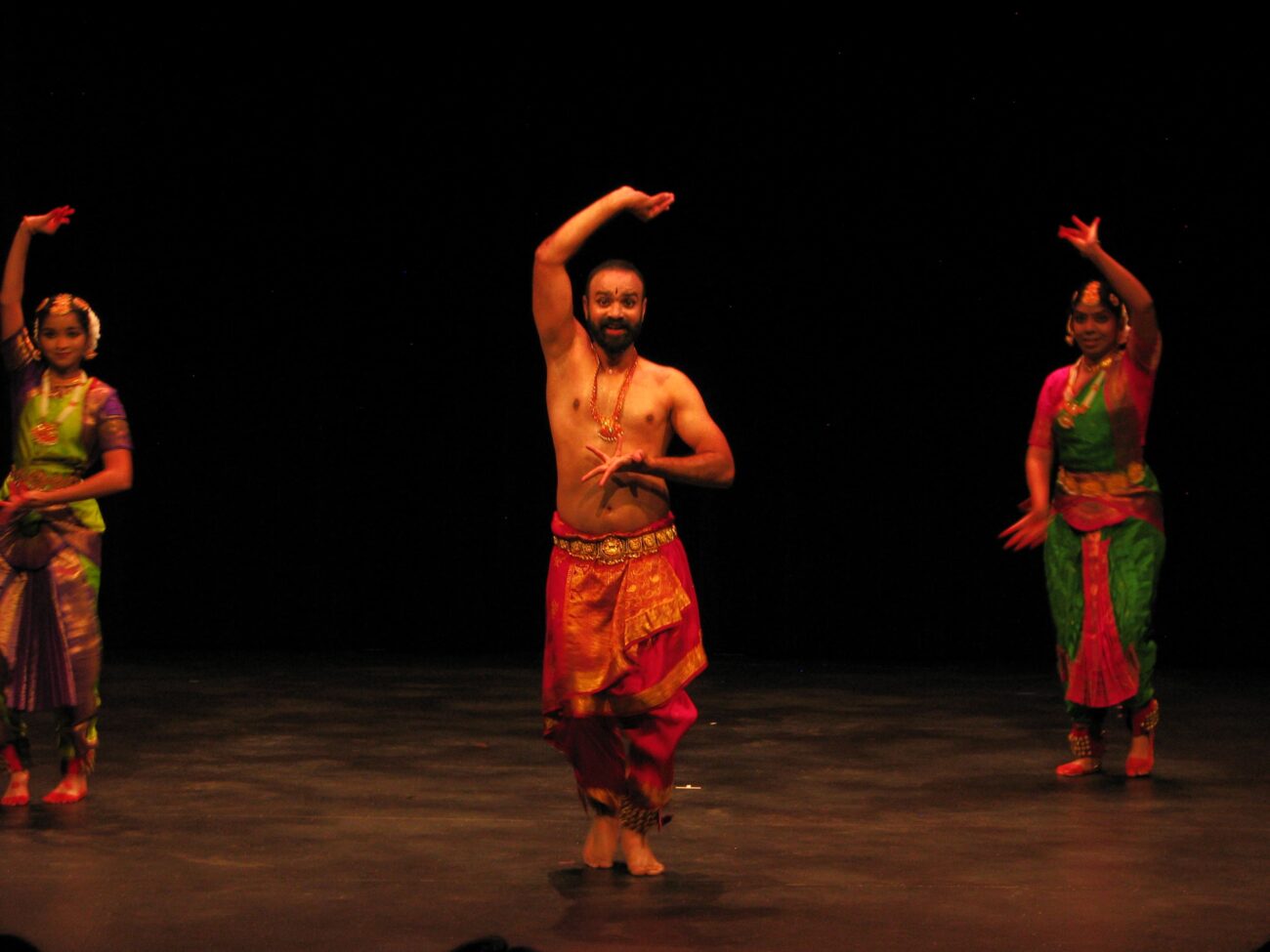
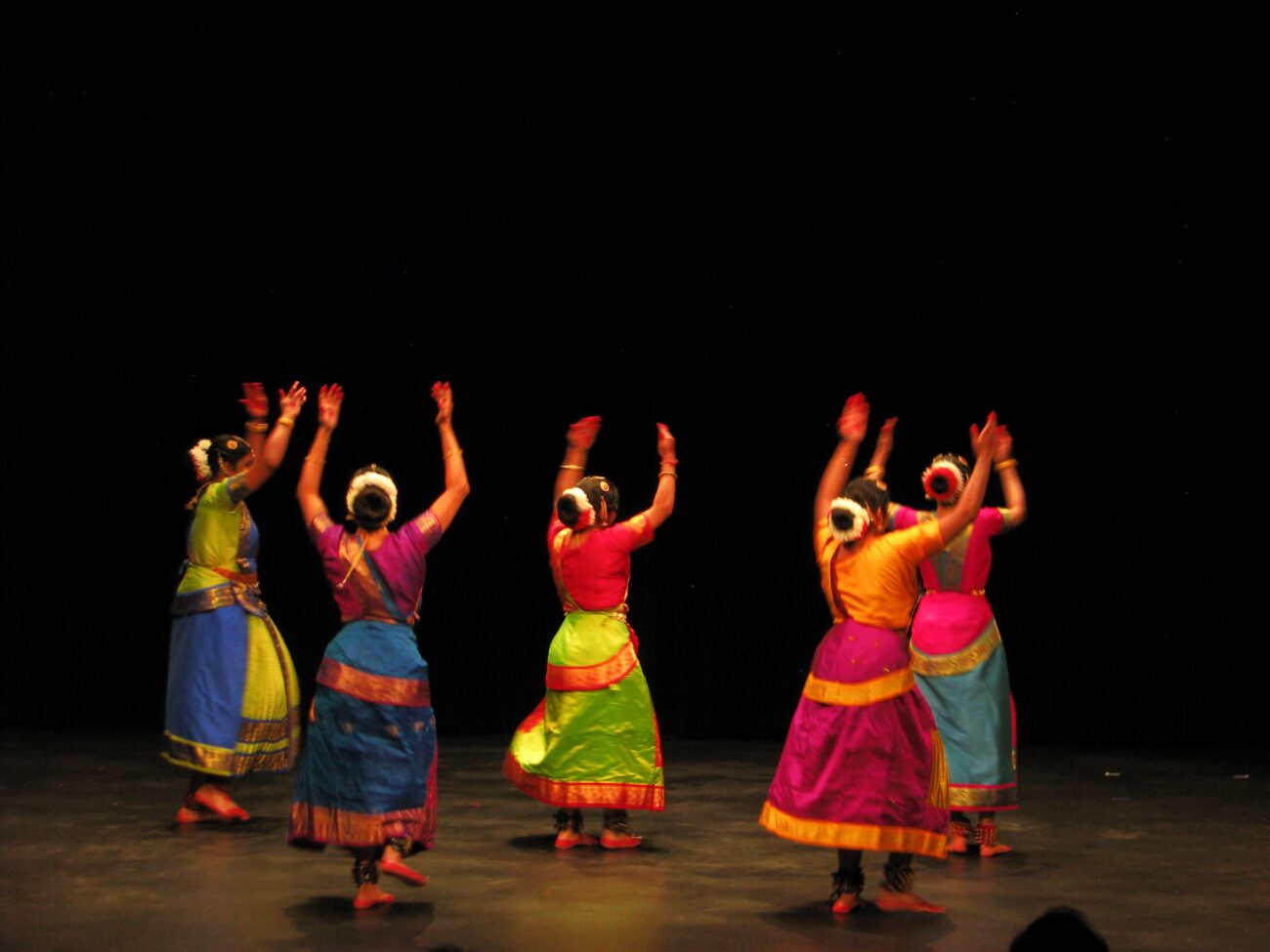
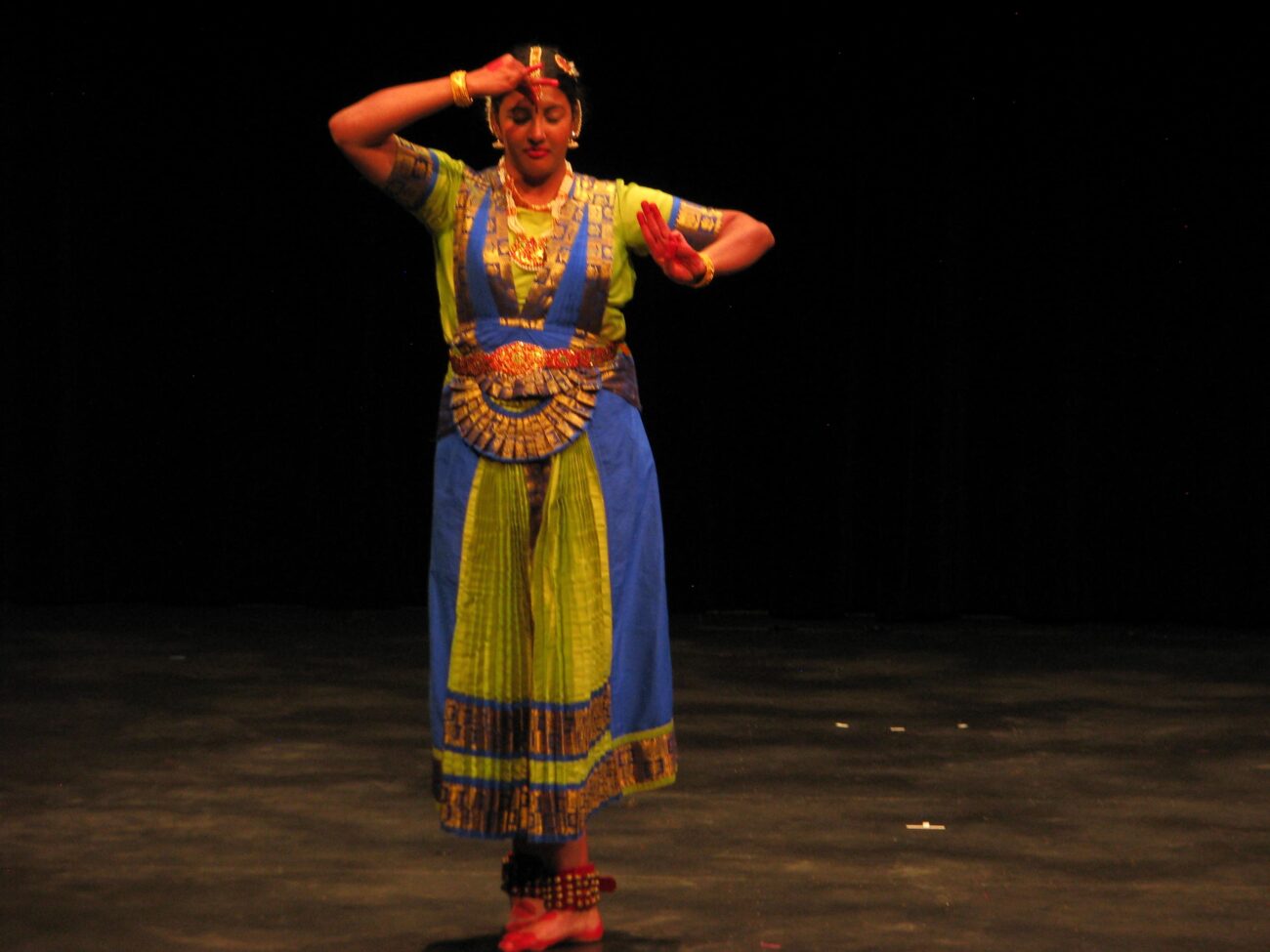
The keertanam Bho Shambho was up next, performed by the senior students of Sadhana School of Indian Arts, led by Smt. Aishwarya Vijaykumar. The five dancers: Aastha, Apurva, Padmaja, Sahana and Shree Lasya, wore bright, colourful costumes that matched the joyful energy they brought to the stage. Bho Shambho is a classic in the repertoire and almost a rite of passage for intermediate dancers; I’ve also performed it a handful of times. The footwork in this piece was not particularly complex, but what stood out was the choreography and the use of formations. The dancers rarely occupied the stage all at once; instead, they entered and exited in turns, and the transitions were so seamless that the stage never felt empty. It gave the performance a dynamic quality, and my eyes were constantly drawn to the fresh patterns and formations.
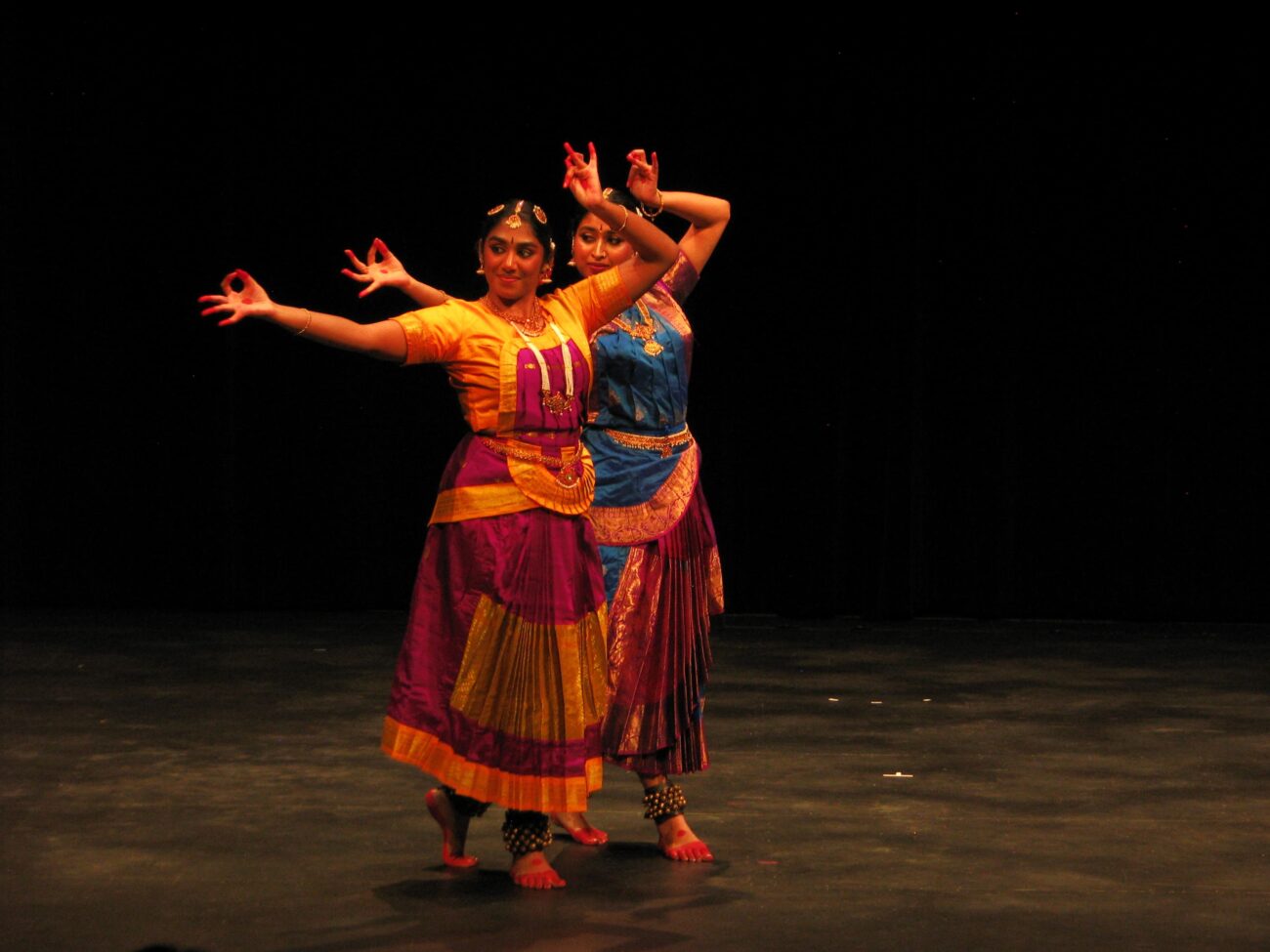
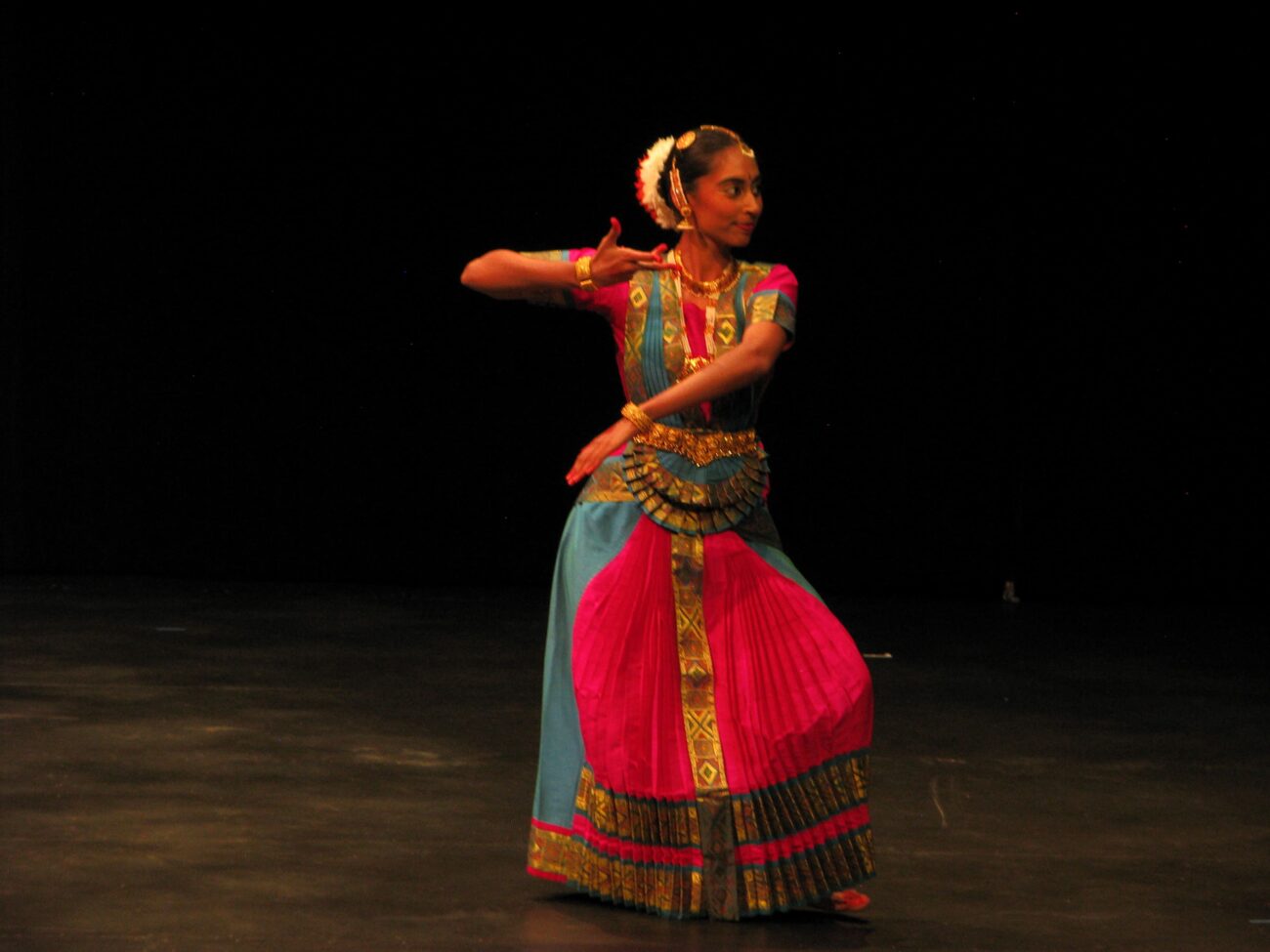
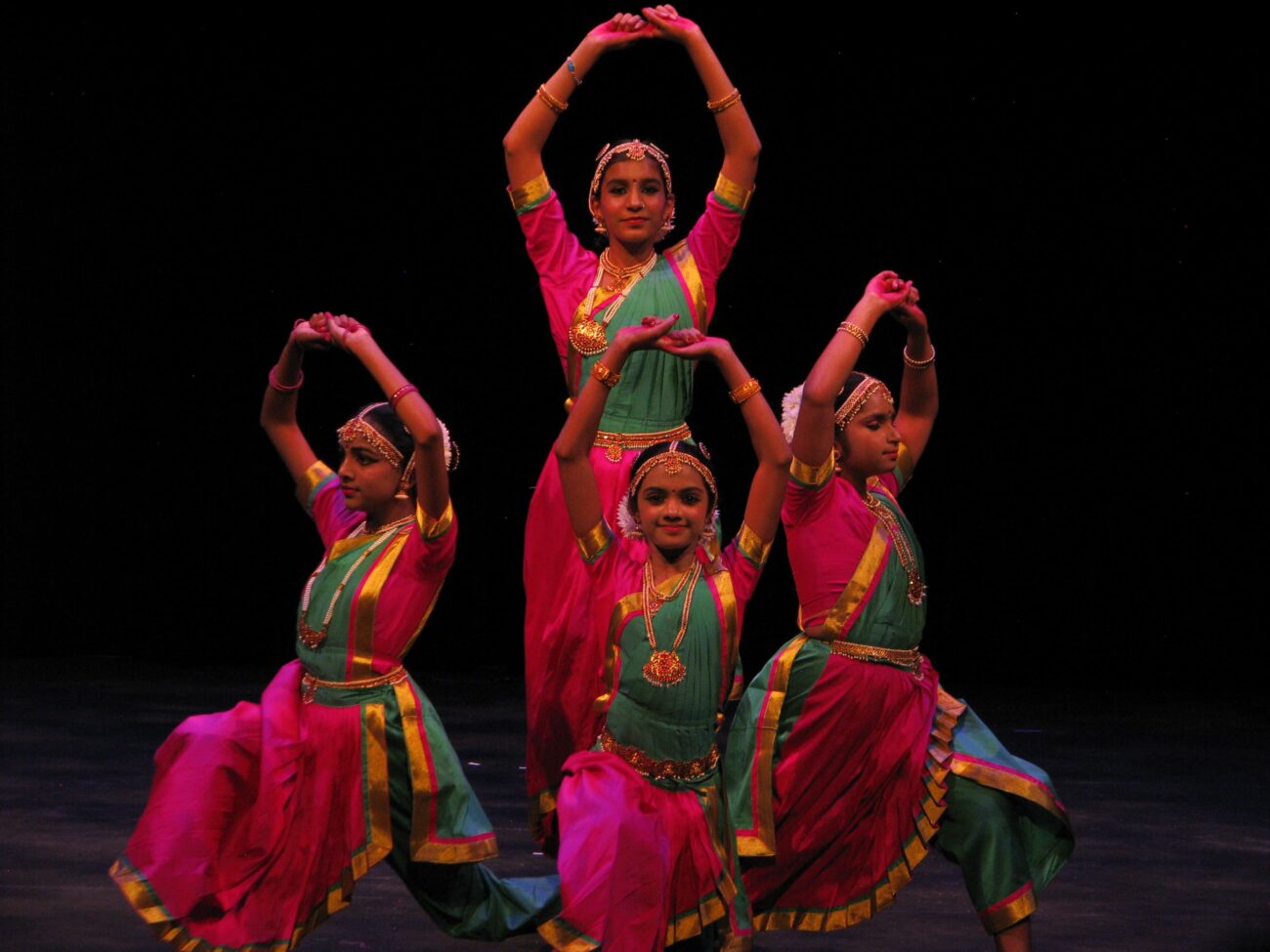
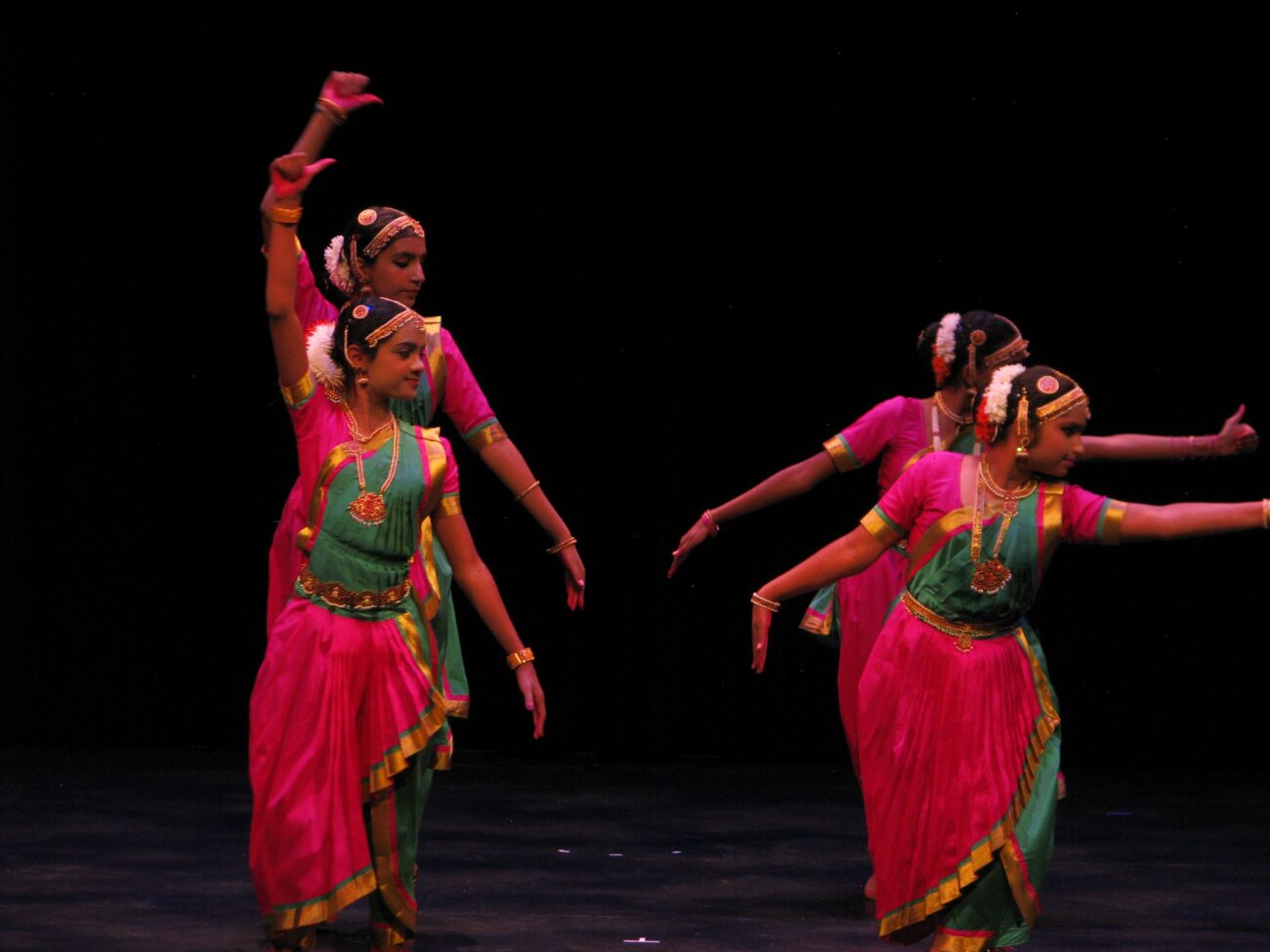
Prashanti School of Dance, led by Smt. Radhika Pillai, brought in a Thillana dedicated to Lord Rama, set in Kapi raga and Adi thalam. The performers, Eva, Aarohi, Lalithya and Vageesha, wore matching pink and green costumes, which gave the group a cohesive look. It was especially nice to see the younger dancers hold their poses steadily and maintain straight lines in the formations. This was actually a thillana I had never heard before, and the melody immediately hooked me: Kapi as a raga has a reflective, almost sorrowful quality, which gave the piece a very different feel from the bright, upbeat thillanas I’m used to seeing. I also love tracking the arudhi of thillanas (a brief, punctuated movement that marks the end of a section.) Their arudhi was simple and clean, and it tied the whole piece together without overcomplicating it.
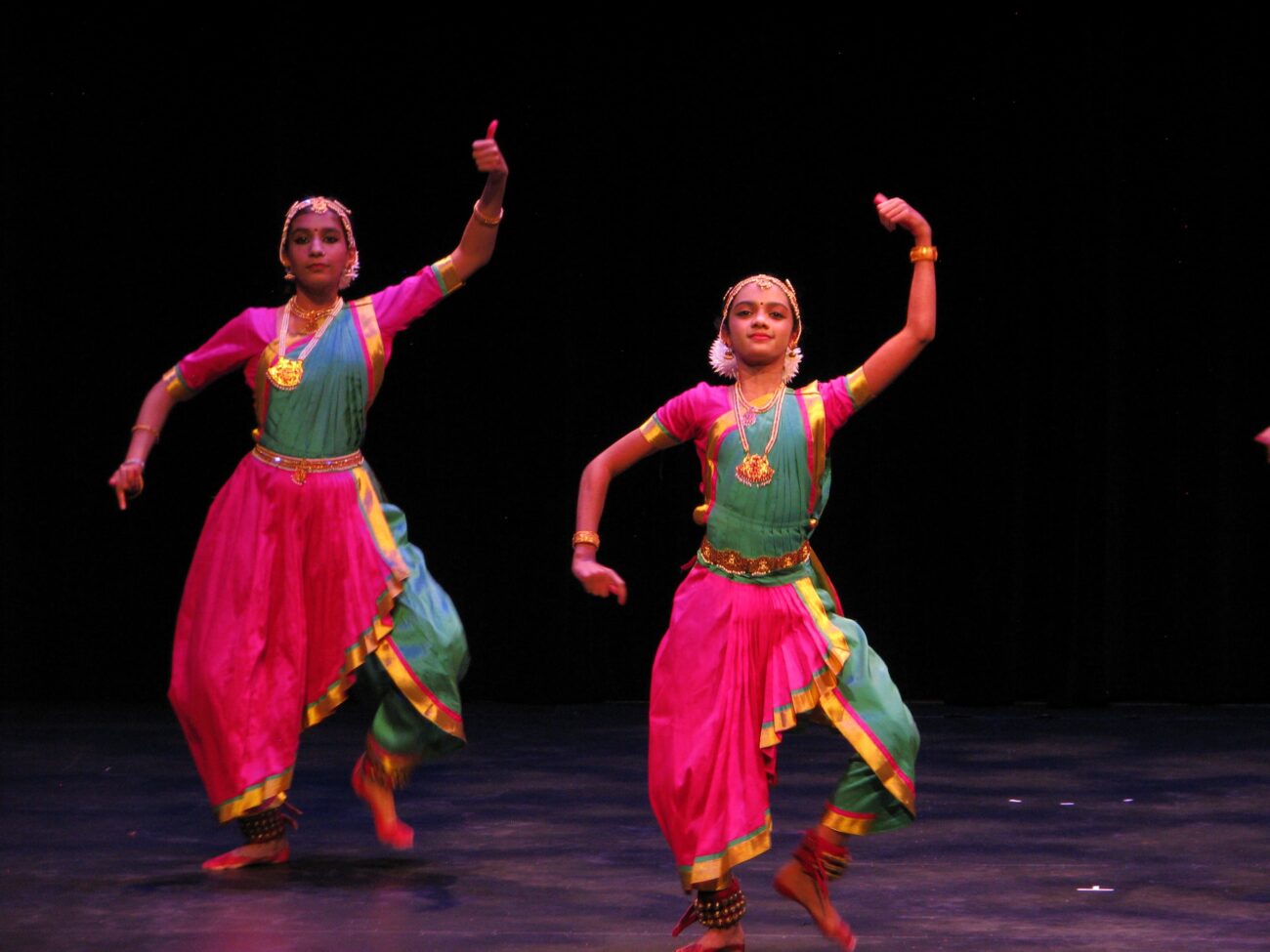
What I thought was the last piece of the first half was a Tulsidasa bhajan, ‘Sri Rama Chandra Kripalu,’ in raga Yaman Kalyani and thalam Misra Chapu, choreographed by Smt. Stuti Mukherjee and performed by Anagha G, Anya, Anika G, Anika S, Anvi, Aparna, Aswathi, Deeya, Ishika, Keerthana, Kusum, Manasvi, Meera, Medhya, Nabhanya, Nakshtra, Nitara, Sneha, and Tanushri.
The huge group definitely brought the energy back to the stage, after the more contemplative thillana we had just witnessed. Sri Rama Chandra Kripalu is usually performed as a mangalam, which is the final piece in a Bharatanatyam performance. A mangalam is typically a popular, upbeat song that isn’t super technically demanding—it’s designed to get the audience clapping along and leave everyone feeling happy. I personally LOVE this piece. With so many dancers on stage, it was pure joy to watch, and the energy was infectious. The choreography even included parts of the story, and they acted out the moment where Rama lifts a bow to win Sita’s hand in marriage. It was fun, engaging, and full of life. Perfect!
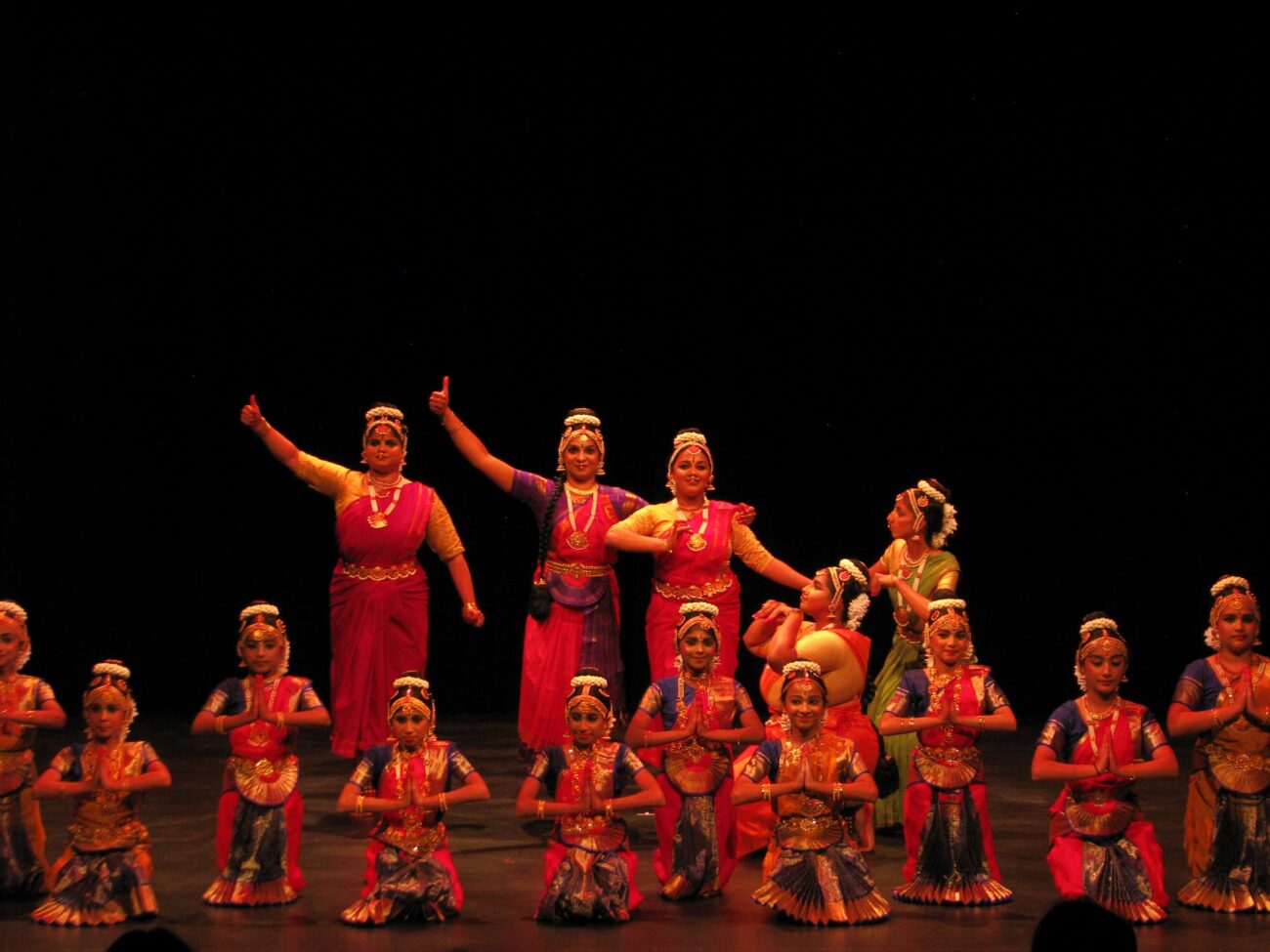
Photo: Kavi Vidya Achar / Fulcrum 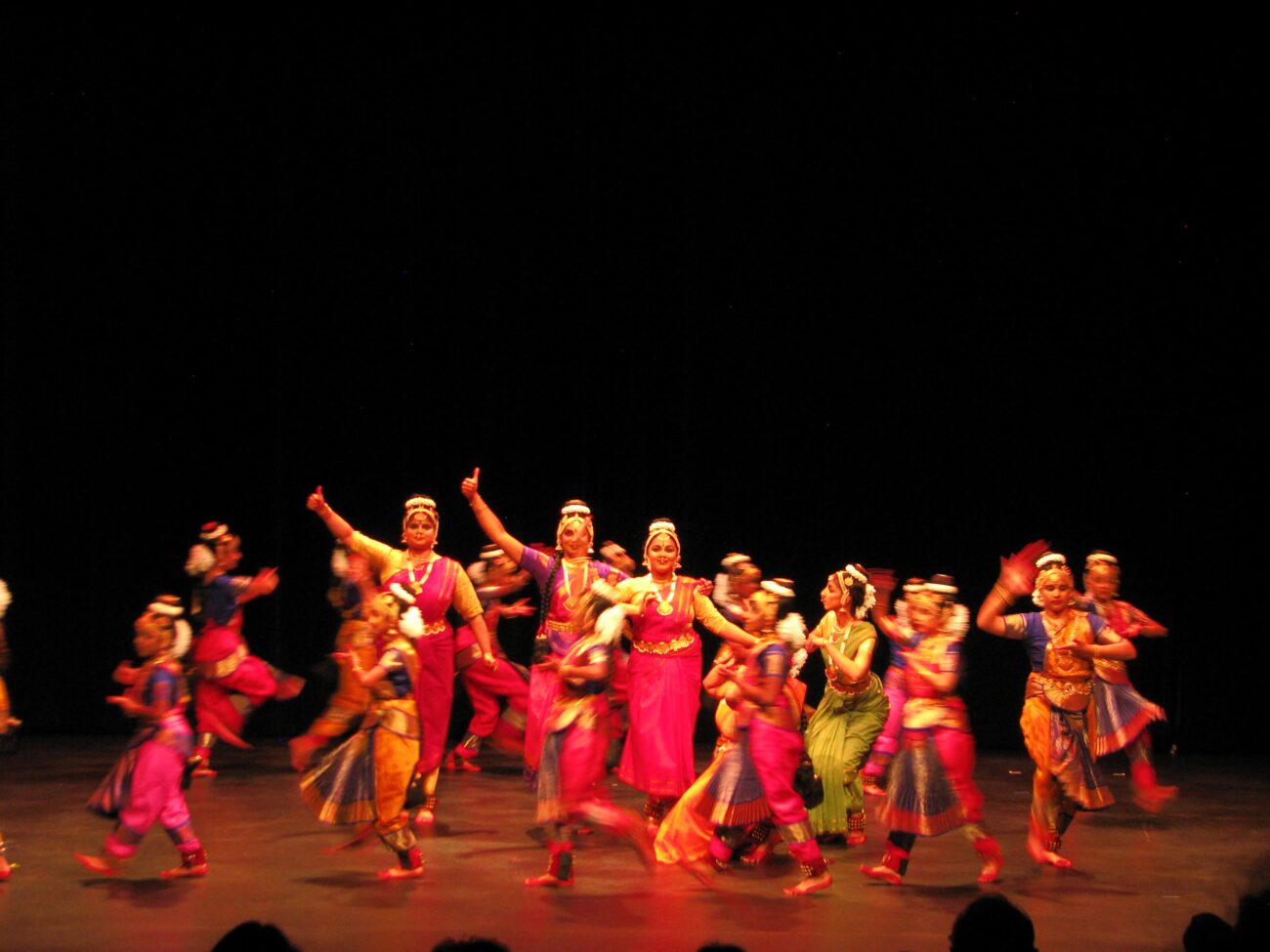
Devotees circle Rama’s family as the music crescendoes. Photo: Kavi Vidya Achar / Fulcrum 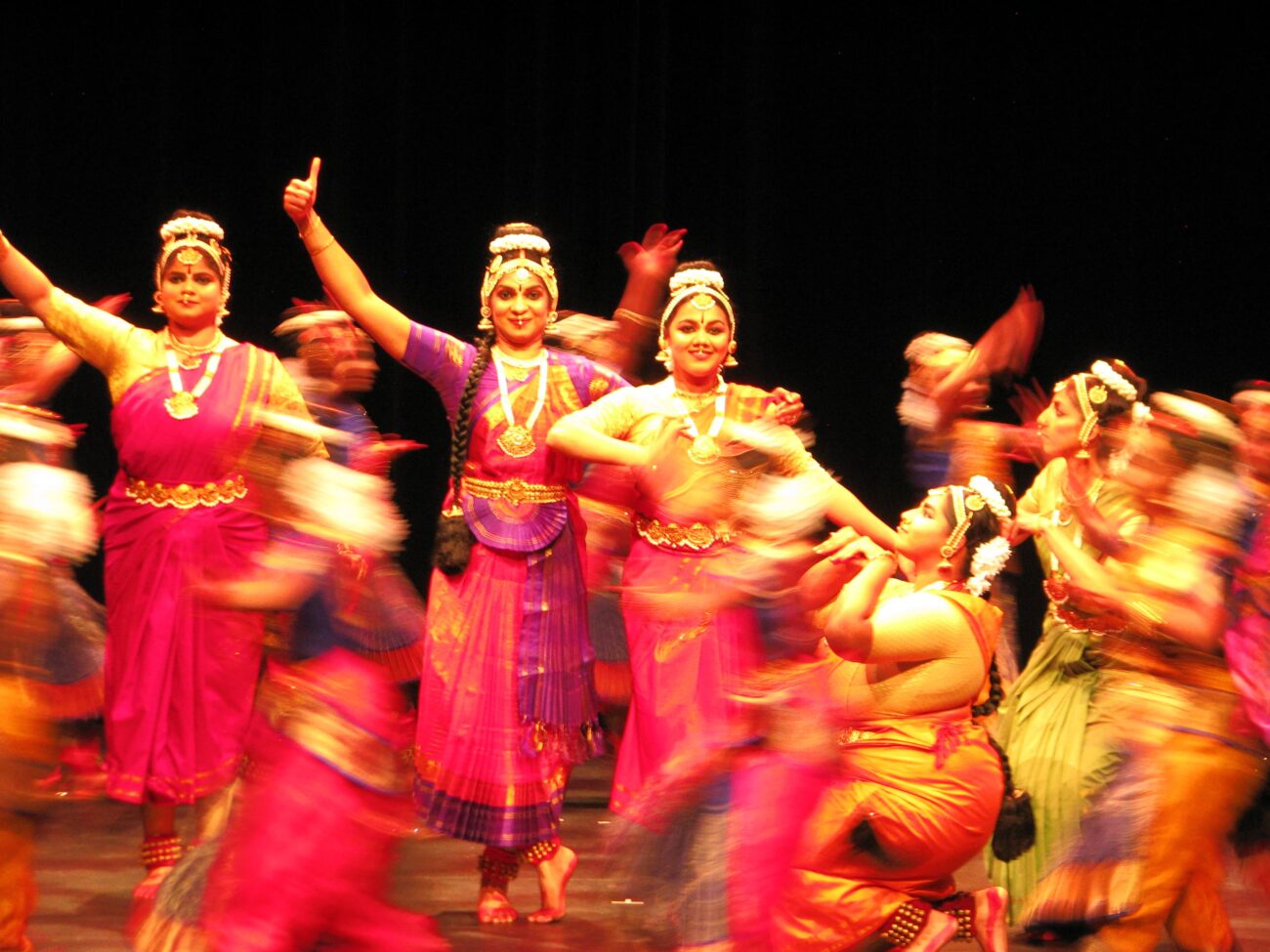
Devotees circle Rama’s family as the music crescendoes. Photo: Kavi Vidya Achar / Fulcrum 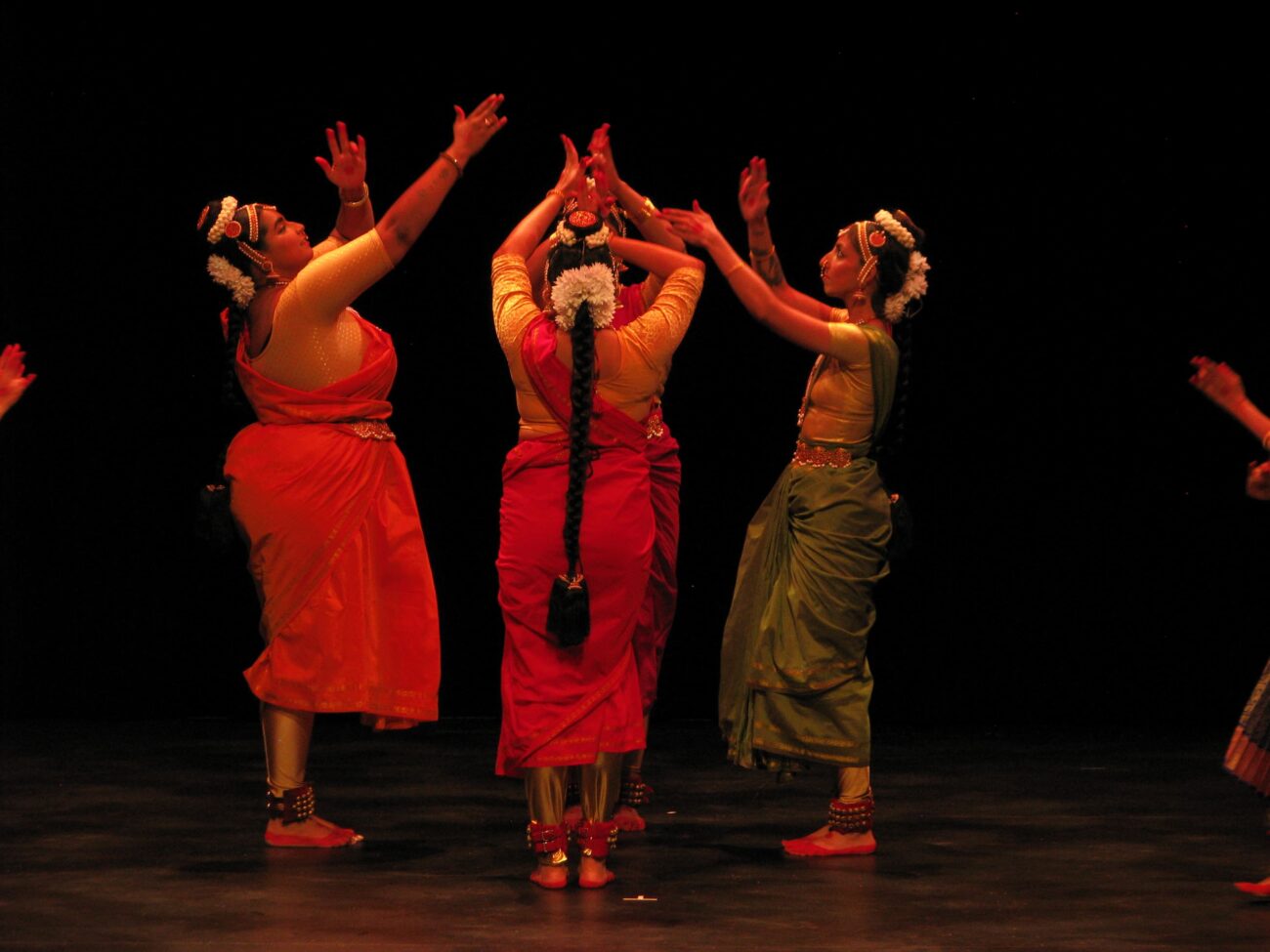
Dancers move their arms in circles, showing a growing fire. Photo: Kavi Vidya Achar / Fulcrum 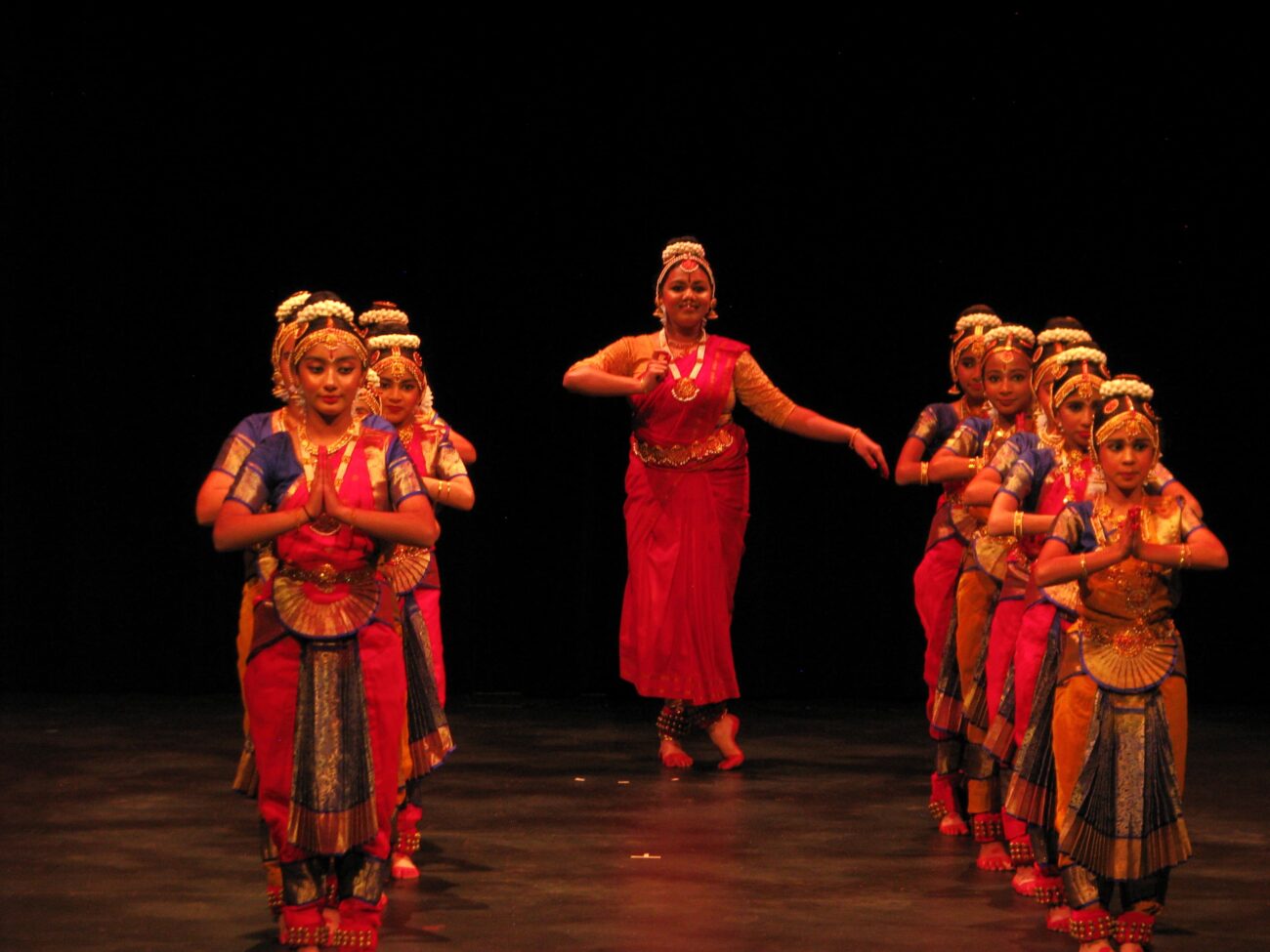
The goddess Sita stands in the center as columns of young devotees pose at her sides. Photo: Kavi Vidya Achar / Fulcrum 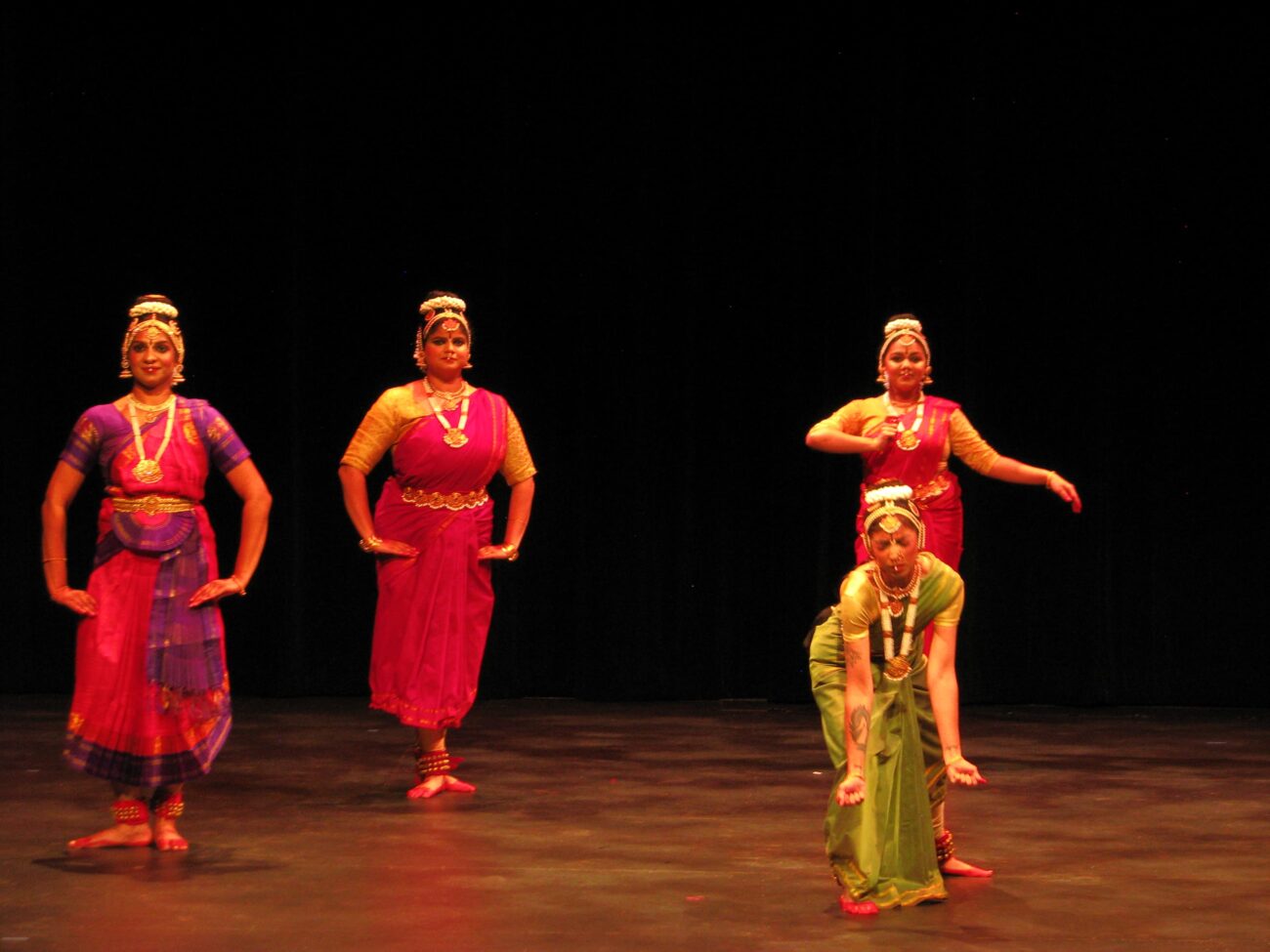
The dancer in a green saree tries and fails to lift a heavy bow. The stringing of the divine bow is a condition for any suitor who wishes to marry the goddess Sita (pictured directly behind the green dancer). Photo: Kavi Vidya Achar / Fulcrum
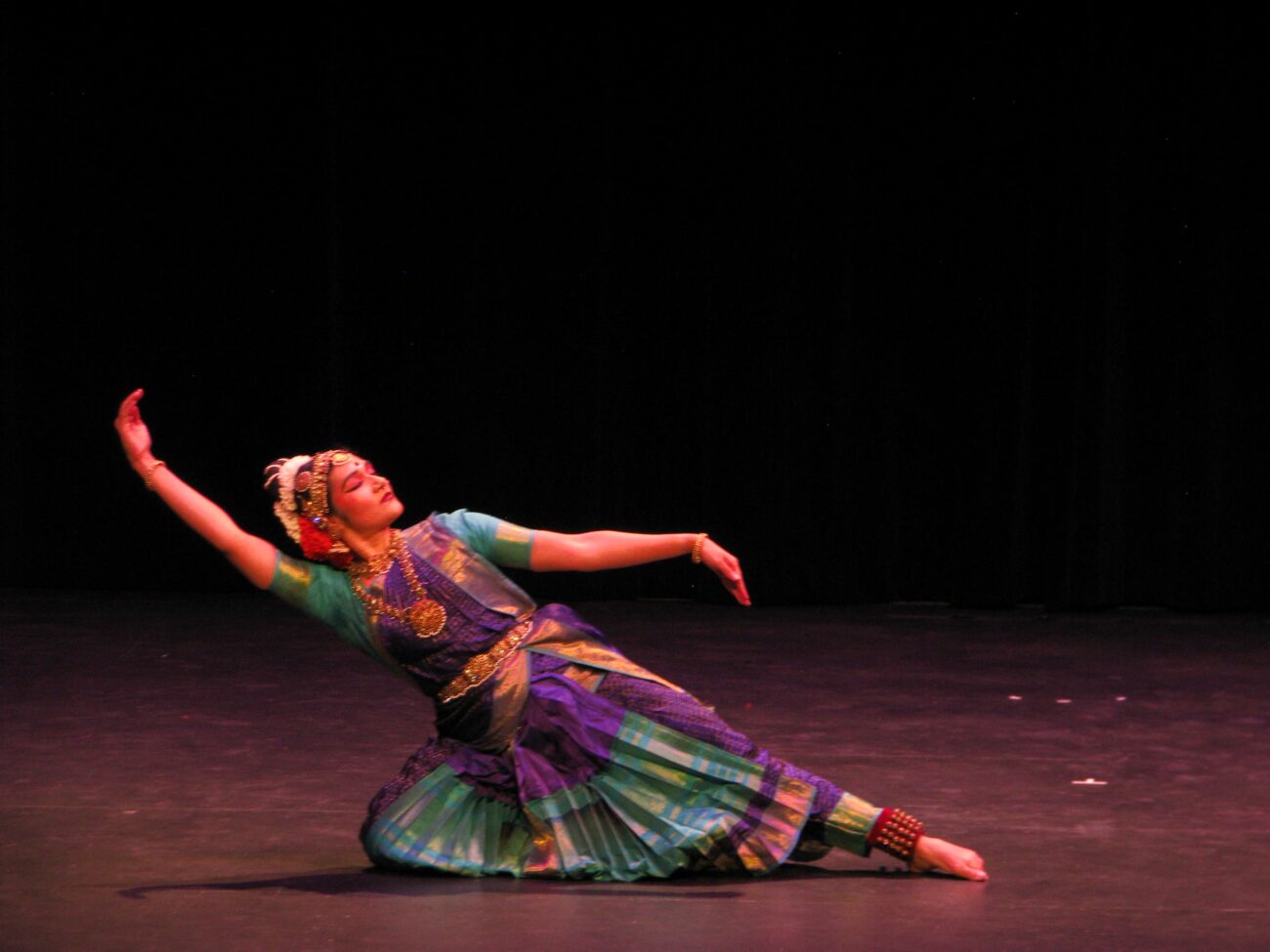
The surprise performance was a traditional piece from the repertoire of Padmabhushan Dr. Vempati Chinna Satyam: Koluvaithiva, set to raga Ramapriya and Mohanam in Adi Thalam, taught by Shri Kasi Aysola. The performer, who was also the event organizer Stuti Mukherjee, performed in Kuchipudi style, and her expressions were absolutely incredible. Her skill was noticeable right off the bat. Beyond her expressive abhinaya, her use of the entire stage and her sharp, quick movements were both technical and masterful. She was also highly innovative with her footwork; during a chatusra jathi segment, she seamlessly packed in multiple thakita (three-beat) sequences and even a five-beat variation. Watching her perform was exhilarating, and I was holding my breath from start to finish.
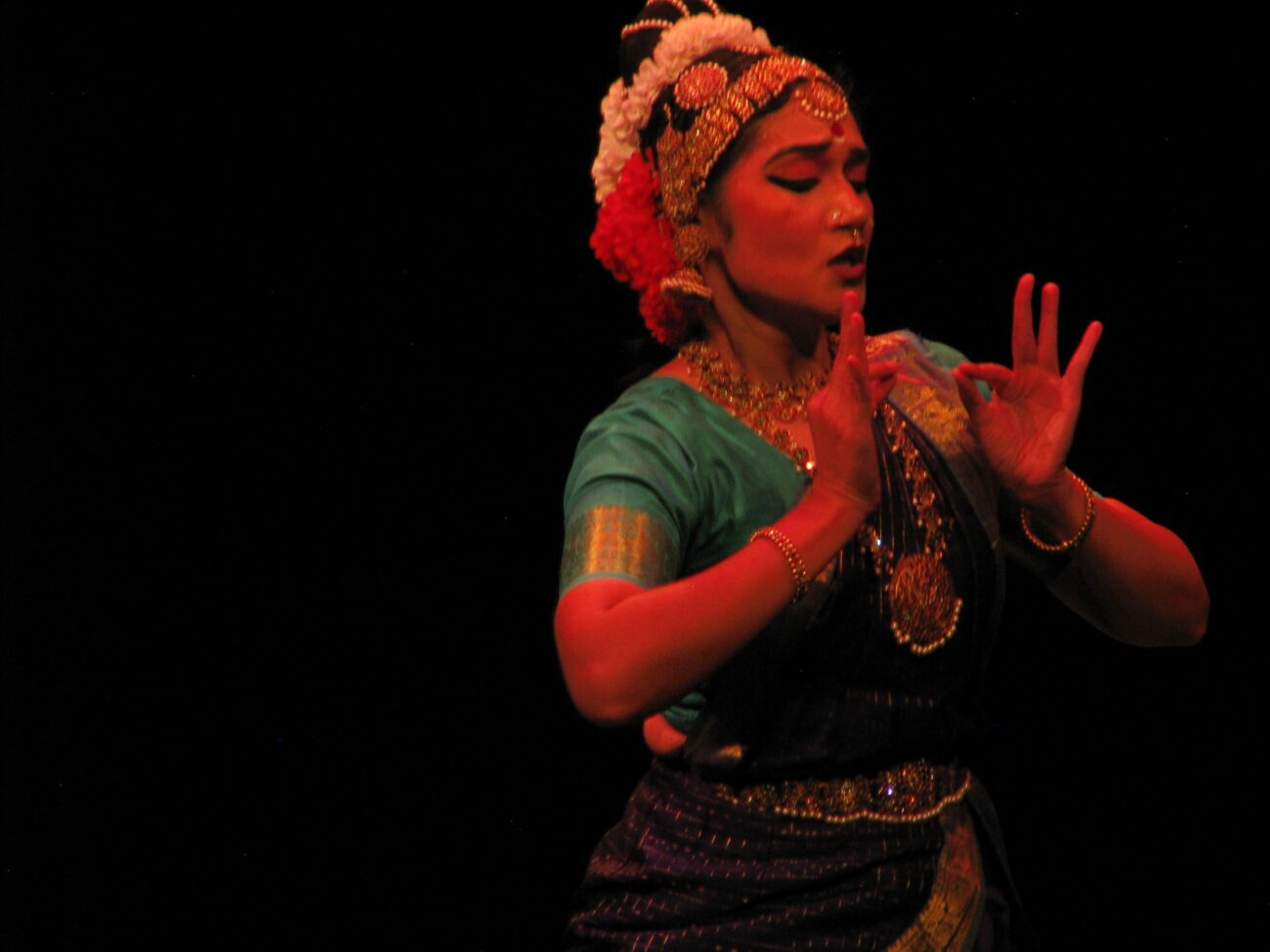
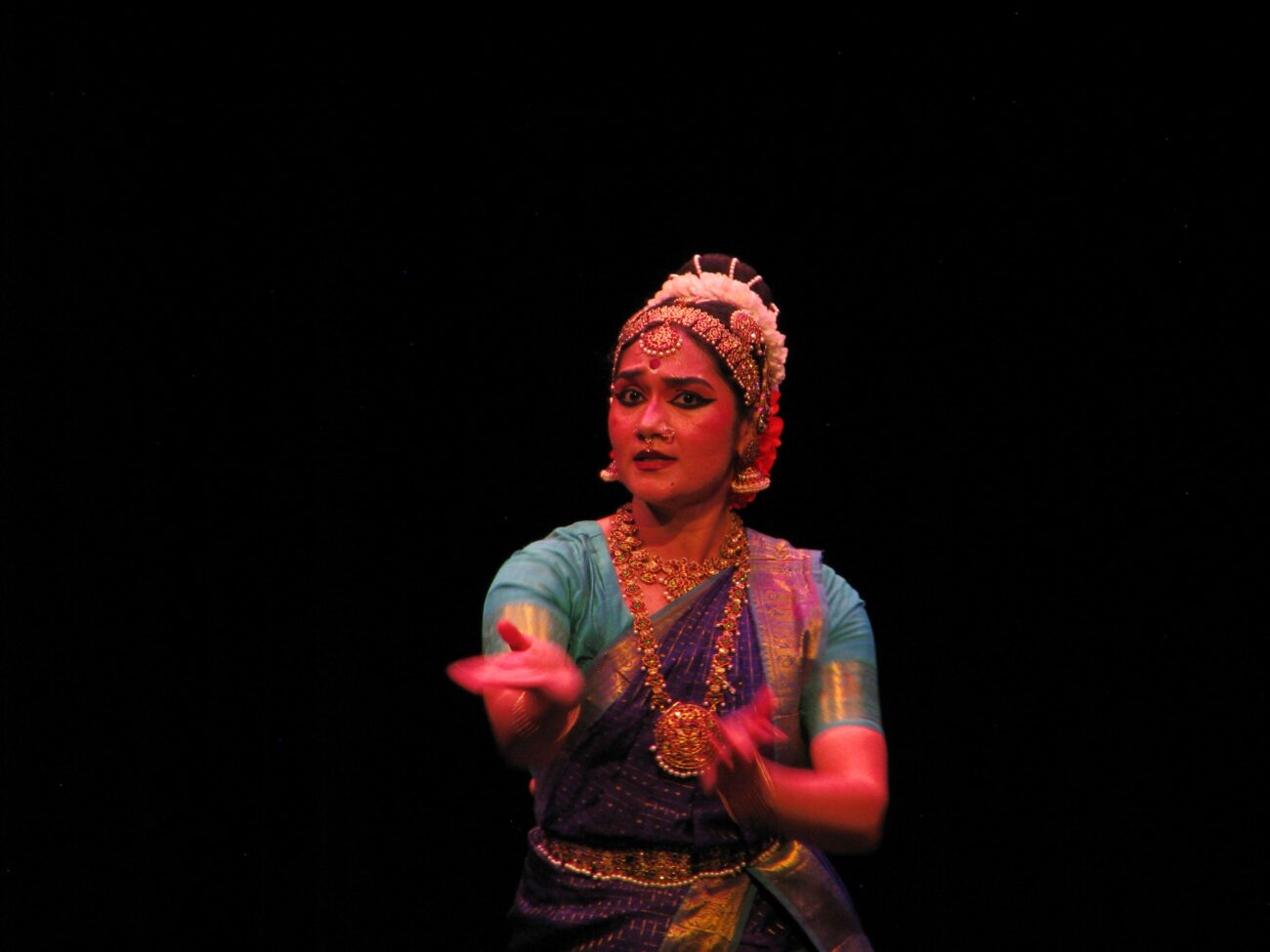
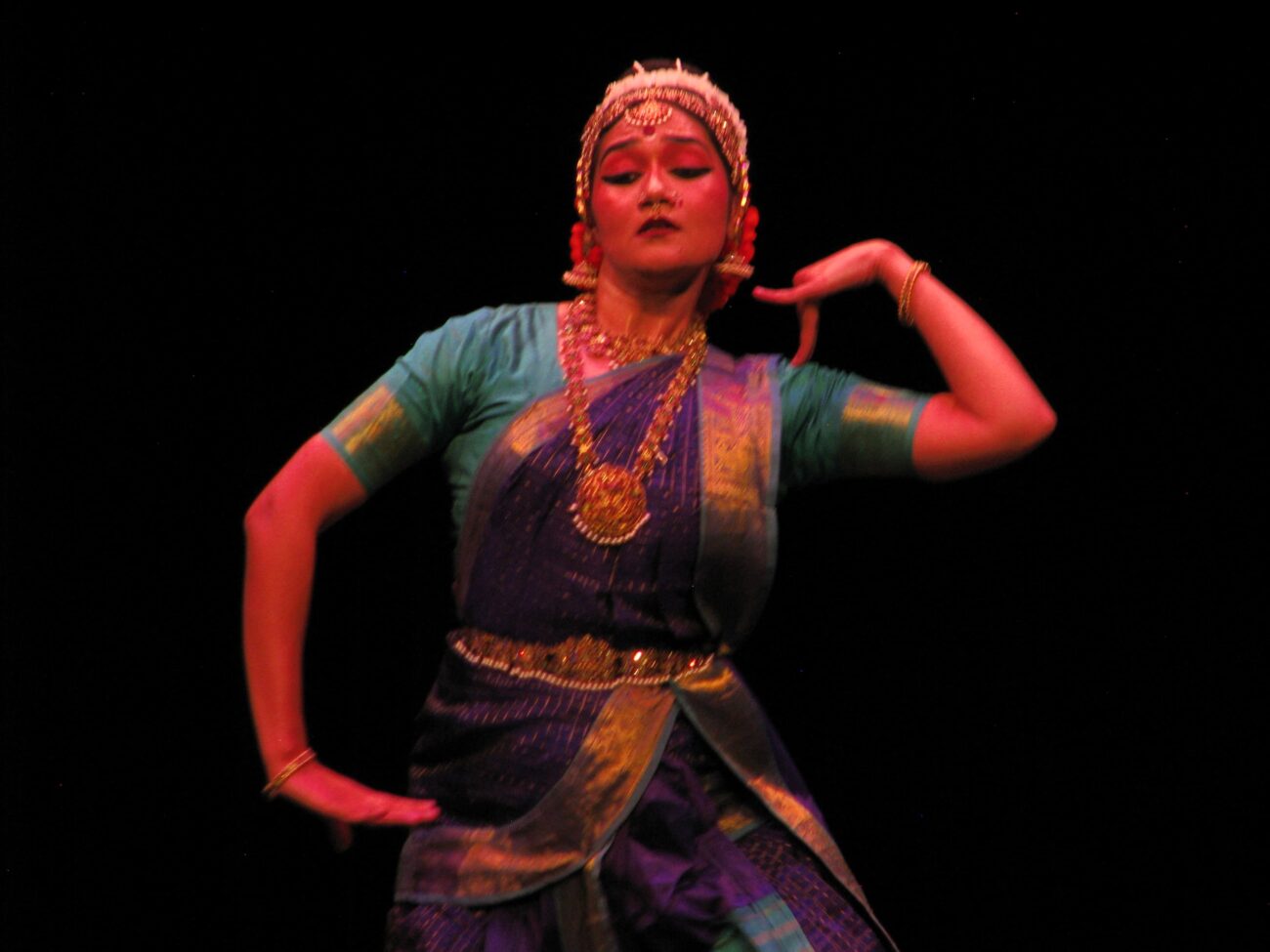
This dance concluded the first half of the show. During the break, Bhoomi and I couldn’t stop gushing about the performances we had just seen. We kept coming back to the precision and grace of the jathiswaram, and the captivating expressions of the Kuchipudi piece. By end of the break, we were eagerly anticipating the evening’s grand finale.
SECOND HALF: THE WHITE WHALE
Bhoomi:
After Stuti Mukherjee’s performance, I was sitting at the edge of my seat in anticipation of Shri Kasi Aysola’s choreography. Having seen the precision in his student’s movements and her captivating theatrical expressions, I could only imagine what lay in store for his retelling of Moby Dick through the language of Kuchipudi.
Unlike Kavi, I was completely new to the world of classical Indian dance, despite being born in New Delhi. Who would have thought I would see my first Bharatanatyam performance in Ottawa, of all places?
When we arrived at the Shenkman Arts Centre, I was worried the storylines would go over my head, but little by little, I began to decode the meaning behind the mudras: how a bent wrist with curved fingers depicted snakes, or how the act of braiding invisible hair invoked the image of a woman. When I put these pieces together, I uncovered moral teachings rooted in religious themes and the exciting myths that decorated my childhood. Alongside the young dancers learning discipline, I was learning about and reconnecting with my culture.
All the dance schools, organizers, and families gathered together showed me how these communities are uniquely positioned to keep culture alive in the diaspora. I watched as they challenged the idea of Canada as a melting pot of identities and presented fusion as an alternative to erasure. As the stage lights dimmed once more for Pravāha’s final act, The White Whale by Shri Kasi Aysola, the audience came face to face with a perfect example of what this fusion could look like.
This was a drama like no other. Through the lens of my camera, I watched Aysola seamlessly flow between characters. Without speaking, changing costumes, or relying on the aid of supporting actors, he communicated each metamorphosis through existing mudras and those of his own creation. After the performance, Aysola told the audience that the Natya Shastra encourages dancers to evolve and create new mudras to depict new stories. For him, gaps in the language represented opportunities rather than obstacles. By creating mudras to evoke whales and mermaids, he showed us that when the differences in one’s cultures feel irreconcilable, there are ways to bridge the gap and move forward.
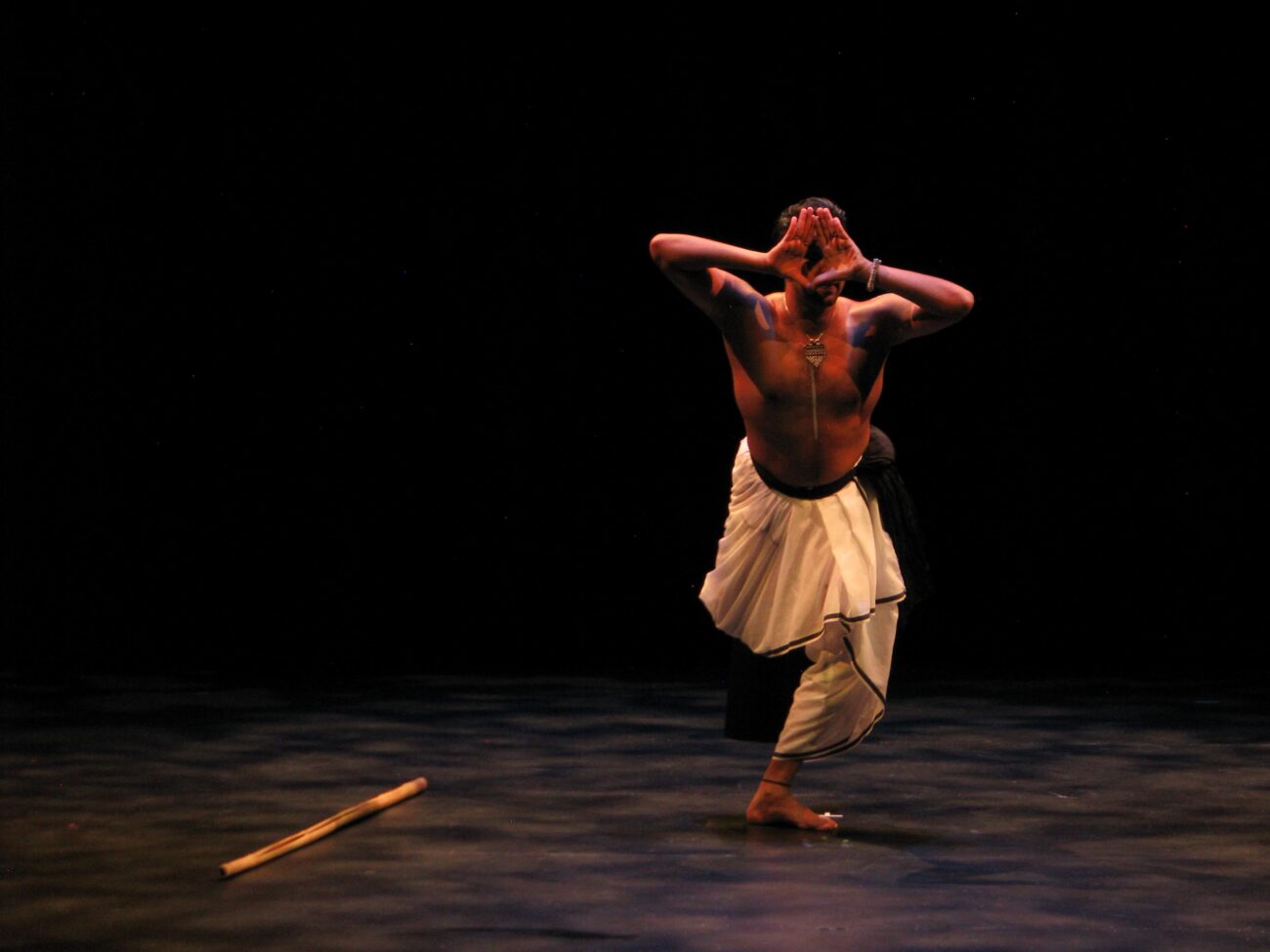
Aysola transforms into the white whale. Photo: Bhoomi Dahiya / Fulcrum 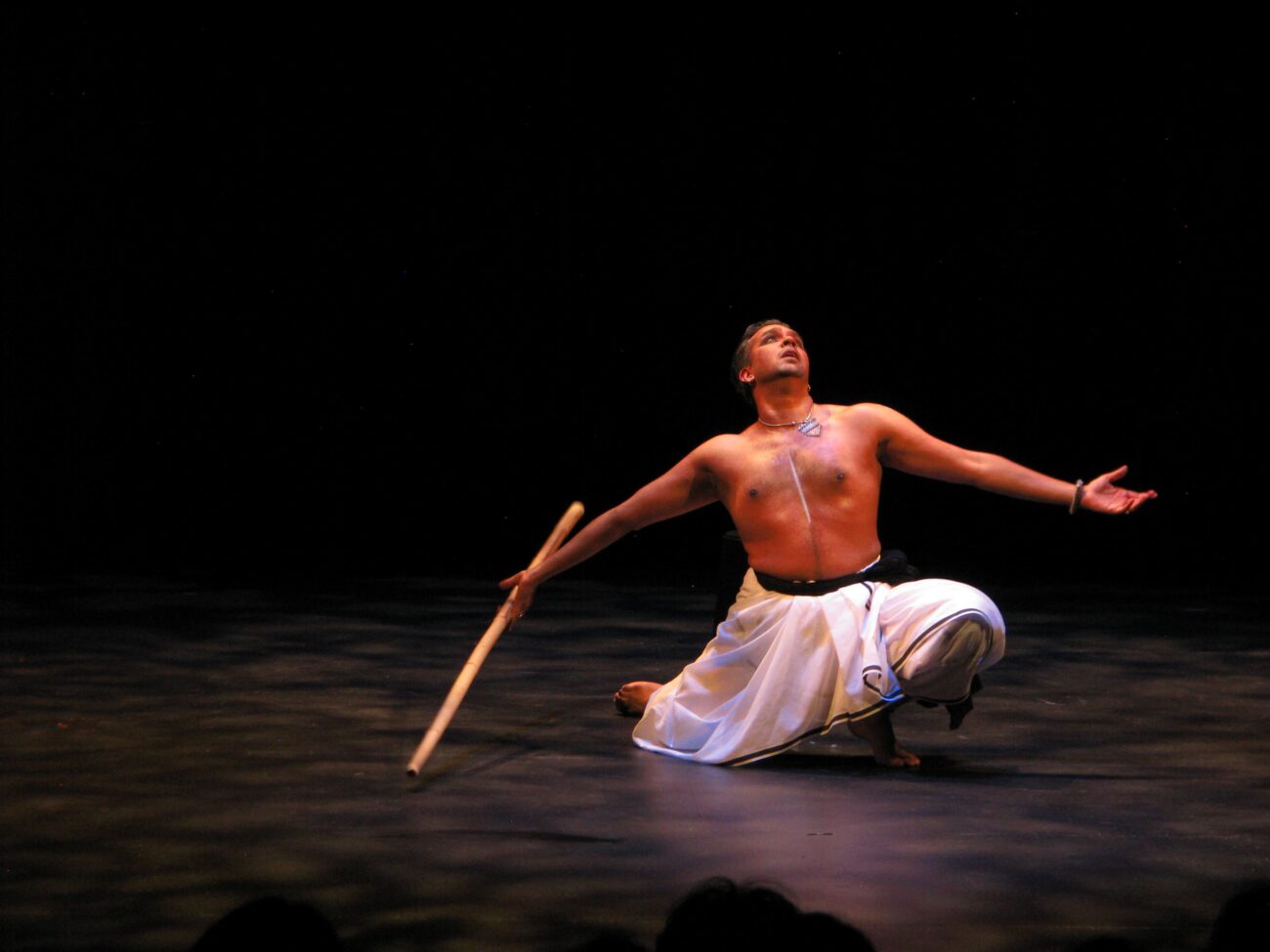
The sailor readies the harpoon. Photo: Bhoomi Dahiya / Fulcrum 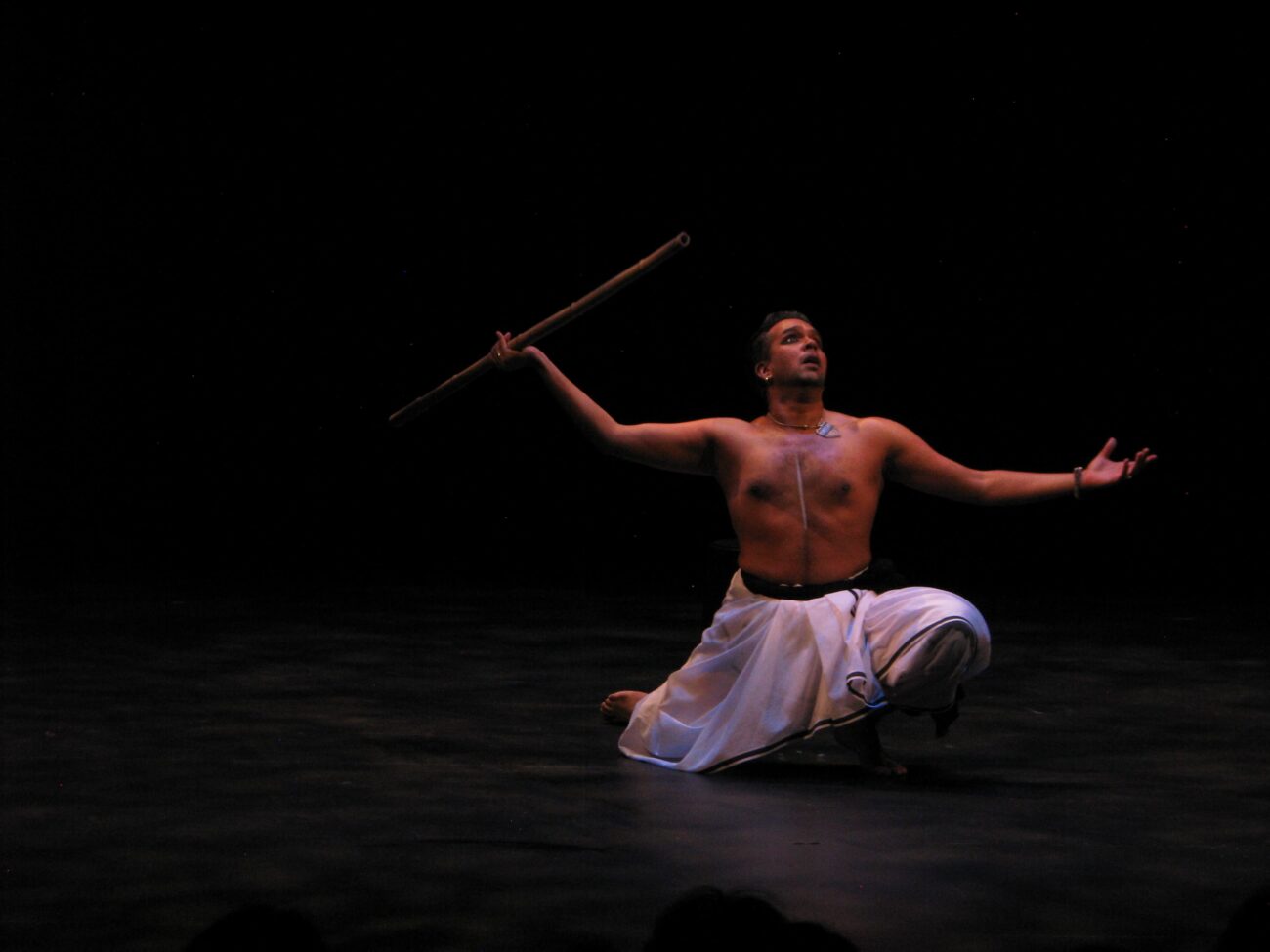
The sailor readies the harpoon. Photo: Bhoomi Dahiya / Fulcrum 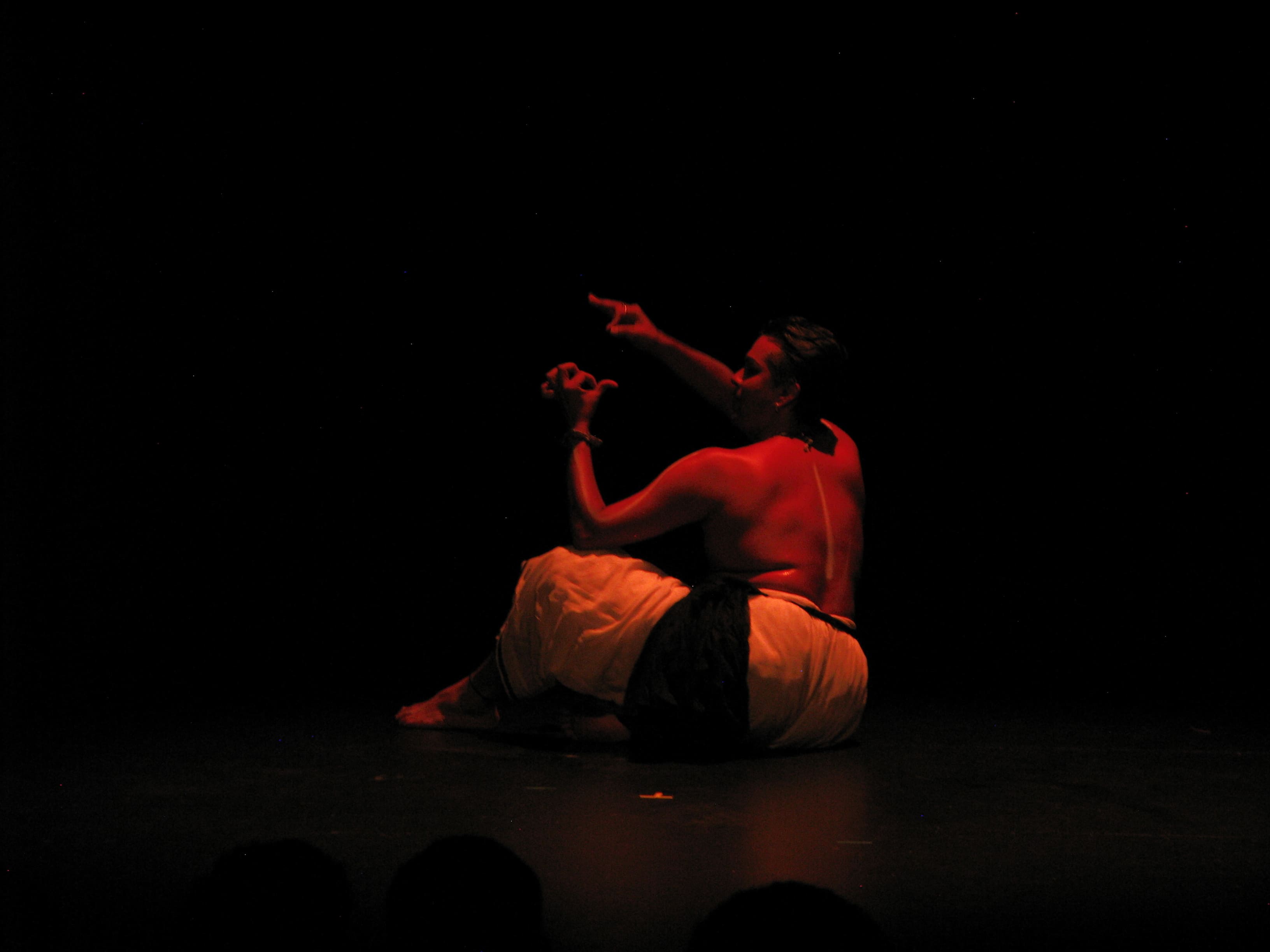
Photo: Bhoomi Dahiya / Fulcrum 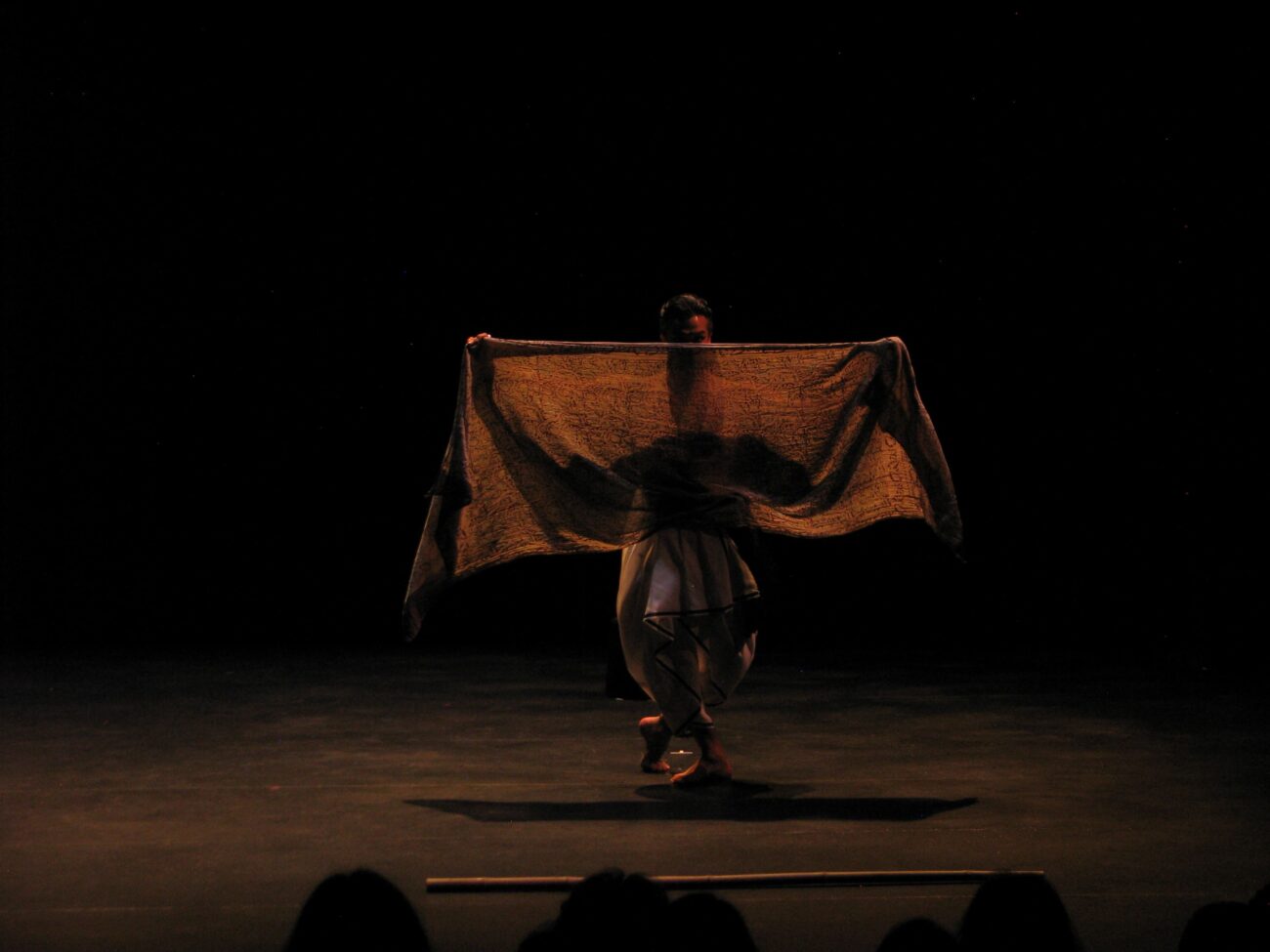
Photo: Bhoomi Dahiya / Fulcrum 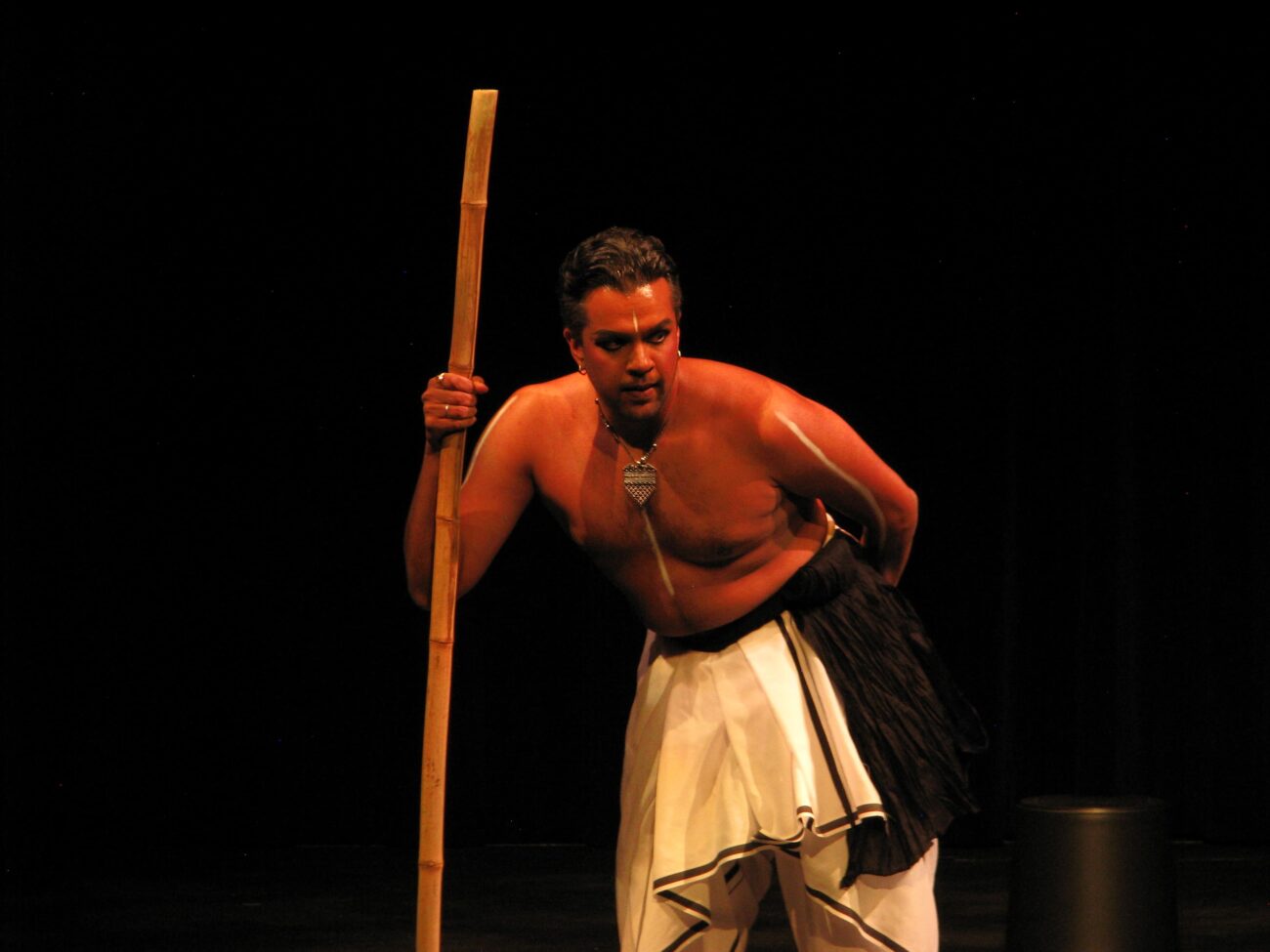
Captain Ahab paces across the ship. Photo: Bhoomi Dahiya / Fulcrum 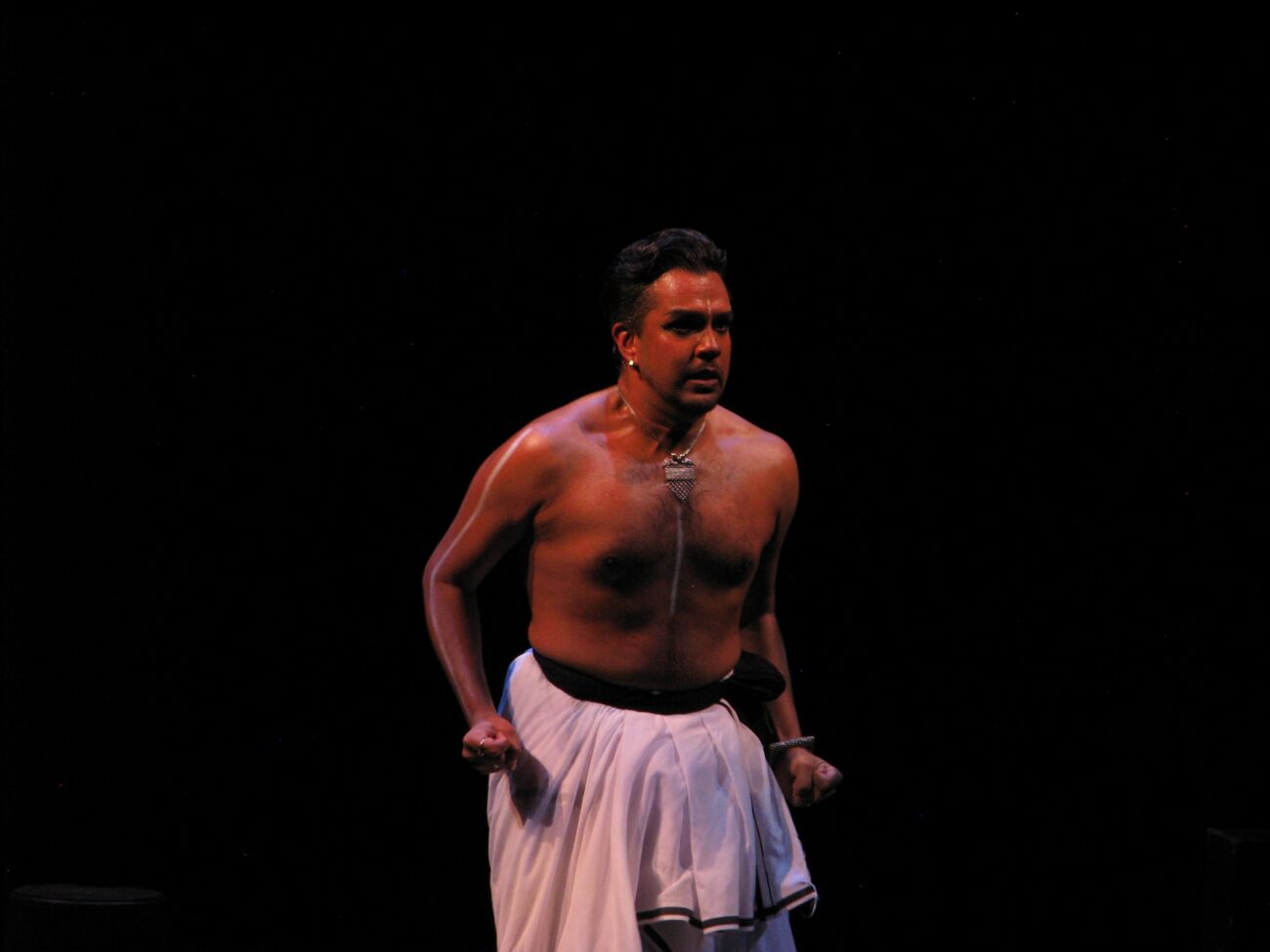
Captain Ahab displays his frustration with the white whale. Photo: Bhoomi Dahiya / Fulcrum 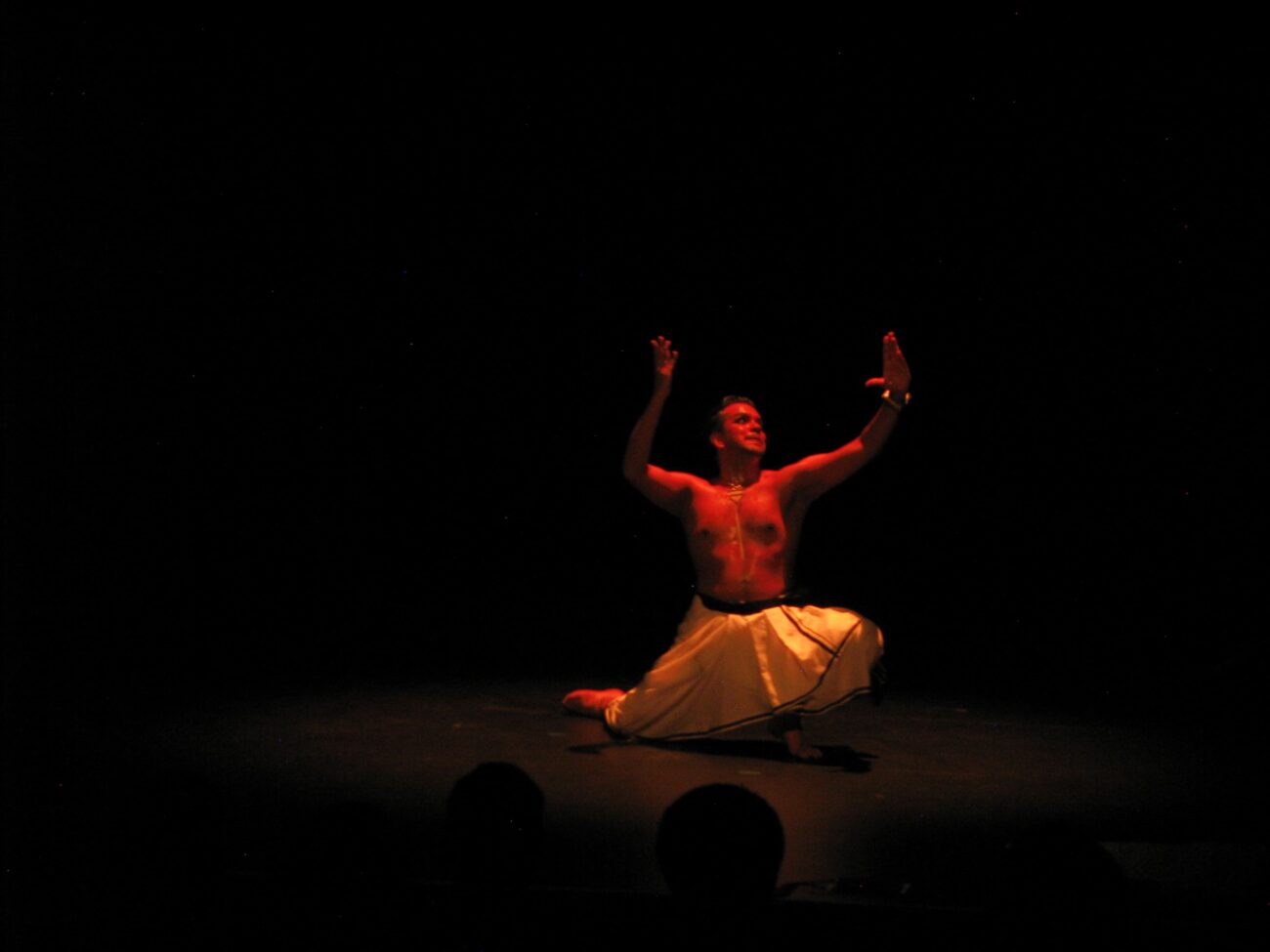
Photo: Bhoomi Dahiya / Fulcrum 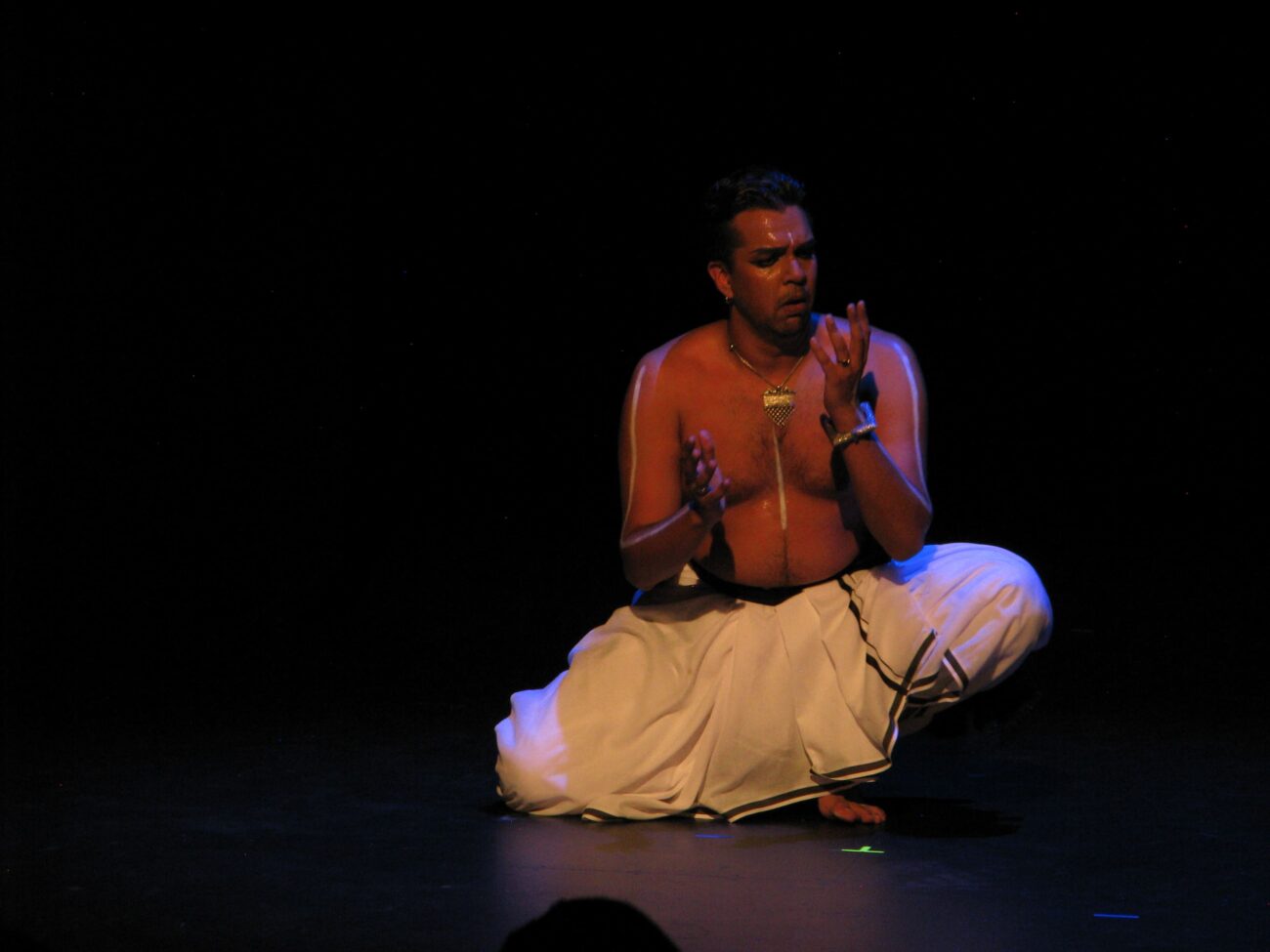
Photo: Bhoomi Dahiya / Fulcrum 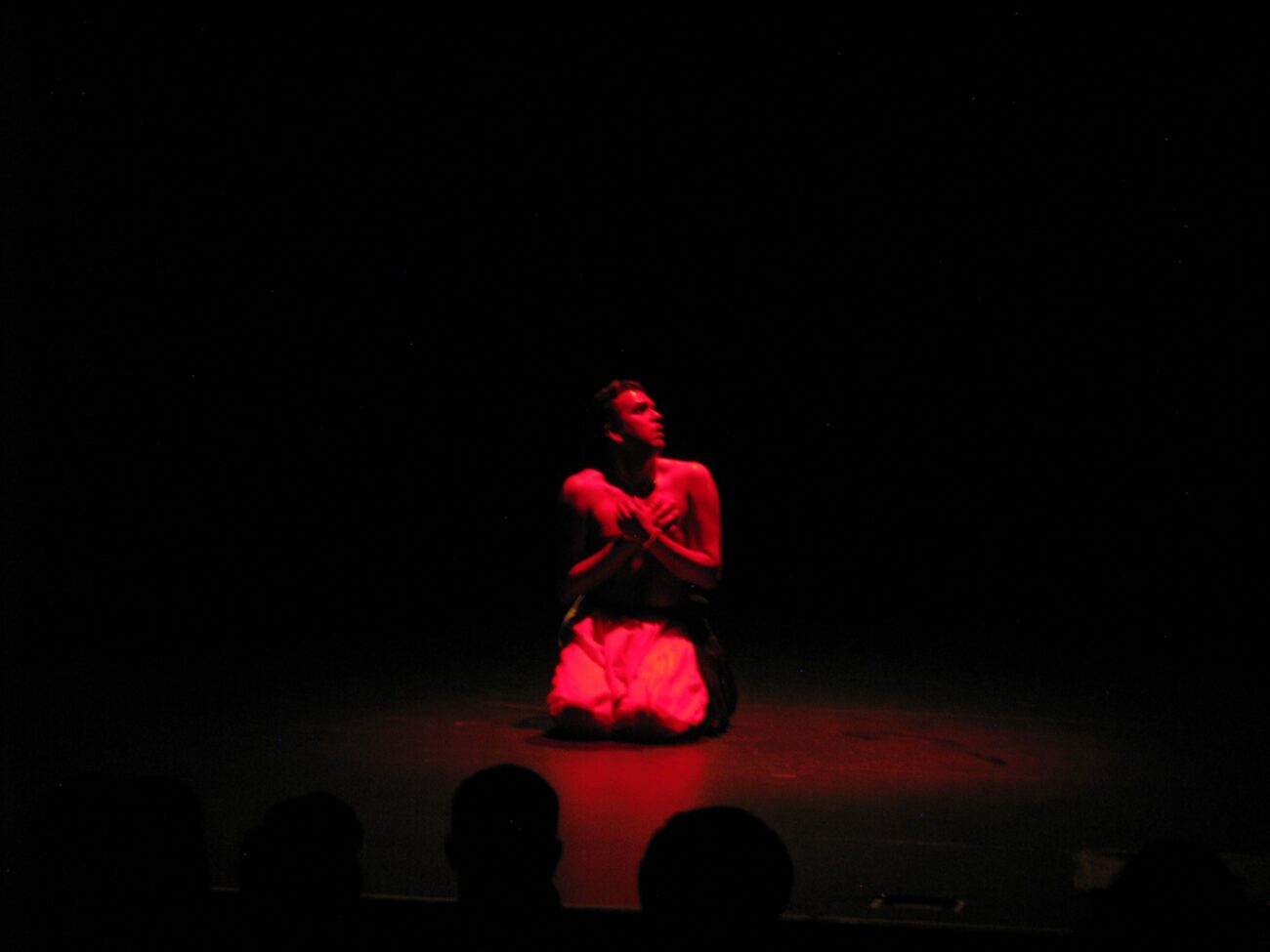
Photo: Bhoomi Dahiya / Fulcrum 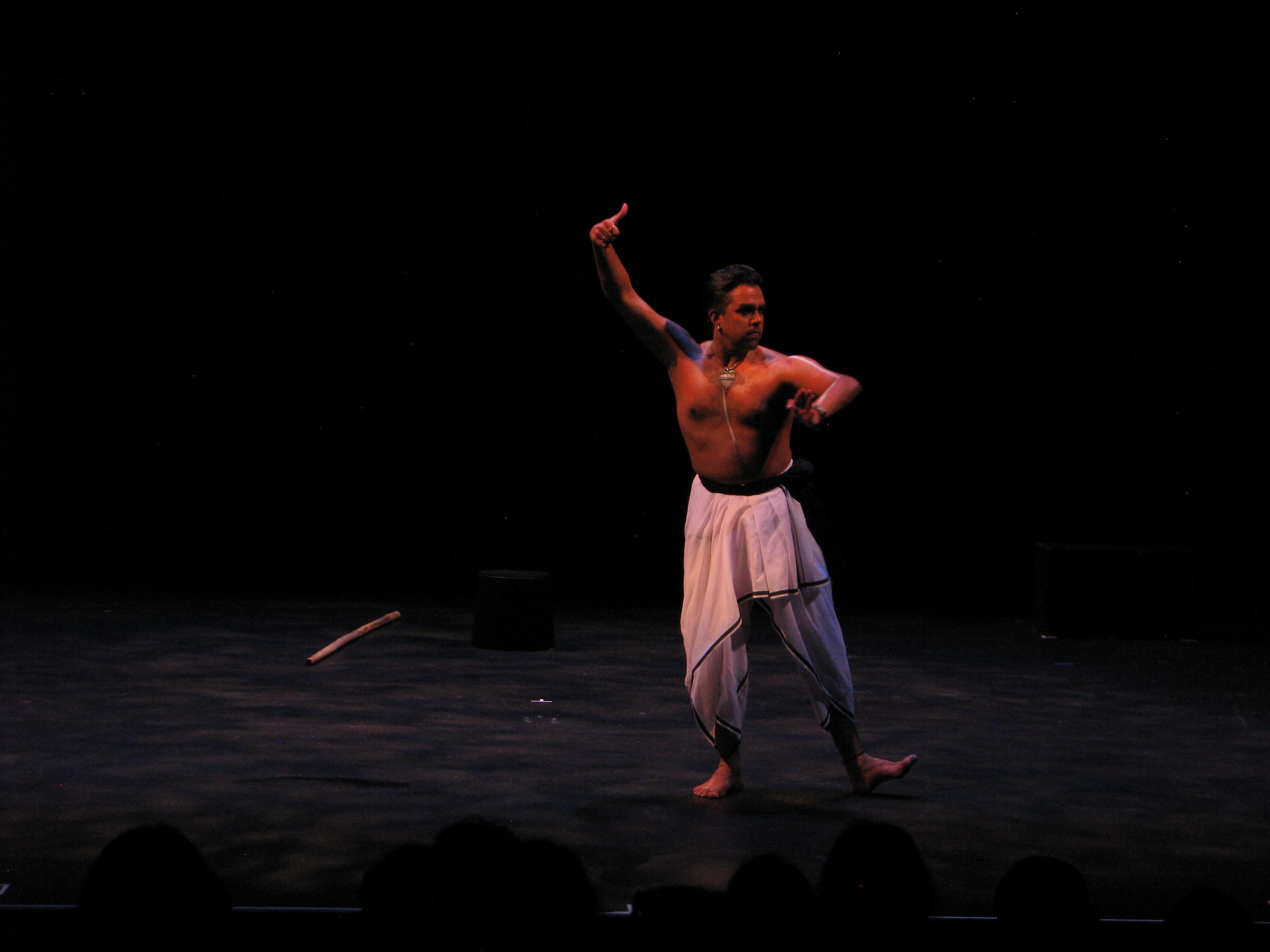
Photo: Bhoomi Dahiya / Fulcrum
Earlier in the evening, one of the organizers spoke on the importance of continuing the tradition of Indian classical dance. She began by highlighting how the dances foster emotional maturity. To give the performances an appearance of depth, the dancers have to empathize with the characters they are embodying. Otherwise, their performances look shallow. I quickly realized Bharatanatyam and Kuchipudi demand thoughtfulness from both the performers and the audience. The beautiful thing is that they fully trust in the audience’s capacity to understand.
Despite my quick Google search of Moby Dick summaries and my lack of familiarity with the mudras, when Aysola transformed from the powerful whale to the obsessed Captain Ahab, I knew what I saw. Gliding across the stage decorated with projections of waves, Aysola rose from the floor into a characteristic Kuchipudi pose, then by slowly bending his leg backwards, he became the one-legged captain. Like any good teacher, he trusted us to make the connection. As he limped into the next scene, I was overcome with chills.
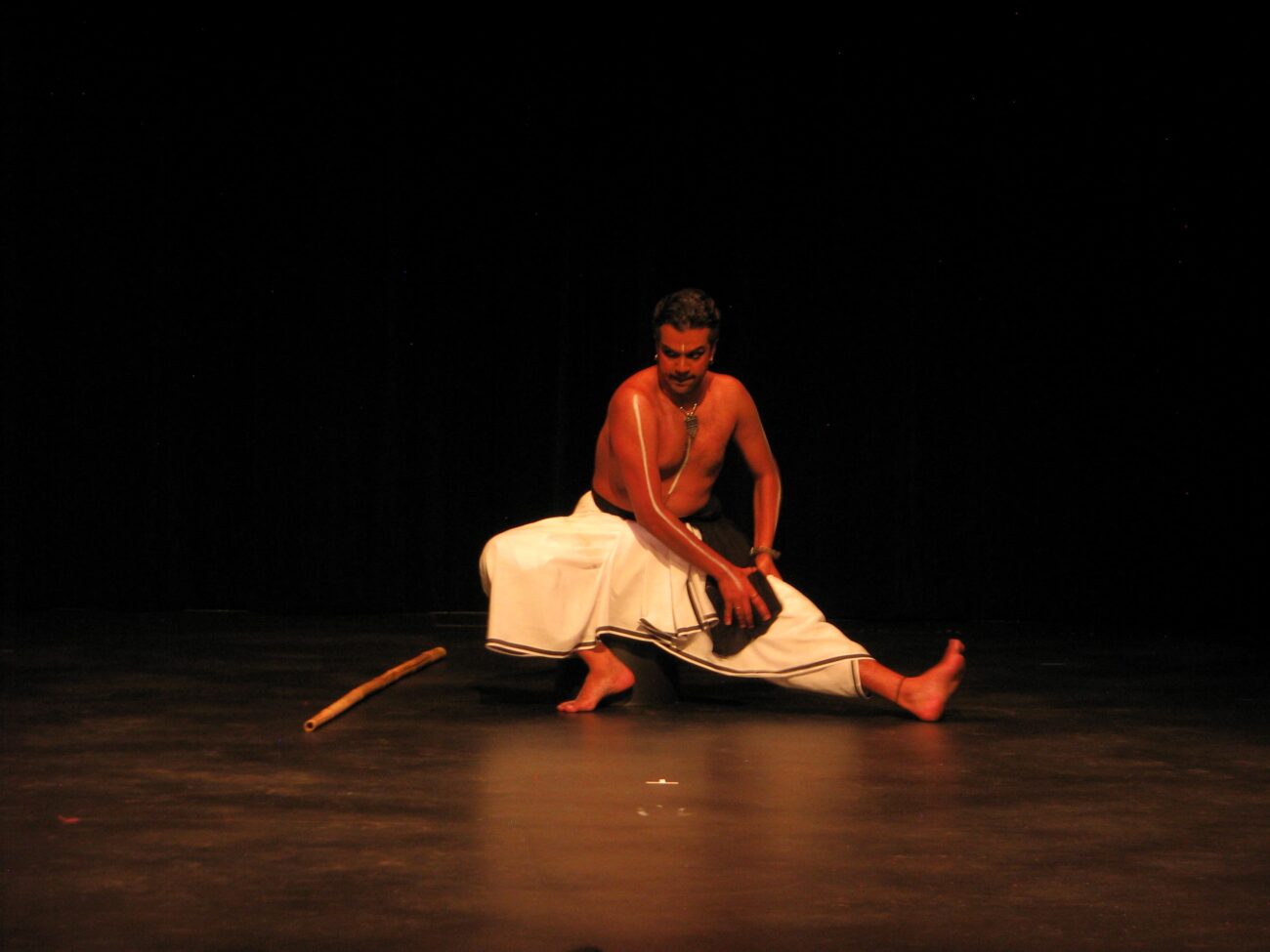
Aysola used the explosive theatrical powers of Kuchipudi to enrich the melancholic and much-adored Western classic, Moby Dick. It was inspiring to see him go beyond mere reconciliation and enable an interflow between his Indian and American identities. Nurturing them both to breathe life into each other. It was no surprise when his performance was celebrated with a standing ovation and thunderous applause.
Before tonight, I didn’t know these dance forms contained entire languages bound up in the subtleties of perfectly bent knees and outstretched arms. Pravāha showed me that classical Indian dance is not only alive in Ottawa, but thriving, thanks to the dedication of teachers, students, and communities across the diaspora. If you ever get the chance to see a show like this, whether it’s Bharatanatyam, Kuchipudi, or another classical form, don’t miss it. Each performance is a window into a world of discipline, creativity, and joy that’s too vibrant to stay on stage alone.