
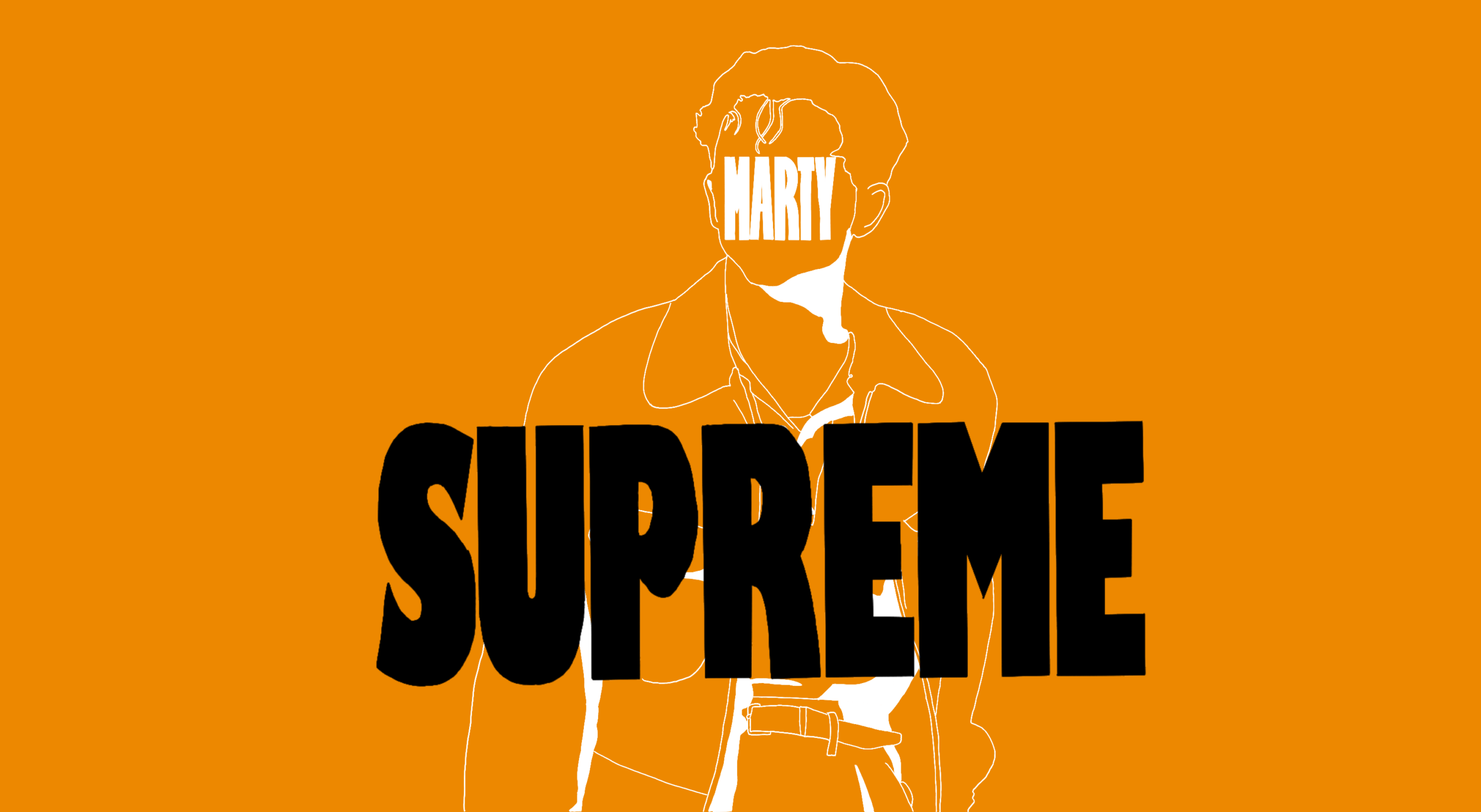
A PORTRAIT OF A MAN WHO BELIEVES HE IS DESTINED FOR GREATNESS.
Marty Mauser is a walking contradiction, an egotistical man with undeniable ping-pong talent who moves through the world as if it were already tailored to him. He is convinced that success is just inevitable to him. Equal parts a strategist and showman, Marty thrives on staying in control, whether it’s in control of his image, environment, or the ping-pong ball. Beneath the confidence though, is a restless need for validation that quietly drives every calculated move he makes throughout the film.
Marty Supreme propels us through Marty’s eventful life at a relentless pace, keeping us wondering what could possibly happen next? The film unfolds in a series of heightened episodes where realism feels deliberately exaggerated, turned just a few notches past “plausible.” But don’t get me wrong, this is not a flaw so much as a mission statement. The film wants us to feel the excess, the momentum, and the intoxication of ambition as Marty experiences it himself.
While Marty’s arrogance can be deeply frustrating, it is almost impossible not to root for him. This tension is precisely where Marty Supreme becomes most interesting. With all of the saturated public figures in the world who blur confidence with entitlement, the film mirrors a cultural fascination with morally ambiguous “winners.” Marty is presented as a self-made myth, propelled forward by belief in his own inevitability.
The film’s greatest strength is its tonal control. It walks a careful tightrope between satire and sincerity, often within the same scene. Marty’s self-mythologizing borders on parody and the film invites us to understand the emotional engine behind that hunger. This balancing act prevents Marty from collapsing into smug self-importance or cheap mockery. Instead, it exists in an uncomfortable middle-space, where admiration and loathing coexist.
Visually, the director of the film, Josh Safdie, reinforces this dynamic with precision. Every frame seems composed to reinforce Marty’s sense of scale. He is always either looming too large in the shot or framed as the obvious centre of attention. The cinematography subtly conspires with the character, making us complicit in his rise even when we know better. The soundtrack, similarly, operates like an emotional cue card, rising at just the right moments to make Marty’s victories feel earned, even when we know they might not be.
The secondary characters — Kay Stone, Wally, and Rachel Mizler — exist largely in relation to Marty rather than as fully realized figures in their own right. Their emotional arcs often bend to reinforce his centrality, and conflicts tend to resolve in ways that favour his worldview. A striking example is Odessa A’zion’s performance as Rachel Mizler, one of Marty’s partners, who continues to put herself in dangerous situations to support him — while pregnant. I mean that kind of devotion borders on alarming. While this can make the stakes feel one-sided, it also underscores the film’s larger point: when history is written by the “successful,” everyone else becomes the supporting cast.
Ultimately, Marty Supreme is less interested in whether Marty deserves his success than interrogating how we define greatness in the first place. Who gets to be called “supreme?” Who decides? And what is sacrificed in the pursuit of being unforgettable? The film never fully answers these questions, but it doesn’t really need to. Its refusal to offer easy moral clarity stands out in a cultural moment that rewards spectacle, dominance, and self-branding over reflection.
By the end, Marty functions exactly as he intends to: leaving the audience to question their own corrupted values, all while rooting for what’s objectively the “wrong cause.”