CANSEC 2026 UNVEILS AI DEFENCE INITIATIVES AMID PUBLIC PROTEST
Protests against CANSEC, Canada’s largest defence and security arms trade show, began at 7 a.m. on May 28. The two-day conference is a business-to-government event featuring emerging military equipment and technologies. This year’s CANSEC brought in an outstanding 20 000 registrants compared to last year’s 15 000. Attendees were composed of over 60 international delegations’ government officials, top-level executives and military officials.
EY CENTRE BECOMES AI CENTRE
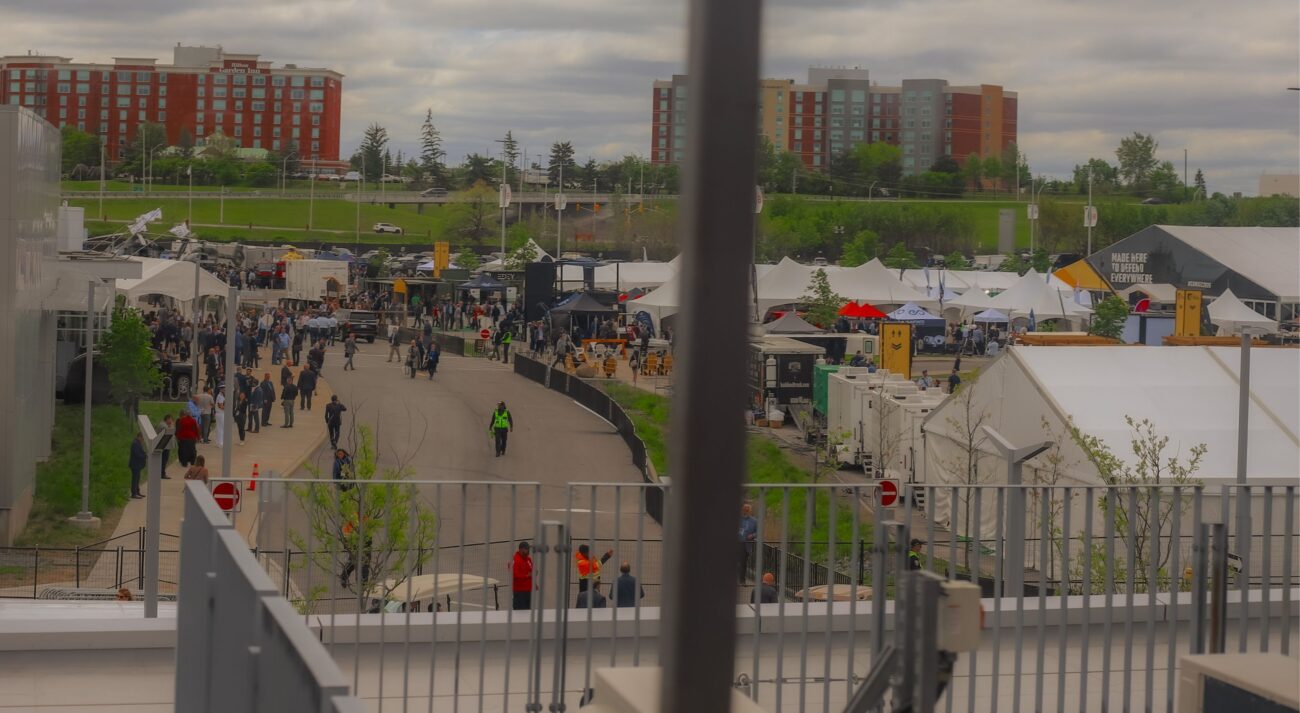
The conference was hosted at the Cohere Centre, formerly known as the EY Centre. Cohere Inc., a Canada-based tech company focused on artificial intelligence, bought over the venue’s naming rights on April 30 and made itself one of CANSEC’s 21 official sponsors shortly thereafter in May. In contrast, EY never sponsored CANSEC throughout their decade of owning the centre’s naming rights.
“If you don’t know who Cohere is, you will,” said Mark Carney on CANSEC opening day.
The Government of Canada finalized its investment of up to $240 million in Cohere in March of 2025. Since then, the company’s LLM, “North”, has become an AI of choice for firms trying to sell to the Canadian Armed Forces.
On May 28, Calian, an Ottawa-based tech firm that has trained over 300 000 military personnel, announced at CANSEC that it will be partnering with Cohere to “bring sovereign AI to the defence industry.”
Cohere and Calian are key players in the federal government’s robust defence plan which prioritizes maintaining and buying most of the military’s equipment domestically. Carney also announced to CANSEC attendees that “over the next 10 years, Canada will invest $180 billion directly in defence procurement.”
The Prime Minister’s speech at CANSEC is one in a series of many emphasizing the federal government’s commitment to increased defence funding. On Oct. 23, 2025, Carney delivered a speech at the U of O during which he promoted the Government of Canada’s plans for a “generational level” of spending on Canadian defence.
CANADIAN UNIVERSITIES ALIGN WITH DEFENCE PRIORITIES
U of O president Marie Ève Sylvestre is currently a member of the cities of Ottawa and Gatineau’s new defence task force that was formed in February of 2026. Per their website, the task force aims “to transform the region into a hub of innovation in national defence with the goal of generating billions of dollars in economic activity fueled by increased military spending.”
When asked about her involvement by INSAF uOttawa at an open session on March 11, Sylvestre expressed that Canada “[has] threats just south of the border and all of the alliances have been redefined in the last few months only.”
She then added that “‘defence’ is a very broad area of research that doesn’t limit itself to the military or arms manufacture… it also encompasses things like cybersecurity and surveillance.”
The U of O is not the only Canadian post-secondary institution deepening its ties with the defence industry.
This past year, the University of Toronto (U of T) became the first ever public Canadian university to sponsor CANSEC, contributing the minimum $10 300 required for one of the lowest-level silver tier sponsor packages.
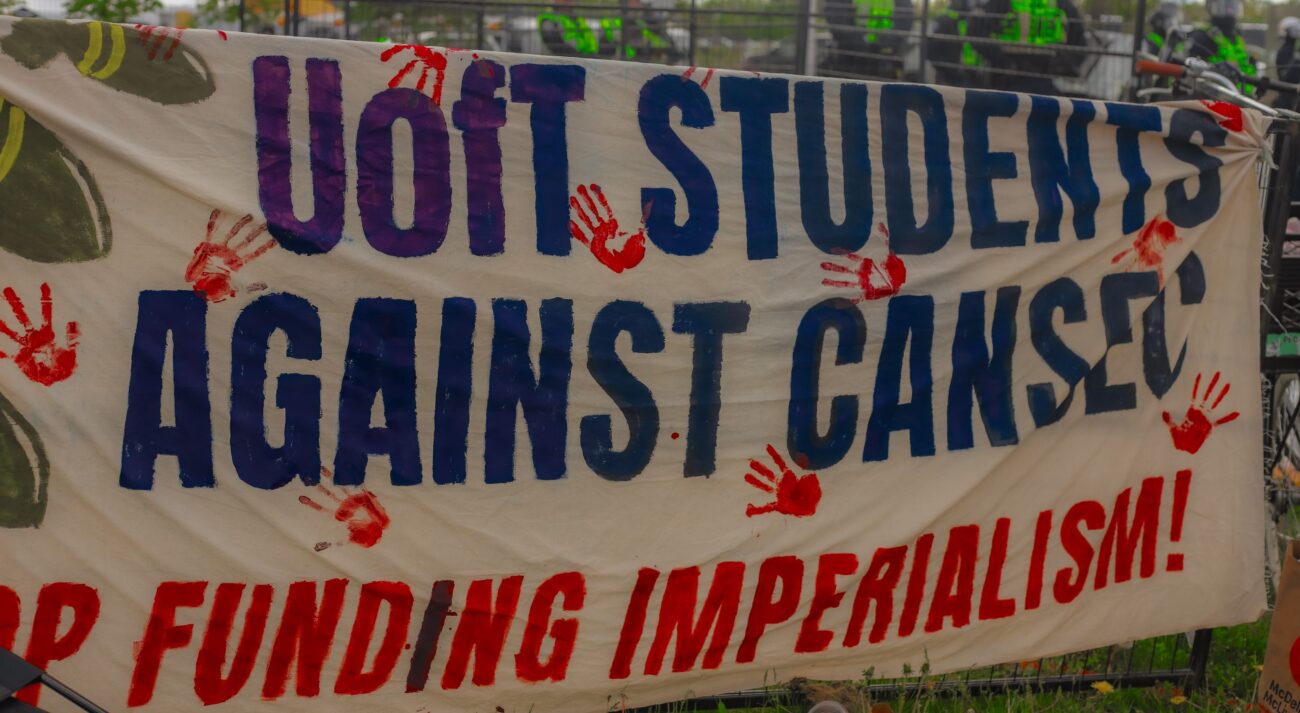
On May 12, various student groups, workers, unions, and faculty associations signed on to a letter to the University of Toronto demanding the university revoke their sponsorship of CANSEC. The organizing groups also condemned the university’s newly published Defence, Research & Innovation webpage, calling it “a coordinated effort by U of T administration to associate the university’s brand with the global military industrial complex.”
On May 19, the federal government announced its investment of $5 million in Ontario Tech University to “enhance domestic defence capabilities.” That same evening, Les Jacobs, Ontario Tech’s vice-president of research and innovation told the CBC that “with the funds, [their] lab will be able to test heavier and larger vehicles being developed for defence purposes.”
Over on the West Coast, the federal government announced on Feb. 19 its combined investment of $40.6 million to the University of British Columbia (UBC) and Simon Fraser University (SFU) for defence related projects. The UBC received funding to develop materials for marine and aerospace security, alongside creating immersive training environments for the Canadian Armed Forces. While the SFU received funding to develop a cybersecurity network, and to train artificial intelligence for military applications.
PROTESTERS CALL CANSEC “A MARKETPLACE FOR MASS DEATH”
Protesters arrived promptly at 7 a.m. on May 28 with banners, flags, emergency aid, and posters with messaging such as “no new arms race” and “police are using your tax $ to defend war criminals.”
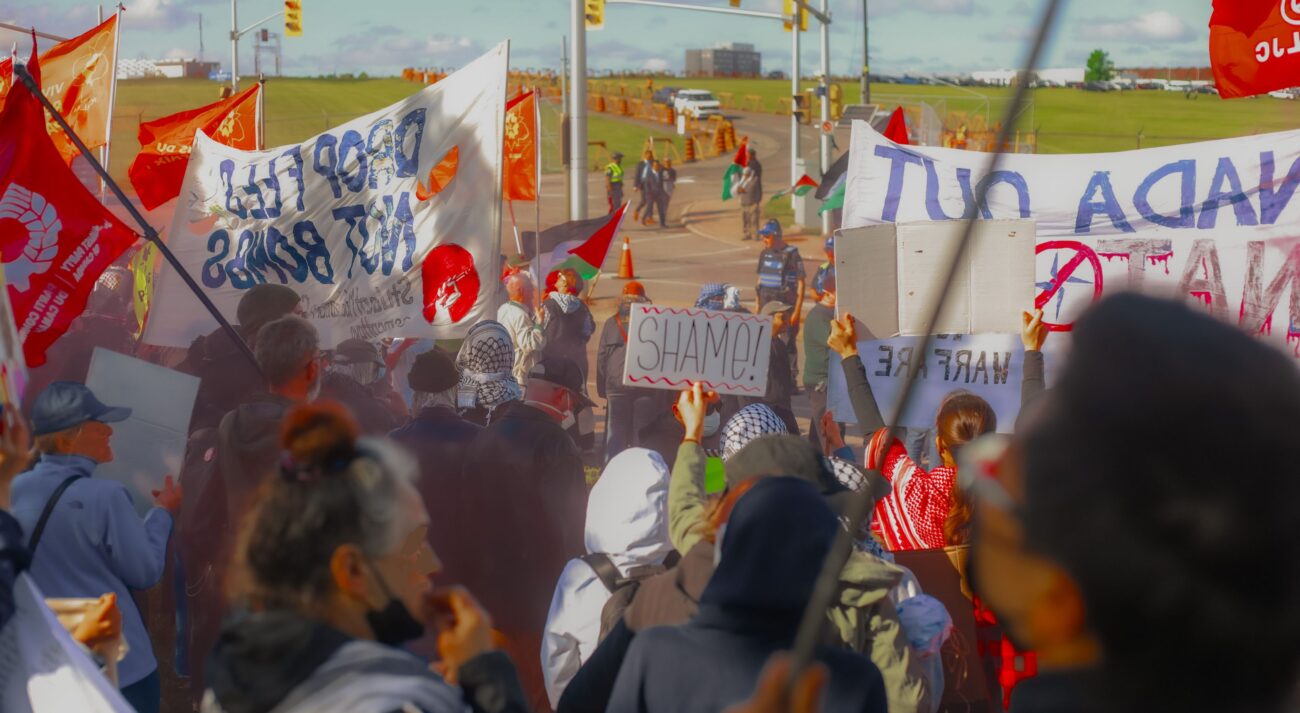
“Shut Down CANSEC” organizers oppose the Canadian government’s military contracts with companies such as: Elbit and Bae Systems who are suppliers to the Israeli military, and Roshel Inc., a Brampton based armoured vehicle manufacturer.
Roshel signed a rush-order contract worth $10 million CAD with U.S. Immigration and Customs Enforcement (ICE) in December 2025, and their armoured vehicles were proudly on display at CANSEC 2025 last May. The manufacturer debuted a new model that converts from “a standard unprotected configuration to a STANAG Level 2 armored vehicle in approximately two hours” at CANSEC 2026.
Over 70 organizations from across Ottawa, the Greater Toronto Area, Hamilton, and Quebec endorsed the “Shut Down CANSEC” protest. Including numerous anti-imperialist organizations such as Anakbayan Canada, the International League of people’s struggle (ILPS), and the International Migrants Alliance (IMA).
Throughout the morning, protesters called for Canada to cut ties with and stop supplying “genocidal forces” with arms, chanting for “a free Palestine, Phillippines, Congo, Lebanon, and Sudan.” Over 100 protesters gathered in groups at the centre’s three main entrances: the Uplands O-Train Station, Uplands Dr. North, and Uplands Dr. South.
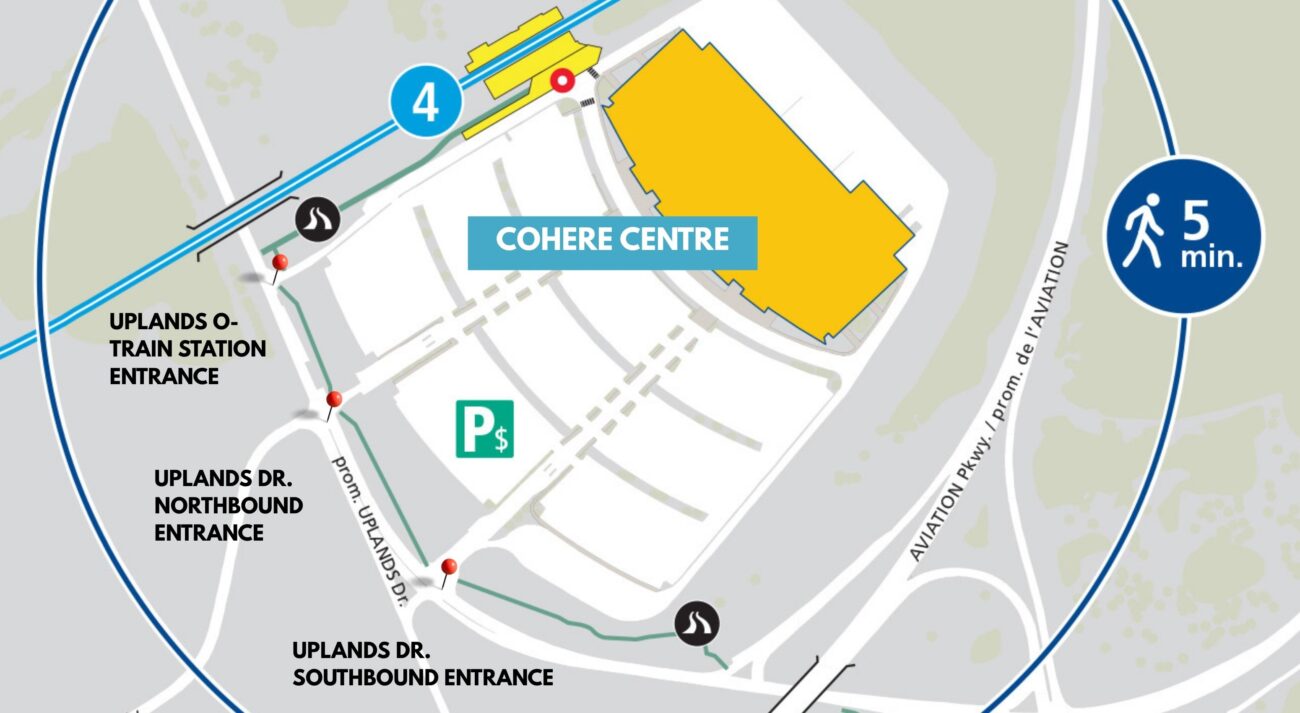
Annotated map of Cohere Centre. Image: OC Transpo/Provided. Edited by Bhoomi Dahiya.
A heightened police presence started much earlier up the road at the Breadner and Uplands intersection adjacent to the Canadian Forces Support Group Ottawa-Gatineau, the decommissioned military base for the National Capital Region.
7:30 a.m.
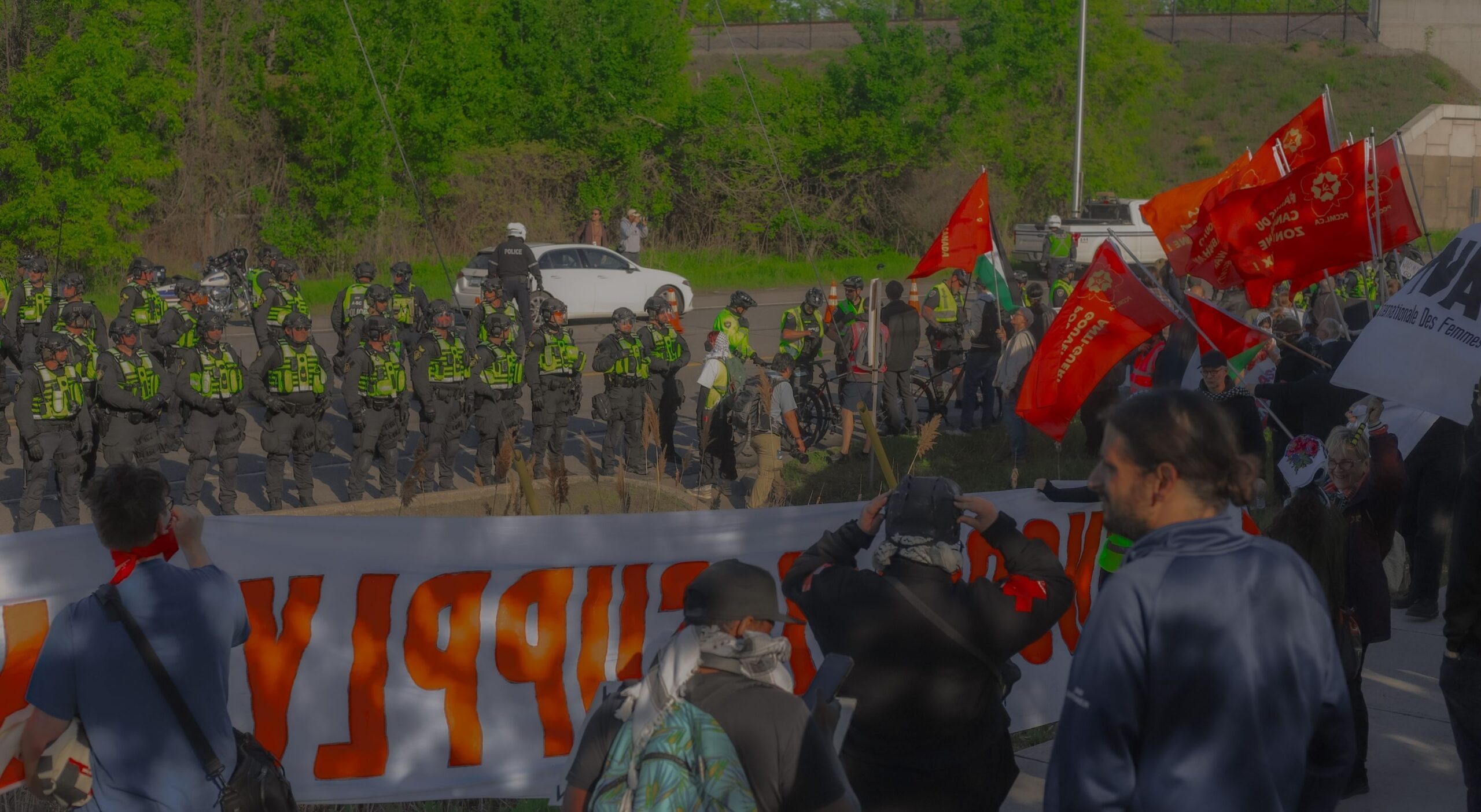
Protesters blocked the Uplands Dr. North and South entrances before rows of Ottawa police officers mobilized to push southbound protestors back to Uplands Dr. North. Prominent figures, such as former Ottawa-Centre MPP Joel Harden, former NDP leadership candidate Tony McQuail, and Doctors Against Genocide member, Dr. Yipeng Ge, were seen walking alongside protesters.
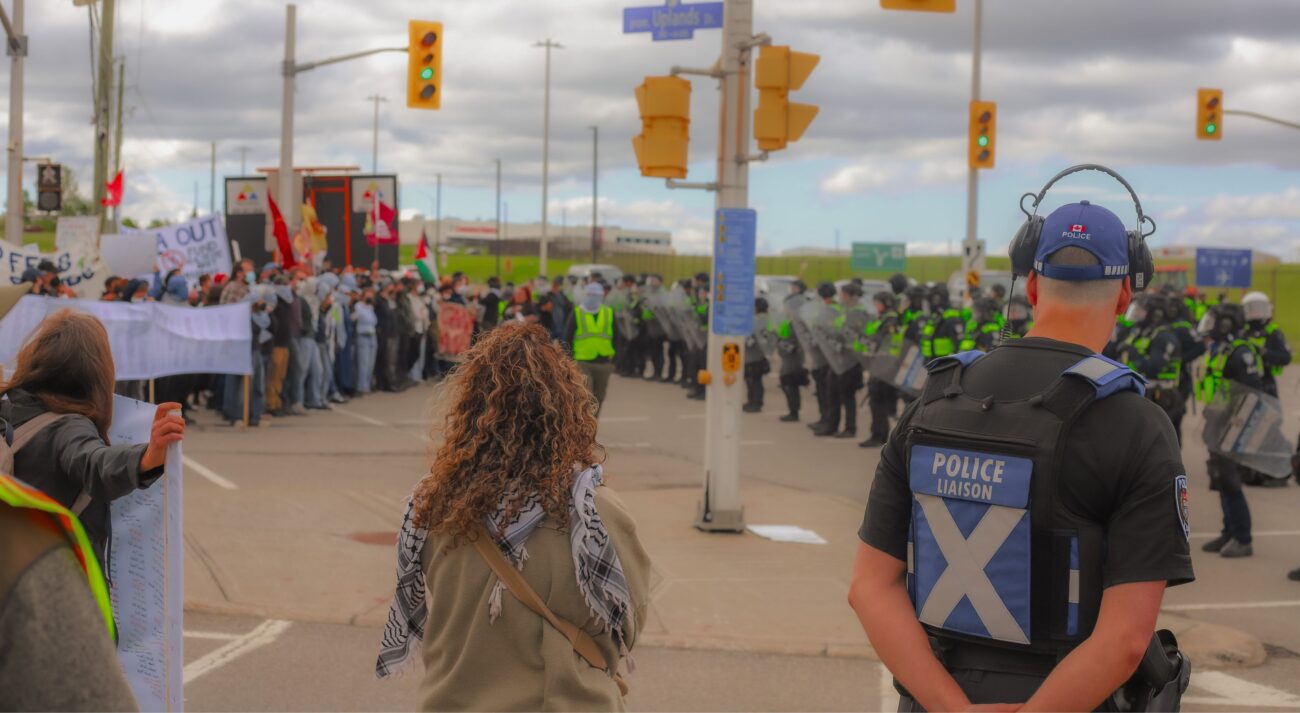
Protesters at the Upland Dr. North entrance. Photo: Bhoomi Dahiya/The Fulcrum. 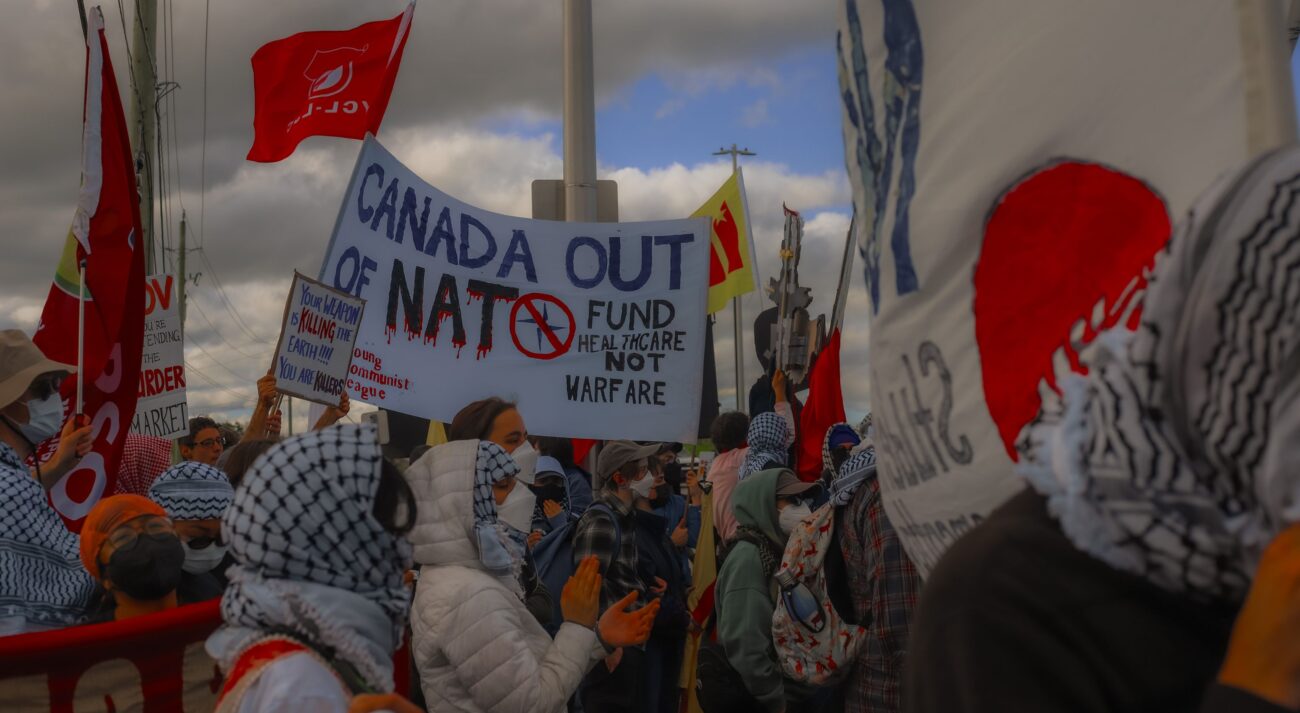
Protesters at the Upland Dr. North entrance. Photo: Bhoomi Dahiya/The Fulcrum. 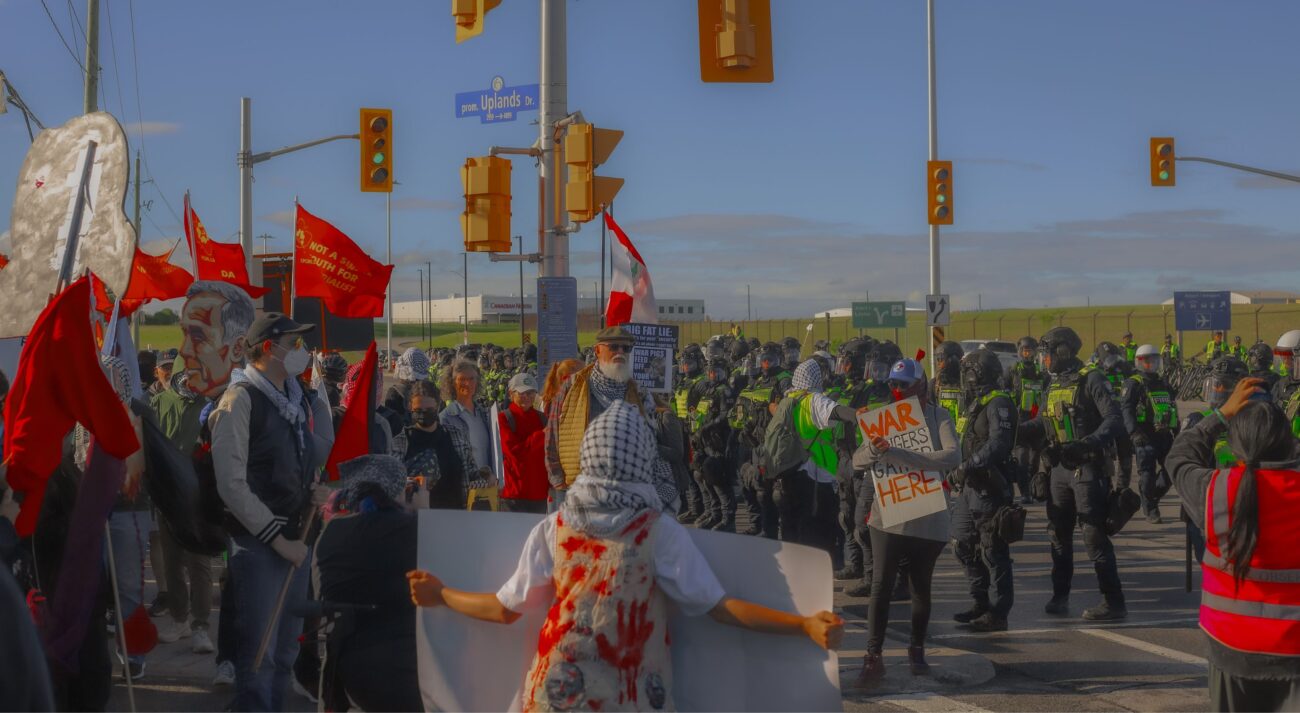
Protesters at the Upland Dr. North entrance. Photo: Bhoomi Dahiya/The Fulcrum. 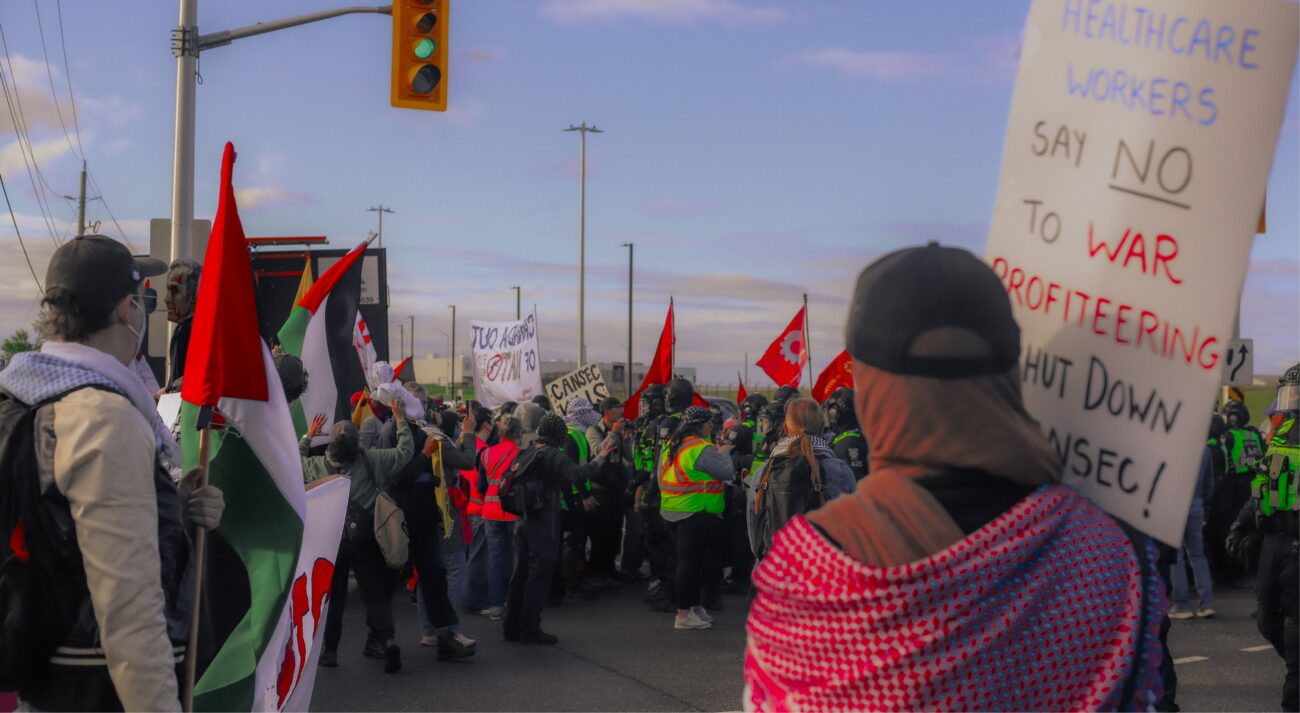
Protesters at the Upland Dr. North entrance. Photo: Bhoomi Dahiya/The Fulcrum.
7:45 a.m.
Tactical unit officers came by the dozens to form a boundary between the protesters and Uplands Dr. road, where CANSEC attendees tried to enter, and the CANSEC parking lot entry behind them at Uplands Dr. North. Officers were in full riot gear armed with dual firearms, riot shields, and rubber bullet rifles. Ottawa Police says that Tactical Unit members are “highly trained in…less lethal options.”
8:00 a.m.
Protesters consolidated their efforts at the Uplands O-Train Station entrance and formed a compact blockade to prevent entry. Tactical units and the Emergency Response Team (ERT) within the Ontario Provincial Police came running and pushed protesters with their riot shields, forcing them to either draw back or risk sustaining injuries.
No attempt at a full scale blockade of this exit was made for the rest of the protest as organizers discussed how they didn’t have “the bodies” necessary. In light of last year’s protest where “officers were pushing [people] by [their] throats,” the safety of protesters seemed to be top of mind for organizers.
“They will be violent, they will” said one protester to a police officer moments prior. Adding, “you have no problem hurting us,” as police forces ran from one exit to the other.
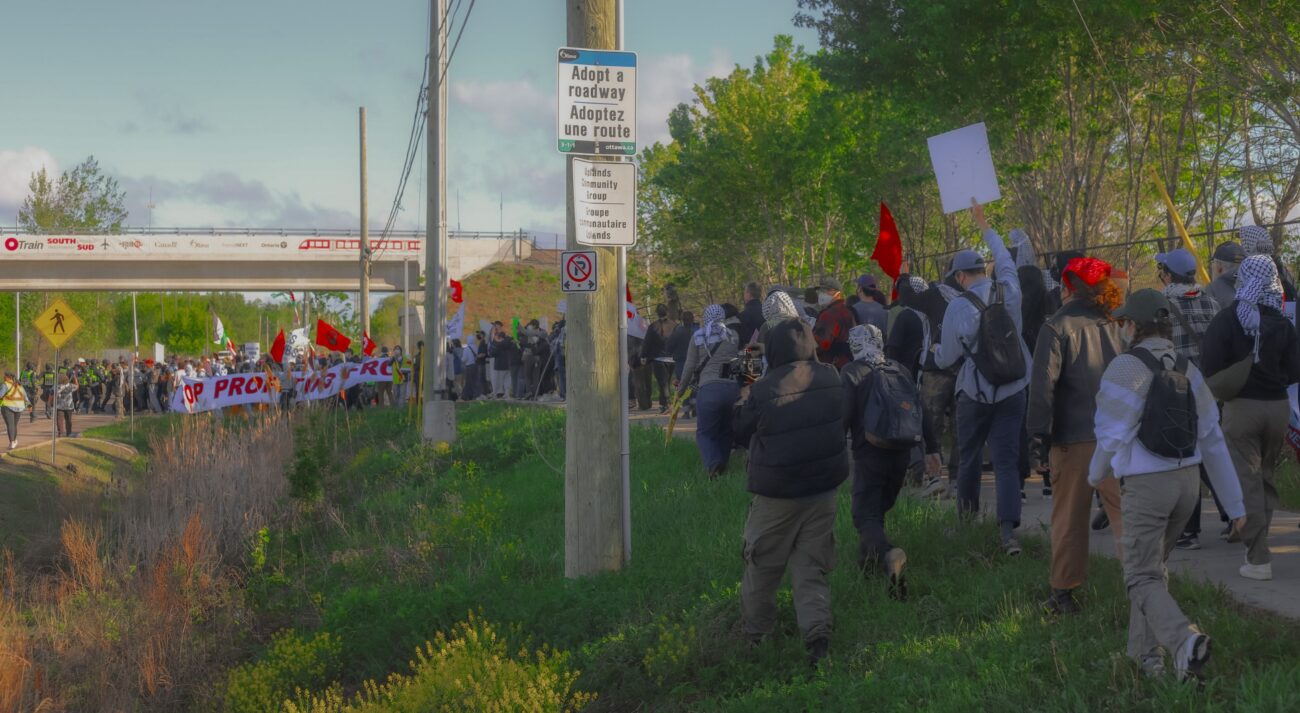
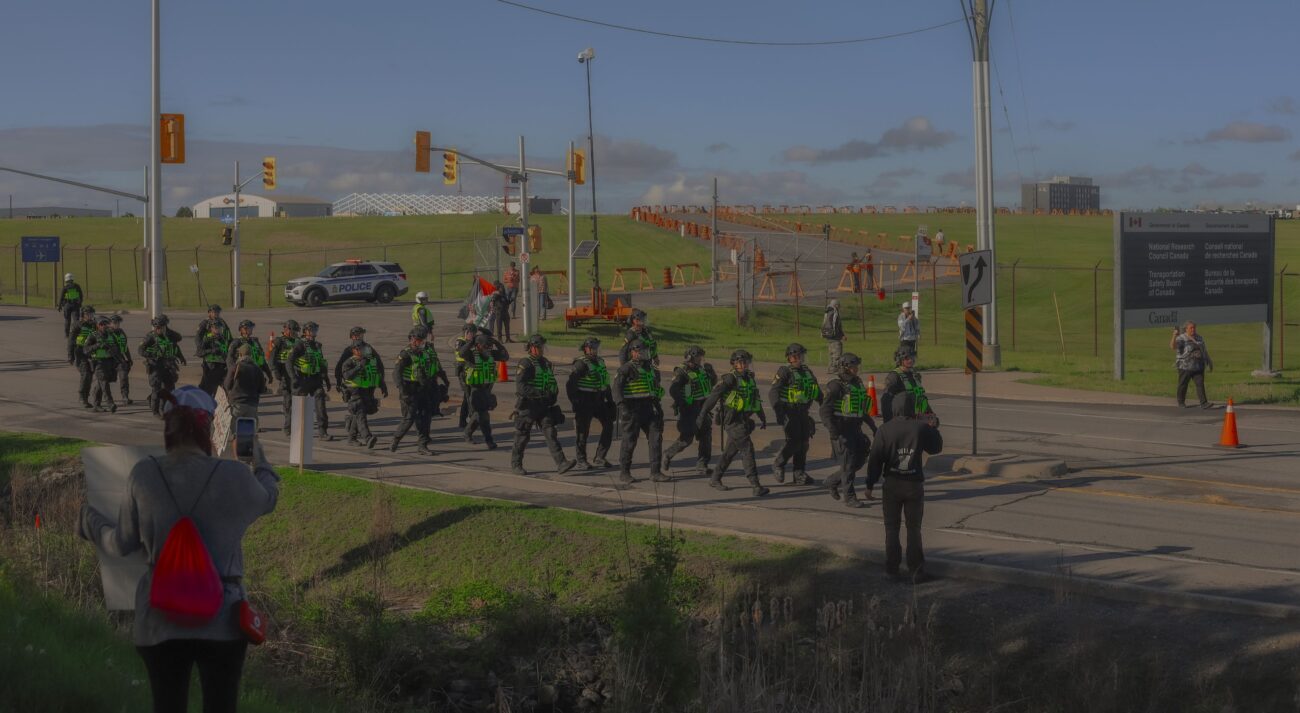
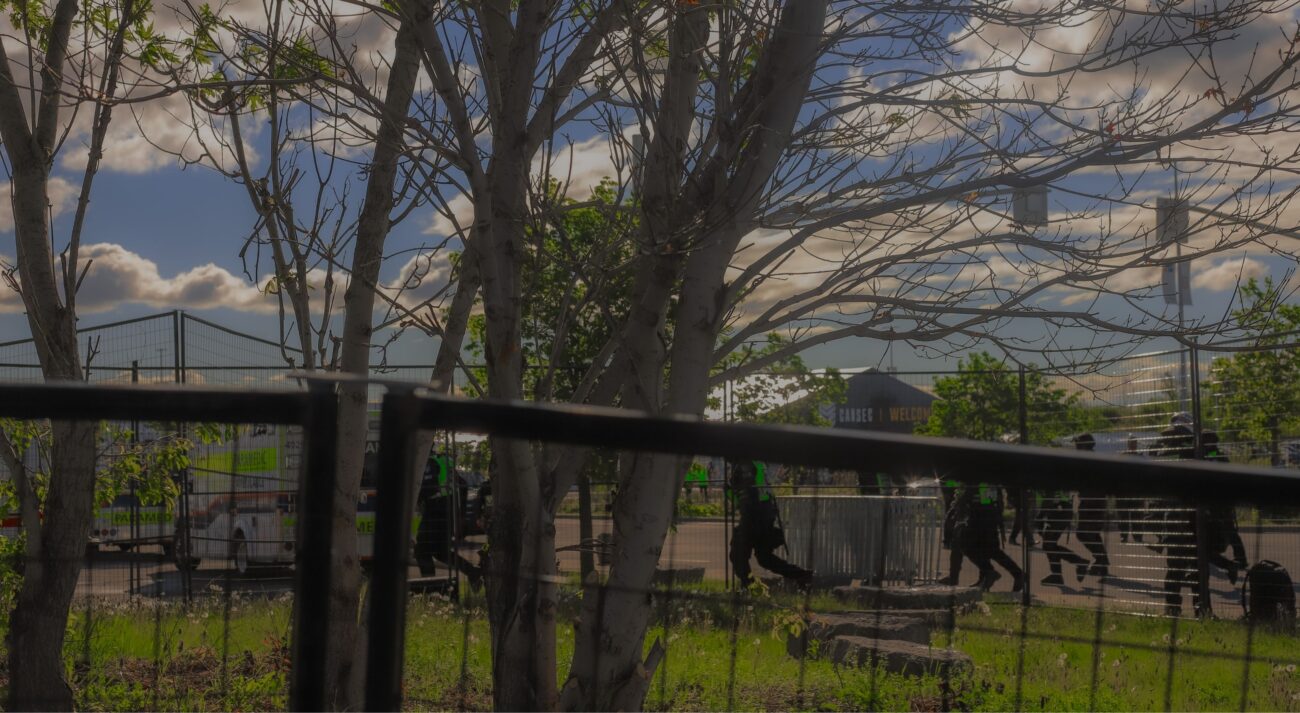
8:30 a.m.
Once protesters returned to the Uplands Dr. North entrance, the dozens of officers deployed reformed their boundary around them, and stationed there until the end of the protest. The vast majority of CANSEC attendees used the open Uplands Dr. South entrance with less than 50 entering through the Uplands O-Train Station and Uplands Dr. North entrances.
Those who passed through were escorted by the police and verbally confronted by protesters. For the most part attendees did not engage with protestors but those who opted to use these entrances could be seen grinning while the protestors called them “baby killers” and “war criminals.”
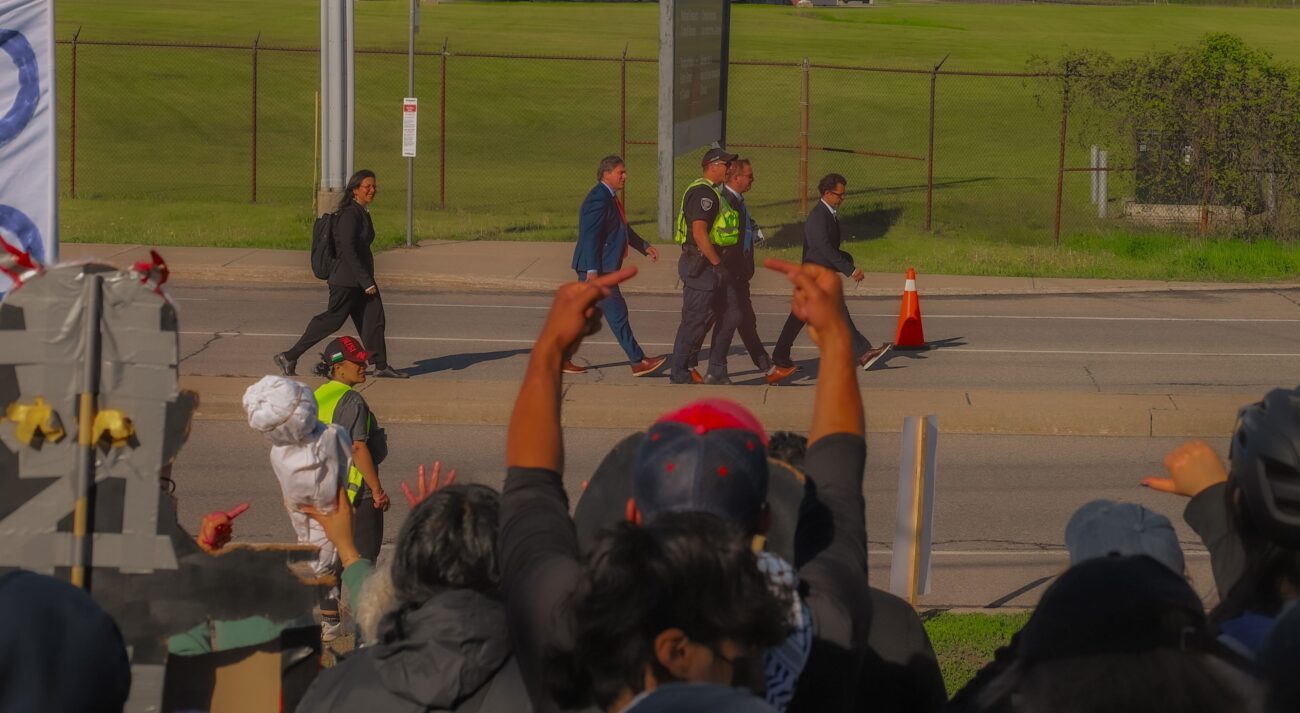
10:30 a.m.
After blocking the Uplands Dr. North entrance for two hours, organizers chose to adjourn while “they could still leave on their own terms.”
On their way homewards, protesters opted to pay fare using cash at the Uplands O-Train station. A crowd then formed at the only two available machines, allowing the protest to continue in a way as protesters heckled the attendees exiting the station.
The police started redirecting attendees through the emergency exit before opting to open the station gates free of charge to get protesters out of the area quickly. The waived fare memo spread quickly to South Keys station, as the gates at the line two transfer were also left wide open.
“Is this what it takes to get free fare?” said a protester.
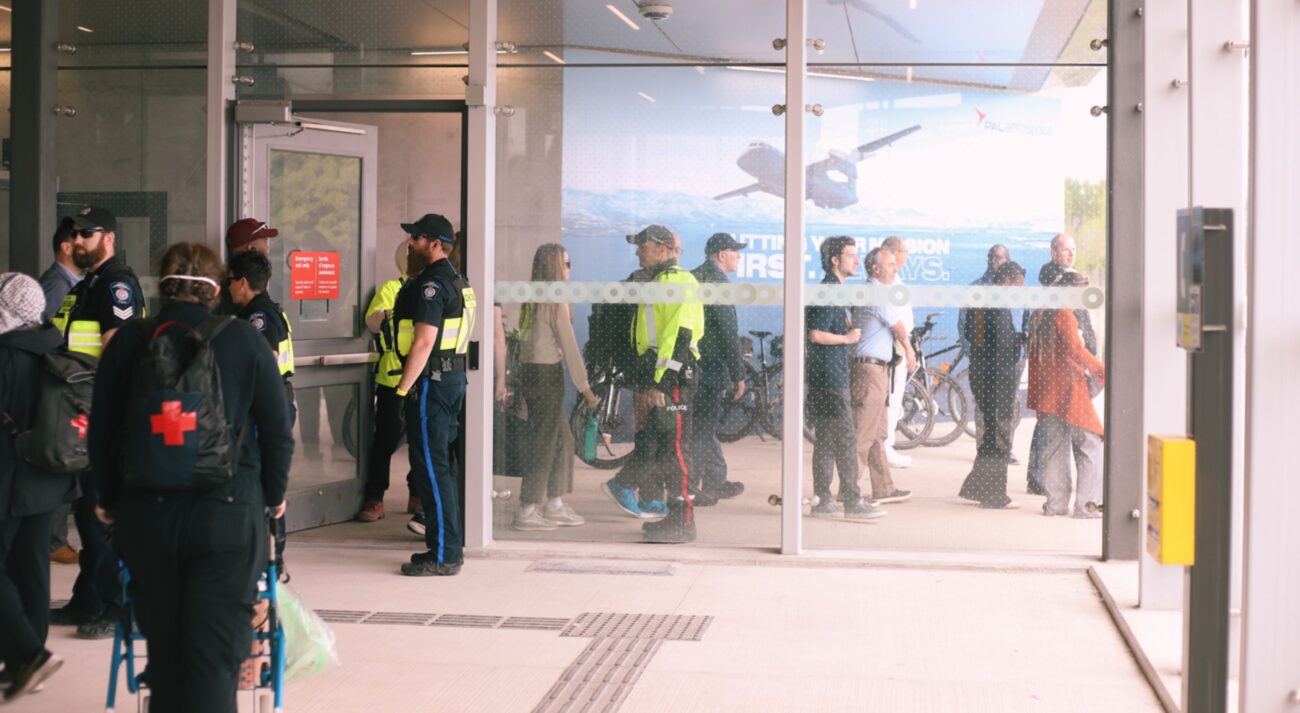
This comment echoed a popular frustration heard throughout the morning as protesters felt their government “had money for defence but not transit, healthcare, or education.” As Canada’s defence spending roughly doubled to meet NATO’s 2% of gross domestic product defence spending benchmark, another protester lamented: “when has the budget for healthcare ever doubled?”
In light of recent research trends across Canada’s public universities and Carney’s promised multiplier effect of defence spending on the economy, the boundaries between these sectors and defence may become increasingly blurry.