SENATOR SAYS UNIVERSITY ‘AIDING AND ABETTING’ IN HORRORS IN GAZA
Prestigious academics, University of Ottawa professors, internationally recognized human rights lawyers, poets, scholars, and people from Gaza, were preparing to travel from around the world to the University of Ottawa for the Palestine Tribunal on Canadian Responsibility on Nov 14 – 15. Rooms had been booked in advance, an organizer told us, and the lead up to the event was unfolding without significant difficulty.
The Tribunal aimed “to document the multiple ways that Canadian entities, including .. universities, .. have enabled and continue to enable the settler colonization and genocide of Palestinians.”
Then, on Wednesday Nov 19., University of Ottawa professors, including organizers of the Tribunal, began to receive what they called ‘threatening’ emails from the University of Ottawa administration.
“It has come to our attention that a joints [sic] group of Palestinian activists invited Palestinians to do a testimony on what happened to them in Gaza post October 7” one of the emails read. Professors were asked to come forward with any information.
This was followed quickly by the Universities protection services getting involved; they began contacting a wide range of staff, librarians, administrators, without directly contacting organizers through the channels listed on their website.
“At least 11 people were contacted by protection services in one way or another,” organizer and University of Ottawa Professor Nadia Abu-Zahra told the Fulcrum. “Not to mention the fact that my entire department gets a message saying, ‘Who has information?’”
“It felt like a criminal investigation was underway,” said Abu-Zahra.
According to organizers, the University made it clear, in communications with organizers who did come forward, that they could and would cancel the event at any moment.
Feeling like the Tribunal was under threat, combined with an escalating internal game of telephone, organizers moved to secure a last minute, off-campus venue in fear of the event being cancelled “on a whim.”
When asked if Abu-Zahra believed it was the university’s intention to cancel the event, Abu-Zahra shared, “It was their capacity, and they wanted us to know that capability could be exercised when and where they choose; that’s not a good feeling.”
“Officially, the booking wasn’t canceled, but the fact that it could [have been] at the snap of a finger made us really cautious,” Abu-Zahra stated.
Abu-Zahra pointed to the high-profile academics, Indigenous elders, and Palestinians, many who came a long way to Ottawa, and were there already by Thursday evening. “Are we going to tell Indigenous elders, on their land, that they can’t come to the university because someone, somewhere — and we don’t know who it is — is working through Protection Services?”
“And the next time we’re going to invite the elders, are we going to have to say to them, ‘Well, we’ve booked something, but we never know with our University? It’s disrespectful.”
Despite months of planning, on Thursday evening organizers were left scrambling for an alternative. Organizers reached out to Independent senator for British Columbia, Yeun Pau Woo, who helped them find space in the Canadian senate.
“They came to me, desperately seeking an alternative,” Sen. Woo told us.
Sen. Woo secured them a room in the senate at the last minute, a decision which resulted in fellow Senator Leo Housakos filing a complaint to the senate.
Moving the tribunal to the Senate had other repercussions. Abu-Zahra said the tribunal had to close registration early, and move most of the registered audience from in-person to livestream attendance.
“The university effectively, … removed an audience who wanted to be there” Abu-Zahra stated.
“… They didn’t succeed in complete cancelling the event, but what’s an event where all the speakers just have a camera on them and everyone else watches through the camera, no one can come up and say hello and meet them … you think law students don’t want to meet these professors of law from around the world?”
Alex Neve, who teaches at the University of Ottawa in addition to being a senior fellow at the Graduate School of Public and International Affairs, was a chair of one of the panels at the tribunal. He was told on Thursday evening the tribunal had been moved off-campus.
“It absolutely was last minute.” Neve said. “Obviously to have a venue yanked from a conference of any kind at the last minute like that, risks completely torpedoing the event and it’s just good fortune that we were able to go ahead.”
Neve added, “I think we need some clear answers from uOttawa as to how and why this happened, who made the decision, on what basis, and some real clear transparency for the decision.”
When asked if he thought the University’s decisions were politically motivated, Neve replied “whenever decisions are made to obstruct and interfere events focused on human rights in Palestine, we know [there is] some very real likelihood politics do play a role.”
“We need a full accounting on how the decision was made” Neve added, not just for purpose of clarity, but to “dispel any concerns about anti-Palestinian racism, and to give confidence that the University will, to the contrary, play its role in promoting and upholding the rights of Palestinians.”
Sen. Woo told the Fulcrum, “a university that penalizes its students or faculty for speaking their conscience … speaking truth about what is widely known about the atrocities in Gaza and who are seeking just solutions for Palestinians, institutions that punish individuals for these actions are complicit in their own way.” Sen. Woo continued, “They are suppressing the truth, and they are aiding and abetting the continuation of the violations of international law.”
When the Fulcrum inquired, University of Ottawa spokesperson Jesse Robichaud denied that the University intervened.
“The University did not intervene or prevent the event from being held on campus.
Staff attempted to reach the event organizers to confirm essential information like the event’s location and number of guests. This is routine for third-party events as the University is responsible to provide a safe environment for everyone on its campuses, including guests. The University was informed during this process that event organizers had decided to hold their event at a location away from campus.
The event was not organized by, or otherwise associated with, the University.”
The Fulcrums request to speak with Protection Services was denied.
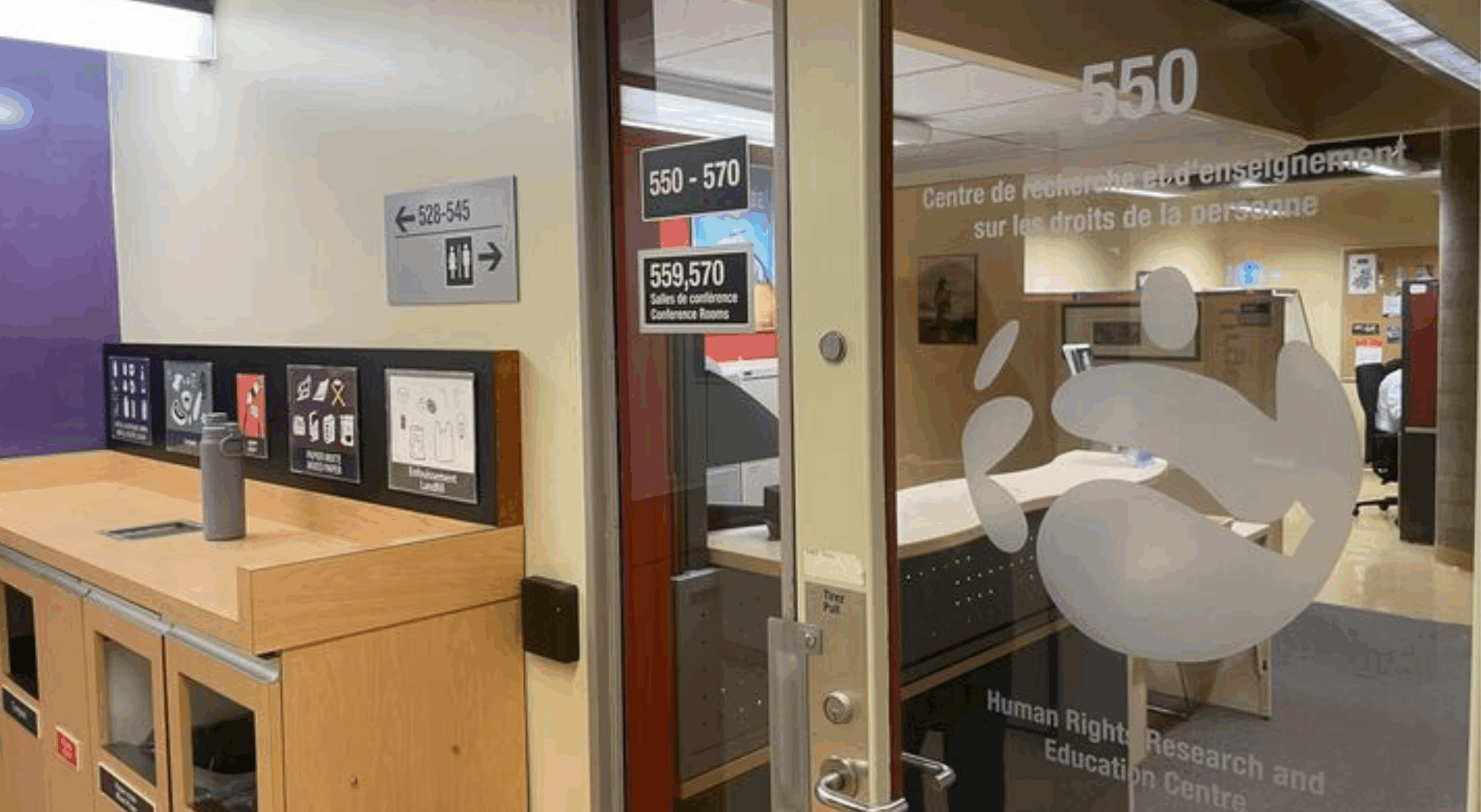
A press release incorrectly stated the event would be held at the University’s Human Rights Research and Education Centre, organizers and the University spokesperson acknowledged to the Fulcrum. Despite early plans to hold it at the Centre, they realized the Centre did not have the space or technological capabilities to host the event. Organizers told us rooms had been secured elsewhere at U of O for this event after the booking at the Centre fell through.
At the time of the Nov 21 interview, Abu-Zahra reported, as far as they know, the university has not reached out to organizers.
“This is at least the third time in as many years that someone, somewhere on campus, in a position of authority seeks to work through protection services to make clear what events are and are not welcome” Abu-Zahra told us.
Despite the change of location to the event, the Tribunal was described as a success. “What became very clear is the many ways in which we have deliberately ignored international laws and policies that lead to [Canada’s] direct responsibility.”