
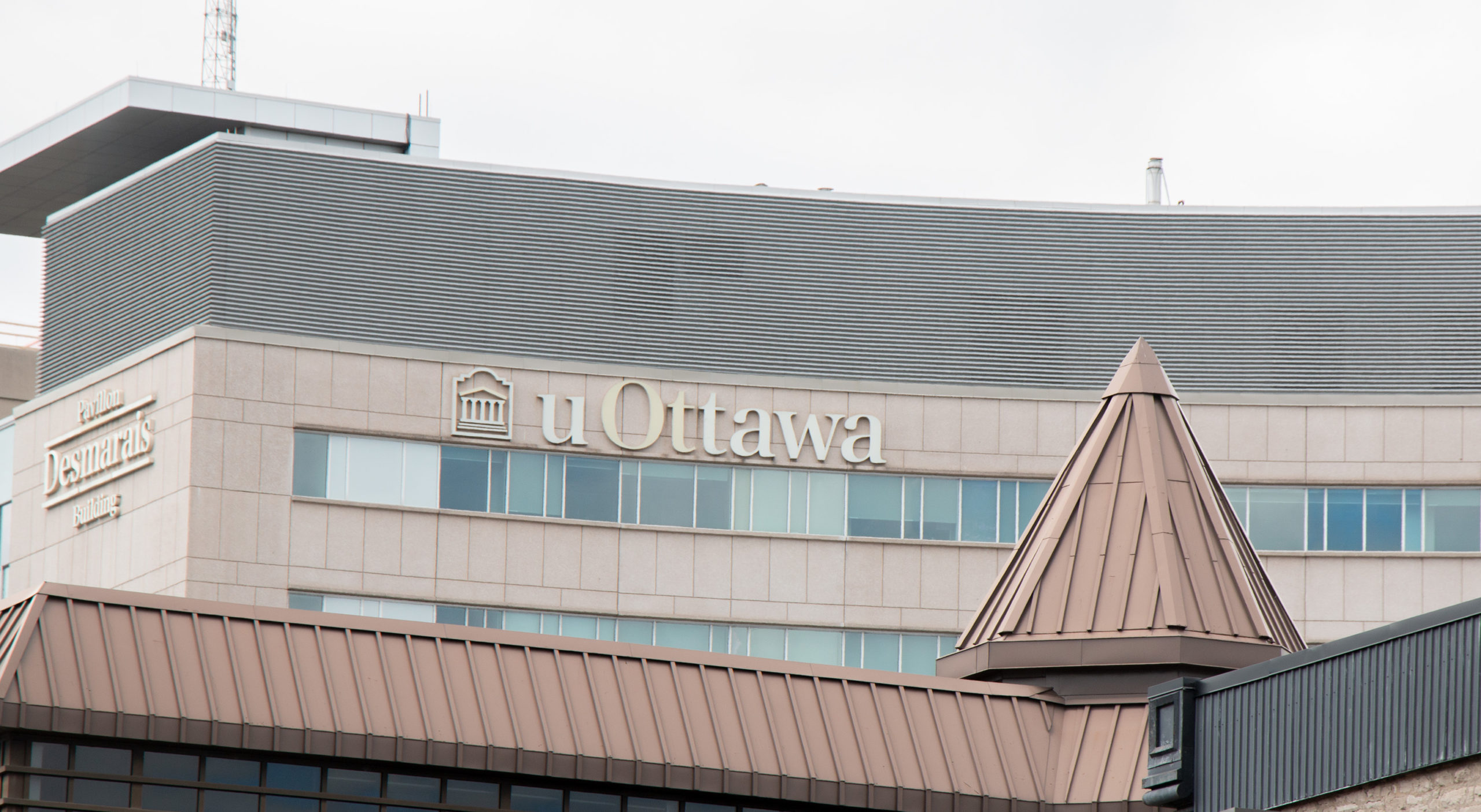
INCREASING TUITION FEES ARE AFFECTING BOTH OUT-OF-PROVINCE AND ONTARIO RESIDENTS ACROSS SEVERAL PROGRAMS , INCLUDING ENGINEERING, LAW, AND TELFER.
Tuition fees are rising again at Ontario universities — a change that is impacting both Ontario residents and out-of-province students at the University of Ottawa.
At the U of O, students in select programs – including Engineering (Bachelor of Applied Sciences), dual fast-track degrees in the Faculty of Engineering or Science, Law (Common Law programs, except the National Law Program), or Telfer School of Management — will see tuition increases on their students accounts this semester.
These hikes range from 3.04% to 7.5% depending on the program, and apply to both Ontario residents and domestic students from other provinces.
However, unlike Ontario residents, out-of-province students have faced annual increases of up to 5% since 2019. This means tuition is increasing at the same rate for Ontario and out-of-province students – but those from outside of the province are still paying more overall.
On the other hand, international students will not face changes to their tuition fees this year at the U of O, a notable break from previous years of increases. Since international student fees are not regulated by the Ontario government, universities are responsible for determining any increases independently.
This break comes at a time when universities across Canada – including at the University of Ottawa – are seeing declines in international students overall, a result of significant reductions in international study permits over the past few years.
While select undergraduate tuition is increasing in specific programs, tuition for graduate and postdoctoral students will remain unchanged for all students in the 2025-2026 academic year.
These increases raise important questions about when and why tuition fees rise at Ontario universities – particularly amid the provincial tuition freeze.
Why is tuition increasing now?
Since 2019, Ontario has maintained a province-wide tuition freeze for domestic students – a freeze that remains in place until at least 2026-2027.
However, a recent Ontario policy directive allows universities to apply for an exemption if they can demonstrate that their fees fall within the category of tuition anomalies.
A tuition anomaly program refers to any program that can prove it is operating at a lower-than-sector-average tuition rate for comparable programs across Ontario.
The tuition increases initially took effect in the 2023-2024 academic year, however increases are capped at 7.5% annually. This means universities can continue to raise fees until the program is no longer deemed a tuition anomaly, but only by a maximum of 7.5% per year.
At the University of Ottawa, several programs met this exemption criteria and were therefore approved for increases.
However, these increases aren’t unique to the U of O. Across the province, tuition hikes are emerging as a consequence to larger trends of provincial underfunding in Ontario’s post-secondary education system.
The bigger funding picture
For decades, government funding made up the majority of university revenue in Ontario. But over the past few decades, public funding of post-secondary education has steadily declined.
Today, private tuition is the largest single source of revenue for universities across the province.
As public funding has declined, institutions have turned to alternatives sources of income to make up major revenue losses. Many universities across Ontario have relied on private partnerships, raising international tuition, and lobbying for policy changes to close financial gaps and maintain operations.
At the University of Ottawa, these financial pressures have become increasingly visible to students. In 2024, U of O introduced several budget cutbacks, including reducing class sizes and course selections, as well as abolishing the merit scholarship.
These changes reflect broader trends in the province, where post-secondary institutions are struggling to operate under sustained financial pressure. The Canadian Federation of Students Ontario, in its 2025 pre-budget submission, described the system as a “financial crisis” that impacts both students and institutions.
Greater concerns about affordability
For many, the concern isn’t just tuition, it’s the overall cost of being a student.
As housing, groceries, transportation, and other academic costs rise, the overall price of post-secondary threatens to push education out of reach for many students.
Alex Stratas, Advocacy Commissioner for the University of Ottawa’s Student Union (UOSU), highlighted concerns that students are being financially squeezed from all angles.
“They’re just taking out money from every direction, and we just don’t have any left,” said Stratas in an interview with Fulcrum.
Stratas criticized the Ontario government for systemically underfunding education, and the university administration for prioritizing private investments over student needs – emphasizing the responsibility that both groups play in ensuring post-secondary education is affordable.
Stratas also raised concerns about a lack of transparency between students and administration. In particular, students in affected programs were made aware of the changes through an email from the office of registrar back in May. Emails went out four months before tuition payment deadlines, and didn’t state why and how fees are changing; rather, they directed students to the University website to find the information themselves.
However, students were not the only ones left in the dark. Stratas stated that UOSU was not made aware by administration and only learned of tuition hikes through student complaints – highlighting an absence of communication in the decision as well as the exclusion of meaningful student consultation.
“It causes a lot of distrust within the student body against the administration,” Stratas added, “I don’t think they’re realizing that.”
What’s next?
The tuition increases have already taken effect for the current academic year. Whether more hikes are coming – and whether students will be consulted in future decisions – remains to be seen.
For now, students in affected programs will need to plan for higher tuition costs as the overall price of post-secondary education continues to rise.