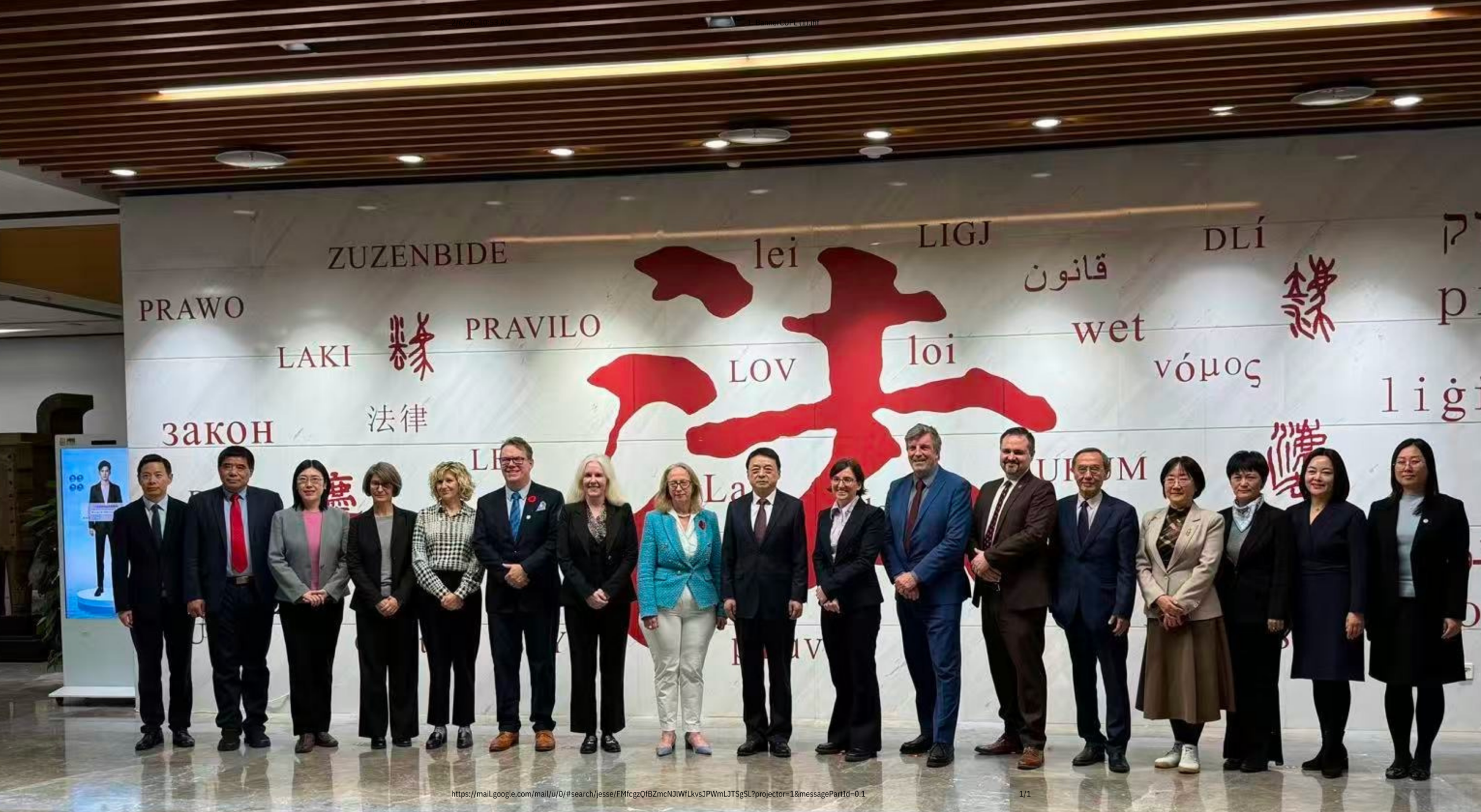
UNIVERSITY OFFICIAL SAYS THE STRENGTHENED TIES FORMALIZED LONG-STANDING RESEARCH LINKS AND COULD OPEN NEW OPPORTUNITIES FOR STUDENTS AND FACULTY.
The University of Ottawa is expanding its academic partnerships with Chinese universities as part of a broader effort to formalize long-standing research collaborations and scale-up student and faculty mobility, university officials say.
According to a university news release published in November 2025, the U of O has strengthened relationships with several top Chinese universities as part of a broader effort to support international research, teaching and student mobility.
Dr. Connell Raymond Monette, director of global partnerships at the U of O, said the expansion formalizes collaborations that have already been taking place across faculties.
“Right now, we have just under 400 partnerships in just over 60 countries around the world,” Monnette said. “That means that we have graduate and undergraduate students as well as professors who have been doing work for years with top tier universities around the world.”
Monette said the university’s relationship with China dates back more than a decade pointing to their long-standing collaborations in medicine.
“The faculty of medicine, just this past year, celebrated their 10 year anniversary with Shanghai Jiao Tong University’s faculty of medicine in China.”
Shanghai Jiao Tong University is considered one of China’s top medical schools. Monette said the U of O’s faculty of medicine has been sending professors and graduate students to China to co-develop its faculty of medicine program.
He said the decision to strengthen partnerships was driven in part by the volume of joint research already underway.
“Just in the last 10 years, we’ve had nearly 800 joint publications with four Chinese universities,” Monette said, referring to Shanghai Jiao Tong University, Zhejiang University, Peking University and Tsinghua University.
Data from the academic database Scopus shows at least 670 co-authored publications between the University of Ottawa and the four institutions since 2015.
One of the most recent collaborations is a 2026 study on AI-driven simulated patients in medical education, co-authored by the U of O and institutions in China, including Peking University,
Formal agreements make it easier for students and faculty to continue that work, particularly through funding and mobility programs. Monette said the U of O has signed agreements with Chinese universities to support research already taking place and expand opportunities for graduate students and faculty.
One example is the U of O’s participation in a Canada-China academic consortium that provides funding for graduate students to conduct research abroad.
Through the program, graduate students can travel to partner institutions such as Tsinghua University, which Monette described as a top-tier institution, without covering the costs themselves.
“Instead of having to spend your money, that consortium makes it possible for you as a University of Ottawa student to go to a top tier Chinese University for a summer research trip,” Monette said.
Beyond medicine, Monette said several faculties are actively involved in partnerships, including law, arts and management.
“Our faculty of Law is very actively engaged with the top law school in China,” he said, referring to the China University of Political Science and Law.
Monette also hinted to the University signing an agreement to establish a joint institution in China’s Hainan province, where U of O may deliver academic programs in the coming years.
According to Monette, U of O’s faculty of law plans to offer a master of law program in China starting in 2027, while the faculty of arts will offer a bachelor of arts in English language studies beginning this fall.
The expansion follows the November 2025 visit to China by President Marie-Eve Sylvestre, who was invited to participate in the World University Presidents Forum — an invitation-only event hosted by China’s Ministry of Education and supported by UNESCO.
The university said it coordinated closely with Global Affairs Canada throughout the process.
“Like any good Canadian university, we follow the guidance from Global Affairs very carefully, especially on research and research security” Monette said.
The university’s expanding engagement with China comes as Canada has sought to recalibrate its relationship with Beijing. In recent speeches, Prime Minister Mark Carney has described the emergence of a “new world order,” arguing Canada must navigate shifting global power dynamics through diplomacy and trade.
Canada’s broader diplomatic engagement with China — including recent visits by Prime Minister Carney, has reinforced the role of academic collaboration as part of that approach.
“There is the concept of academic diplomacy,” Monette said. “Sometimes countries get along, and sometimes they don’t…but the university researchers are often still doing joint research, and students are still doing student mobility.”
Jesse Robichaud, director of public affairs at the U of O, said the university’s approach to international partnerships should be understood as continuation of long-standing academic collaboration rather than a reaction to shifting global politics.
“People speak about geopolitical shifts, but from the university’s perspective, this isn’t a response to recent changes,” Robichaud said. “It reflects work that Monette spoke about that has been happening at the university over the last 10 to 15 years.”
Robichaud said the partnerships are not a shift but a continuation of existing work with international partners, building on momentum already in place.
For Monette, the partnerships also reflect U of O’s increasingly global alumni network.
“We really are a global university and our alumni network is getting bigger and bigger and more and more international every year,” he said.