Or, How I Learned to Stop Worrying and Love Authenticity
You’ve met them. In fact, you’re probably connected with them on LinkedIn after sitting next to them just once in a lecture hall. You know the type: they’ve somehow optimized their morning routine, leveraged their network, and pivoted their personal brand before 7 a.m.
Their content is unmistakable. They’re the ones who turn waiting in the Second Cup (or Tim Hortons) line into a three-paragraph meditation on perseverance, complete with a candid photo of themselves looking pensively at the menu board. Later, they’ll tag you in a post about “collaborative synergy” after a single group project, somehow framing your shared struggle with a broken printer as a masterclass in adaptive problem-solving.
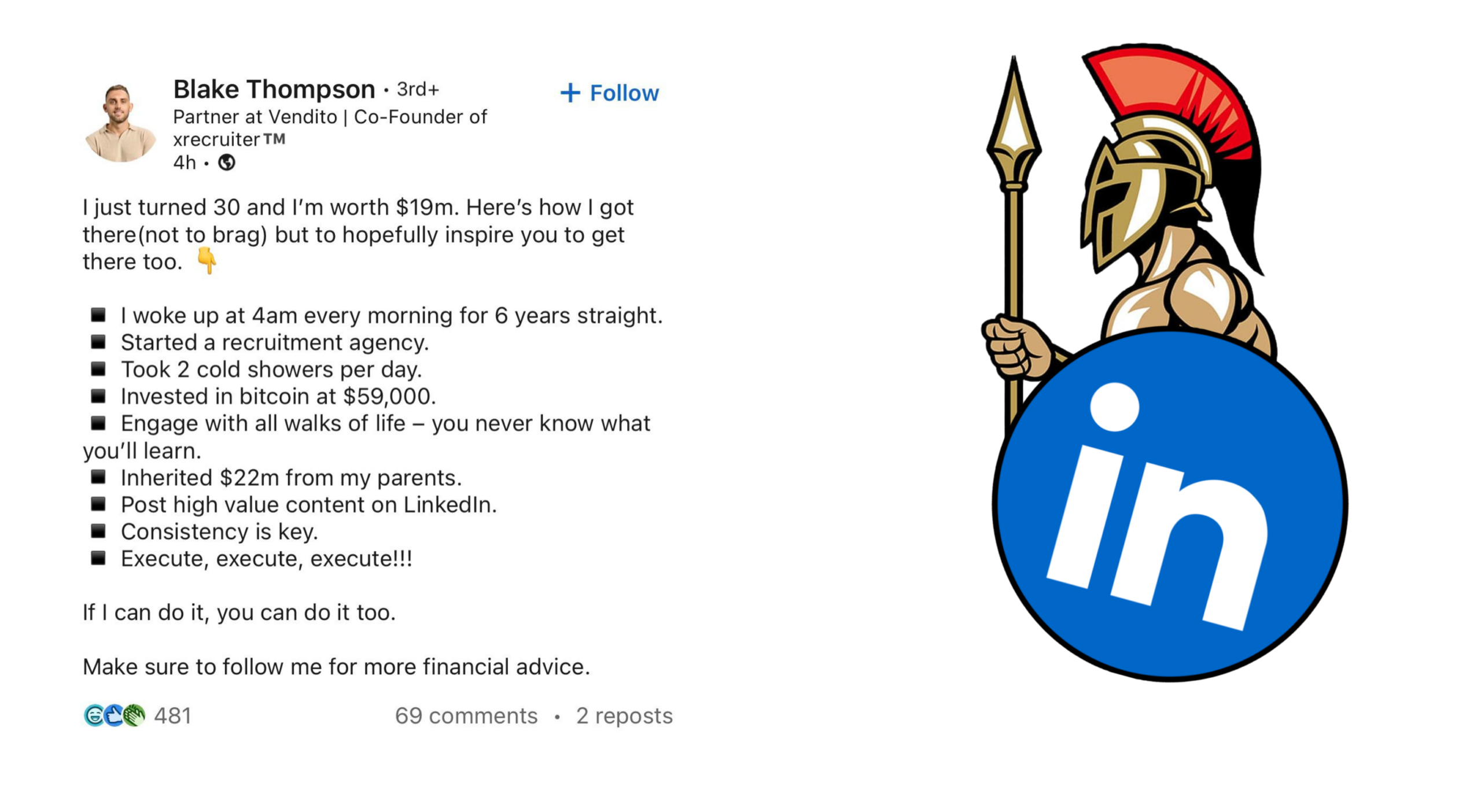
Welcome to the world of the LinkedIn Warrior, the student who has weaponized hustle culture so thoroughly that they can no longer distinguish between a Tuesday morning coffee run and a keynote address at a Fortune 500 conference.
These are the students who treat every human interaction like a networking opportunity that must be documented, analyzed, and spun into content. The roommate who passive aggressively posts about “stakeholder misalignment in shared living spaces” instead of just asking you to do the dishes. The classmate who describes getting ghosted after a first date is “a strategic pivot toward new market opportunities in the relationship sector.” The person who writes “gratitude posts” about setbacks that read less like genuine reflection and more like a TED Talk delivered by someone who’s had too much coffee and not enough therapy.
The LinkedIn Warrior’s profile is a carefully curated monument to productivity. Headshot so polished it could be used in a corporate brochure. Skills section longer than most CVs. Experience descriptions that somehow transform “Made photocopies for the registrar’s office” into “Spearheaded high-volume document reproduction initiatives to optimize administrative workflows.” Every accomplishment, no matter how minor, is an opportunity for personal branding. Attended a networking workshop? That’s “investing in continuous professional development and expanding strategic partnerships.” Studied at Fauteux Hall? “Optimized productivity in a collaborative learning environment.” Showed up to class on time? “Demonstrated unwavering commitment to punctuality and excellence.” Every moment, no matter how unremarkable, is content waiting to happen. mundane moment, repackaged and relaunched as a personal brand event
But here’s where it gets truly exhausting. The posts. Oh, the posts. The 5 a.m. gym selfies with captions about “winning the morning.” The photos of laptop screens at midnight with soliloquies about the grind. The crying selfies (yes, crying selfies) with paragraphs about vulnerability being a leadership strength. The humble-brags masquerading as inspirational content. “Just got rejected from my dream internship, but failures are just redirections! Can’t wait to see where this pivot takes me. Thoughts, connections?”
And it has gotten so extreme that satire genuinely cannot keep up with the source material anymore. Parody accounts exist solely to mock this culture, posting fake LinkedIn confessionals soaked in buzzwords and manufactured vulnerability, and yet they are routinely shared earnestly, complete with comments like “This is exactly what I needed to hear today” and “So brave for putting this out there.” When the joke and the real thing are functionally indistinguishable, it raises an uncomfortable question: did the LinkedIn Warrior ever know the difference?
It’s performative productivity on steroids, a constant stream of “content” that treats mundane moments like they’re case studies at Harvard Business School. And the worst part? It works on people. Students scroll through these posts and feel the creeping dread that they’re not doing enough, not posting enough, not optimizing enough, not grinding enough. They wonder if maybe they should also be documenting their breakfast choices as examples of decisive leadership or framing their all-nighters as evidence of grit and determination.
But the compulsion to keep up runs deeper than career anxiety. It starts quietly colonizing how you see your own time. You’re sitting on your couch on a Saturday afternoon, doing nothing in particular, just existing, and somewhere in the back of your mind a LinkedIn post is already writing itself: “While you’re resting, someone else is building their empire.” Suddenly your afternoon off isn’t rest. It’s laziness with good wifi. Your lunch with a friend isn’t a connection; it’s an unoptimized networking opportunity you failed to document. Your weekend where nothing happened, no workshops attended, no skills sharpened, no content generated, starts to feel less like a break and more like a gap in your personal brand timeline. What makes this especially cruel is that hustle culture never actually defines the finish line. There is no point at which you have ground enough, optimized enough, sufficiently branded yourself into someone worth following. The LinkedIn Warrior isn’t successful; they’re just visibly busy. And visibility is the whole point. You’re not seeing their life, you’re seeing the version of it that passed the personal brand quality check. And for students already stretched thin across assignments, part-time (or full-time) jobs, and the entirely reasonable pressure of figuring out who they even are, having your downtime quietly reframed as a character flaw isn’t just annoying. It’s a particular kind of exhausting that’s hard to name, because the pressure isn’t coming from a professor or a deadline. It’s coming from a scroll.
Let’s be clear: there’s nothing wrong with celebrating genuine achievements or building a professional presence online. Got an internship? Great, share it. Published research? Fantastic, post about it. Graduated? Absolutely worth commemorating. But not everything is a high stakes boardroom moment requiring strategic analysis and a motivational caption. Sometimes a coffee is just a coffee.
The LinkedIn Warrior has forgotten that authenticity doesn’t require a filter, three hashtags, and a call to action. They’ve confused visibility with value, conflated posting with productivity, and mistaken performance for genuine connection. They’ve turned their entire existence into content, and in doing so, they’ve become a parody of the very professional success they’re chasing.
So, if you’re reading this at 4 a.m., about to post your “morning grind” routine, ask yourself: are you sharing because it’s meaningful, or because you’ve convinced yourself that if it’s not documented and hashtagged, it doesn’t count? Are you networking, or are you performing?
Not everything needs to be a personal brand. Sometimes you’re just allowed to be a person.