OpenAI’s claimed breakthrough on a decades-old mathematical problem raises questions about the future of research.
On Sept. 8, OpenAI announced that an internal artificial intelligence (AI) system had produced a solution to the Navier-Stokes existence and smoothness problem, one of mathematics’ seven Millennium Prize Problems. The nearly 90-year-old problem asks whether equations describing the movement of fluids will always behave smoothly, or whether they can eventually break down and produce what mathematicians call a “singularity.”
OpenAI claims its system proved the latter. According to the company, around 10,000 AI agents worked together for 88 hours to produce an analytical proof, along with a formalized version in Lean, a program used to verify mathematical proofs. OpenAI’s proof concerns an external force acting on the fluid and has yet to undergo independent mathematical review.
Unsurprisingly, the announcement caused a firestorm in the world of mathematics.
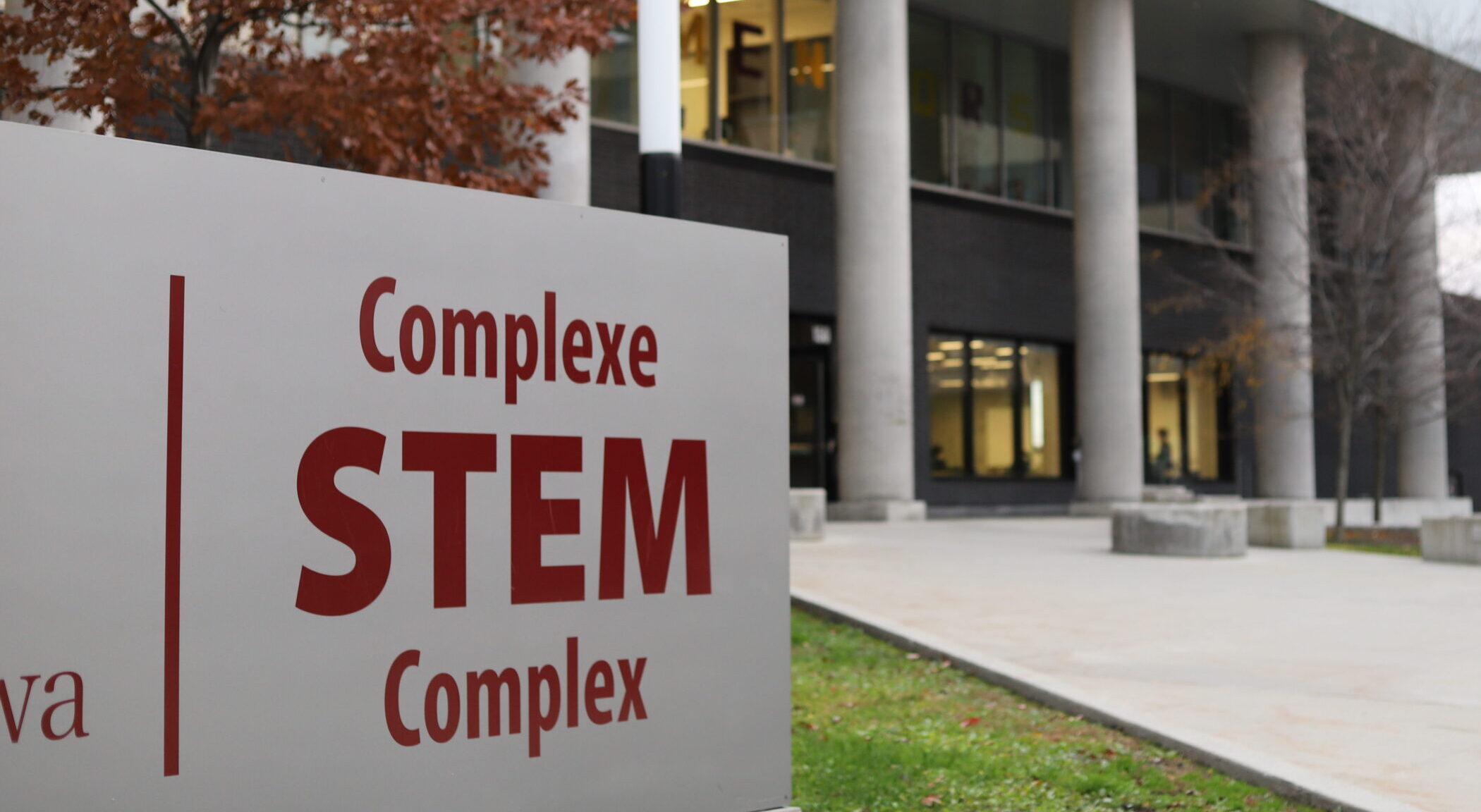
Loic Cappanera, associate professor in the Department of Mathematics & Statistics at the U of O, described this breakthrough as extremely significant, particularly considering how quickly AI systems have advanced:
“Two years ago, I remember many of my colleagues and myself saw that even when you feed AI undergraduate assignments, it makes a lot of mistakes. Then last year, that was not true anymore. For most undergraduate assignments, AI gives correct answers.”
Cappanera emphasized that the breakthrough was built on recent work by Spanish mathematicians Diego Córdoba and Luis Martínez-Zoroa. Rather than emerging independently of existing mathematical knowledge, the result reflects a field in which AI can increasingly extend and combine ideas developed by researchers.
That distinction matters when considering what the announcement demonstrates. Producing a proof is one achievement; establishing its significance, originality, and place within existing mathematics is another.
One concern beyond the classroom that Cappanera raised is how AI could affect the exchange of ideas within academia. Researchers regularly discuss unfinished work at conferences, sharing possible directions and receiving feedback from colleagues. But with AI potentially capable of developing those ideas more quickly, Cappanera is considering no longer sharing his work at these conferences. He worries that someone could use AI to pursue an idea he shares before he has time to develop it himself, particularly when working at a slower pace with students.
As AI makes it easier to produce research, Cappanera expressed worry that mathematicians could spend increasing amounts of time verifying results rather than developing their own ideas. Especially when AI systems could be used to verify work produced by other AI systems without sufficient human oversight.
What does this mean for students?
Cappanera advised that students should learn how to use AI to identify important concepts, understand theorems, and review attempts at solving problems. However, he emphasizes that this usage is still an exchange that requires students to be able to identify mistakes made by artificial intelligence. “If you know your [mathematical] basics well, you will use this tool way better than many others,” he said.
The implications could extend beyond university classrooms. As AI becomes capable of handling increasingly complex mathematical tasks, students entering research and technical fields may find themselves working alongside systems that can solve problems once reserved for specialists. This raises questions about which skills will remain valuable as the technology advances, and how universities can prepare students for a field that is changing so quickly.
According to Cappanera, the increasing capabilities of AI are already influencing how mathematics is taught at universities. He pointed to the declining usefulness of traditional take-home assignments as students gain access to systems capable of completing them quickly.
As a result, he believes universities place greater emphasis on in-person assessments, interactive exercises, and direct engagement between professors and students. Cappanera described the possibility of a classroom structure in which students review foundational material independently before using class time to work through applications with their professors.
As an applied mathematician, Cappanera works with computational methods, programming, and simulations, some of which require substantial computing resources and collaboration with researchers in other fields. While AI can assist with coding, calculations, and exploring possible approaches, he explained that running complex simulations and interpreting their results still requires direct involvement from researchers.
The Navier-Stokes breakthrough story signals towards a question of a future where proofs and research become heavily automated. It also illuminates the gap between the produced results and those that verify them. Who understands these results well enough to trust them? How much of that reasoning can be carried out by machines? What role will mathematicians have if those capabilities continue to improve?
There are not yet clear answers to those questions. But the students sitting in math classrooms right now may be among the first who have to confront them directly.