Managing academics, athletics and a social life can feel impossible. Here’s what four Gee-Gees have learned about making it work.
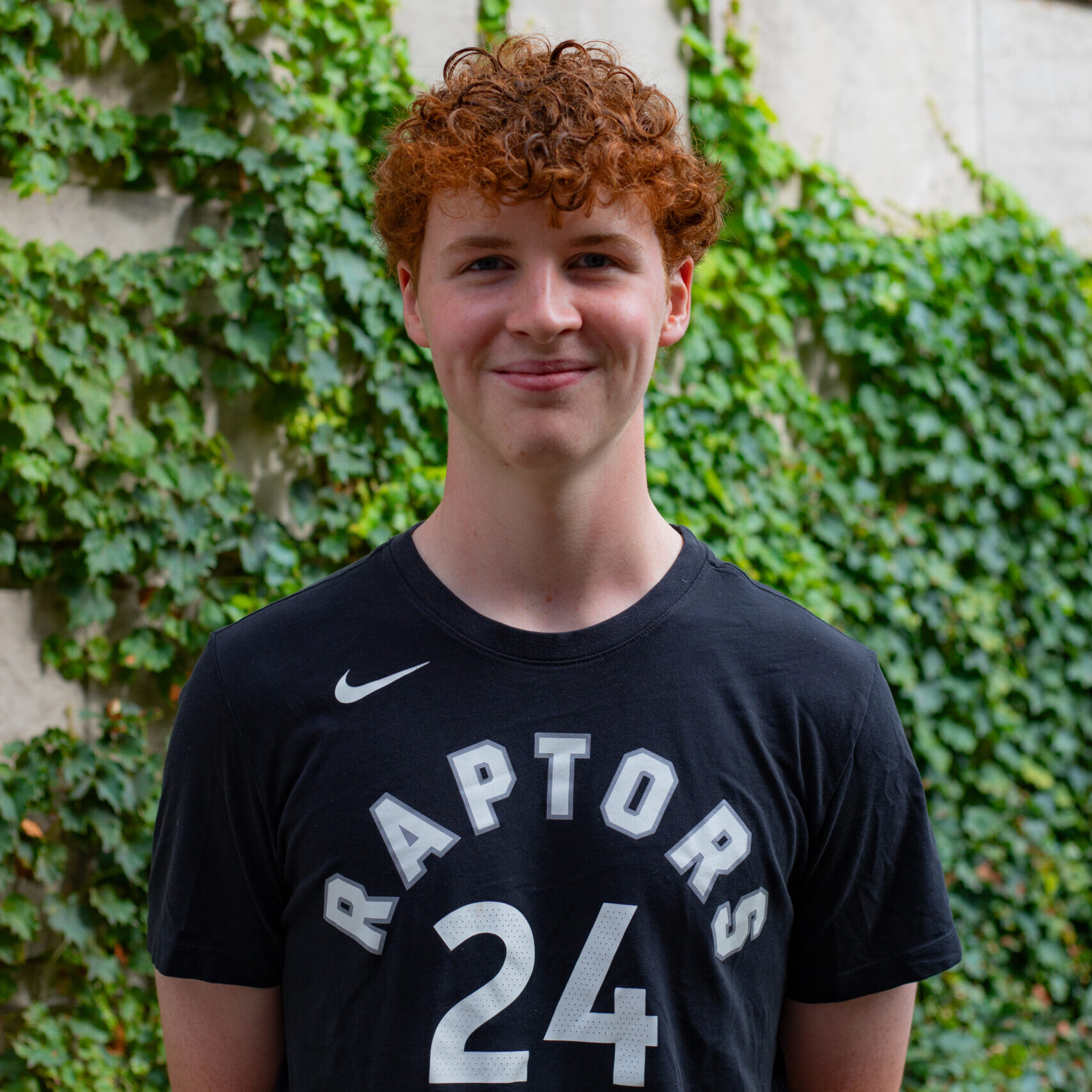
“I came to university wildly underprepared … By most measures, my first year did not go particularly well academically or athletically,” admitted Liam Ryan in an interview with the Fulcrum.
For first-year students, adjusting to life in university can be quite the challenge. For student athletes, managing final exams, training and a social life can seem like an insurmountable task.
Lauren Ambrose – Women’s Soccer
The experiences of third-year defender Lauren Ambrose are a road map for winning impact. The Vancouver native has contributed to two OUA championship winning teams, throwing in two U SPORTS Academic All-Canadian nods for good measure.
“My biggest advice would be to show up to every practice ready to work hard and with a positive mindset. Every player can make an impact, regardless of their year or role on the team,” said Ambrose.
She noted that younger athletes should focus on contributing where they can throughout the seasons, rather than measuring their success through individual performances:
“I think a big part of having a winning impact on a team is being consistent, supporting your teammates, and always looking for ways to improve. The little things you do both on and off the field can make a big difference in the team’s overall success.”
For first-year Gee-Gees, Ambrose is a reminder that champions are built not only in the big games, but by commitment to working hard and to taking care of yourself and those around you .
She noted that “it’s also important to give your body time to recover by getting enough sleep and eating well. Finding a balance between pushing yourself and resting is key to staying healthy and performing at your best.”
For Ambrose, the key to success in university athletics is the emphasis on the little things, the work put in every day that shows through in the biggest moments.
Liam Ryan – Nordic Skiing
The third-year Nordic skier recounted how his first year consisted of “juggling a demanding schedule of core science courses, adjusting to moving across the province, living in residence and navigating a completely new training environment.”
But by second year, Ryan had found his footing: “I was returning to an environment I was more comfortable with, had become more involved in the Gee-Gees community through the Student-Athlete Council and my team’s executive as a men’s assistant captain, and had developed much better study and planning habits. By the winter semester, I was setting personal bests on the snow, including a top-10 finish in the ski sprint at Canadian Nationals in the non-collegiate category, while also maintaining a near-perfect GPA.”
Ryan’s advice to student athletes is “that balancing everything is less about finding the perfect schedule and more about becoming comfortable with being busy.” He added that, “my teammates and fellow student-athletes understand the demands of balancing sport and school, and being surrounded by people who hold themselves to a high standard academically and athletically has pushed me to do the same.”
Although Ryan has taken on the role of president of the Nordic ski team, he still remains involved with SAC, joined two research projects with a physician from our medical school, and joined a U of O Senate committee focused on the Evaluation of Undergraduate Programs at the university.
He attributes his ability to manage his commitments to his deliberate planning of his semester in advance. For Ryan, this entailed “spending a few days mapping [things] out, identifying the busiest periods of the year across [his] different commitments, planning around them and intentionally looking for periods where [he] can rest, recover or put more time into training.”
While Ryan is a proponent of planning ahead for deadlines, practices and everything in between, he still shared that his biggest advice to younger student-athletes would be “to make room for the parts of university that have nothing to do with school or sport.” Ryan notes that, “it is easy to feel like you should always be studying or training … But some of the most important parts of my university experience have come from getting involved, spending time with teammates and building a community outside of the classroom.”
Katherine Vithoulkas – Women’s Swimming
Ryan’s mention of organization is echoed by former Gee-Gees swimmer Katherine Vithoulkas, who balanced captaining the women’s swimming team with an Honours Bachelor of Arts in Psychology. Vithoulkas also managed to earn U SPORTS All-Canadian team selections every year throughout her bachelor’s degree.
For Vithoulkas, staying organized was absolutely essential in managing the many demanding facets of her life as a Gee-Gee.
“If I could give one piece of advice to other students, it would definitely be to stay organized. As soon as you get your syllabi at the beginning of the semester, put all your important dates, assignments, exams, and deadlines into an agenda or calendar. That way, every week you know what’s coming up and you can plan ahead instead of feeling overwhelmed,” Vithoulkas said.
However, like Ryan, Vithoulkas stressed that being a successful student athlete meant more to her then purely academics and athletics. Making time to enjoy her university experience was just as important.
“I’ve had such a great experience at uOttawa, and one of the biggest things I’ve learned is that university isn’t just about getting good grades. Work hard and take your studies seriously, but also make time for yourself, have fun, and enjoy the experience while you’re here.”
Bronwen Earle – Women’s Rugby
While organization can take you far, Bronwen Earle’s experience proves that challenges can arise that no calendar will prepare you for.
The Gee-Gees women’s rugby player has had to endure significant injuries on the field throughout her Honours Bachelors in Communication, with a minor in Human Kinetics.
“In my first year, I fractured my femur and partially tore my ACL and MCL during our home opener, and a year later I suffered a full ACL tear that caused me to miss another season. While balancing school, physical rehab, mental hurdles and the challenges of being away from home, I learned the importance of perseverance, organization, and using the support systems around me,” said Earle.
Earle credited the use of those support systems as an important part of her return to the field:
“I have also learned to take advantage of the resources available through the university, including athletic therapists, doctors, nutritionists, mental performance staff, coaches, and academic support. Through learning how to balance school with athletics, leaning on the people around me, and staying committed to my goals, I have returned stronger both on and off the field.”
For first-year athletes, Earle’s experience is an example of the grit and determination required to push through the inevitable hardships that come with student athletics.
“University athletics can come with challenges and setbacks, but the experiences you go through can often teach you the most and become your greatest opportunities for growth,” she said.
You can do it!
“You do not need to have everything figured out in the first year, I certainly didn’t,” reiterated Ryan. Give yourself time to find your routine, learn what works for you and become comfortable being a student-athlete.