“[…] WOMEN’S REPRODUCTIVE HEALTH BECOMES A TOOL FOR ROSTER RISK-MANAGEMENT, RATHER THAN A MEASURE OF THE PLAYER’S WELL-BEING.”
Last summer, I had the displeasure of coming across a sports betting account on Instagram that claimed to use WNBA players’ statistics to “predict” their menstrual cycles. The creator does this in order to bet the under on player performances he assumes will be “affected.”
At the time, I refused to dwell on it too much. With only about 4000 followers and one viral video, I figured that it was only a matter of time until “FadeMeBets” would fade into obscurity.
He didn’t.

The Instagram account has now amassed almost 30 000 followers. Although the creator posts a variety of sports betting content, engagement numbers reveal where the real interest of his audience lies. His videos on “blood money betting”, as he brands it, have reached up to four million views which eclipses the mere 3000 to 7000 views his other content receives.
TikTok user, Colin Myers also gained traction for publicly discussing having applied this same method. Referencing a video of Indiana Fever player Lexie Hull, in which she mentioned being on her period; Myers claims to have sent the clip to his group chat urging them to bet the under on Hull’s performance.
Meanwhile, on the Stuff Island podcast, comedian James McCann recounted meeting a bettor who claimed to infer menstrual cycles from injury reports, using terms like “soreness” as cues.
It should go without saying that the logic behind menstrual-cycle-based betting is flimsy at best. These bets against athletes are placed based on who, in the bettor’s best estimates, are experiencing menstrual symptoms. The method has no grounding in actual science.
In spite of this, people still remark that this could possibly be a “win for women”, as this “strategy” could potentially incite more men to educate themselves about the phases of the menstrual cycle and their impact on performance. An argument that can only be described as absolutely insane.

For decades, the problem regarding women’s health dialogues in sports was the lack thereof. Now, the conversation is being commodified.
Nevertheless, I can’t help but notice that this has been happening before and beyond these sports betting shenanigans. The phenomenon exposes a deeper cultural pattern in women’s health related research and discussions in sports; one that consistently and disproportionately centres women’s physiology around performance rather than well-being.
The limits of FIFA’s Women’s Health revolution
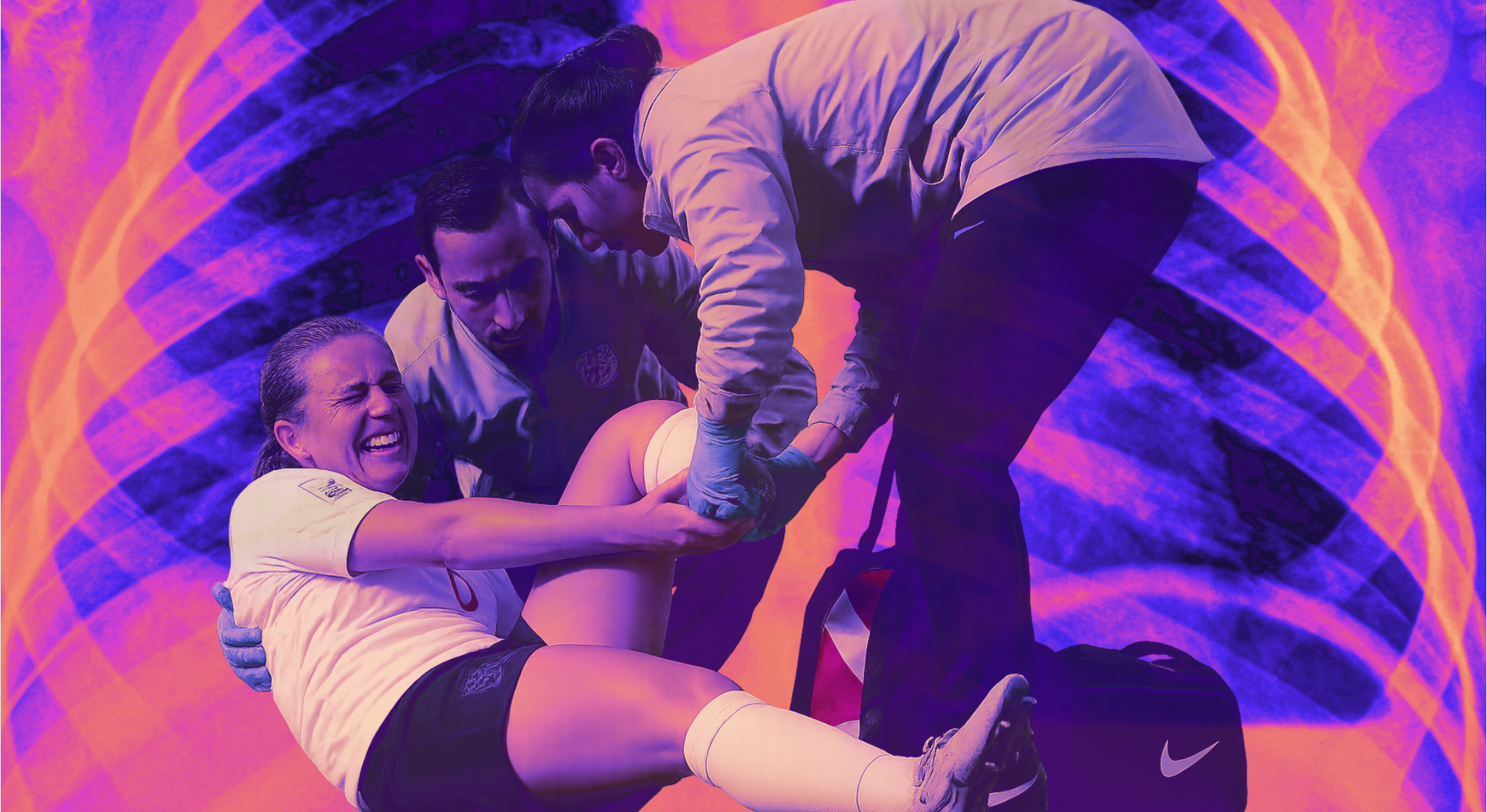
In 2023, FIFA launched the Women’s Health, Wellbeing and Performance Project. This was a landmark effort towards expanding the conversation of women’s health in professional sports, as one of its key findings describes the link between menstrual cycle phases and ACL injury risk.
According to Inside FIFA, the project focuses on “enhancing the holistic development of every female footballer […] and prioritizing the health, well-being and performance of these athletes.”
But something about the language feels telling. The phrasing places performance as the measurable outcome, while health becomes the condition it rests upon.
The three pillars of awareness, research, and education are mostly operationalised in performance terms. “Awareness” is directed at coaches so they can “better tailor training.” “Research” is meant to “close the gap in understanding women’s performance factors.” While “education” is described as helping practitioners “manage female players effectively.”
Understandably, the project centres on what can be measured such as training, recovery, performance, but stops short of exploring what these findings mean for the athlete’s overall health and long-term well-being beyond their sport.
Dr Nonhlanhla Mkumbuzi, one of the project’s experts, explains: “If you are letting someone manage female players but they don’t know the hormones of what it is that makes them women […] that means we need to do something, and that is education.”
That focus on education for better management is valuable—and I fully acknowledge that the positionality of the research is right to view female physiology through a performance lens. Elite sport is all about performance.
But when well-being becomes a means to an end rather than the goal in itself, we lose something along the way.
Women’s reproductive health begins to serve as a checkpoint for the risk management of a team’s roster, not necessarily as a measure of the athlete’s longevity or safety.
This is not to argue that the science is wrong or that performance shouldn’t matter, but rather that the balance feels off. When research treats women’s health primarily as a necessity to sustain high output, the athlete’s physical comfort and humanity become afterthoughts.
Bodies being understood mostly through their output enables others, like the aforementioned sports gamblers, to reduce the health of female athletes’ to mere data points.
Emma Wade weighs in
Without diminishing the importance of FIFA’s women’s health project, its foundation should incite further research into the broader health challenges female athletes face beyond performance related concerns.
The project is an important starting point, but it also highlights how much of women’s health in sport remains unexamined when it doesn’t directly intersect with athletic output.
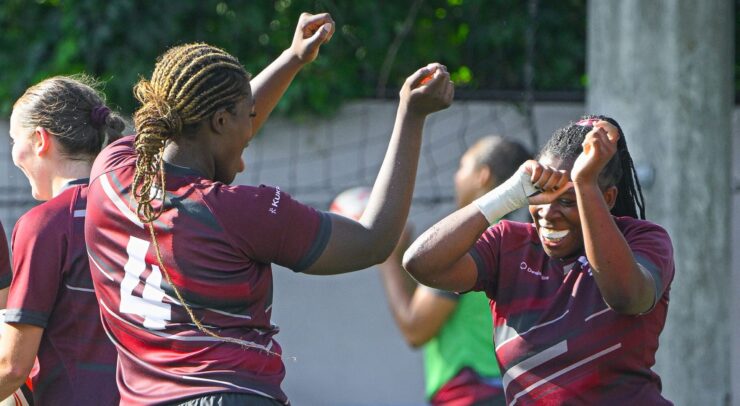
Emma Wade, a former Gee-Gees rugby player and now a physiotherapy resident, has seen this gap firsthand. During her master’s in physiotherapy, Wade’s research encompassed pelvic floor health. This is an area she describes as “under-researched right now” due to how they “have really outdated tests to look at urinary incontinence.” Wade contributed to a study that sought to “debunk the tests that they’re using right now to push for more and better research on the subject.”
Urinary incontinence is defined by involuntary leakage of urine. In contact sports like rugby, this can occur due to the muscles that support the bladder becoming strained or weakened due to how players are constantly bracing for impact.
“Incontinence happens even in younger women, especially in high-impact and contact sports,” she says. “It’s not really something that gets talked about. I had no idea about it until I started my research.”
Pelvic floor dysfunction isn’t typically seen as a performance threat as it doesn’t sideline athletes or affect statistics, but it directly impacts long-term health and comfort. This is an example of a physical reality that doesn’t exactly align with the priorities of performance centred research, but still significantly shapes how athletes experience their bodies.
The take-away
FIFA’s data-driven focus on optimizing training and management, as well as Emma Wade’s call for deeper research into overlooked conditions, like pelvic floor dysfunction, indicate a pattern. Women’s bodies are finally being studied, but often through the lens of productivity.
What’s missing from the broader conversation is a health framework that values how athletes live and feel in their bodies, not just how efficiently their bodies perform. Until that shift happens, women’s health research and dialogues in sport remain zoned in on what affects the game, but not necessarily what affects the woman.
There must be a shift from treating the health of female athletes as a variable to manage, toward seeing it as an integral aspect of women’s lives that deserves protection.