
A HARIKATHA CELEBRATING MUTHUSWAMY DIKSHITAR AND A SERIES OF BHARATANATYAM PERFORMANCES BROUGHT TOGETHER OTTAWA’S SOUTH INDIAN ARTS COMMUNITY
I’ve been learning Carnatic music for more than ten years, but until September 20, I had never seen a harikatha in person. I’d read about the centuries-old form before: a blend of storytelling, and singing, but seeing it performed at Les Lye Studio during the South Indian Cultural Association’s Yuva Swaranjali and Nrtyanjali was something else entirely.
That evening’s harikatha was performed by Yogashree Bharath, accompanied by Aradhana Sukumaran on the violin and by Ekaansh Narayan on the mridangam, to mark the 250th birth anniversary of Muthuswamy Dikshitar. I’ve sung his kritis for years, but I know little about the man himself. Unlike his contemporaries, he rarely spoke about his own life, and few of his students left behind written accounts. What still survives are his 500-odd compositions that are considered a rite of passage in learning Carnatic music.
HARIKATHA
The evening opened with Dikshitar’s first kriti: “Srināthādi guruguho jayati jayati” in raga Mayamalavagaula and Adi tala. The legend goes that Dikshitar was offering prayers at the Tirrutani temple, when the god Subramanya placed a sweet candy in his mouth. To thank him, Dikshitar composed this kriti, which extols his virtues and asks the god to bless him. Following this incident, Dikshitar adopted “Guruguha”, another name for the god Subramanya, as his composer’s signature. As a kid, I would always wait for his name to show up in the lyrics. It was the one part I could catch right away, and a small reward for sitting through a long, serious composition.
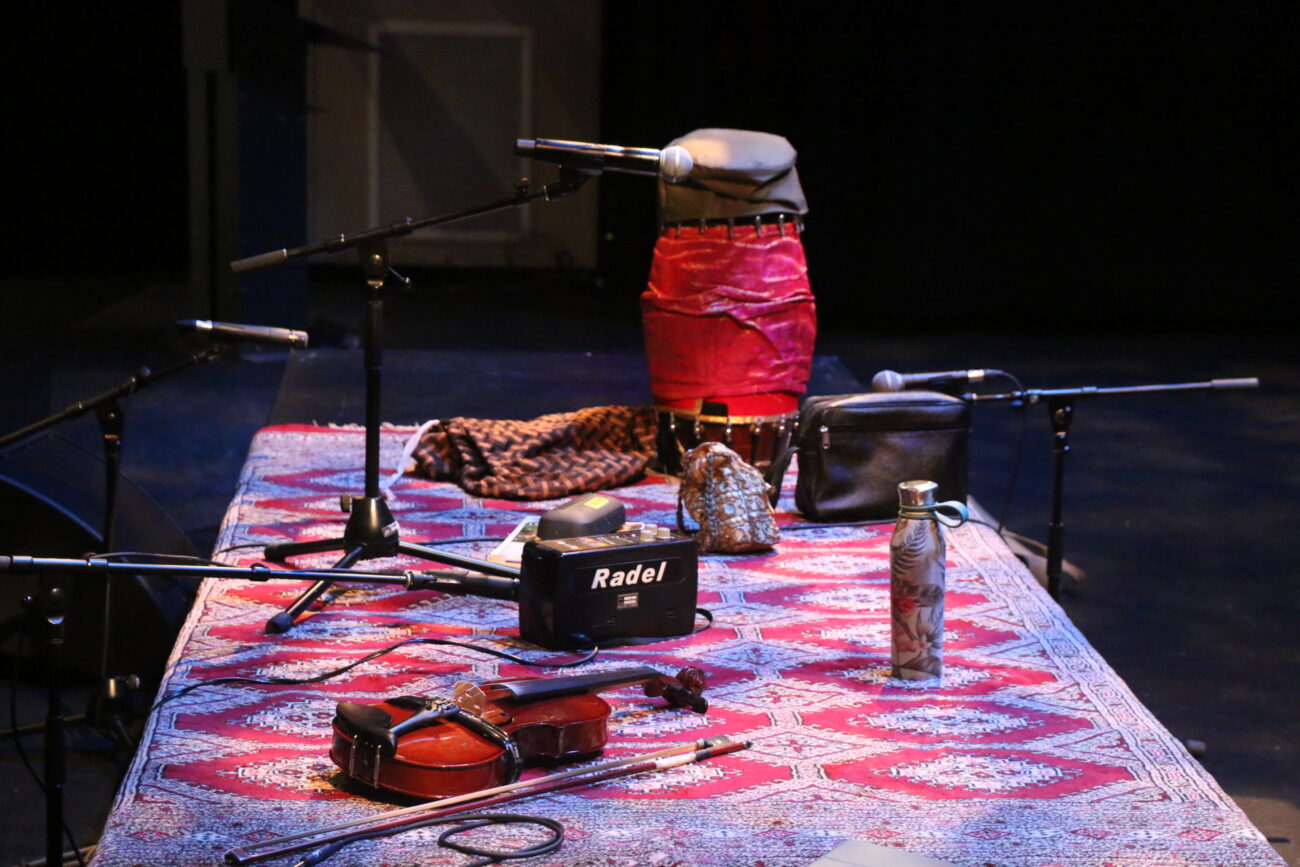
The stage is set up before the musicians arrive. Photo: Kavi Vidya Achar / Fulcrum 
Yogashree describes the adventures of Dikshitar to the audience. Photo: Kavi Vidya Achar / Fulcrum 
Yogashree describes the moment Dikshitar witnesses Lord Subramanya. Photo: Kavi Vidya Achar / Fulcrum 
Yogashree continues with the singing portion of the harikatha. Photo: Kavi Vidya Achar / Fulcrum
Yogashree’s retelling of this story felt so warm, and she spoke of Dikshitar with the reverence one would give a dear friend. Traditionally, one person would narrate while another sang, but she did both, slipping between speech and song so naturally that it felt like one continuous performance. Harikatha once served as a way to teach, moralize, even broadcast news over the radio, but hearing it live gives life to the small jokes and playfulness of the narration.
The next piece moved into Saveri, a raga known for its meditative, devotional feeling. In between songs, Yogashree slipped in small details about Dikshitar’s writing: his training on the veena, his precise phrasing, and his fascination with structure. You could tell she saw him not just as a saintly composer, but as a meticulous craftsman.
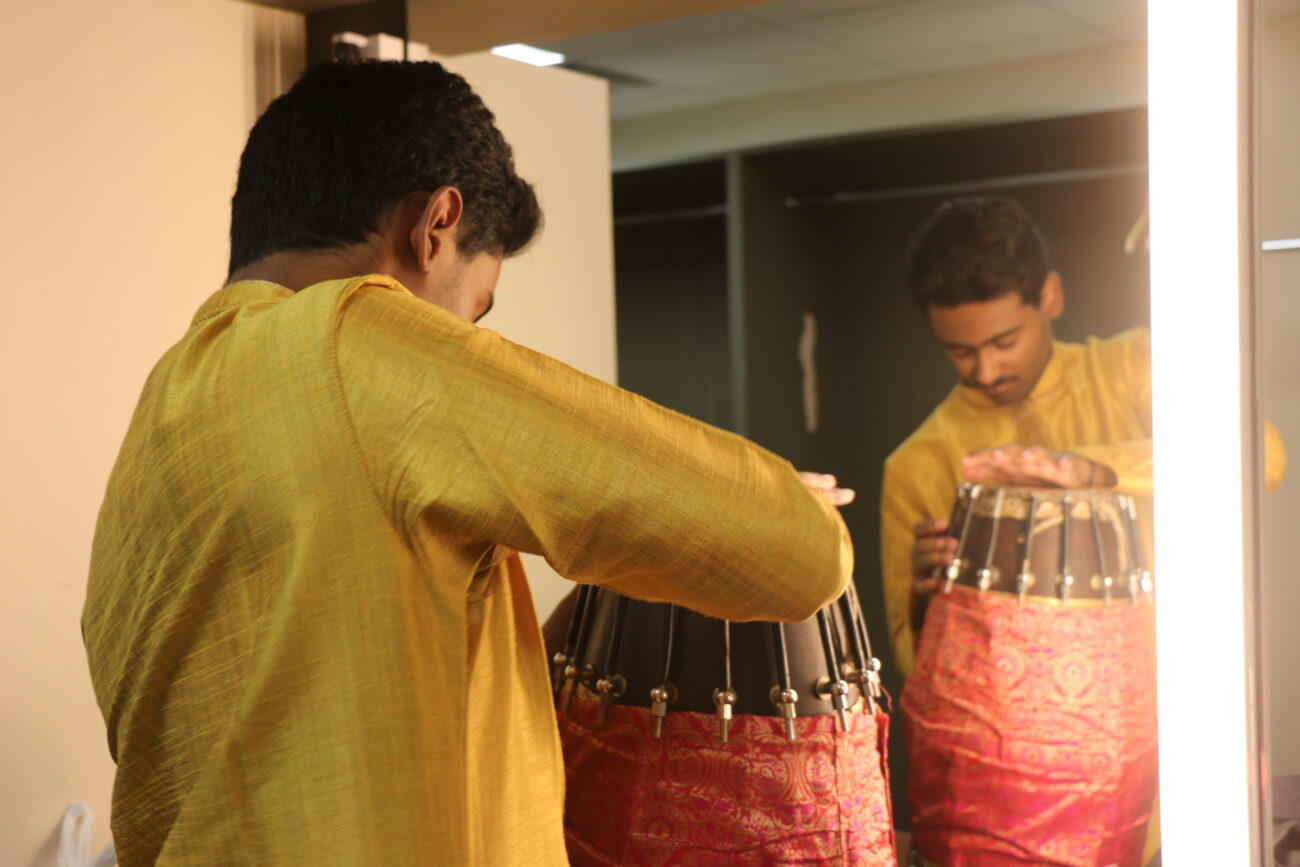
The artists Yogashree Bharath, Aradhana Sukumaran, and Ekaansh Narayan prepare backstage for their performance. Photo: Kavi Vidya Achar / Fulcrum 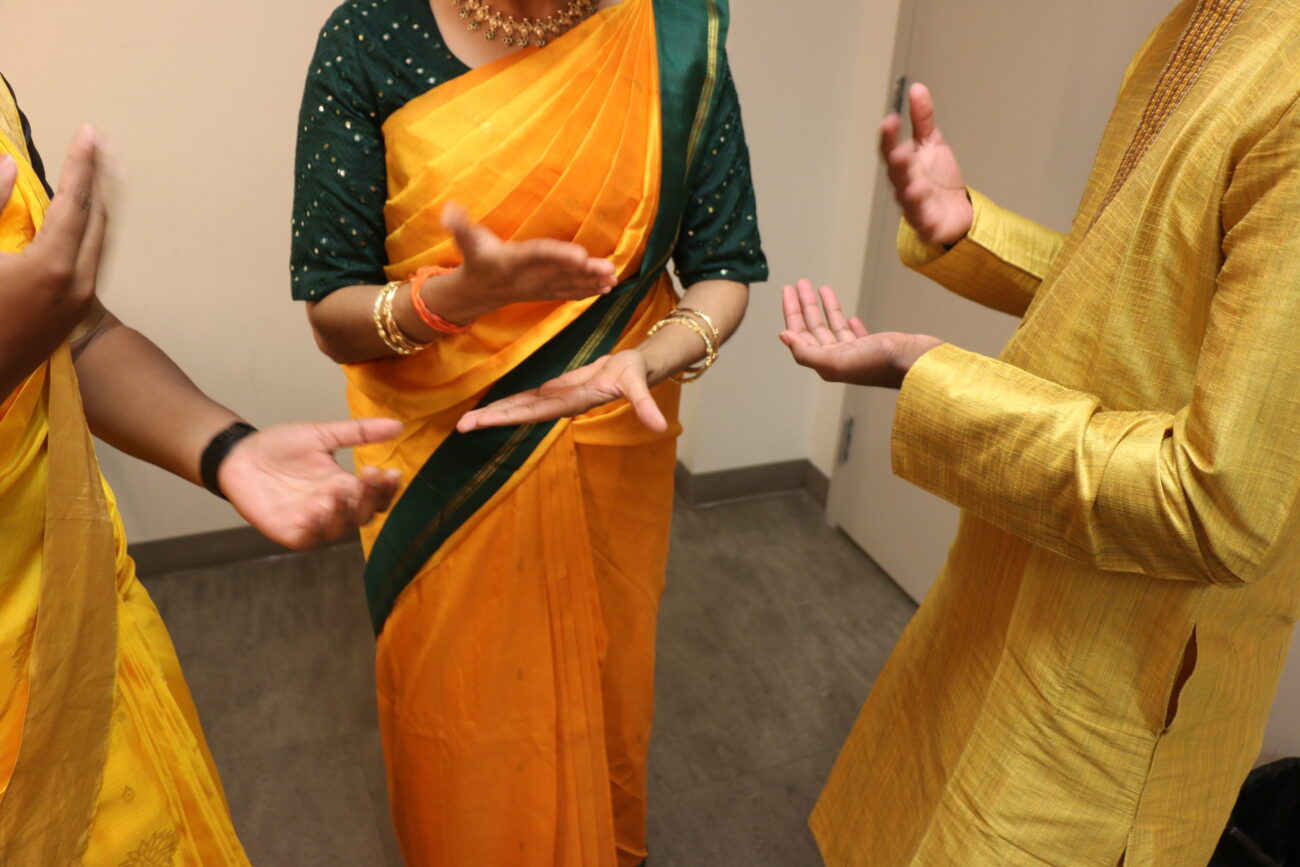
The artists Yogashree Bharath, Aradhana Sukumaran, and Ekaansh Narayan prepare backstage for their performance. Photo: Kavi Vidya Achar / Fulcrum 
The artists Yogashree Bharath, Aradhana Sukumaran, and Ekaansh Narayan prepare backstage for their performance. Photo: Kavi Vidya Achar / Fulcrum 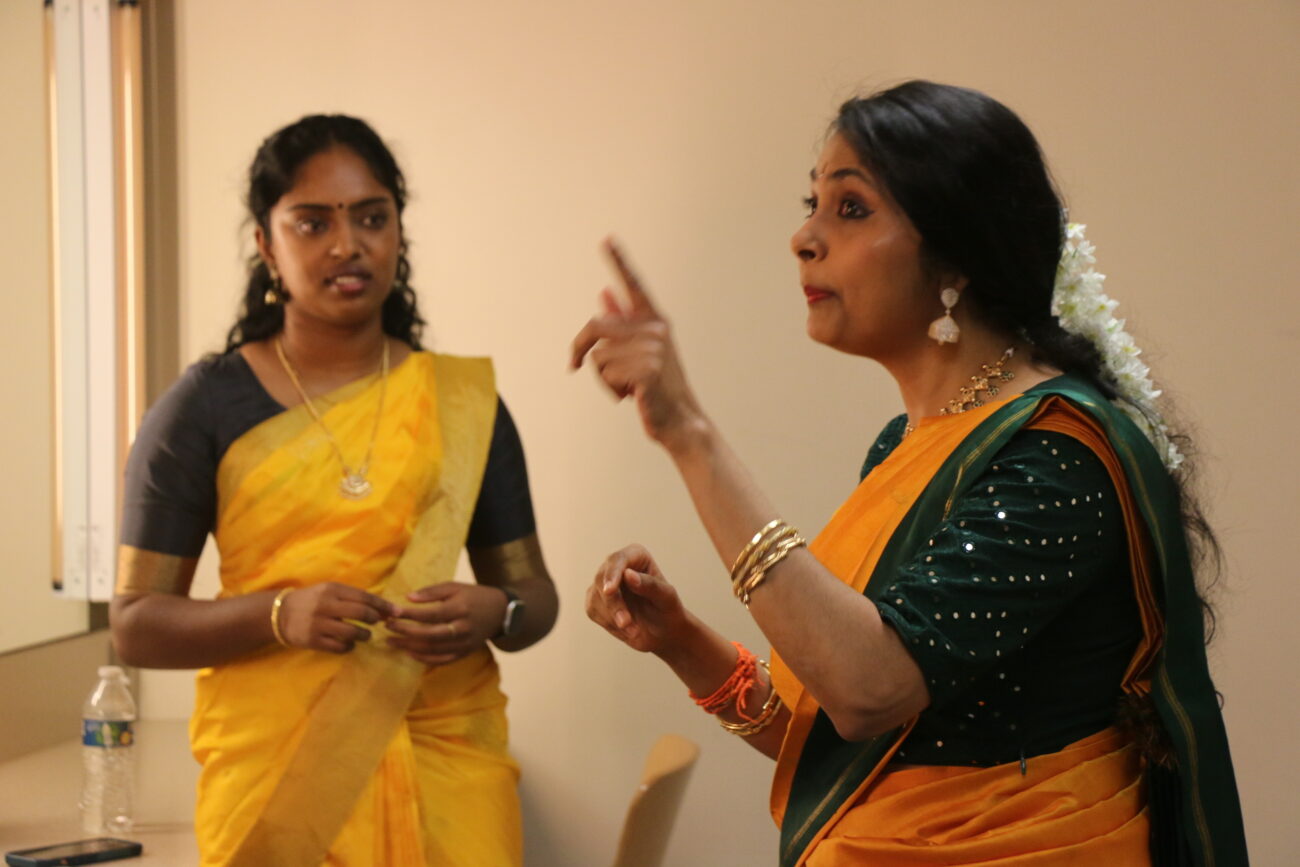
The artists Yogashree Bharath, Aradhana Sukumaran, and Ekaansh Narayan prepare backstage for their performance. Photo: Kavi Vidya Achar / Fulcrum 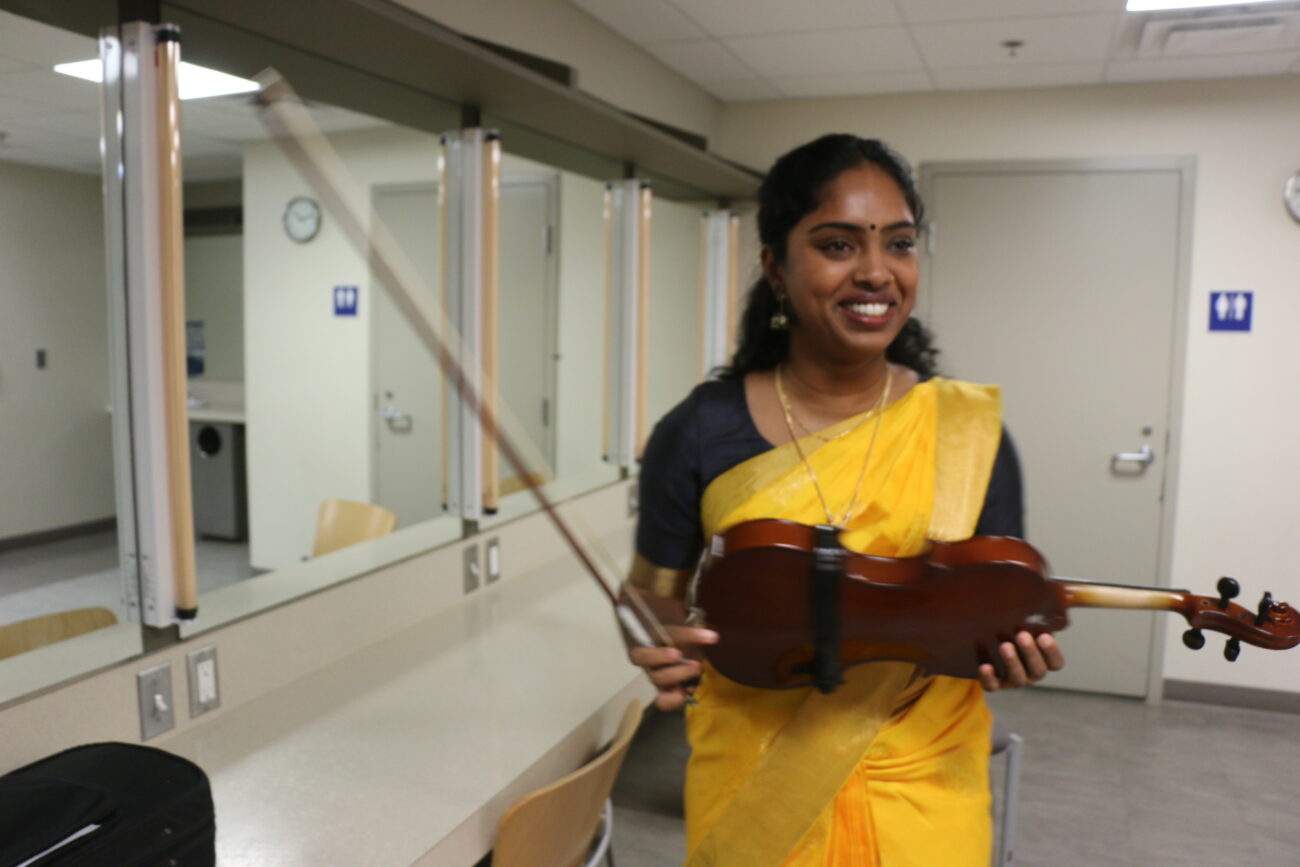
The artists Yogashree Bharath, Aradhana Sukumaran, and Ekaansh Narayan prepare backstage for their performance. Photo: Kavi Vidya Achar / Fulcrum 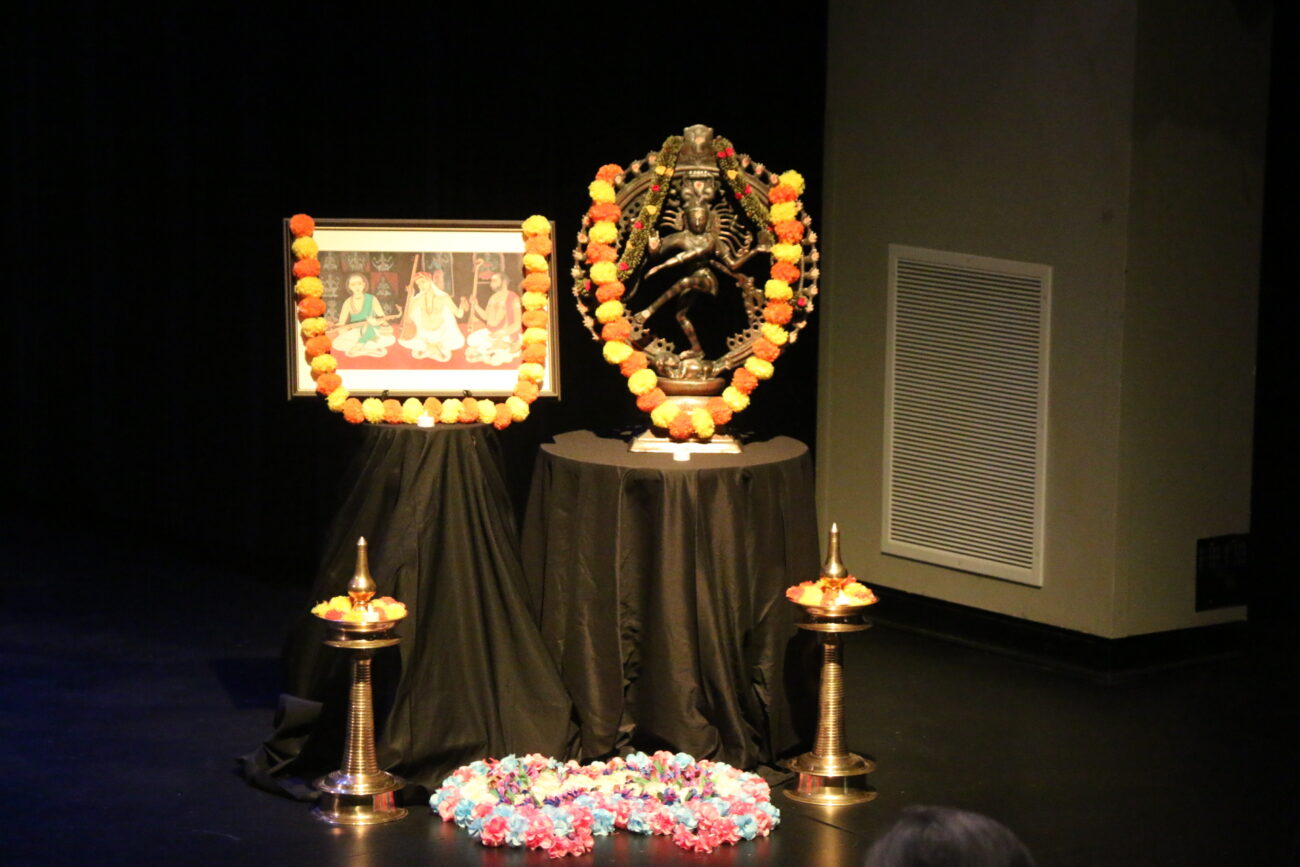
An altar of the dancing god Nataraja is set up next to the stage. Photo: Kavi Vidya Achar / Fulcrum 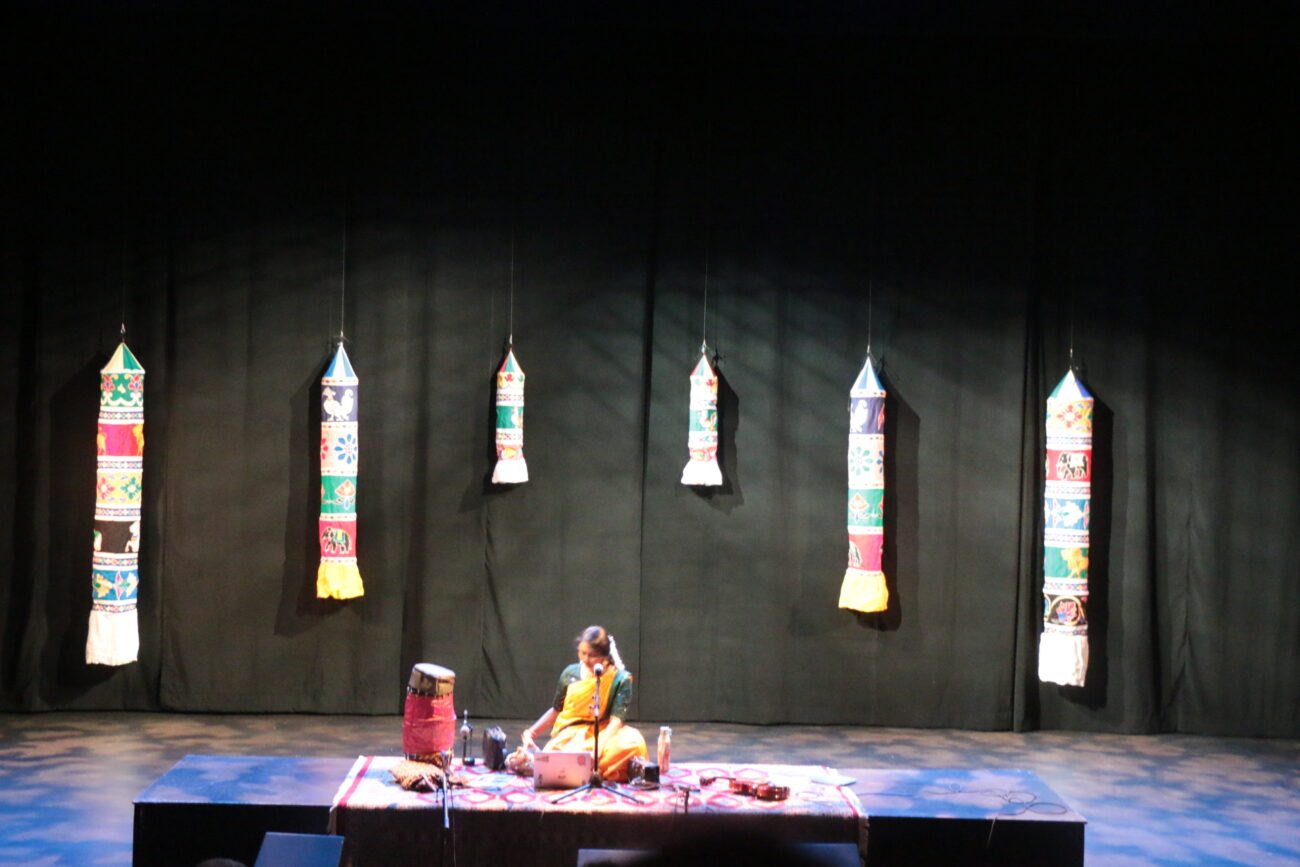
Yogashree prepares to start the harikatha performance. Photo: Kavi Vidya Achar / Fulcrum
After a narration of Dikshitar’s stay in Kanchipuram with his brothers, Yogashree performed the highlight of the evening: “Shree Vishwanatham Bhajeham,” from the Chaturdasha Ragamalika. In this piece, each stanza moves into a new raga, seven in total, with the raga names embedded in the lyrics. Yogashree pointed them out before singing, so you could follow the shifts as they happened, like markers on a map. This was the most exciting composition of the evening by far.
Looking around me, everyone was putting talam with her, waiting for each raga’s name to be announced. When they finally were, it felt like a small celebration in the room, and you could sense the collective thrill. The combination of anticipation, rhythm, and melody made it feel alive in a way that few compositions do.
I’ve often felt that Carnatic music has its walls up very high. There’s so much technique and so many rules that it can be hard to just jump in. But hearing Dikshitar’s stories alongside the songs made him feel human. Although many people consider him a saint because of his devotion, it was striking to see how his experiences in Tiruttani and Varanasi shaped his music, and how his devotion felt like an extension of his life.
THE SECOND HALF – IN PICTURES
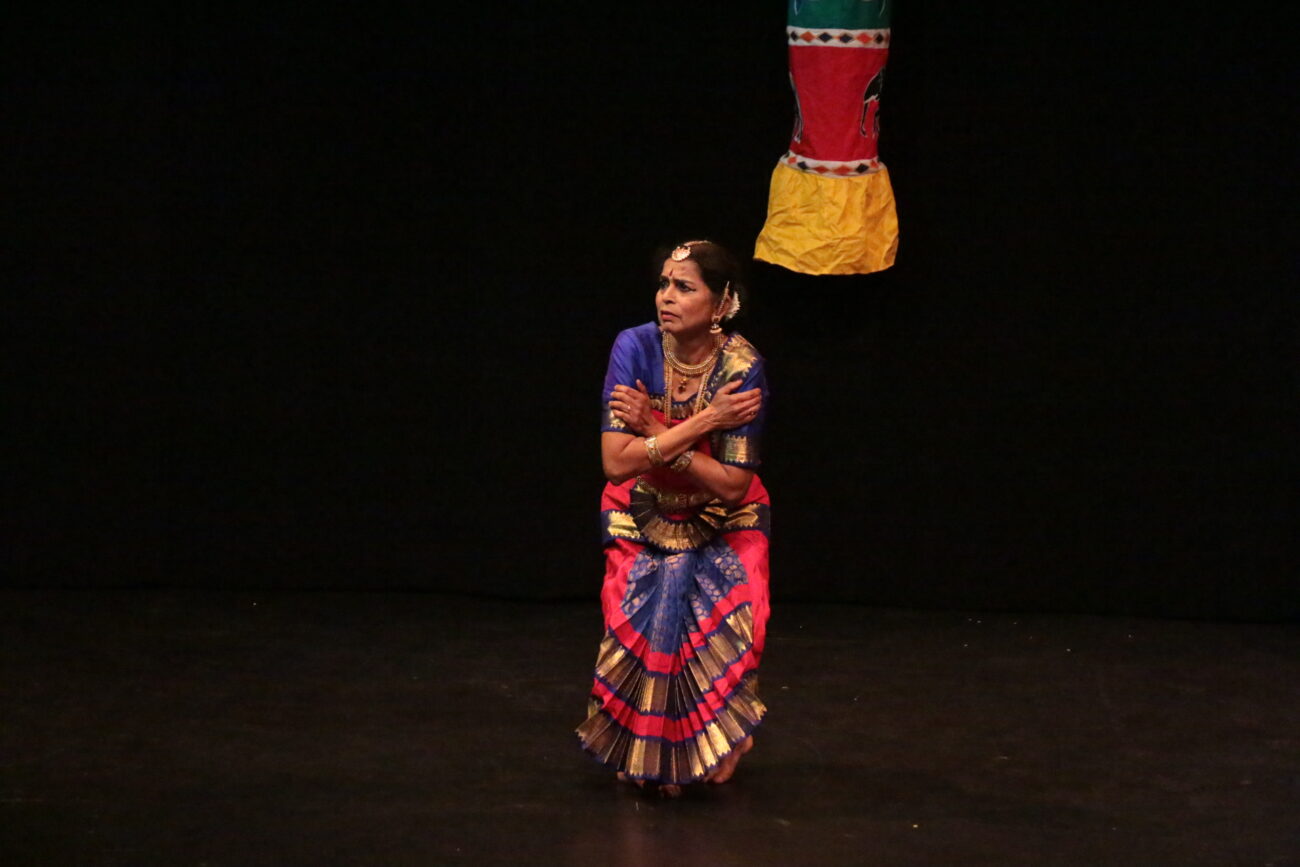
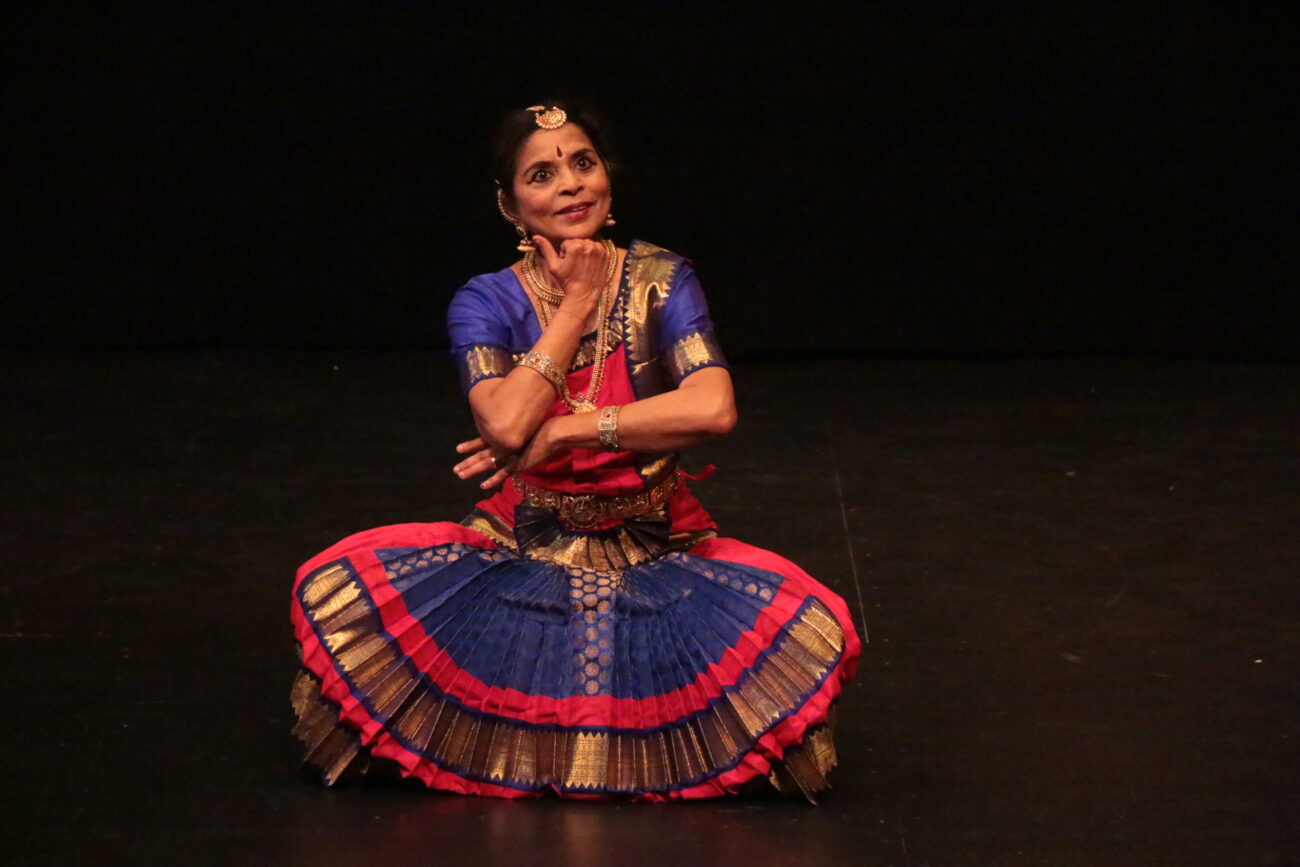
The dance portion opened with a solo by Jeyanthi Ghatraju, where she moved through each of the nine rasas (emotions). It wasn’t a flashy piece—no big jumps or dramatic spins— but her expressions carried everything. She let her eyes do most of the storytelling, which was surprising considering the subject matter. In other Navarasa pieces I’ve seen, it’s common to lean on gestures, costuming or other identifying movements to make sure that each of the nine emotions read as distinct to the audience. But Jeyanthi kept it understated, using almost no external cues, and staying predominantly in one area of the stage.
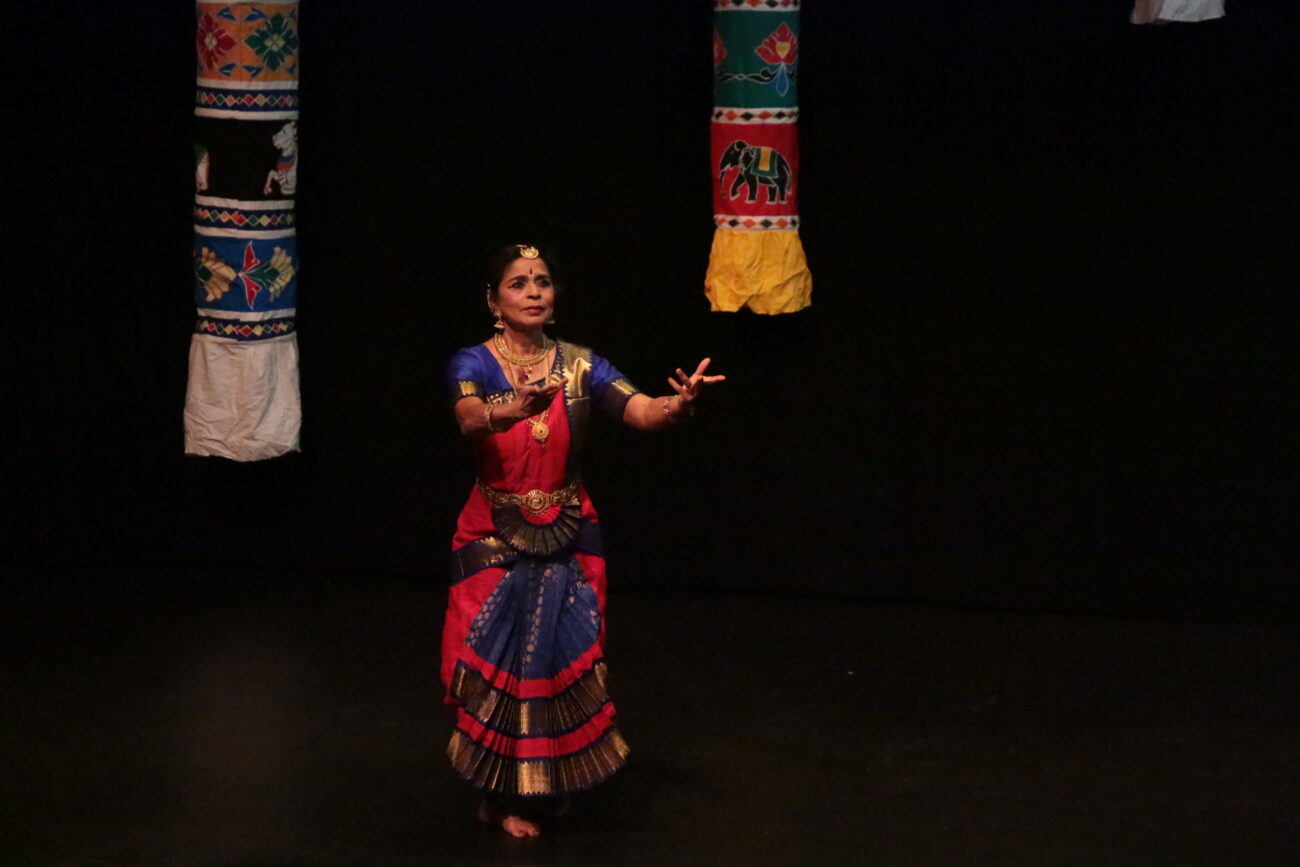
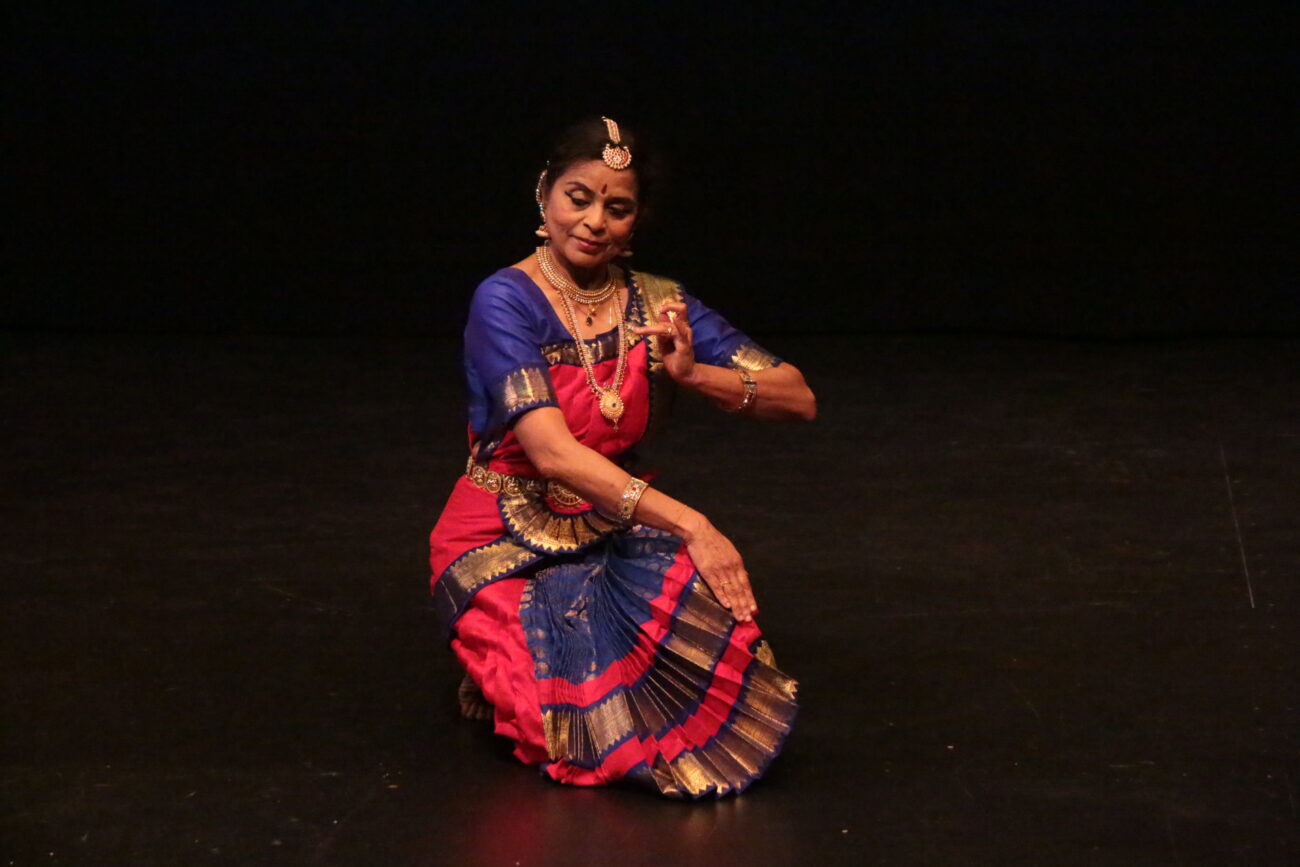
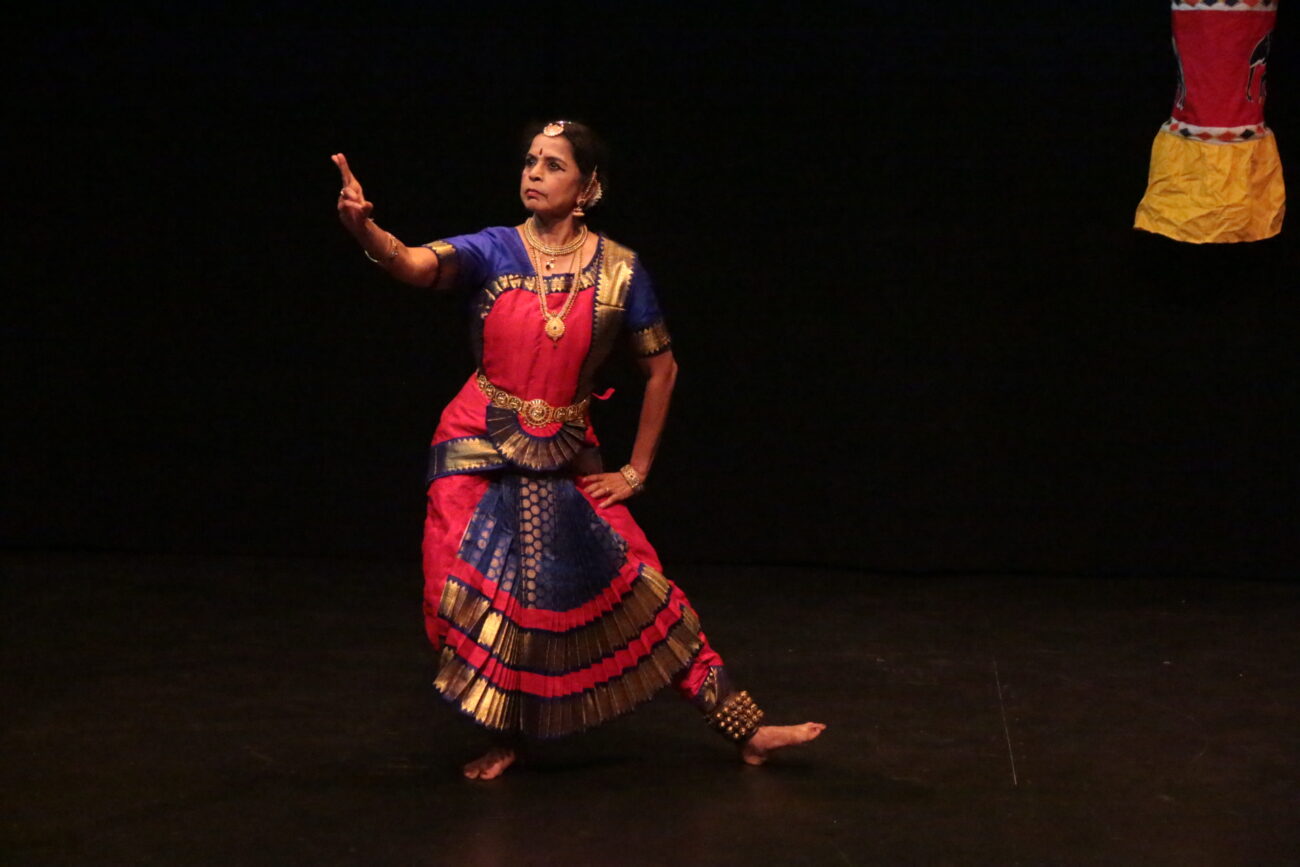
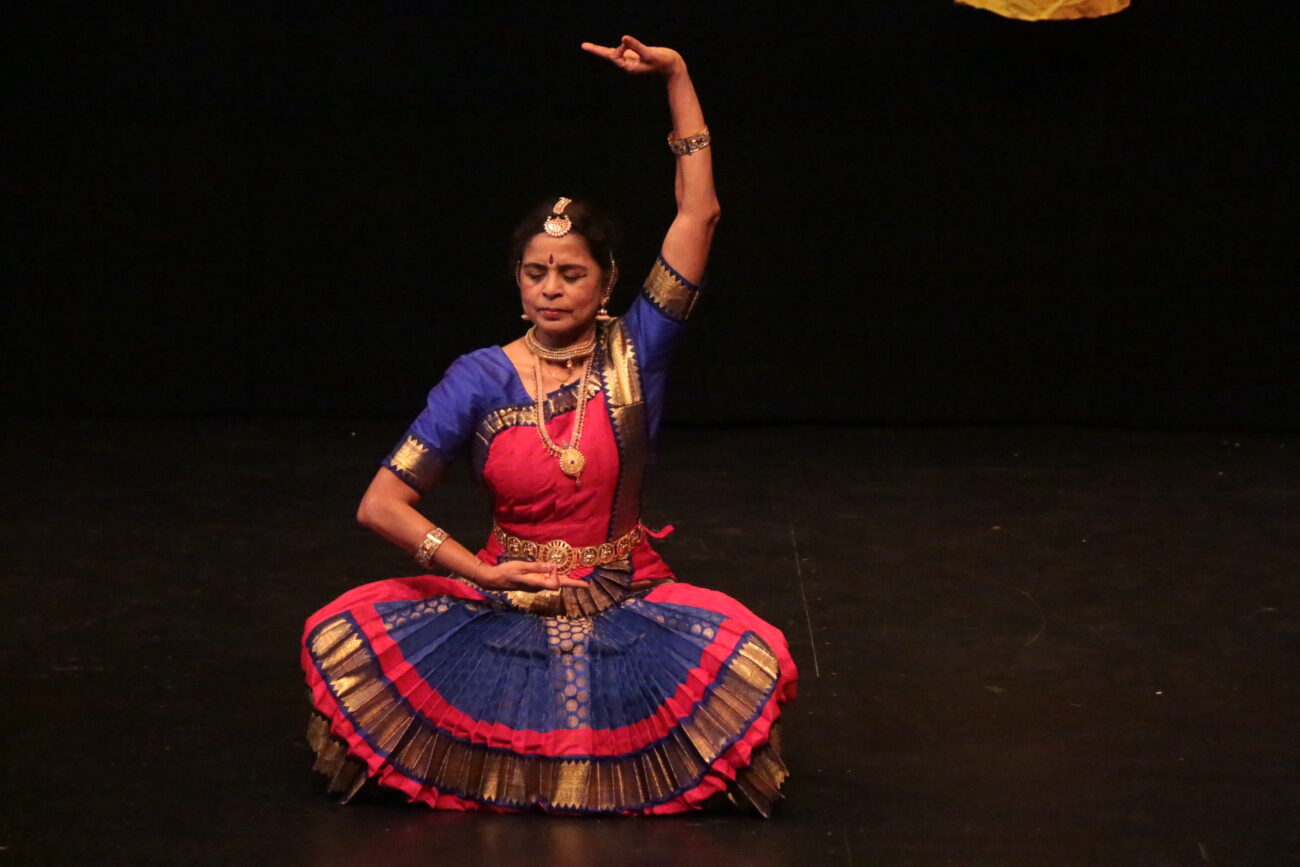
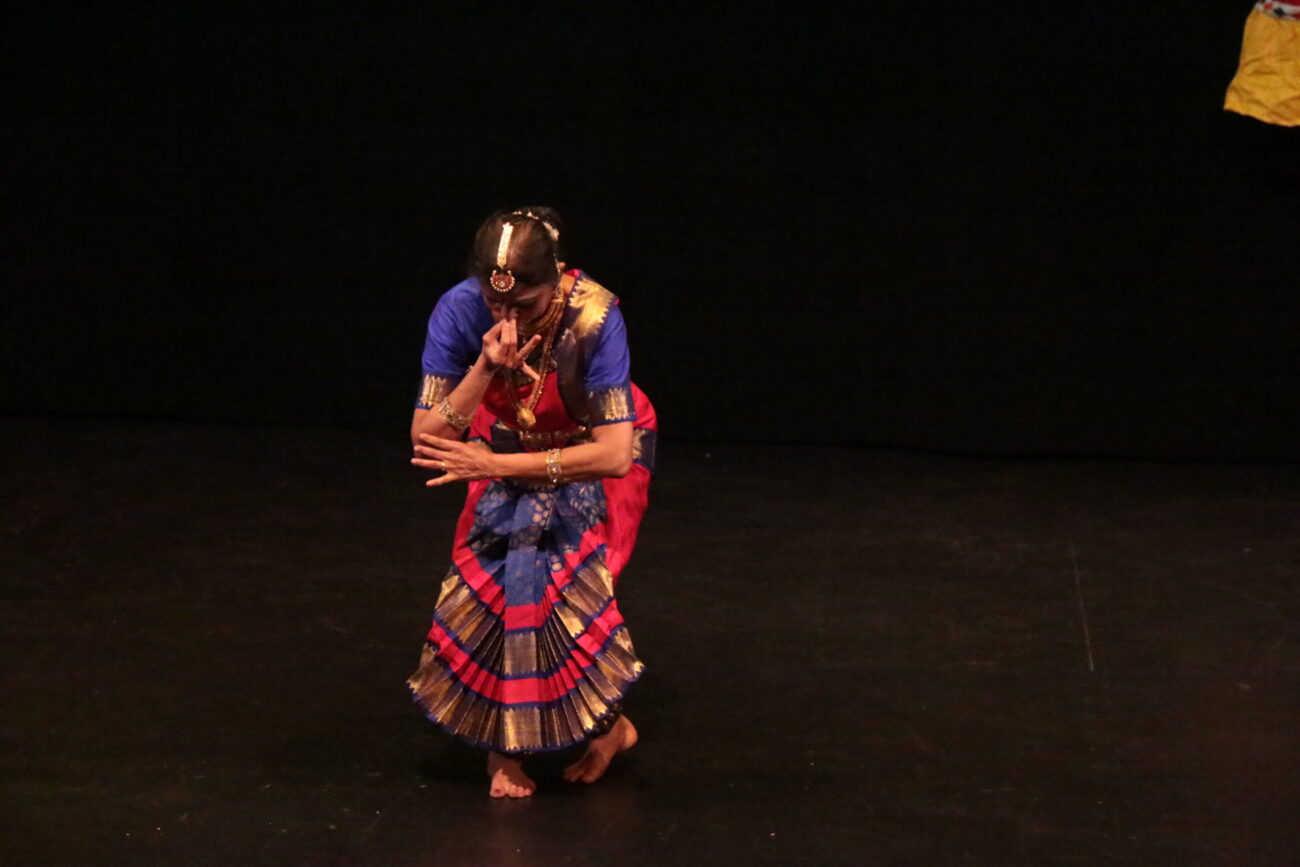
You could tell immediately that she had decades of experience; the subtlety in her face said more than any large movement could.
The second item was the varnam, and it was the anchor of the evening. The piece stitched together different episodes from the Ramayana, each one chosen to bring out a specific emotion. Before the dancing began, there was a short verbal explanation accompanied by the dancers’ movements, which I loved. It gave the audience a preview of what each rasa would look like, and became a visual clue for when those shifts happened later in the piece.
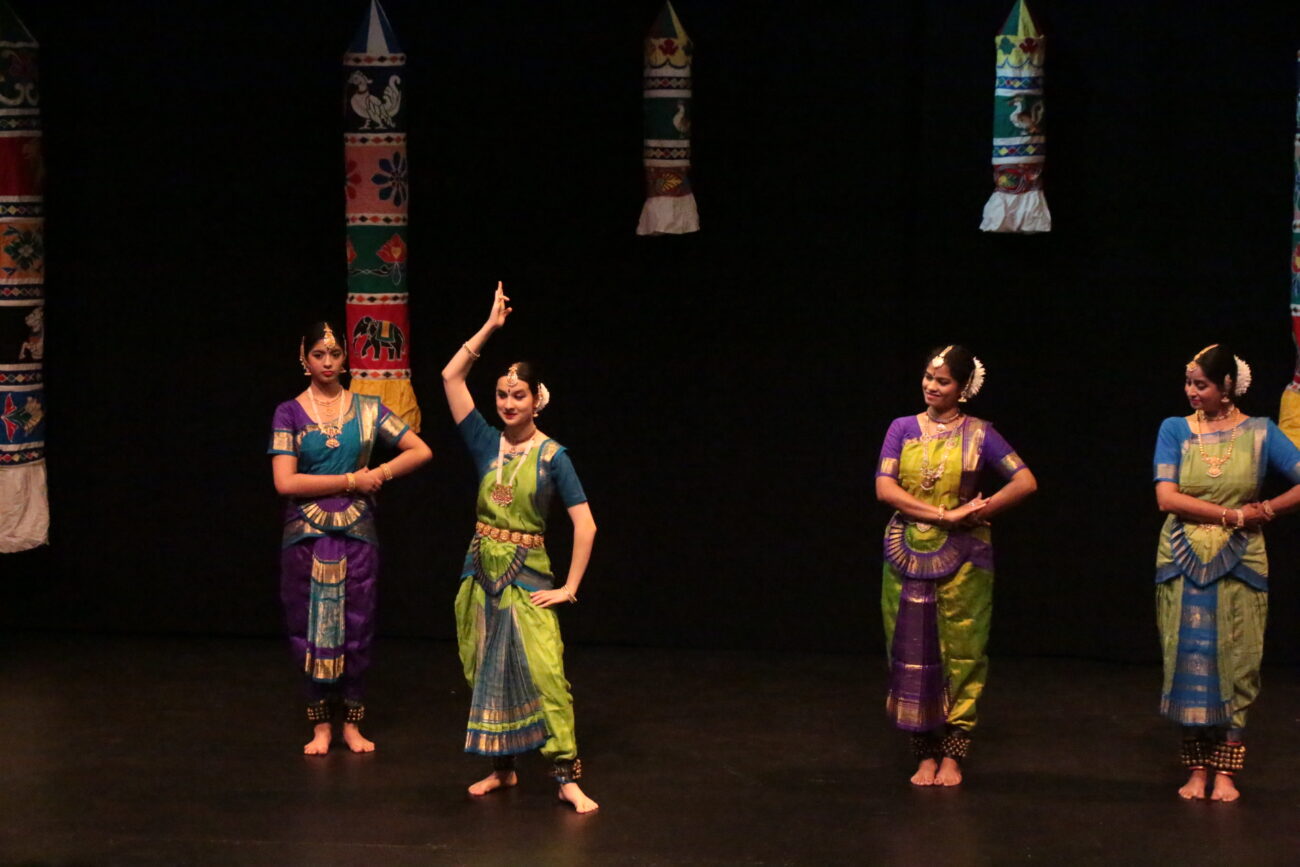
Prisha depicts a king, while Jeyanthi narrates. Photo: Kavi Vidya Achar / Fulcrum 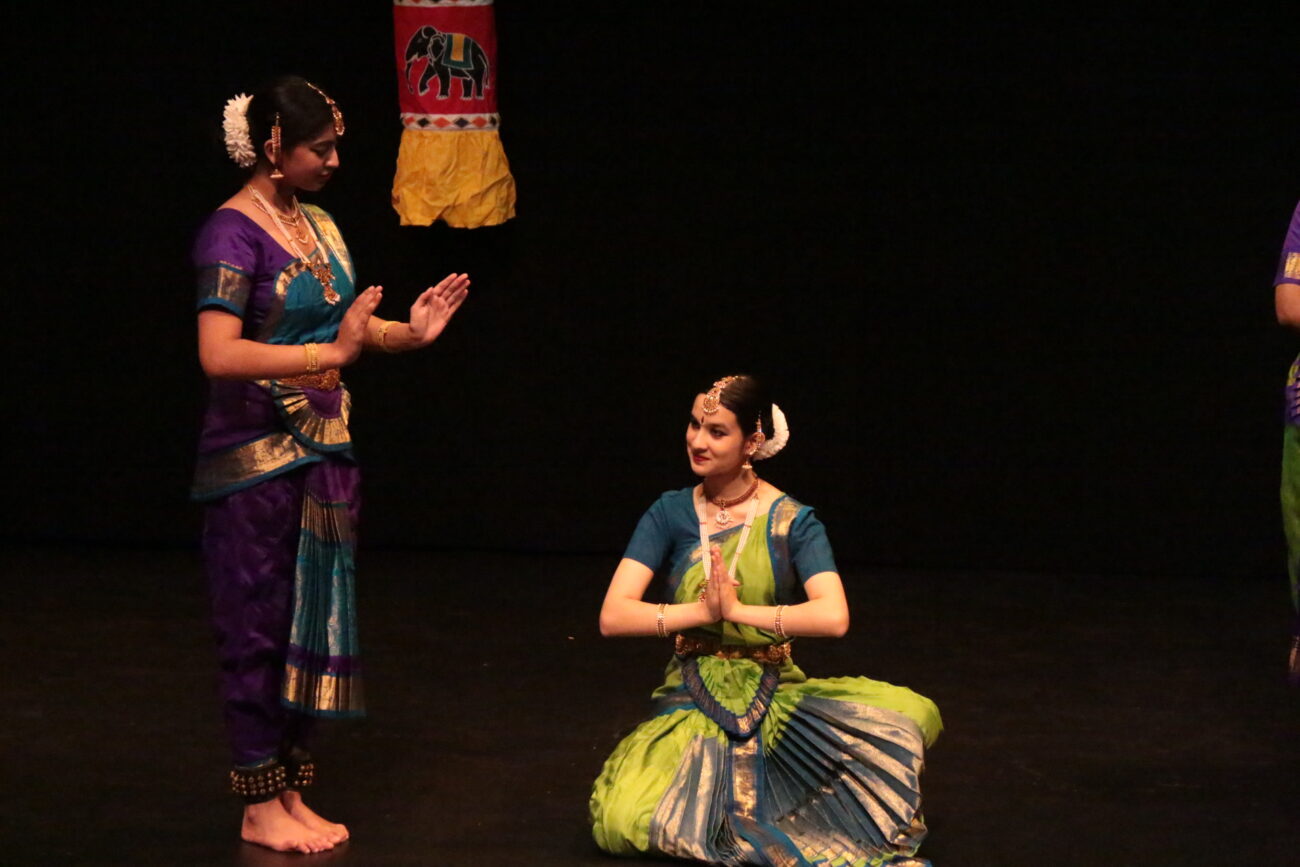
Druthi, as God, blesses Prisha. Photo: Kavi Vidya Achar / Fulcrum 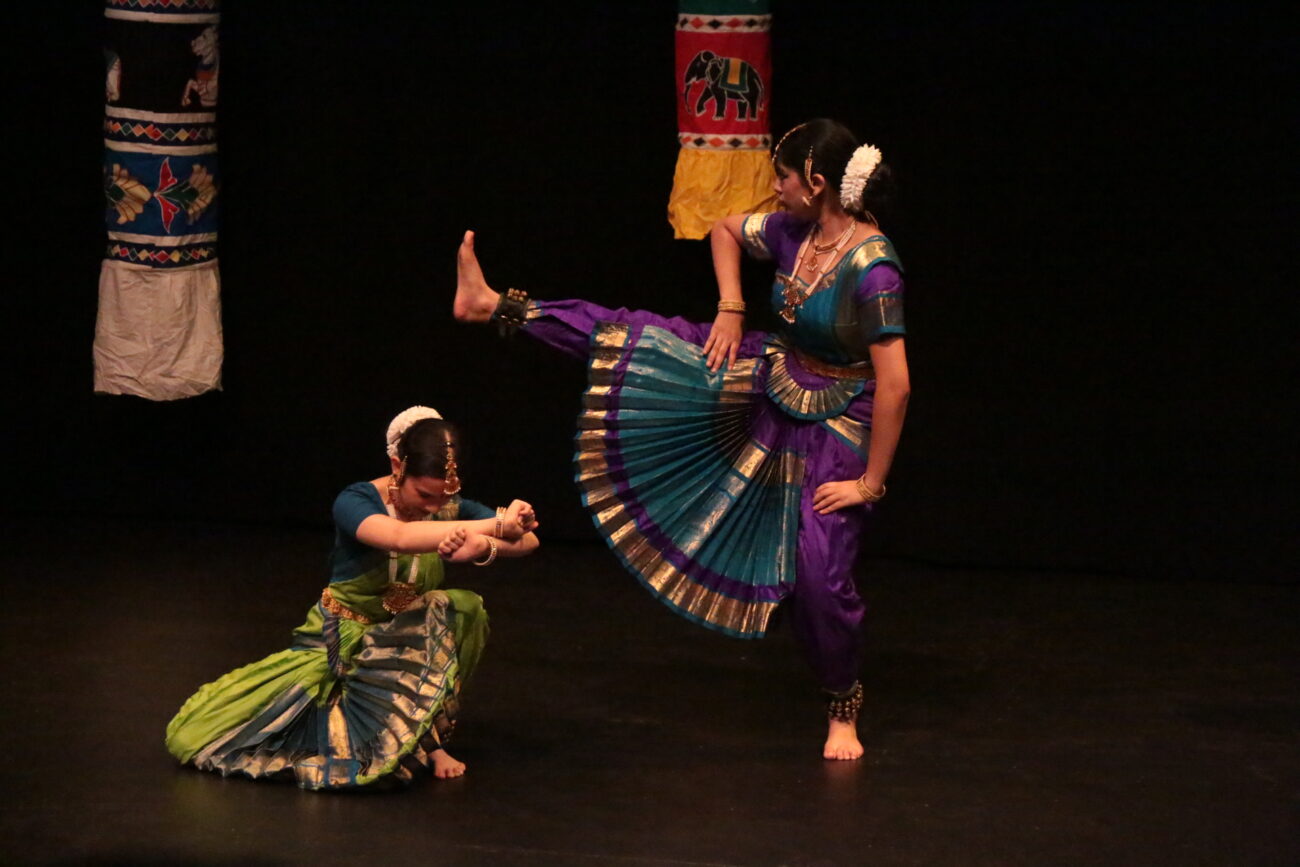
In this scene, Druthi acts as the God Shiva, protecting his devotee, played by Prisha. Photo: Kavi Vidya Achar / Fulcrum 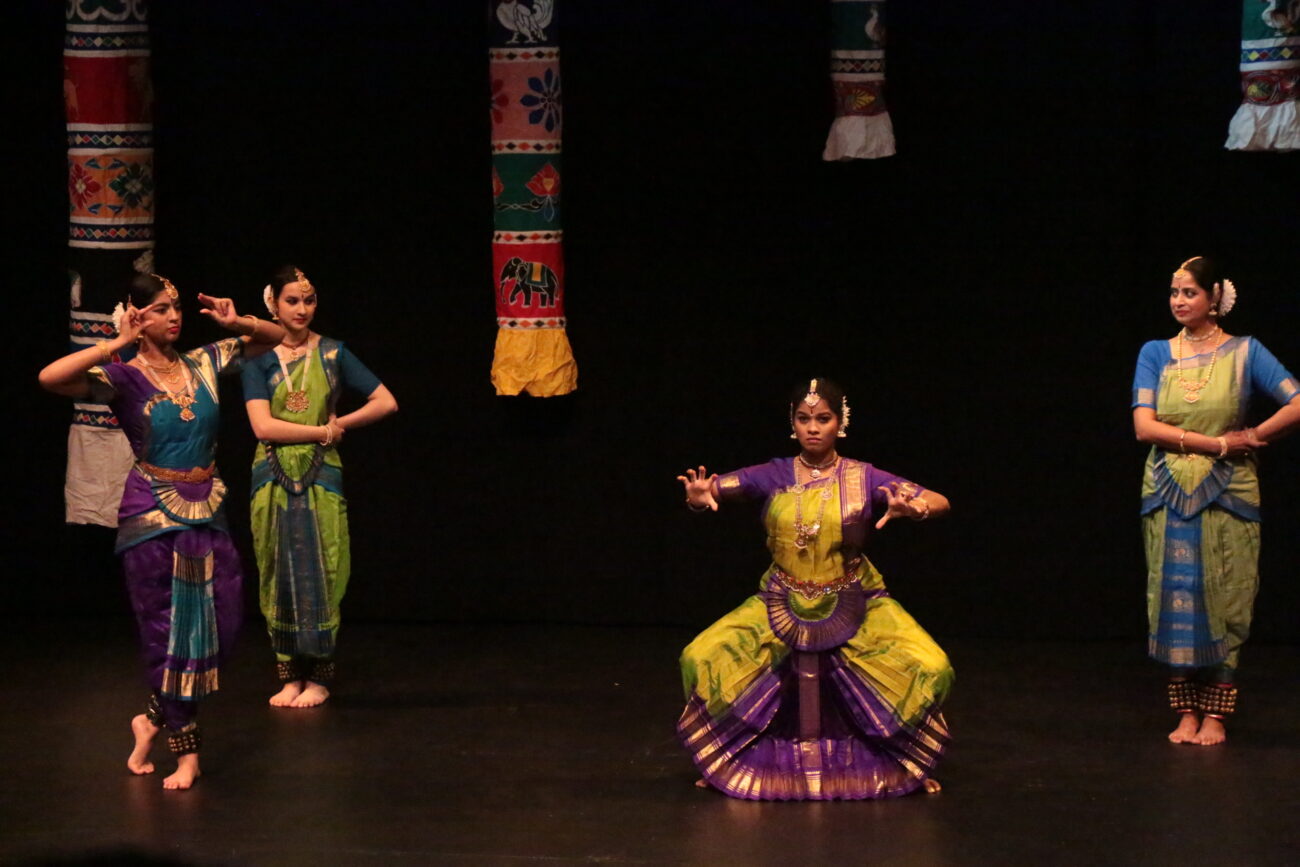
Dayalini depicts the half-human, half-lion god Narasimha, who emerges from a pillar to protect a young boy. Photo: Kavi Vidya Achar / Fulcrum 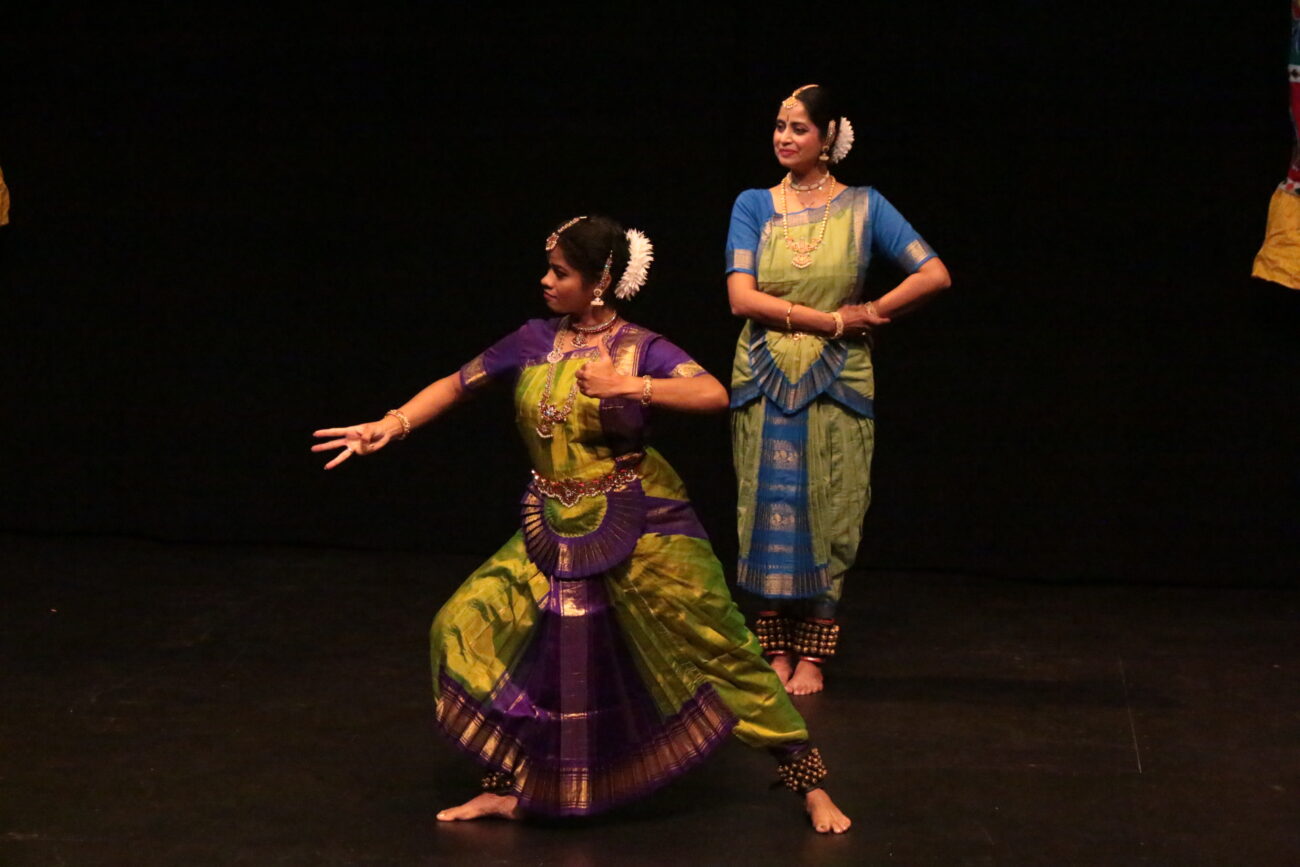
Dayalini plays the Goddess Durga, who kills the demon Mahishasura with her trident. Photo: Kavi Vidya Achar / Fulcrum
The dancers entered and exited in turns, and the pairings were thoughtful. Dayalini Lingesh really stood out to me in the nritta sections. Her movements were crisp, coordinated, and she utilized the entire stage. My favourite moment of the night was her portrayal of Hanuman setting Lanka on fire. The other dancers played Ravana’s soldiers, wrapping Hanuman’s tail over and over before lighting it. When Dayalini leapt across the “city,” it felt like she actually set the stage on fire. Her jumps were explosive, and she carried the whole scene with so much energy.
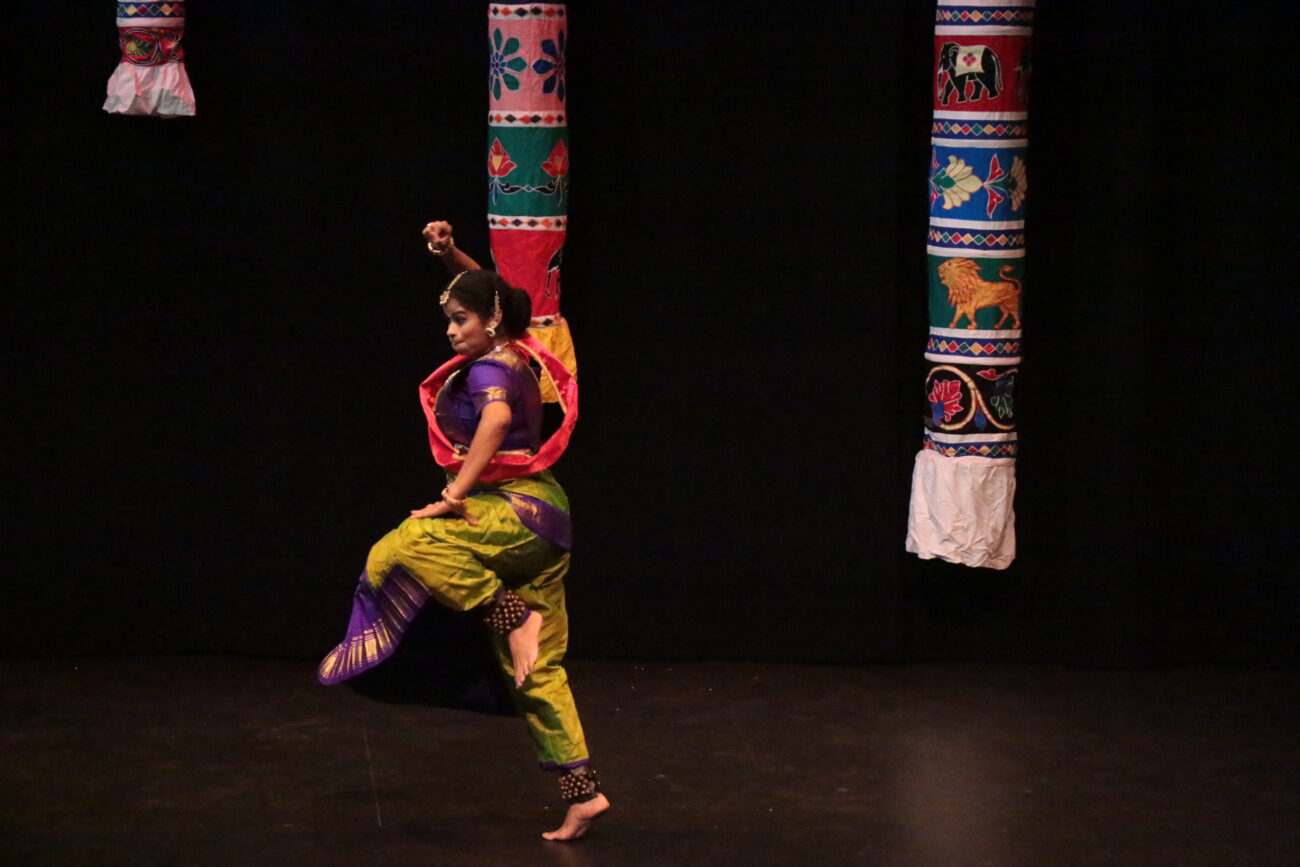
Dayalini as Hanuman, leaps across the stage, setting the kingdom of Lanka on fire. Photo: Kavi Vidya Achar / Fulcrum 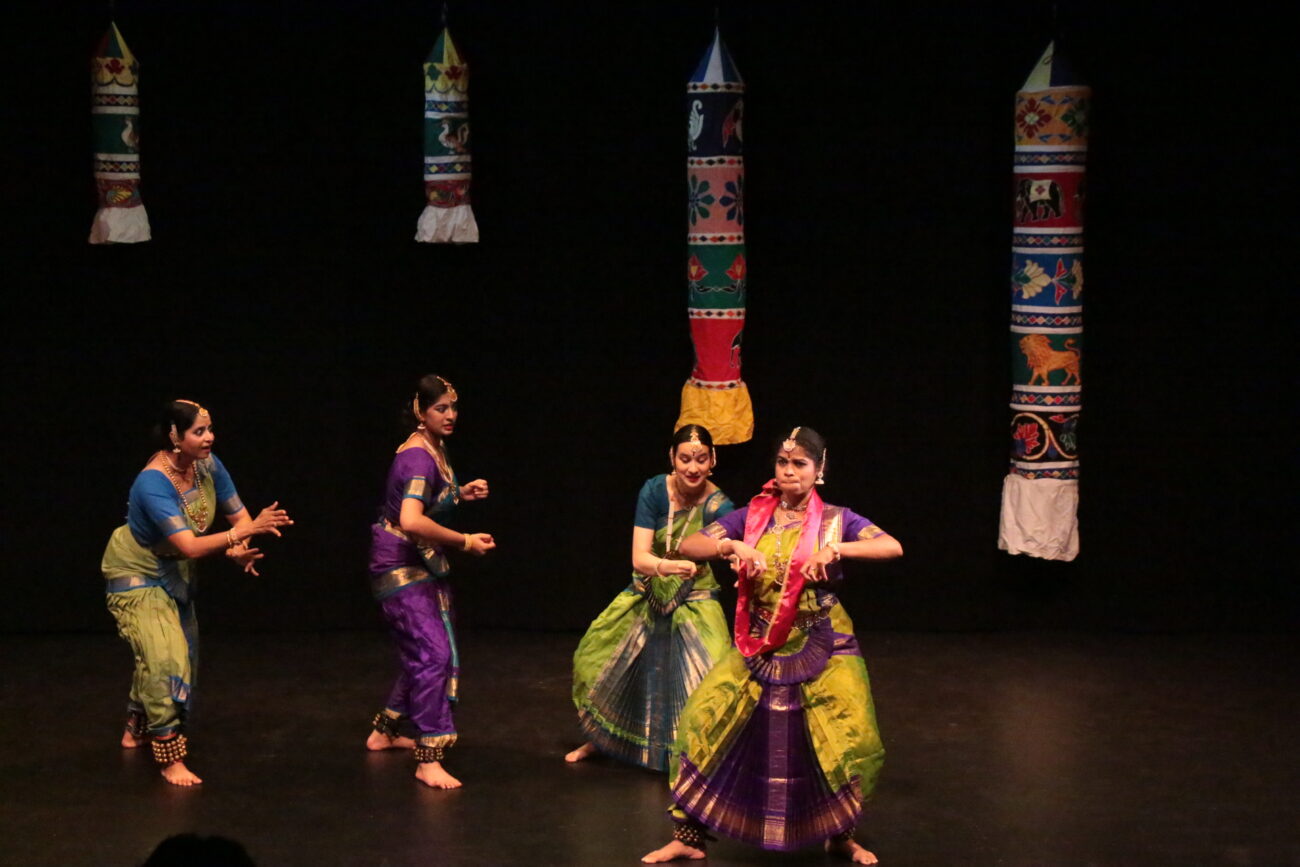
The dancers tie Hanuman’s tail with cloth and set it on fire. Photo: Kavi Vidya Achar / Fulcrum 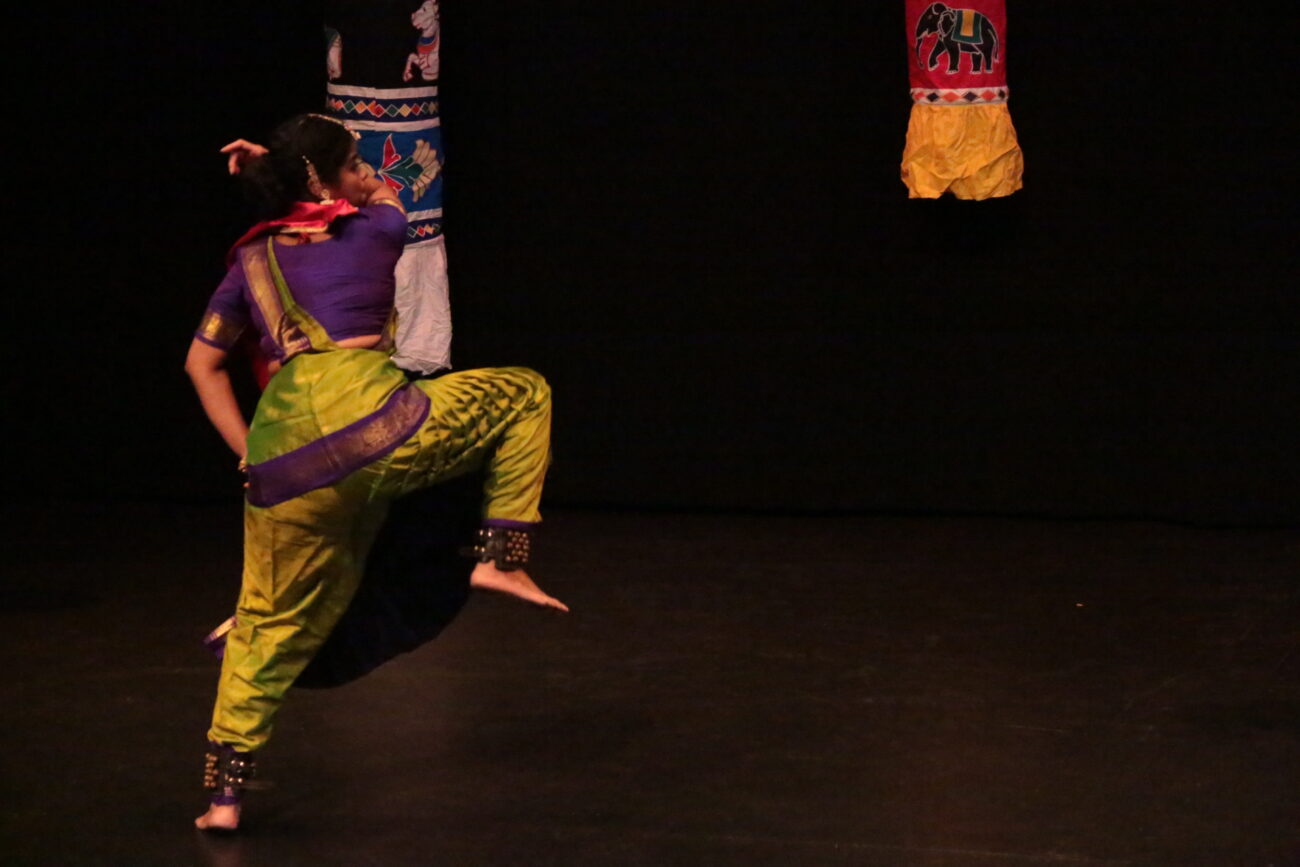
Dayalini as Hanuman, leaps across the stage, setting the kingdom of Lanka on fire. Photo: Kavi Vidya Achar / Fulcrum 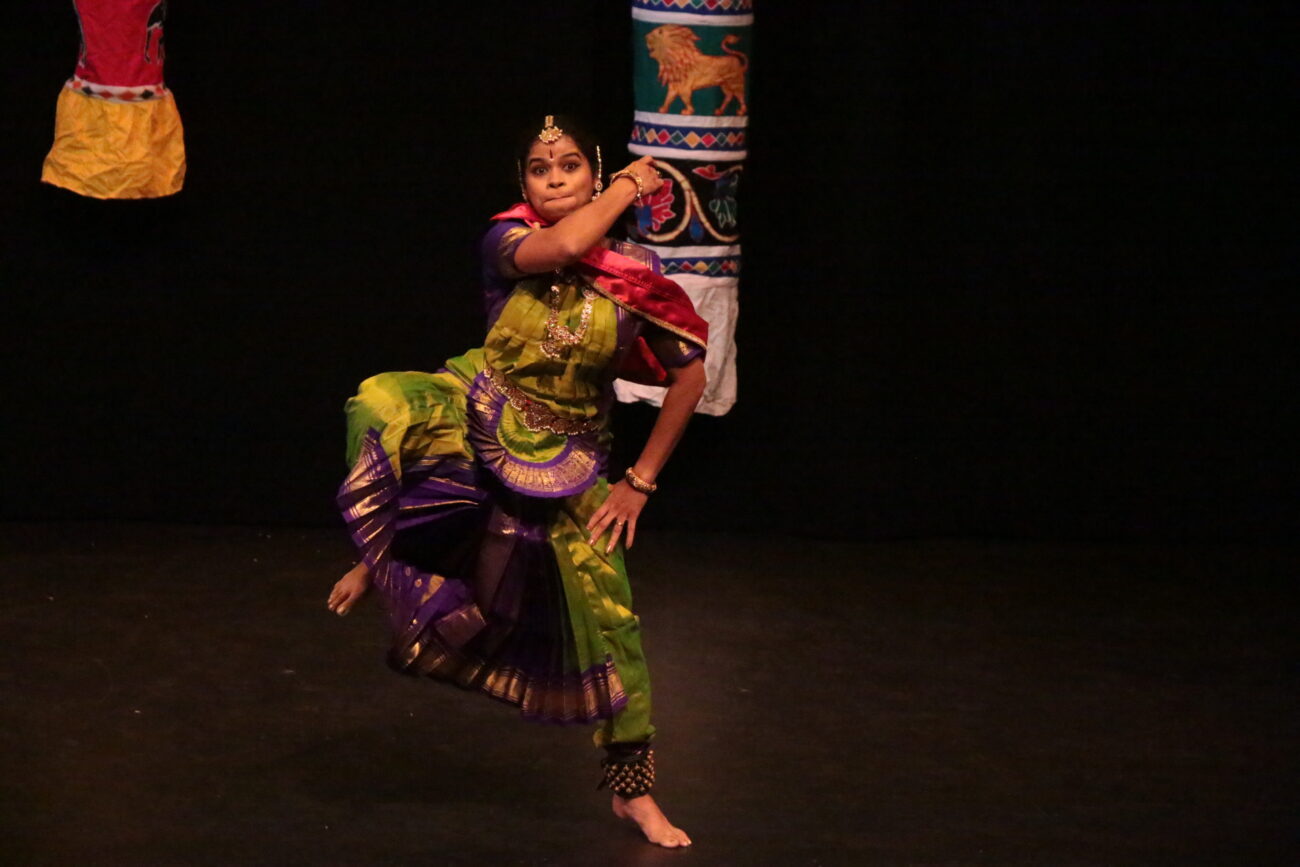
Dayalini as Hanuman, leaps across the stage, setting the kingdom of Lanka on fire. Photo: Kavi Vidya Achar / Fulcrum 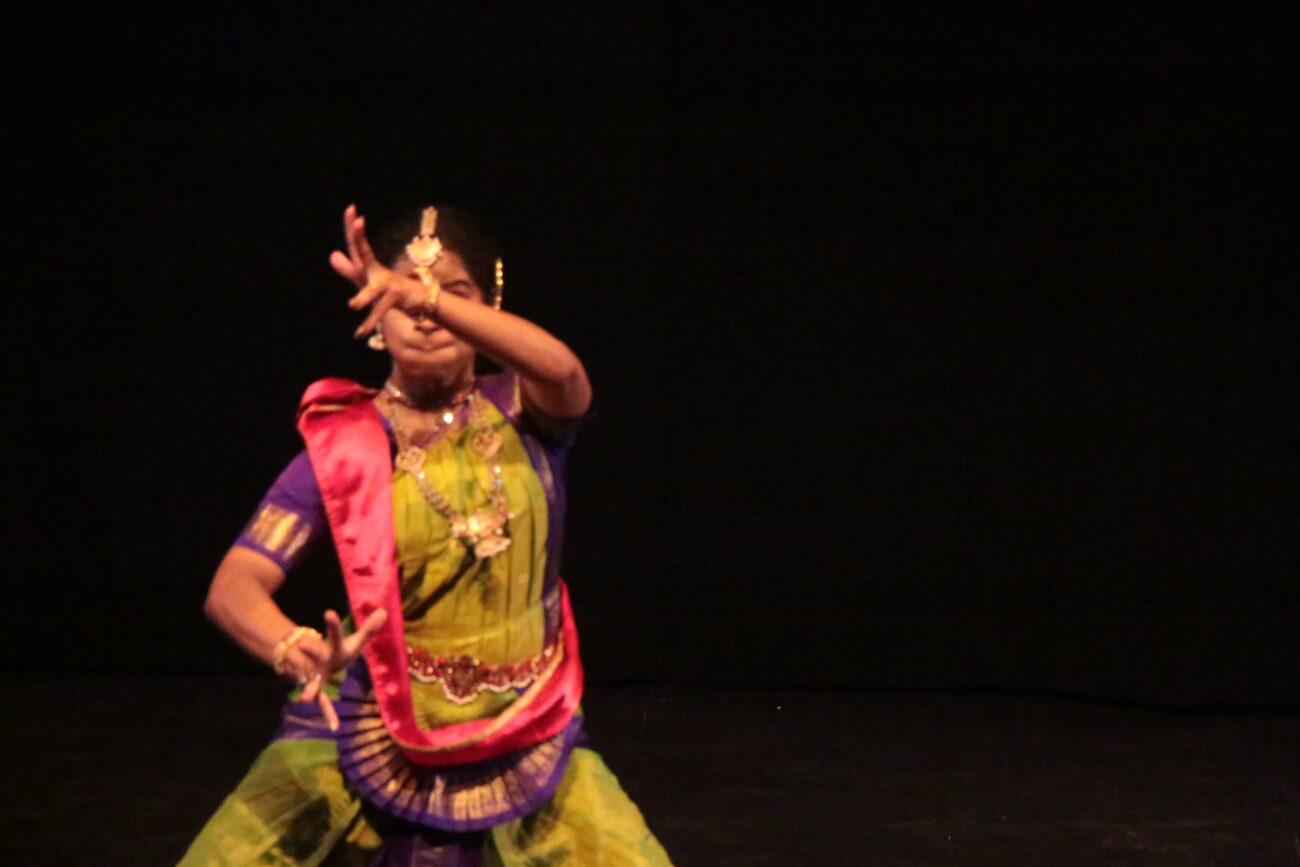
Dayalini as Hanuman, leaps across the stage, setting the kingdom of Lanka on fire. Photo: Kavi Vidya Achar / Fulcrum 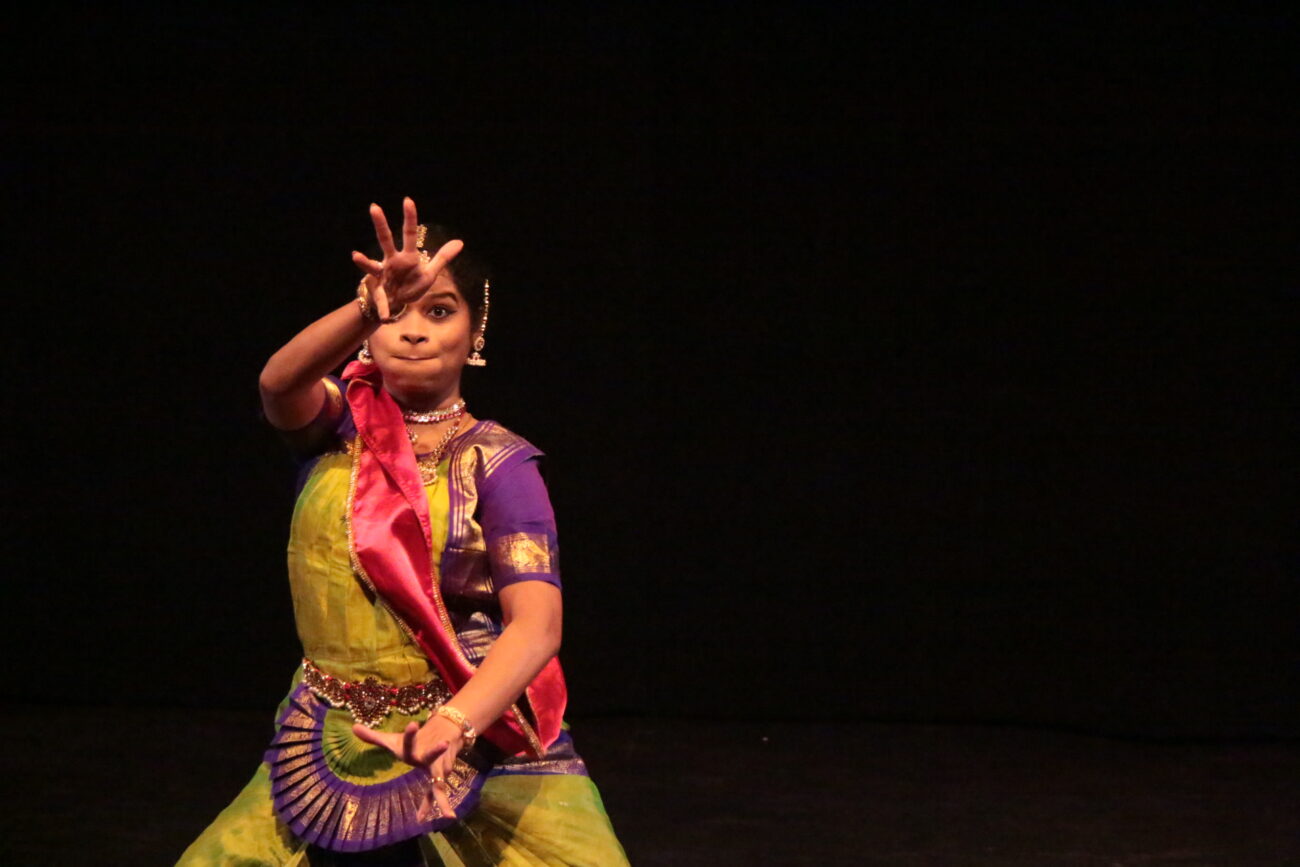
Dayalini as Hanuman, leaps across the stage, setting the kingdom of Lanka on fire. Photo: Kavi Vidya Achar / Fulcrum 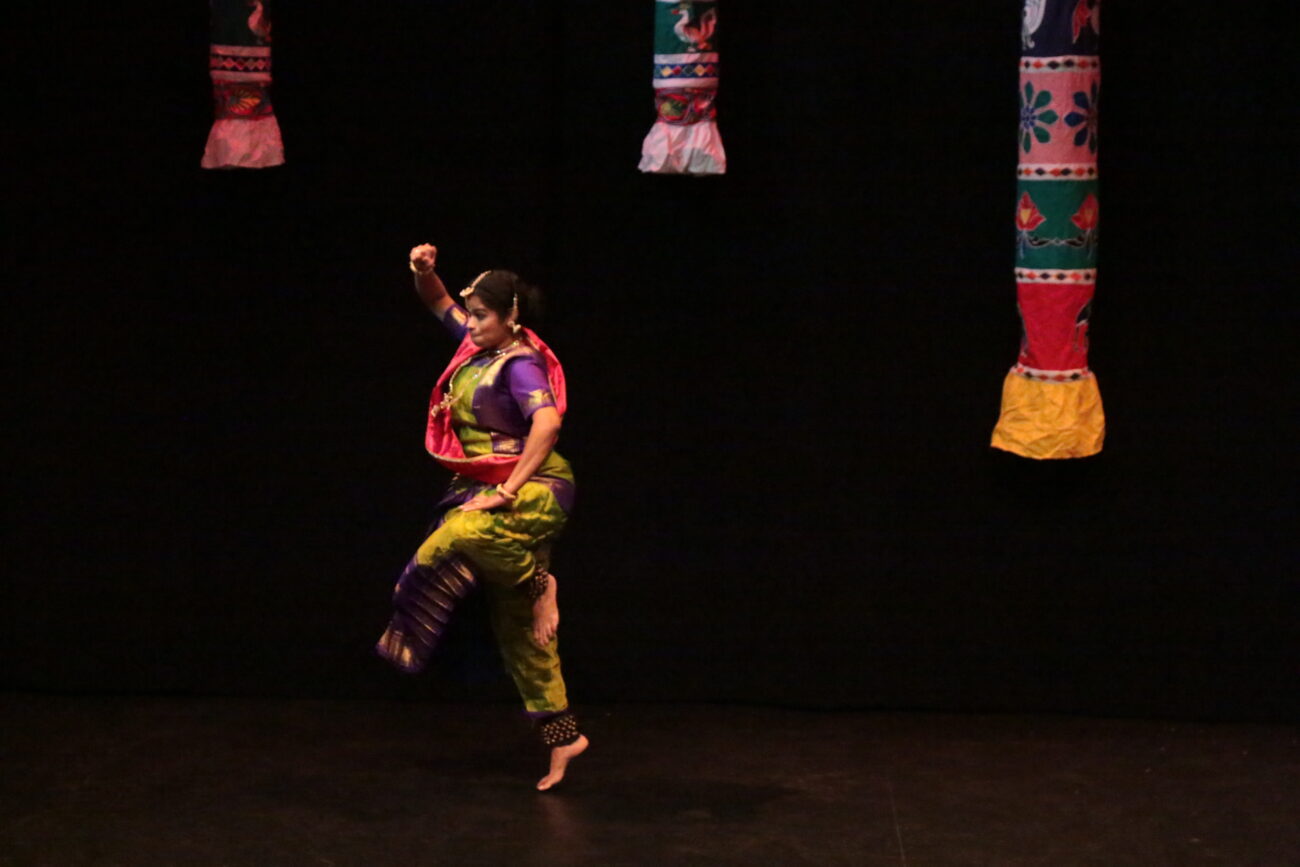
Dayalini as Hanuman, leaps across the stage, setting the kingdom of Lanka on fire. Photo: Kavi Vidya Achar / Fulcrum 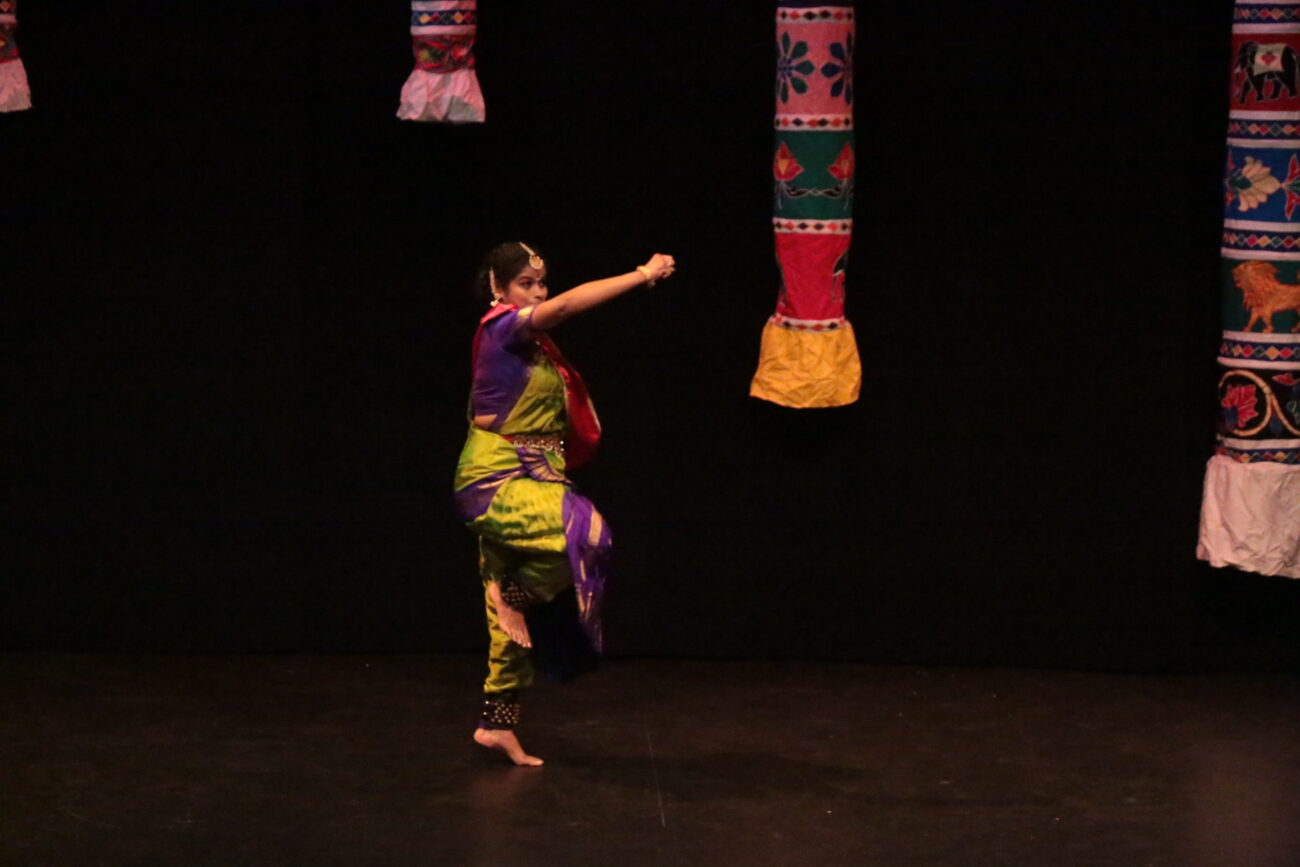
Dayalini as Hanuman, leaps across the stage, setting the kingdom of Lanka on fire. Photo: Kavi Vidya Achar / Fulcrum 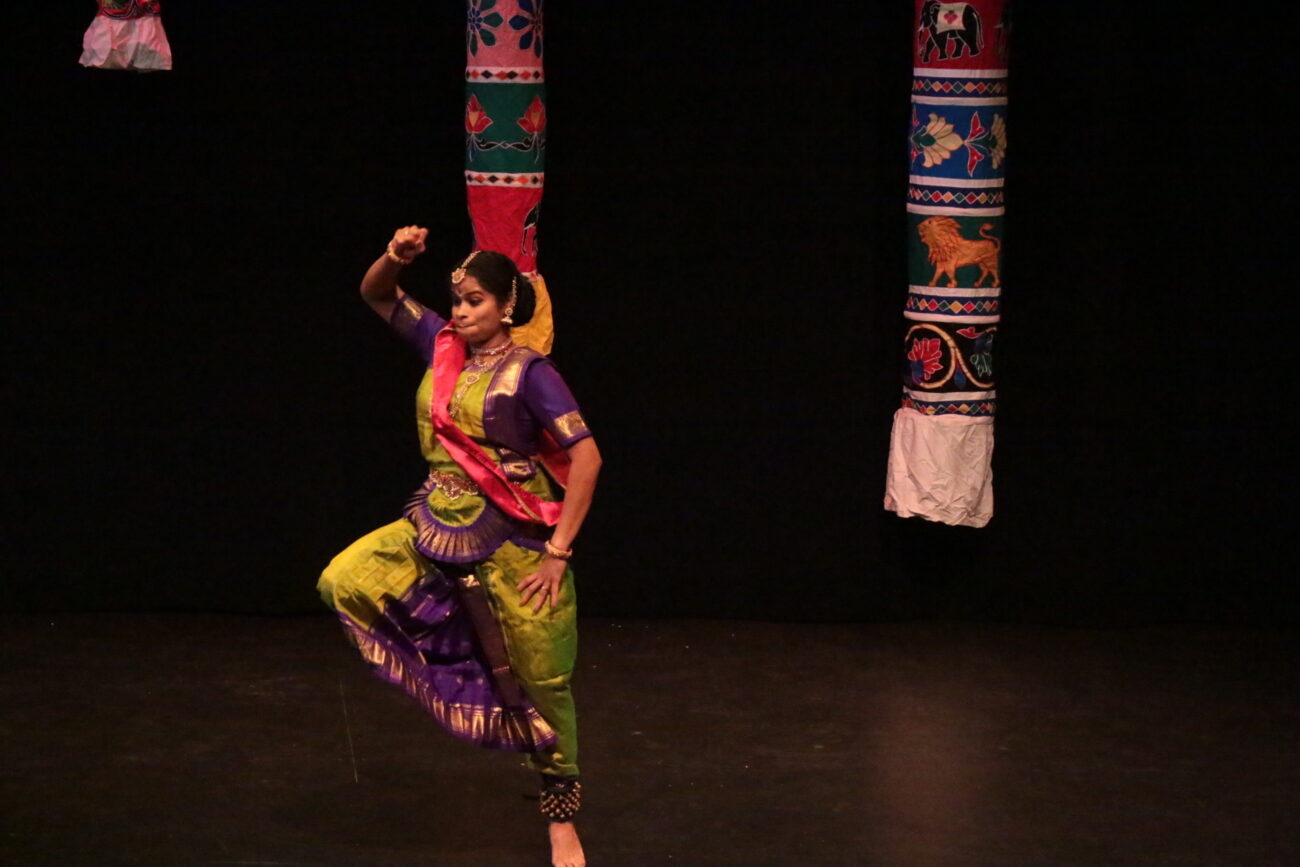
Dayalini as Hanuman, leaps across the stage, setting the kingdom of Lanka on fire. Photo: Kavi Vidya Achar / Fulcrum
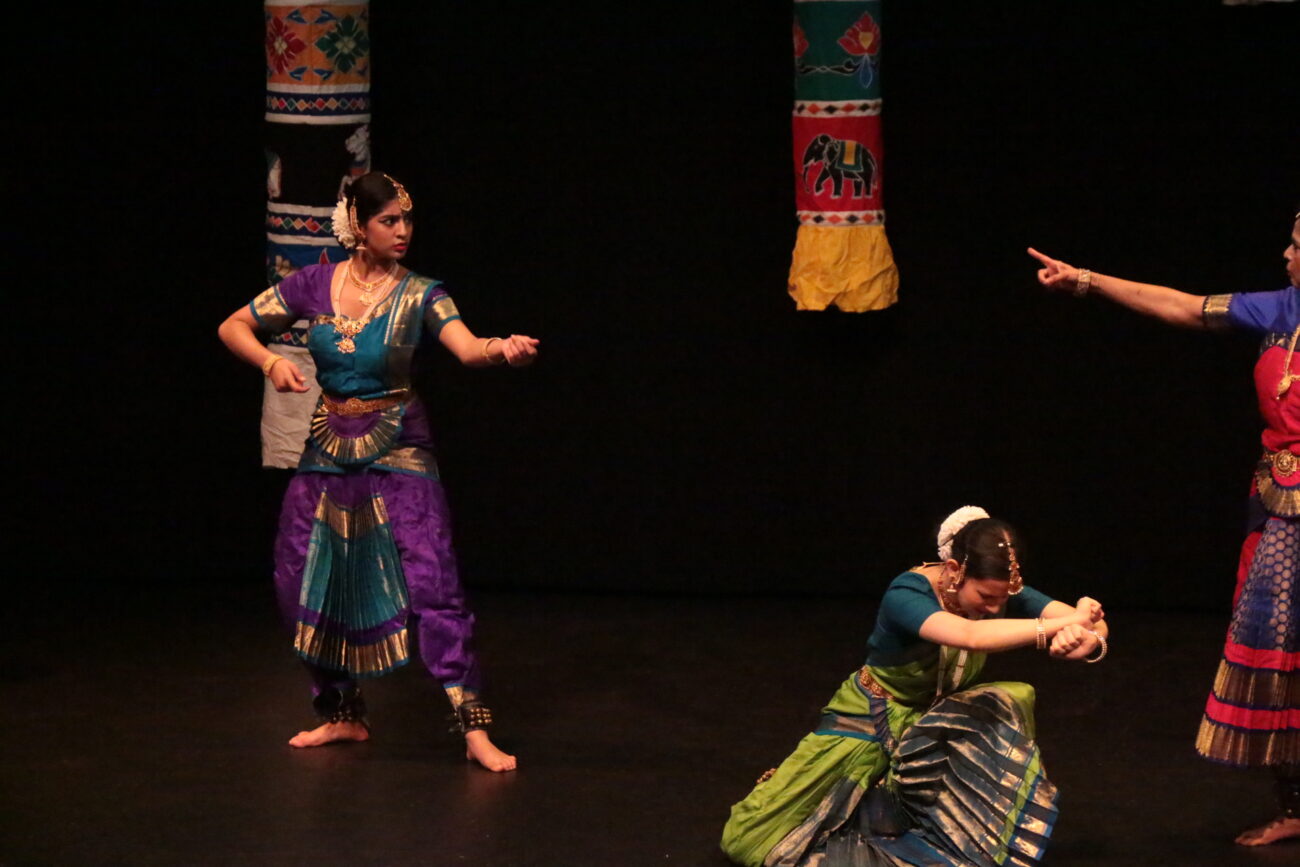
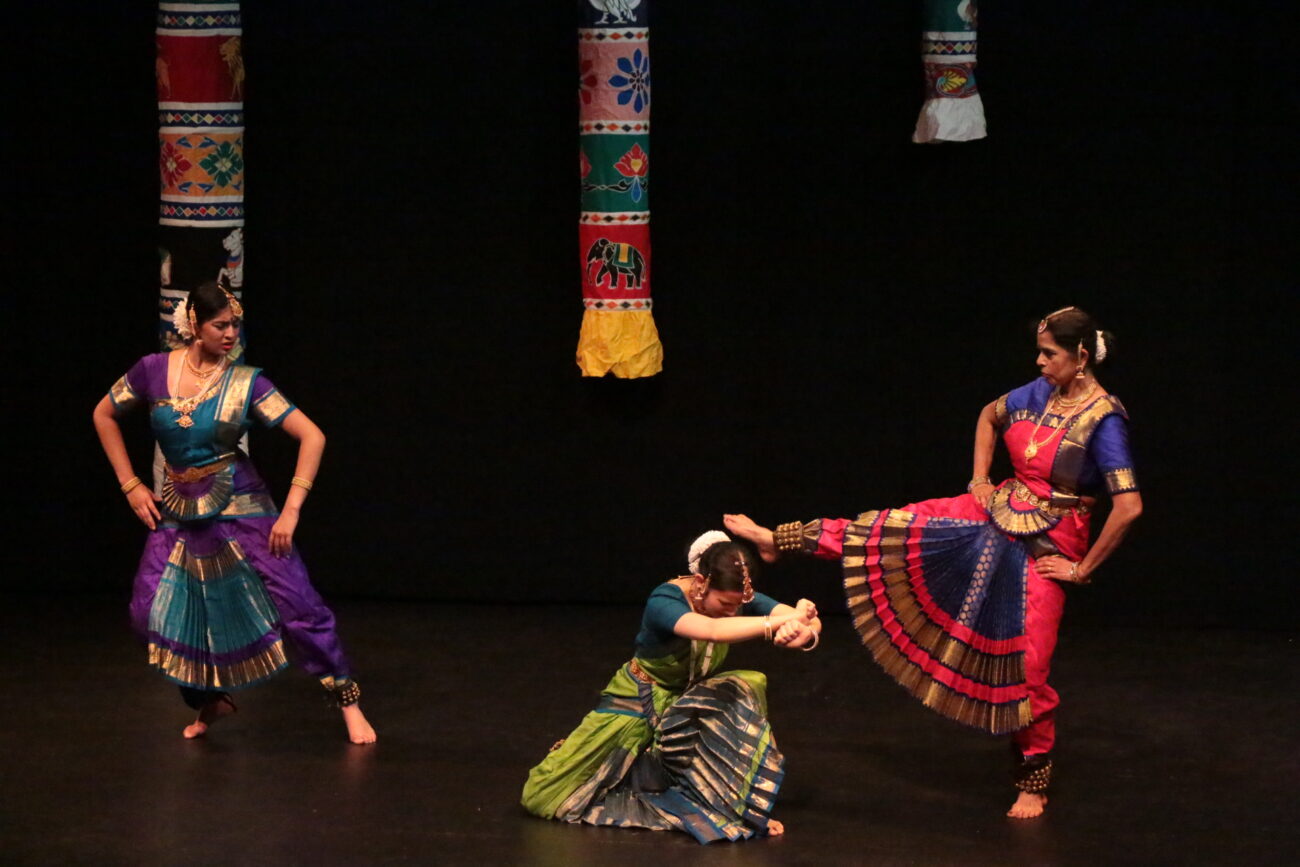
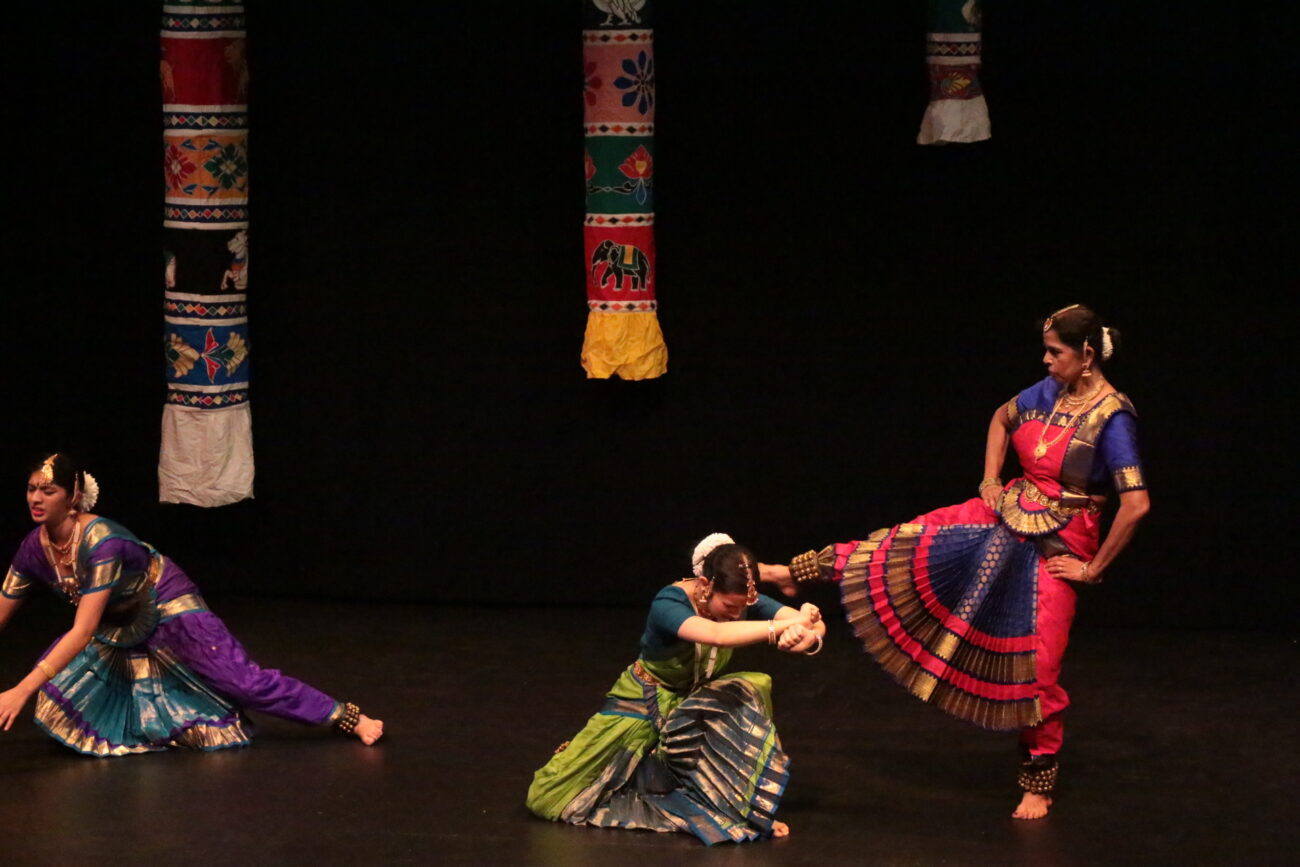
Another moment that really stood out was their depiction of the Markandeya story. Markandeya is the boy sage who, according to legend, was destined to die at sixteen. When Yama, the god of death, arrives to take him, Markandeya clings to a Shiva lingam for protection. Prisha, playing Markandeya, wrapped herself around the invisible lingam, and Druthi, as Yama, slipped an imaginary noose around her neck and began to pull, dragging her backwards inch by inch while Prisha refused to let go. Their timing was so tight that the whole struggle felt completely real.
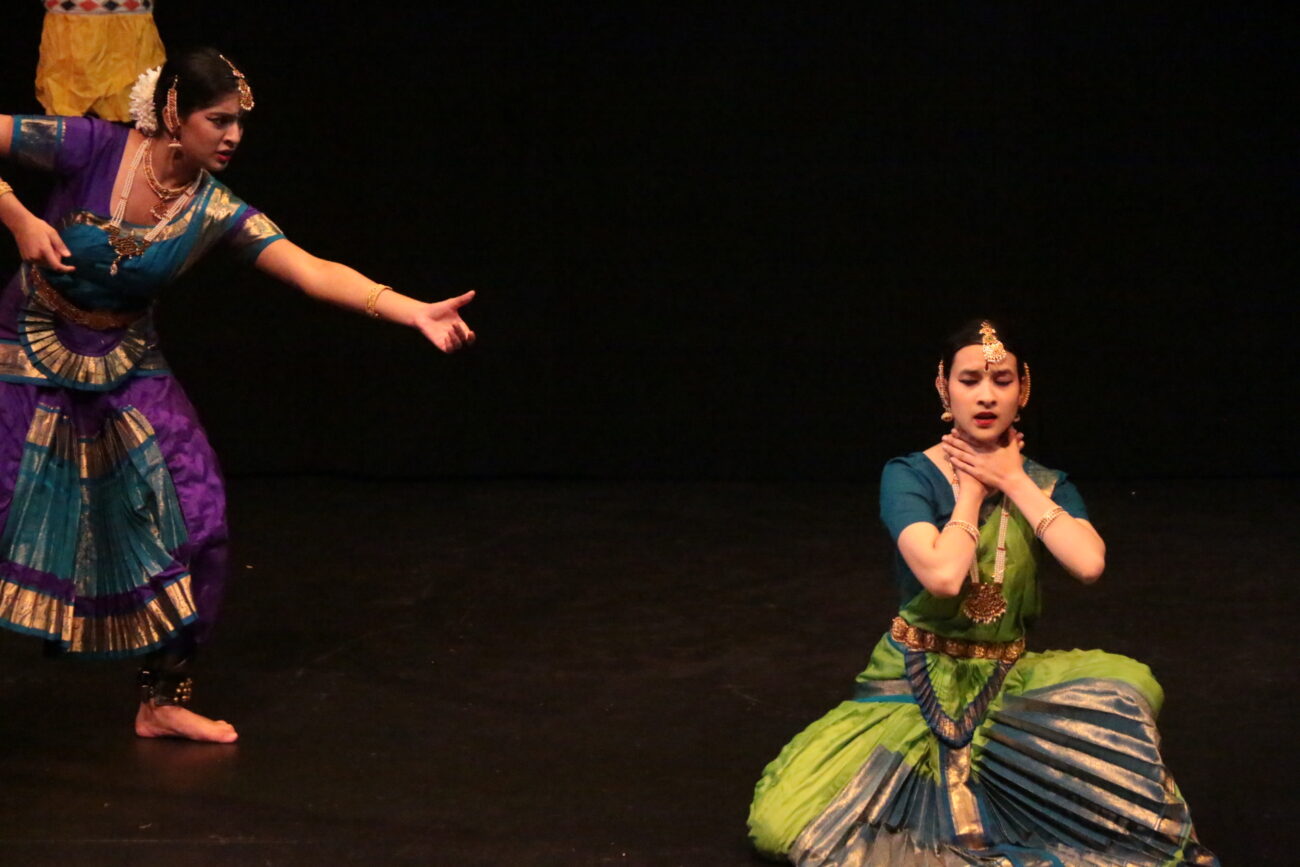
Druthi, as Lord Yama, pulls Prisha (Markandeya) backwards with a noose. Photo: Kavi Vidya Achar / Fulcrum 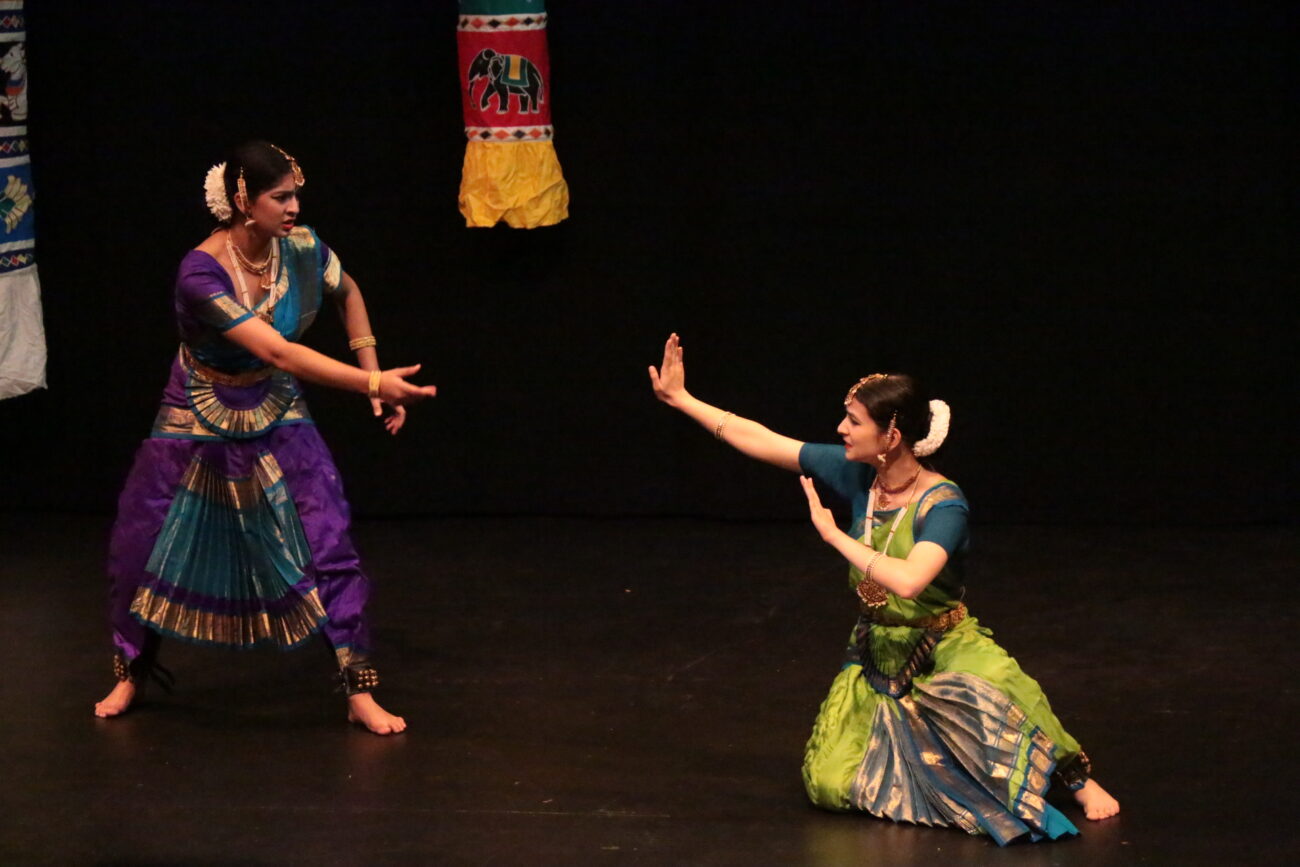
Druthi, as Lord Yama, pulls Prisha (Markandeya) backwards with a noose. Photo: Kavi Vidya Achar / Fulcrum 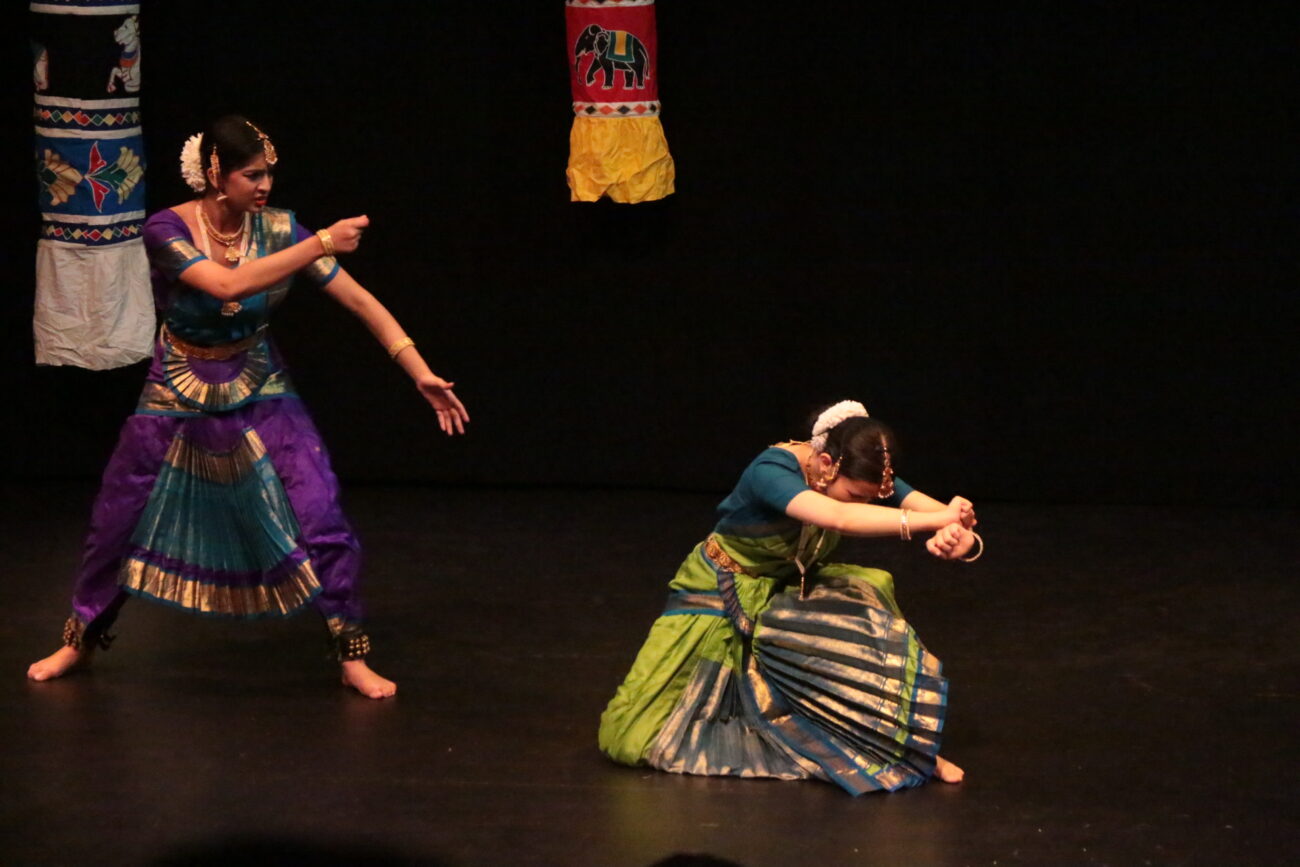
Druthi, as Lord Yama, pulls Prisha (Markandeya) backwards with a noose. Photo: Kavi Vidya Achar / Fulcrum
And then, in a sudden, perfectly timed entrance, Jeyanthi appeared as Lord Shiva. She stepped in front of them and delivered the famous kick that sends Yama flying. It was one of the clearest, most memorable visualizations of the story I’ve seen, and I’m so glad I caught it on camera.
In another story, the warrior goddess Durga defeats the bull-headed demon Mahishasura. Dayalini and Druthi’s fight scene was pure mastery.
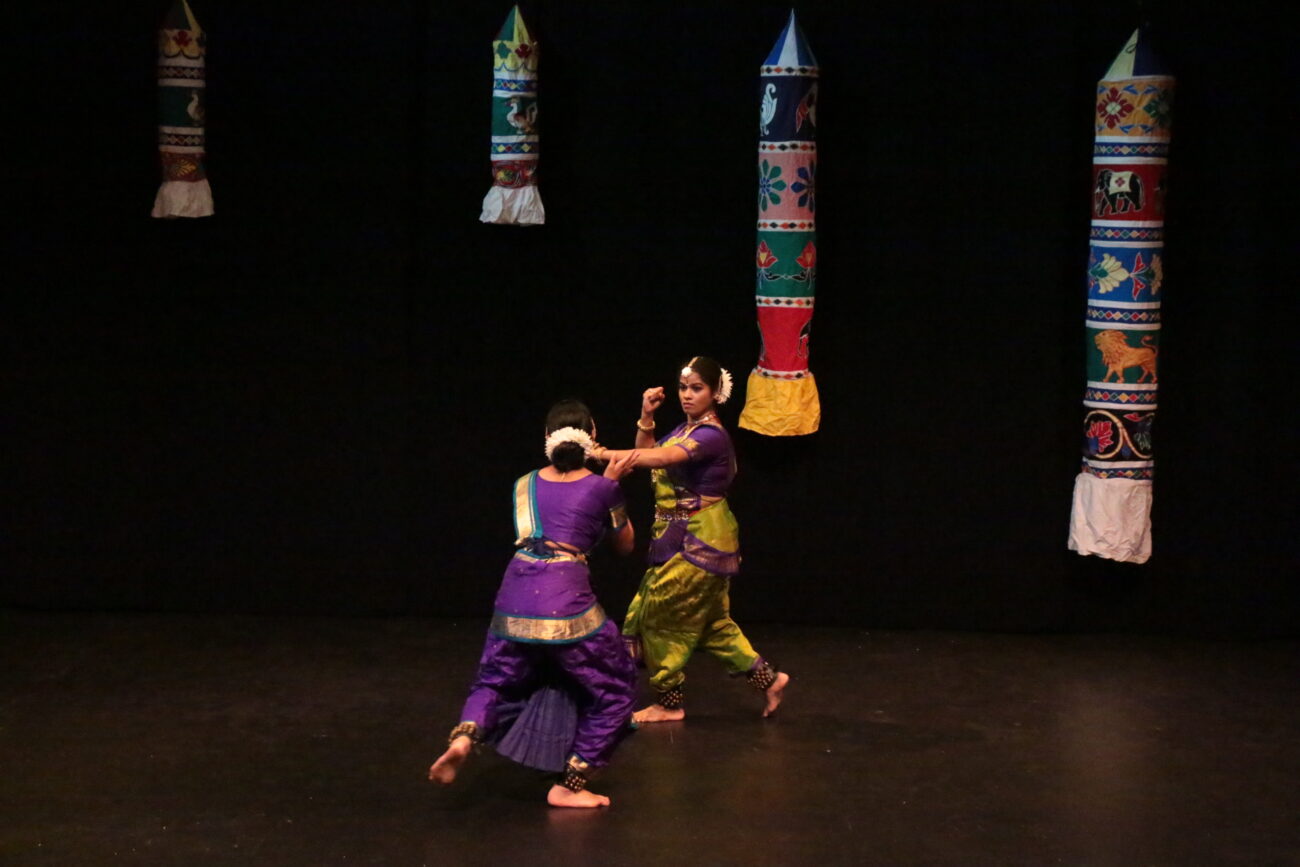
Dayalini (in green) plays Goddess Durga, advancing on the demon Mahishasura (played by Druthi in purple). Photo: Kavi Vidya Achar / Fulcrum 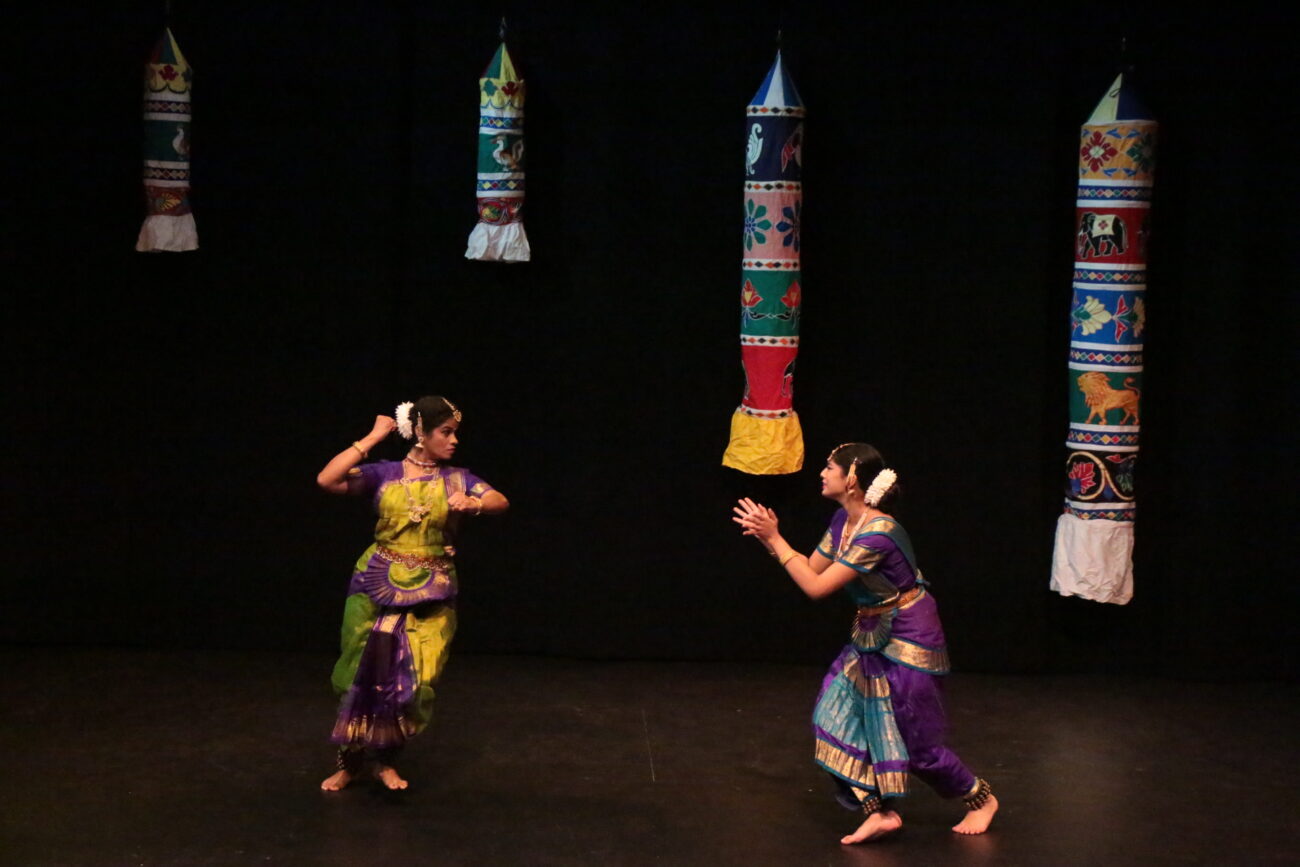
Photo: Kavi Vidya Achar / Fulcrum 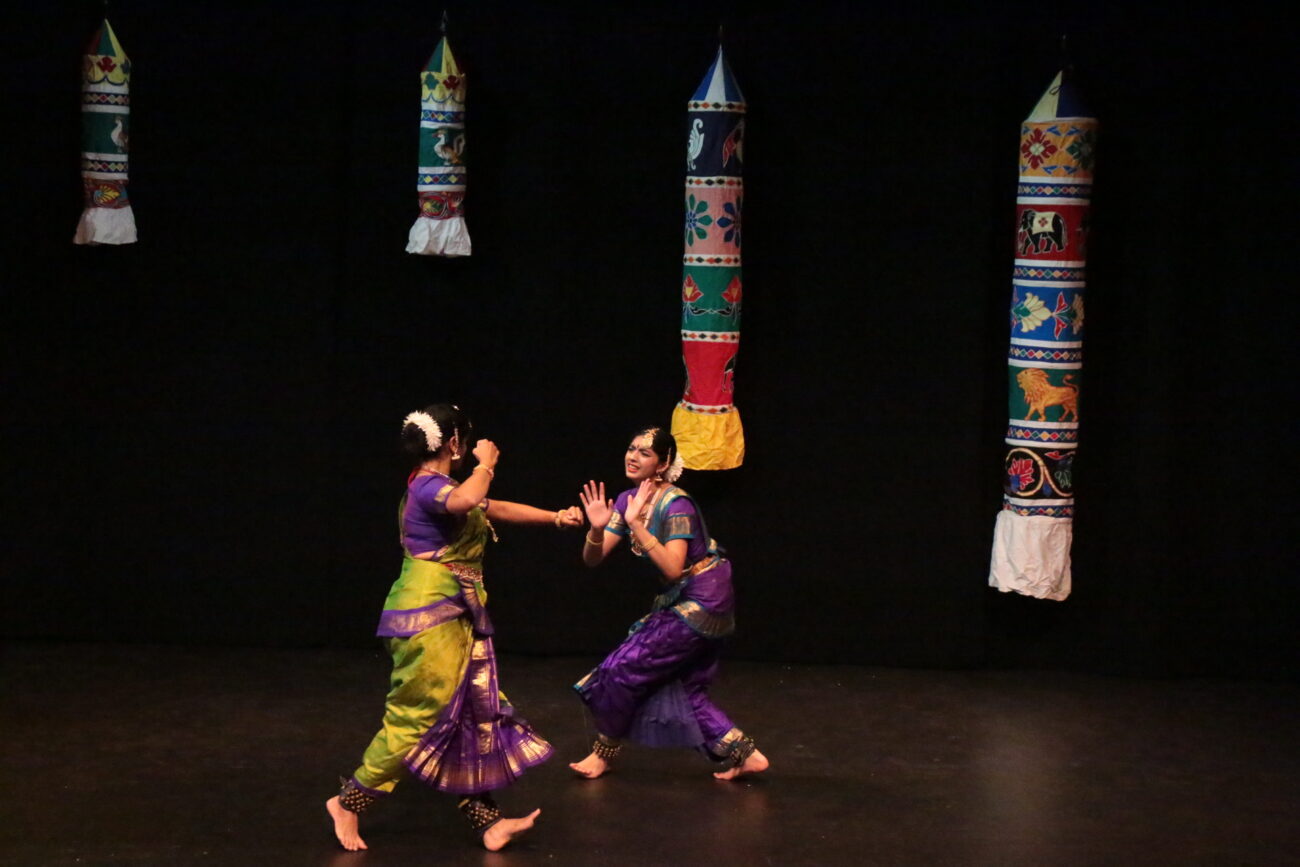
Photo: Kavi Vidya Achar / Fulcrum 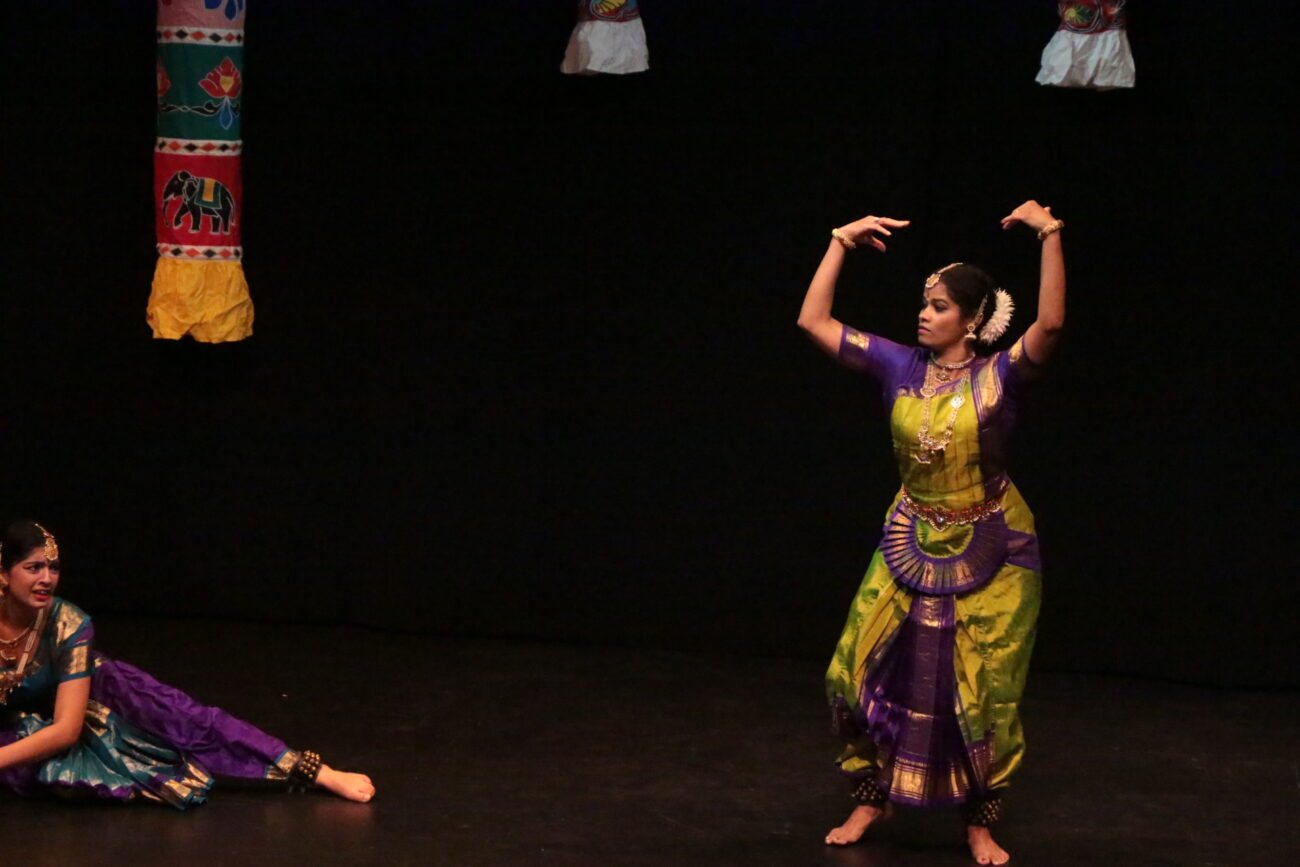
Photo: Kavi Vidya Achar / Fulcrum 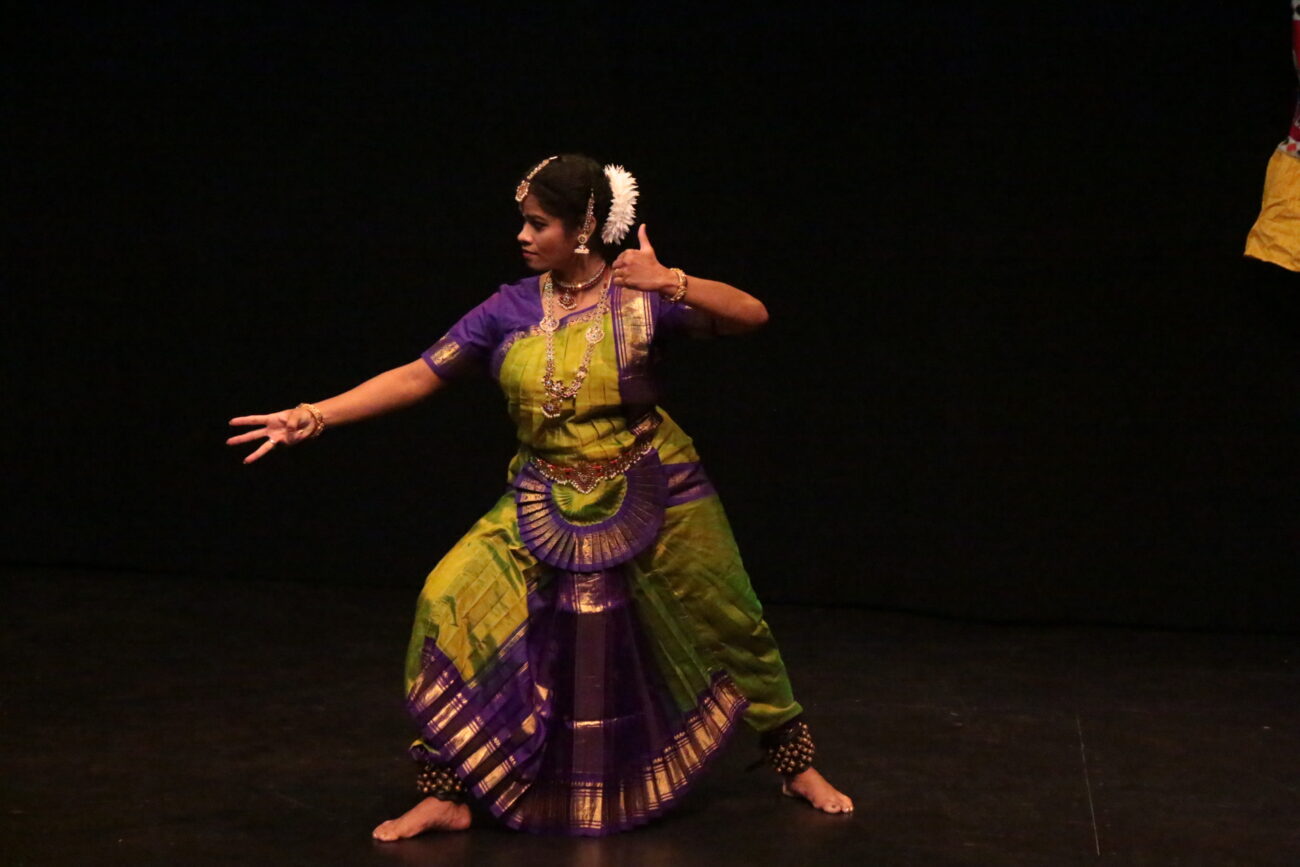
Dayalini strikes with her trident. Photo: Kavi Vidya Achar / Fulcrum 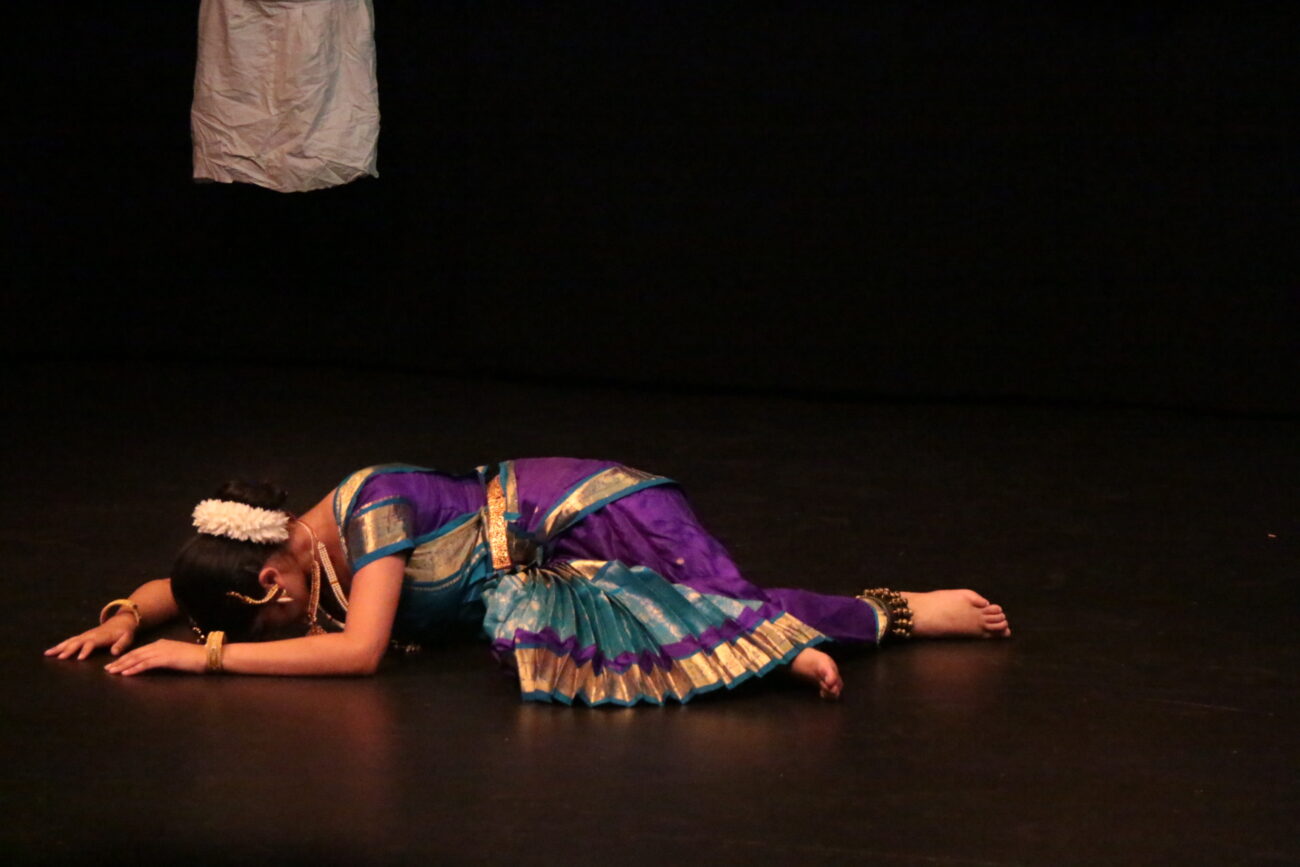
Druthi, as Mahishasura, lays defeated. Photo: Kavi Vidya Achar / Fulcrum
Jeyanthi and Dhanashree’s depiction of the love between the gods Rama and Sita was also super sweet to watch.
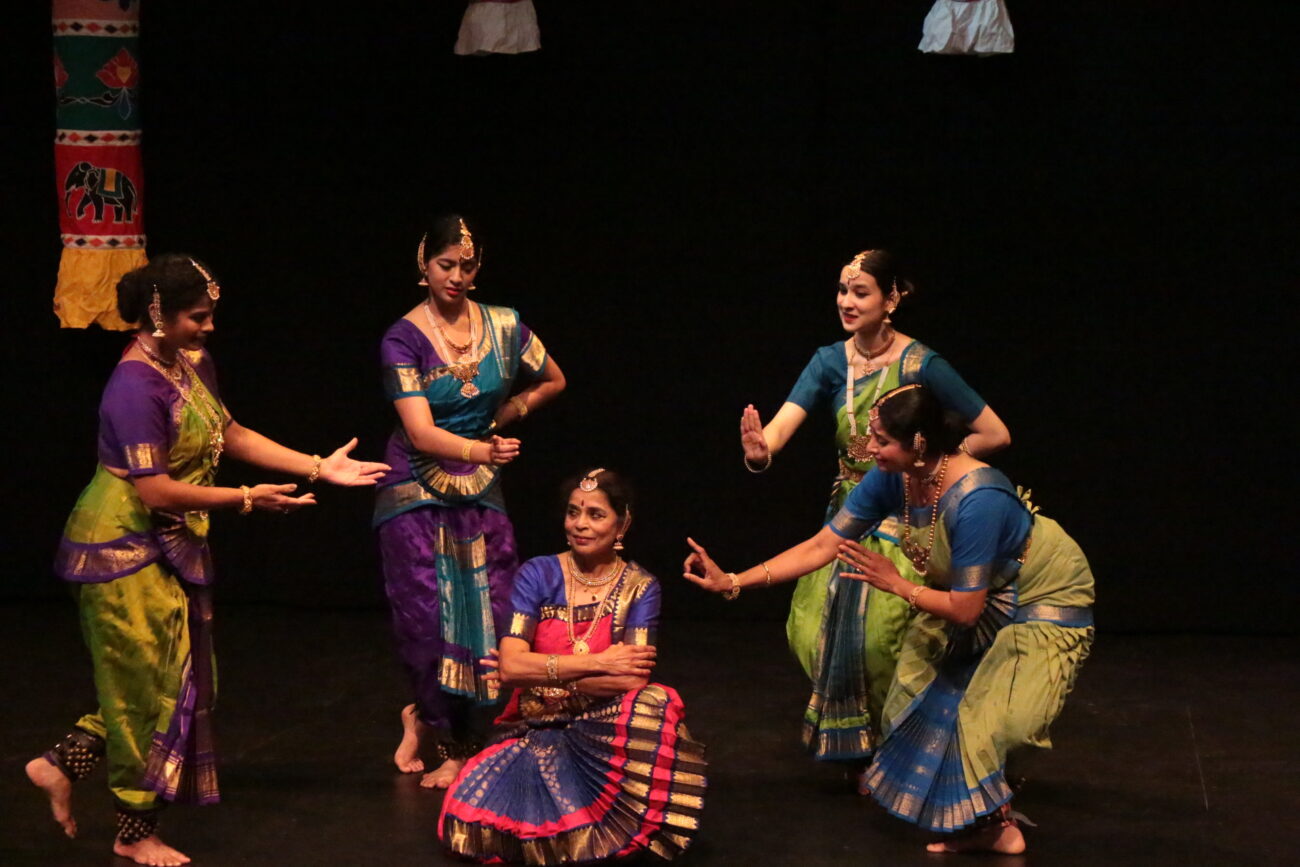
Dancers cajole Sita, played by Jeyanthi. Photo: Kavi Vidya Achar / Fulcrum 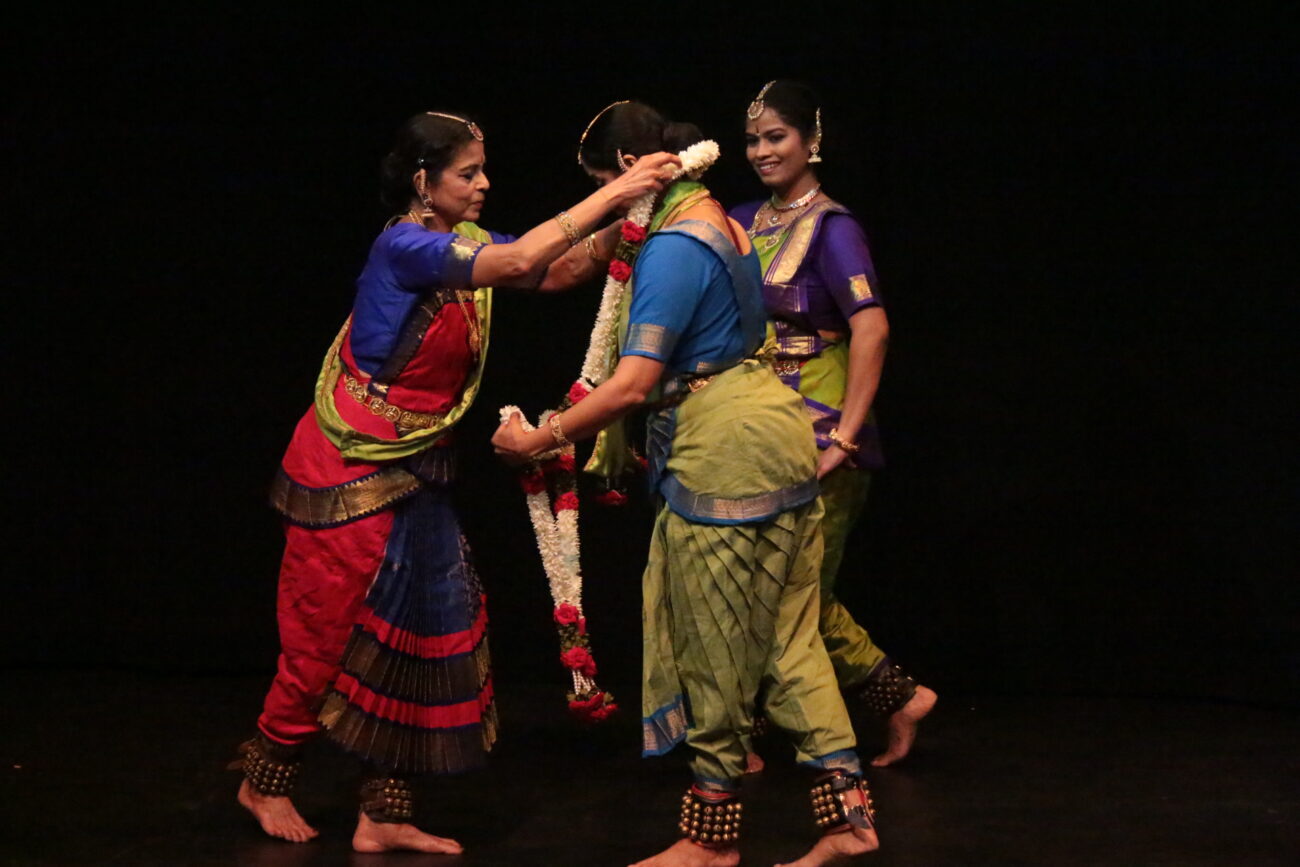
Jeyanthi, as Goddess Sita, puts a garland around Lord Rama’s neck, as a marriage ritual. Photo: Kavi Vidya Achar / Fulcrum 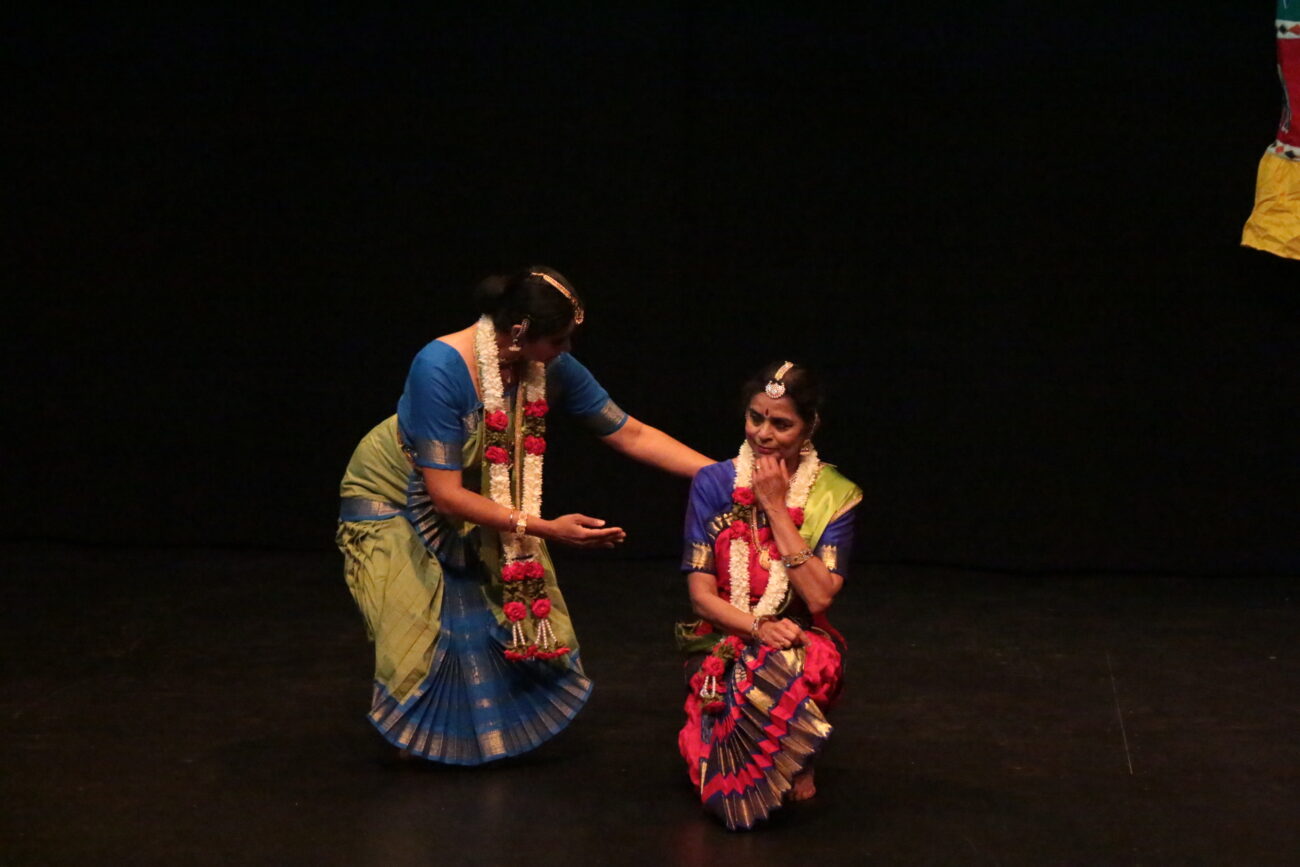
Lord Rama (Dhanashree) tends to Goddess Sita. Photo: Kavi Vidya Achar / Fulcrum 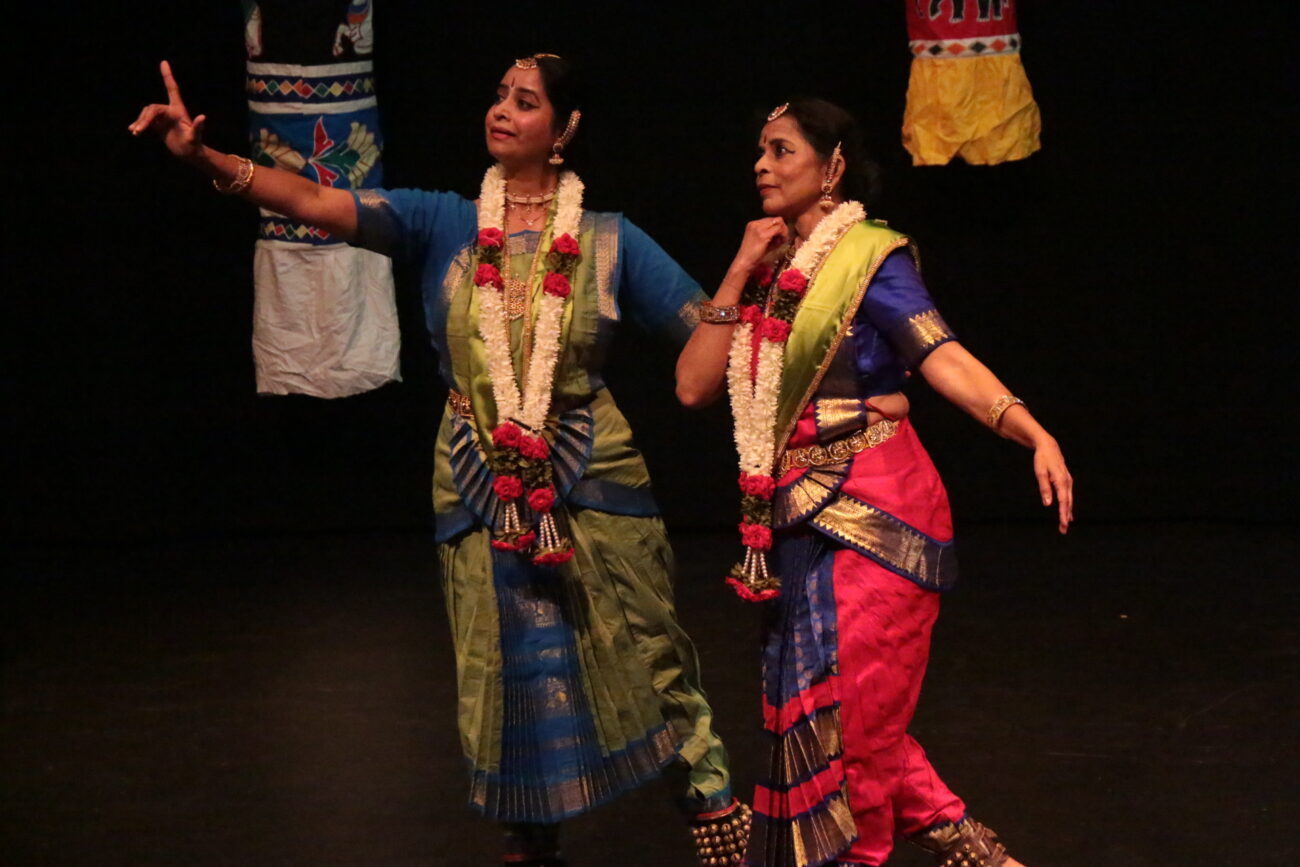
Rama shows Sita a star in the distance. Photo: Kavi Vidya Achar / Fulcrum 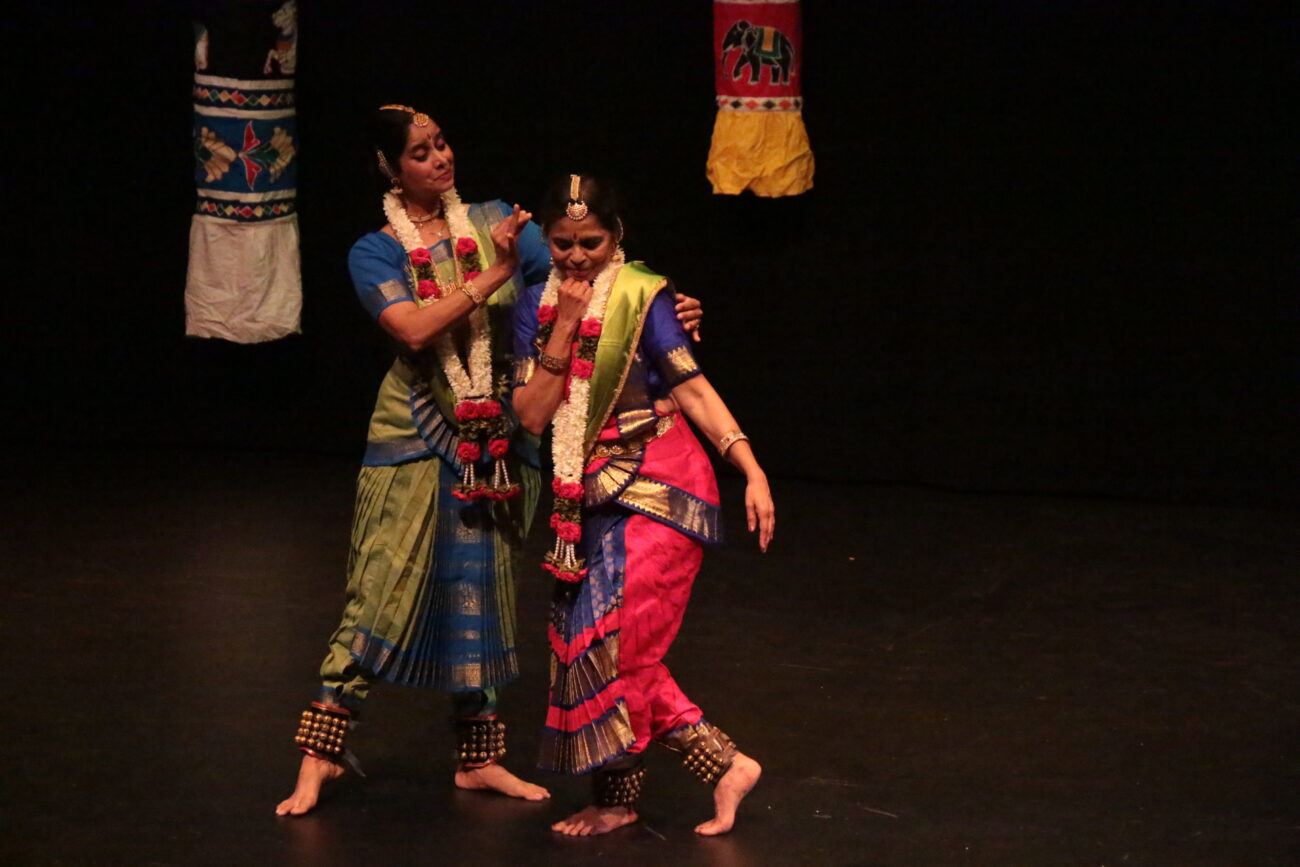
Rama puts flowers in Sita’s hair. Photo: Kavi Vidya Achar / Fulcrum 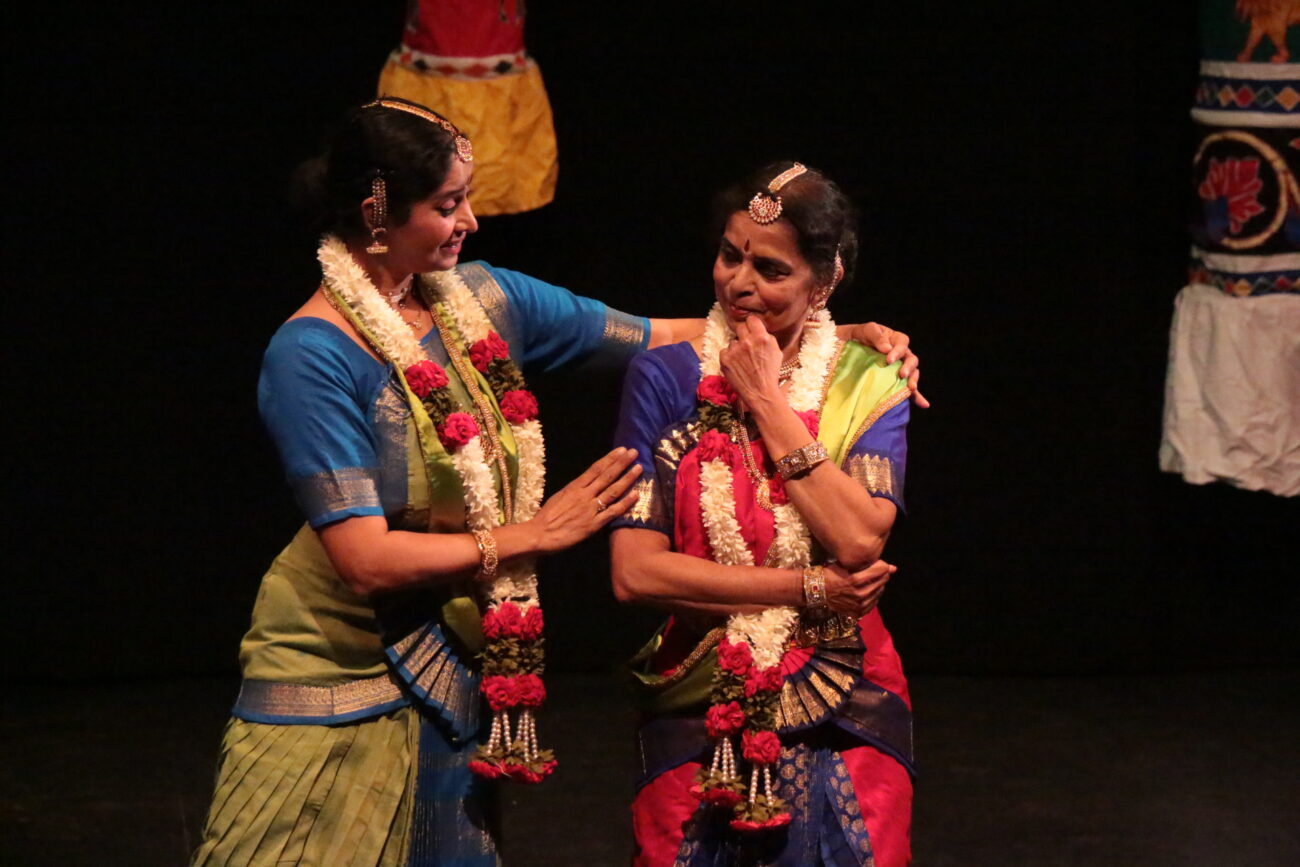
Photo: Kavi Vidya Achar / Fulcrum
And finally, here are some of my favourite moments from the show!
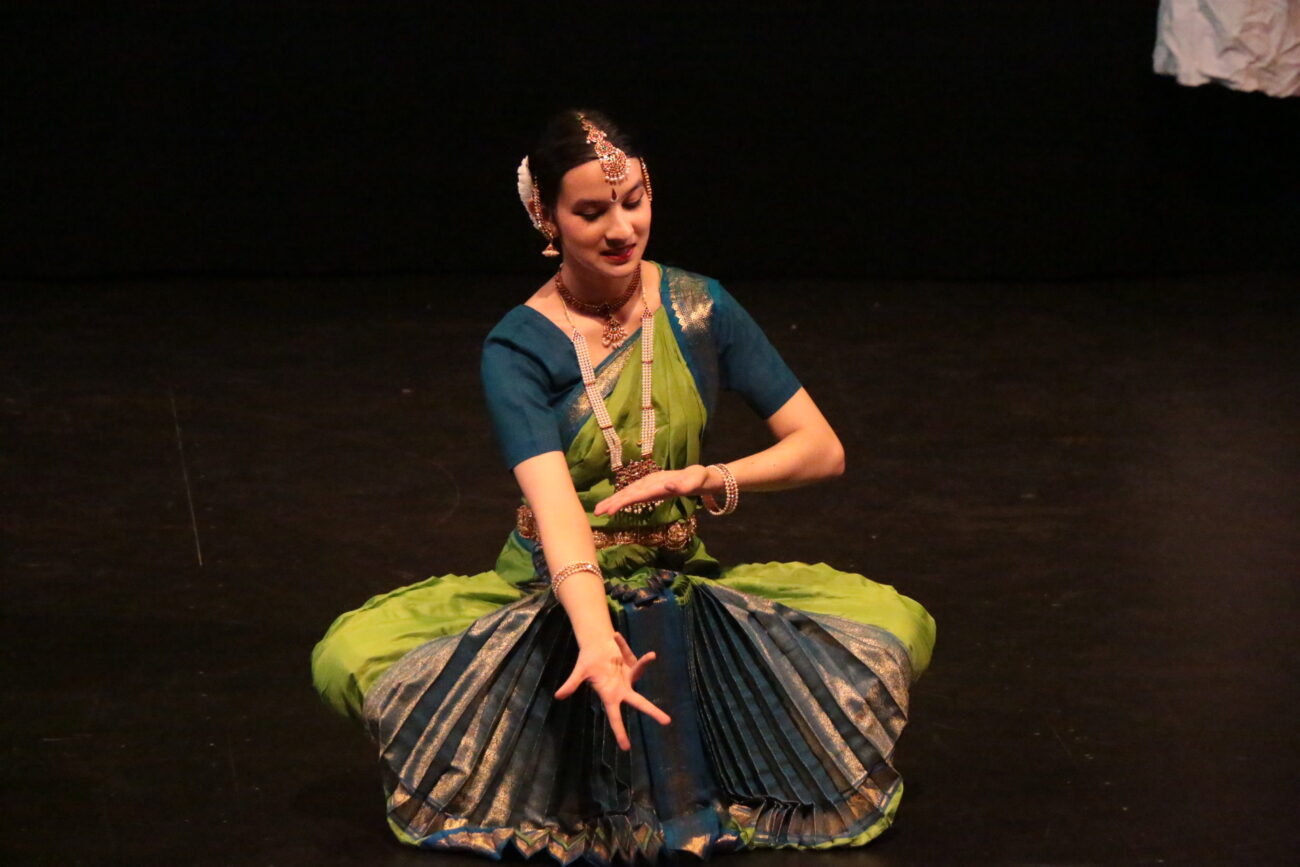
Prisha offers flowers to God. Photo: Kavi Vidya Achar / Fulcrum 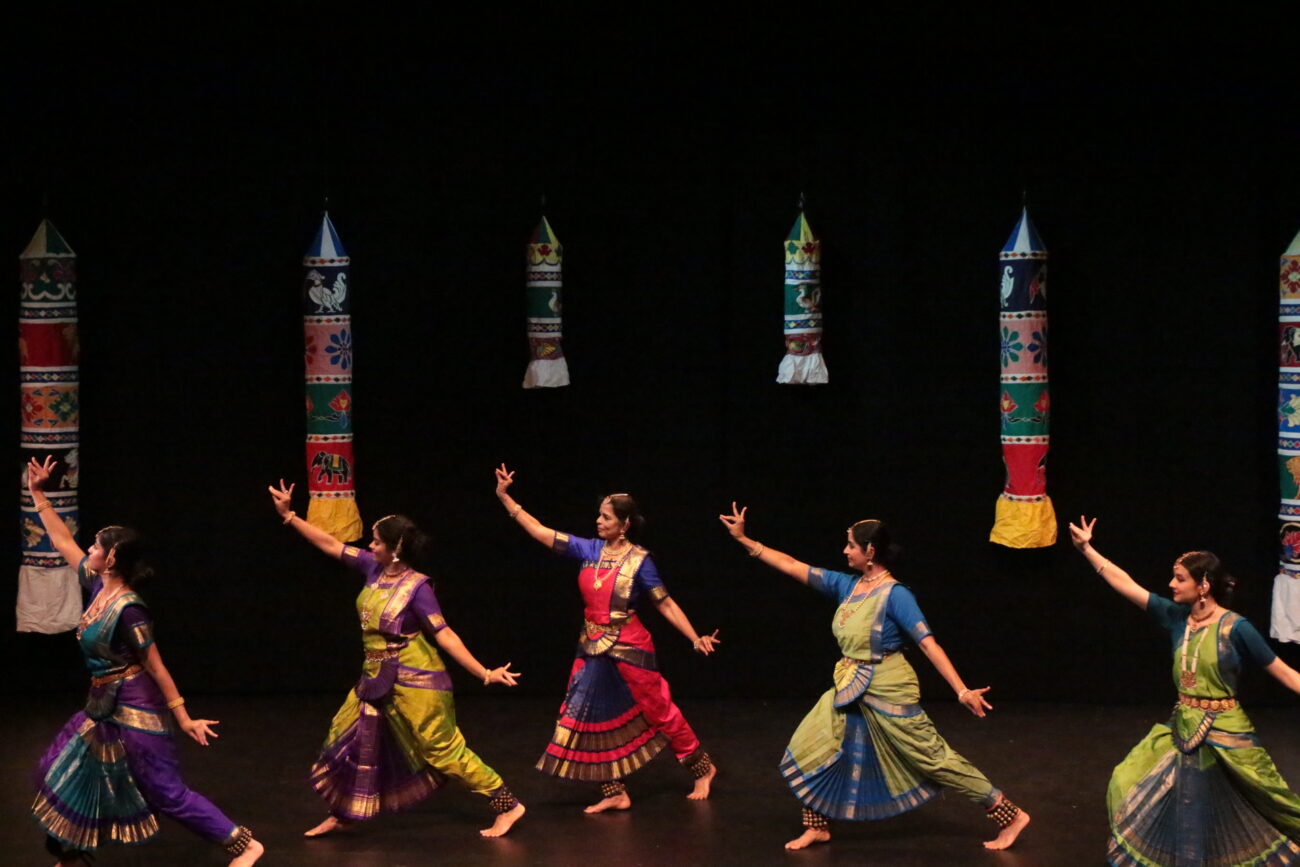
Photo: Kavi Vidya Achar / Fulcrum 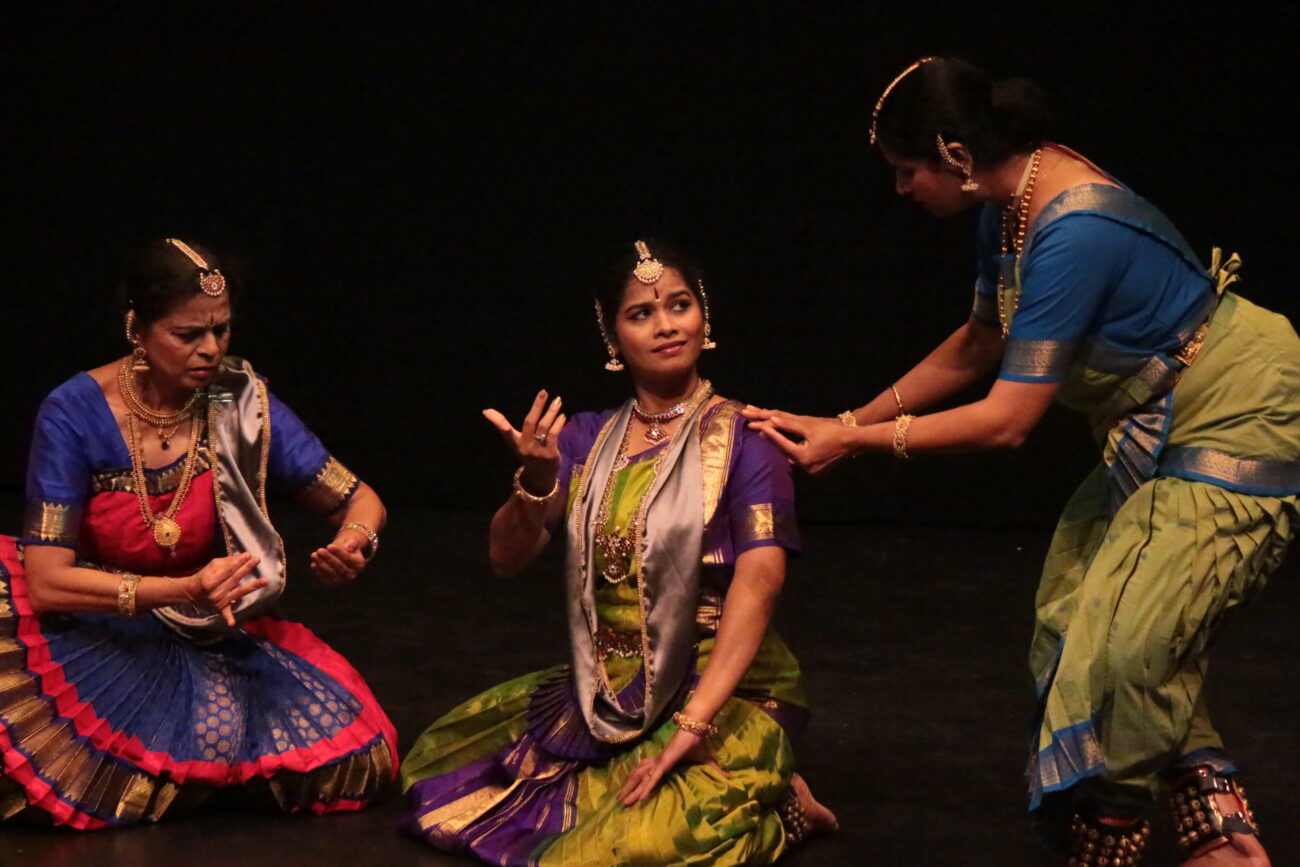
Dayalini, as Hanuman, easily offers to cross the ocean to deliver Rama’s ring to the captured Sita. Photo: Kavi Vidya Achar / Fulcrum 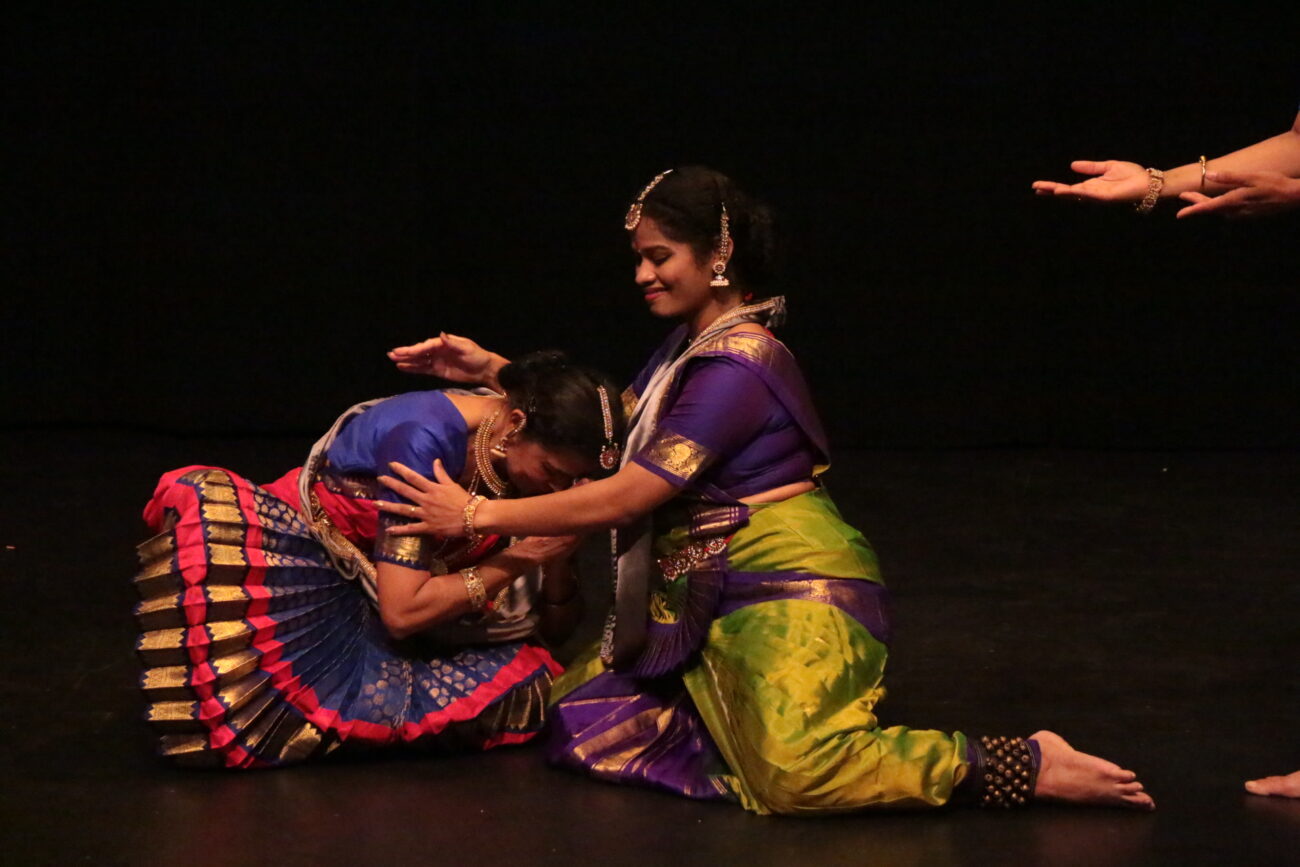
Rama thanks Hanuman. Photo: Kavi Vidya Achar / Fulcrum 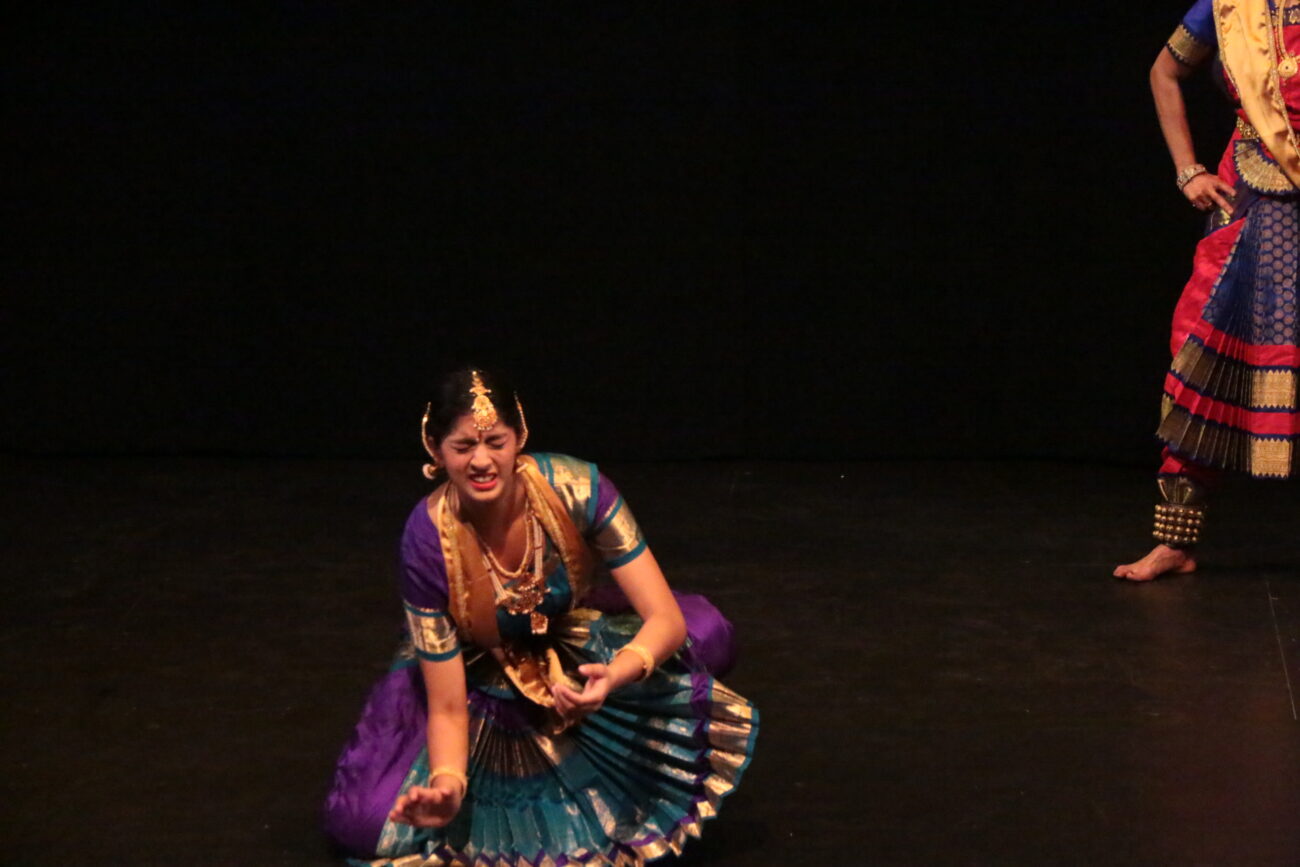
Druthi, as a king, struggles to lift the the heavy divine bow. Photo: Kavi Vidya Achar / Fulcrum 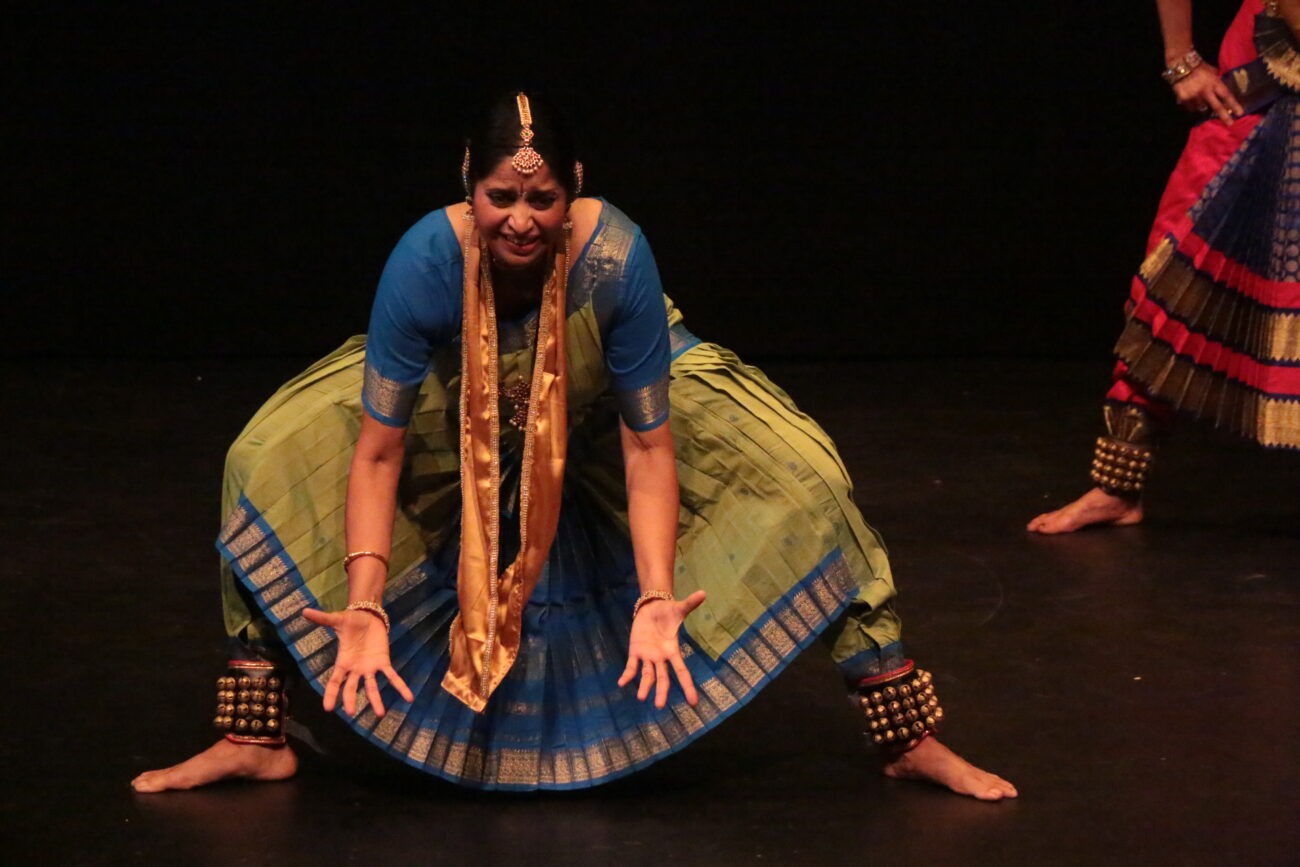
Dhanashree, too, struggles to lift this bow. Photo: Kavi Vidya Achar / Fulcrum 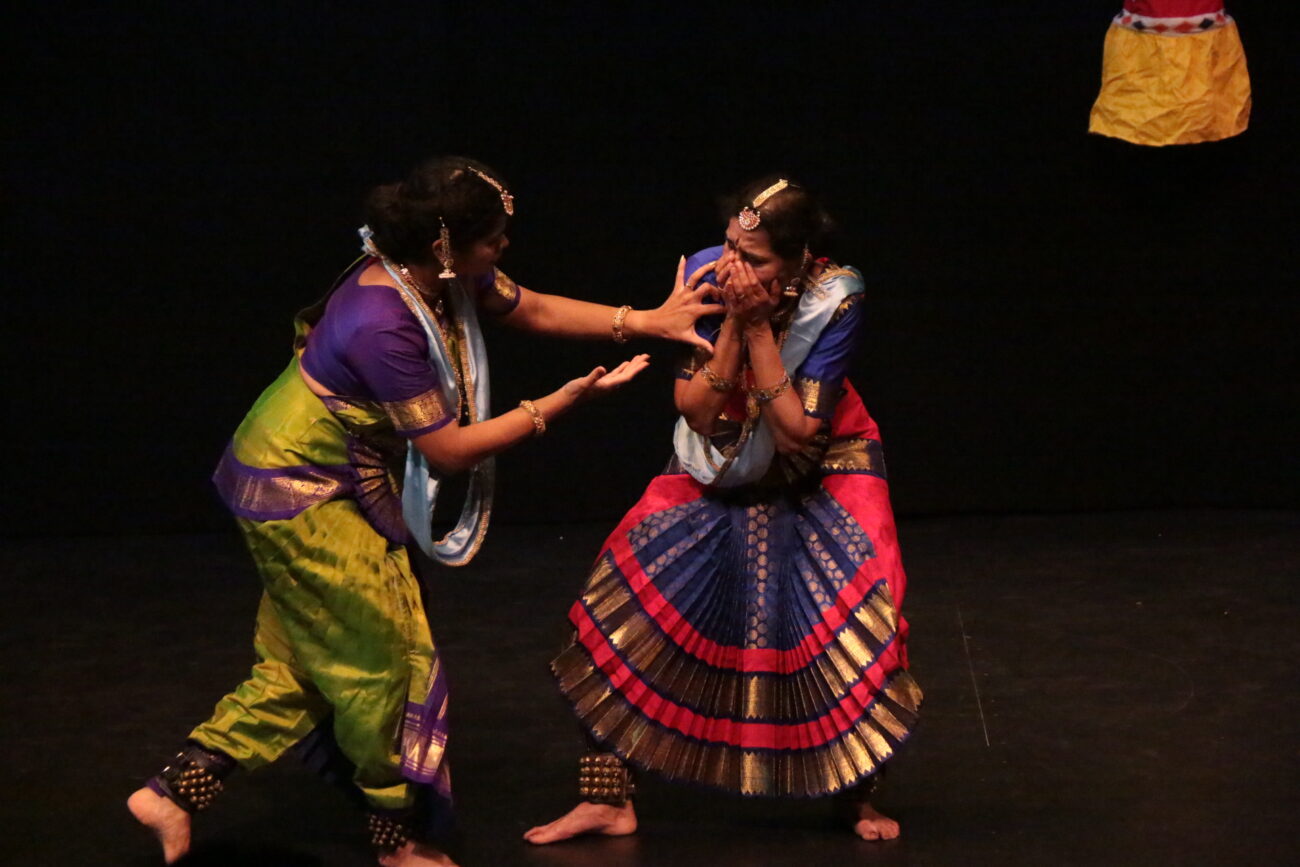
Jeyanthi, as the demoness Surpanakha, holds her face in pain after her nose was severed. Photo: Kavi Vidya Achar / Fulcrum 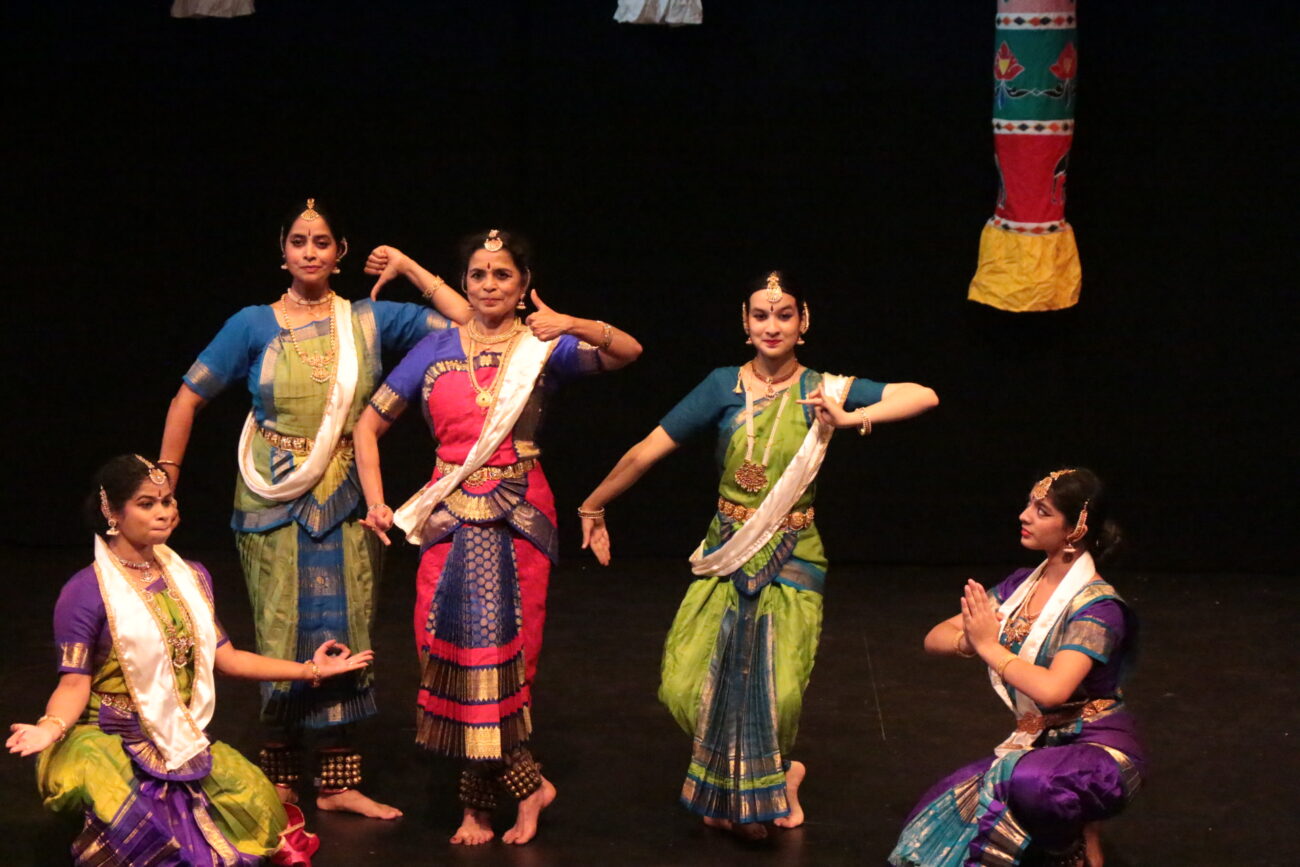
The evening closes out with a family portrait. From left to right: Dayalini (Hanuman), Dhanashree (Lakshman), Jeyanthi (Rama), Prisha (Sita), and Druthi (devotee). Photo: Kavi Vidya Achar / Fulcrum 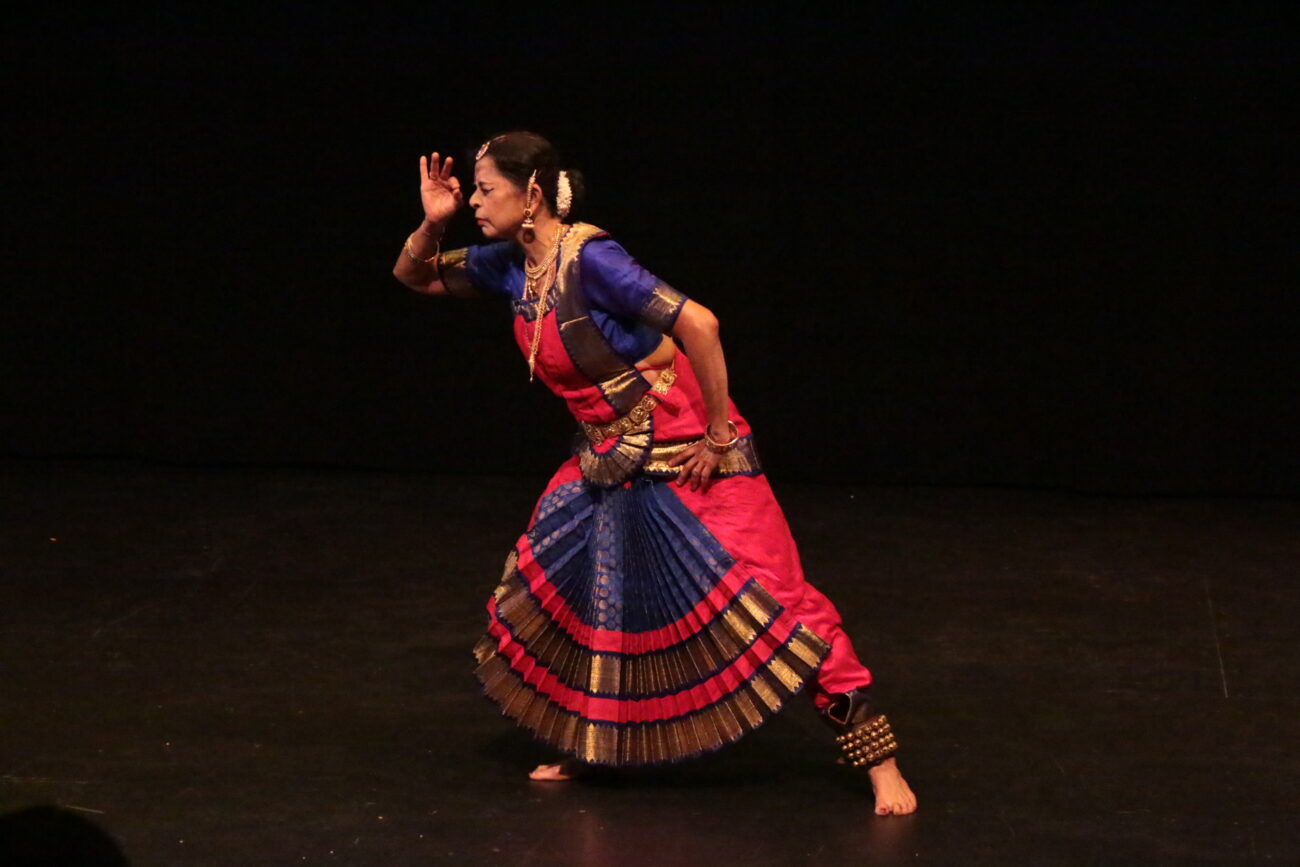
Photo: Kavi Vidya Achar / Fulcrum 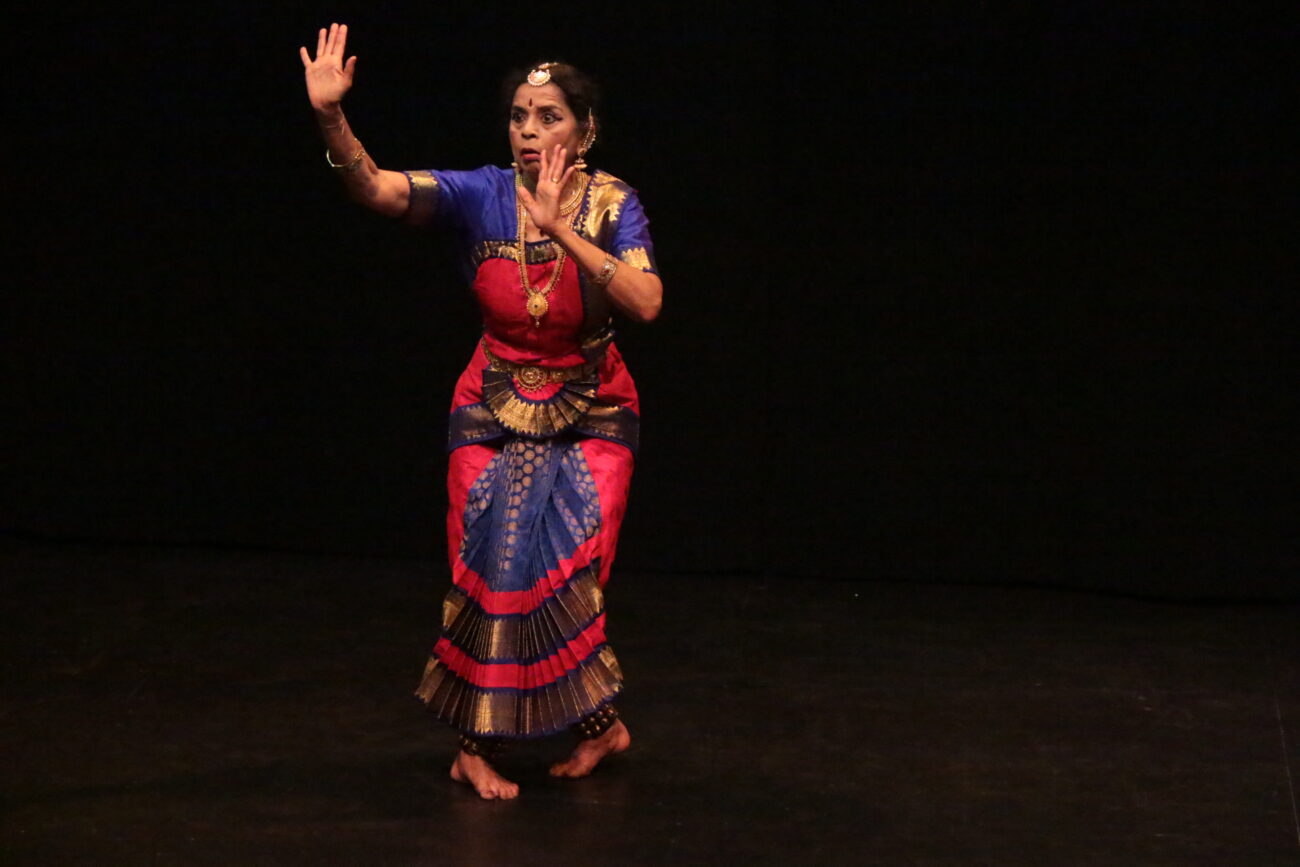
Photo: Kavi Vidya Achar / Fulcrum 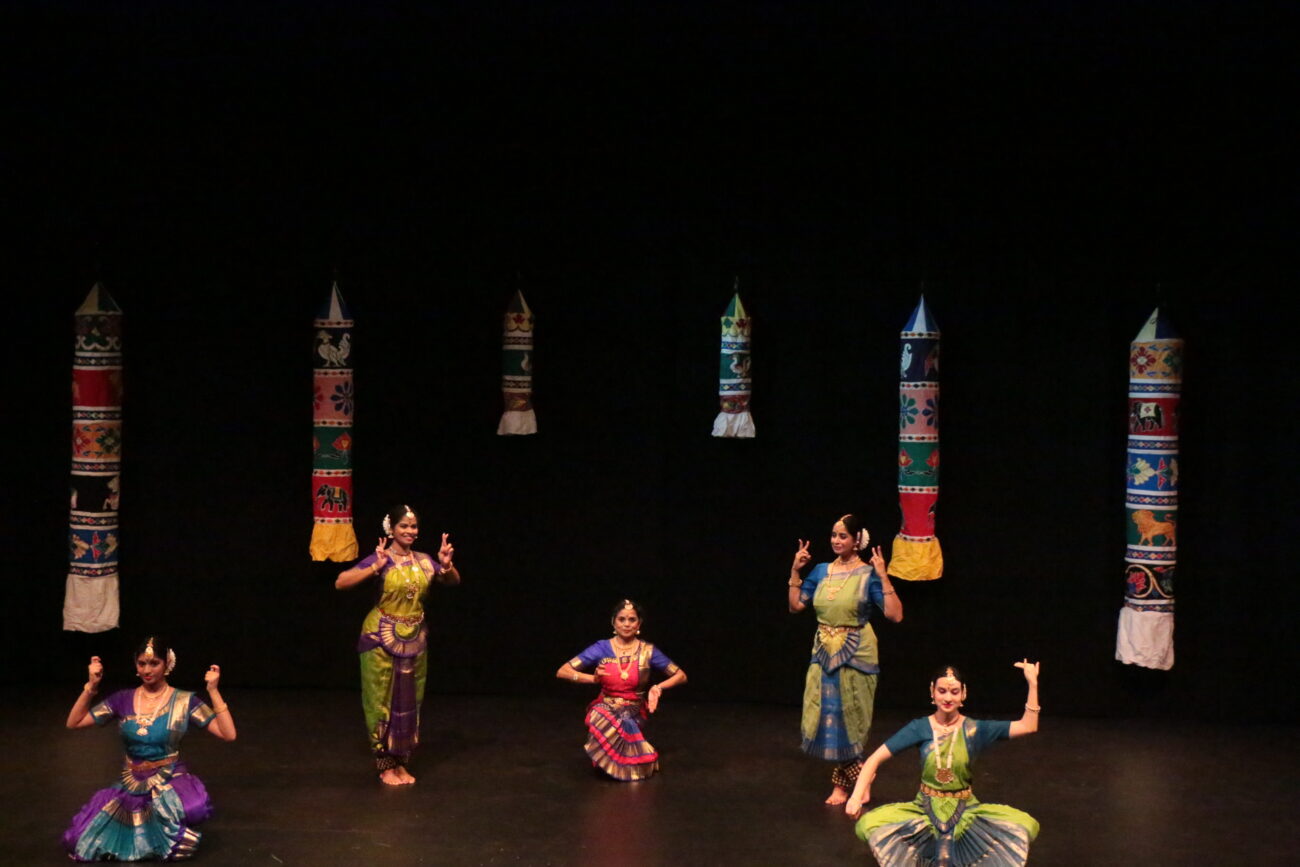
The dancers pose as goddesses. Photo: Kavi Vidya Achar / Fulcrum 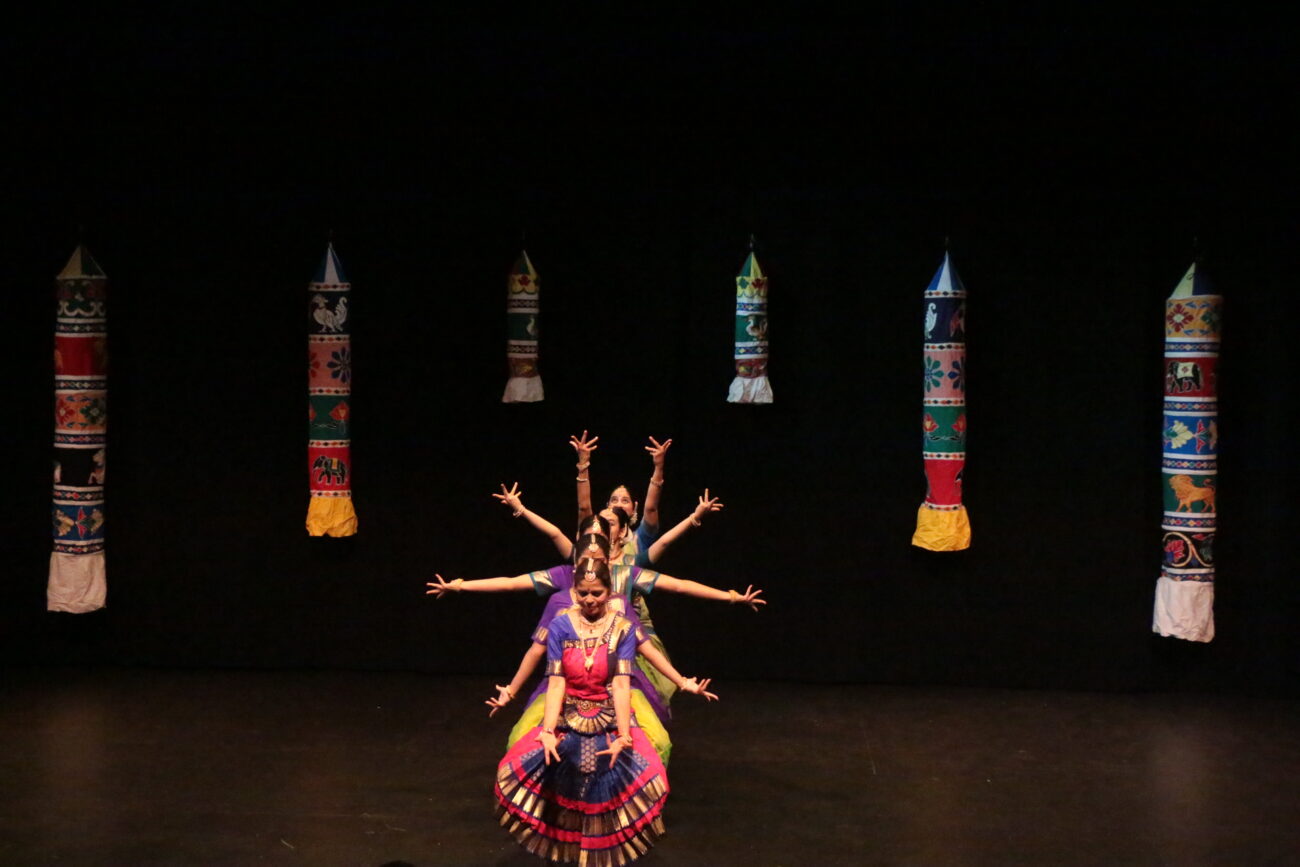
Dancers show the multiple arms of the Goddess. Photo: Kavi Vidya Achar / Fulcrum 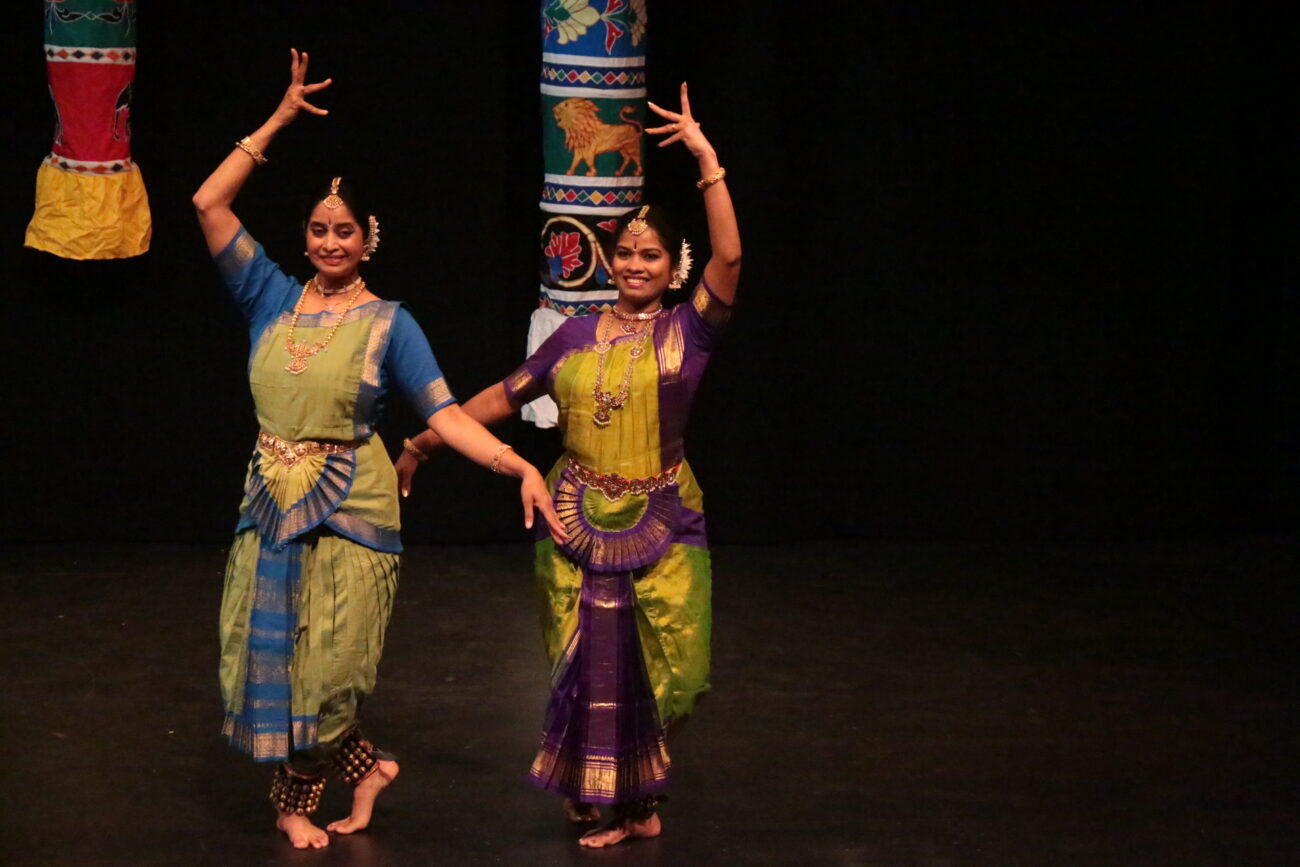
Photo: Kavi Vidya Achar / Fulcrum 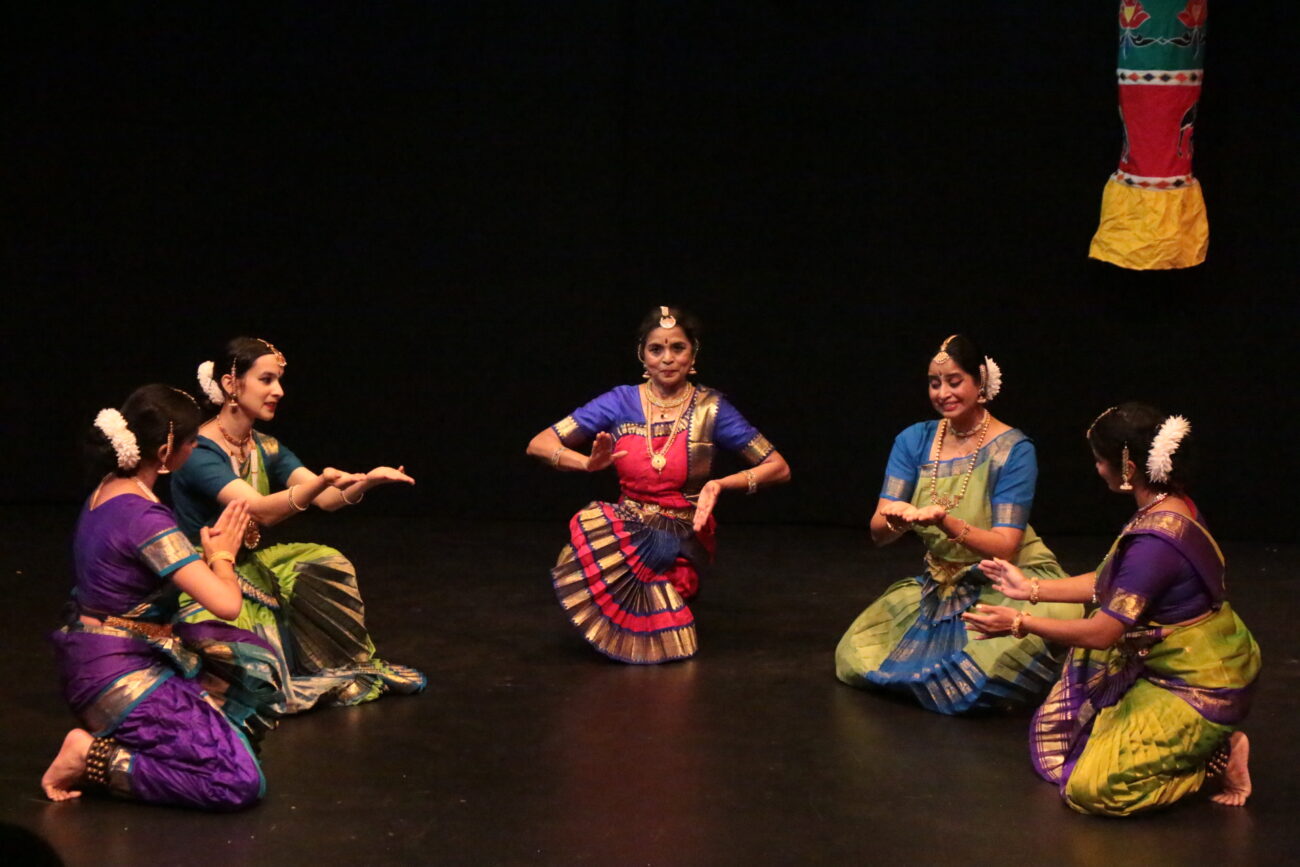
Dancers offer flowers to Jeyanthi, who plays the Goddess Parvathi. Photo: Kavi Vidya Achar / Fulcrum
Druthi and Prisha had travelled from Boston for this performance and chatting with them backstage was a reminder of what early passion actually looks like. Watching them put on their makeup and wrestle with their buns was the best kind of backstage chaos. They already carry themselves with confidence on stage, and it’s easy to see how much they’re going to grow in the years ahead.
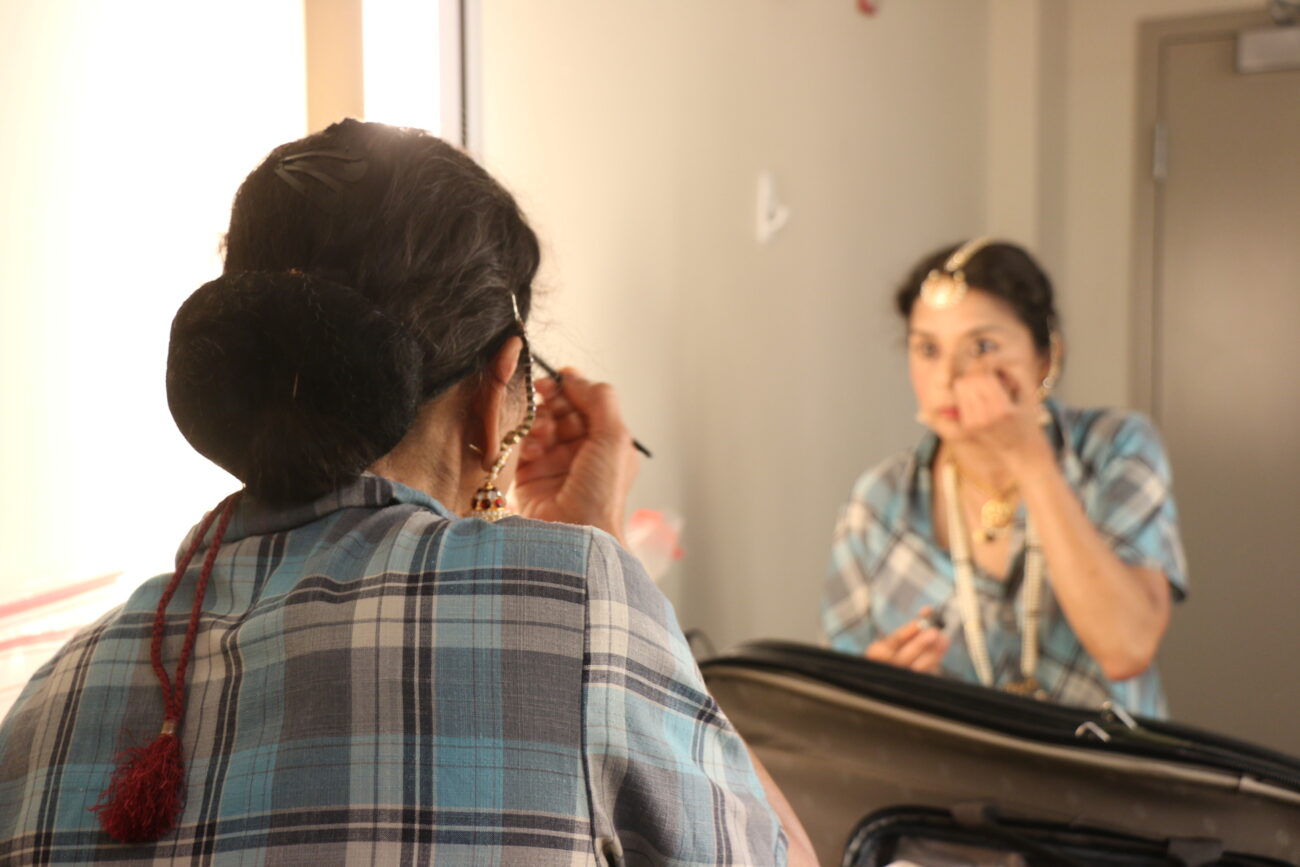
Jeyanthi does her makeup in the mirror. Photo: Kavi Vidya Achar / Fulcrum 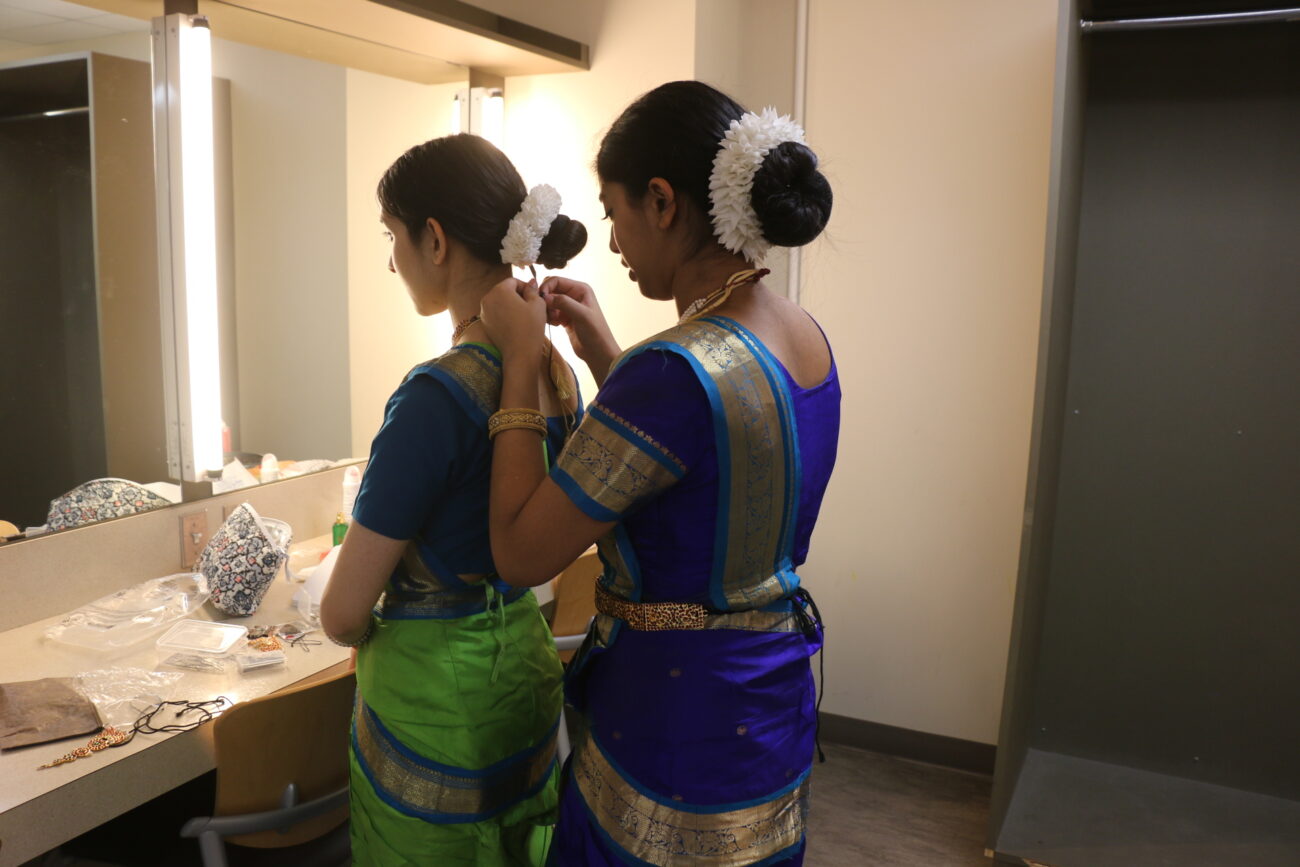
Druthi helps Prisha with her bun. Photo: Kavi Vidya Achar / Fulcrum 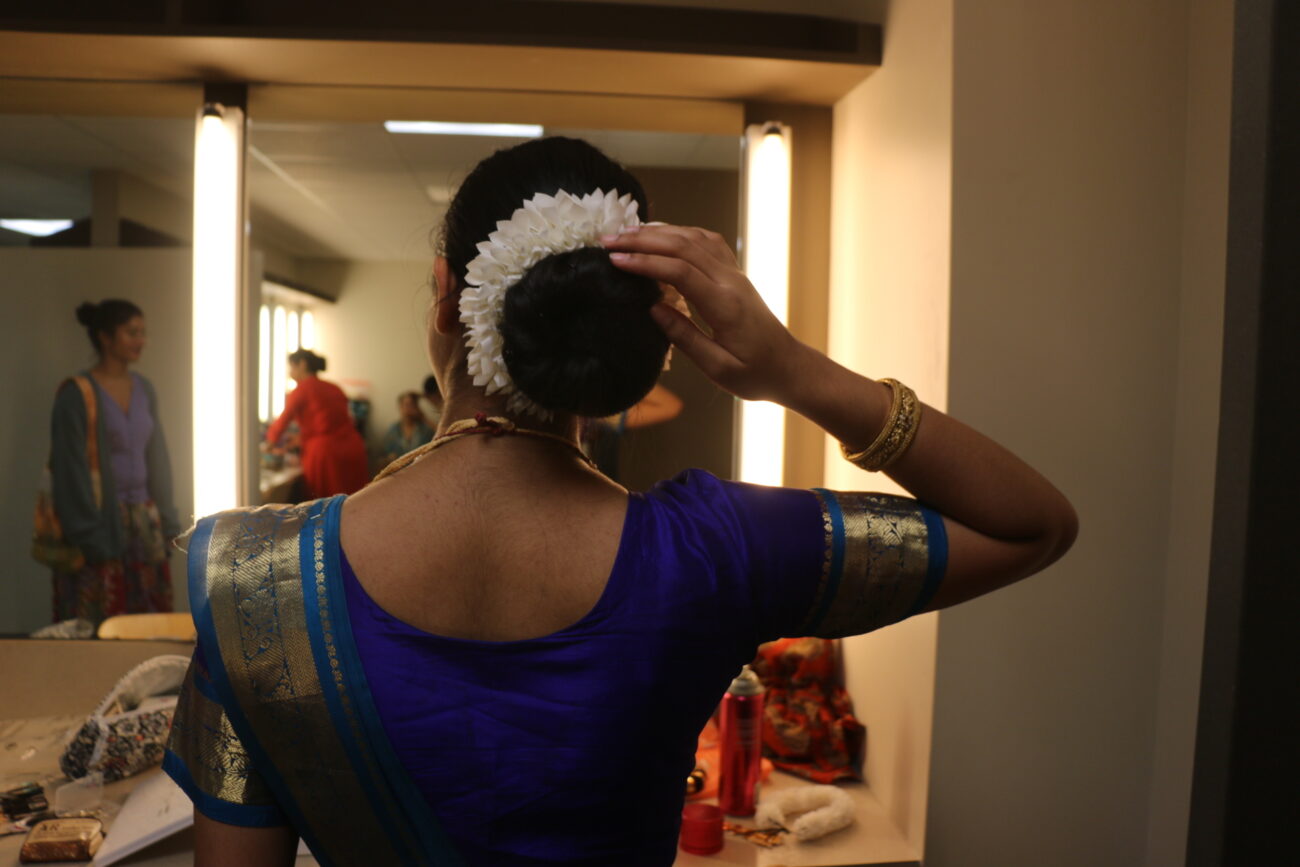
Druthi adjusts her hair in the mirror. Photo: Kavi Vidya Achar / Fulcrum 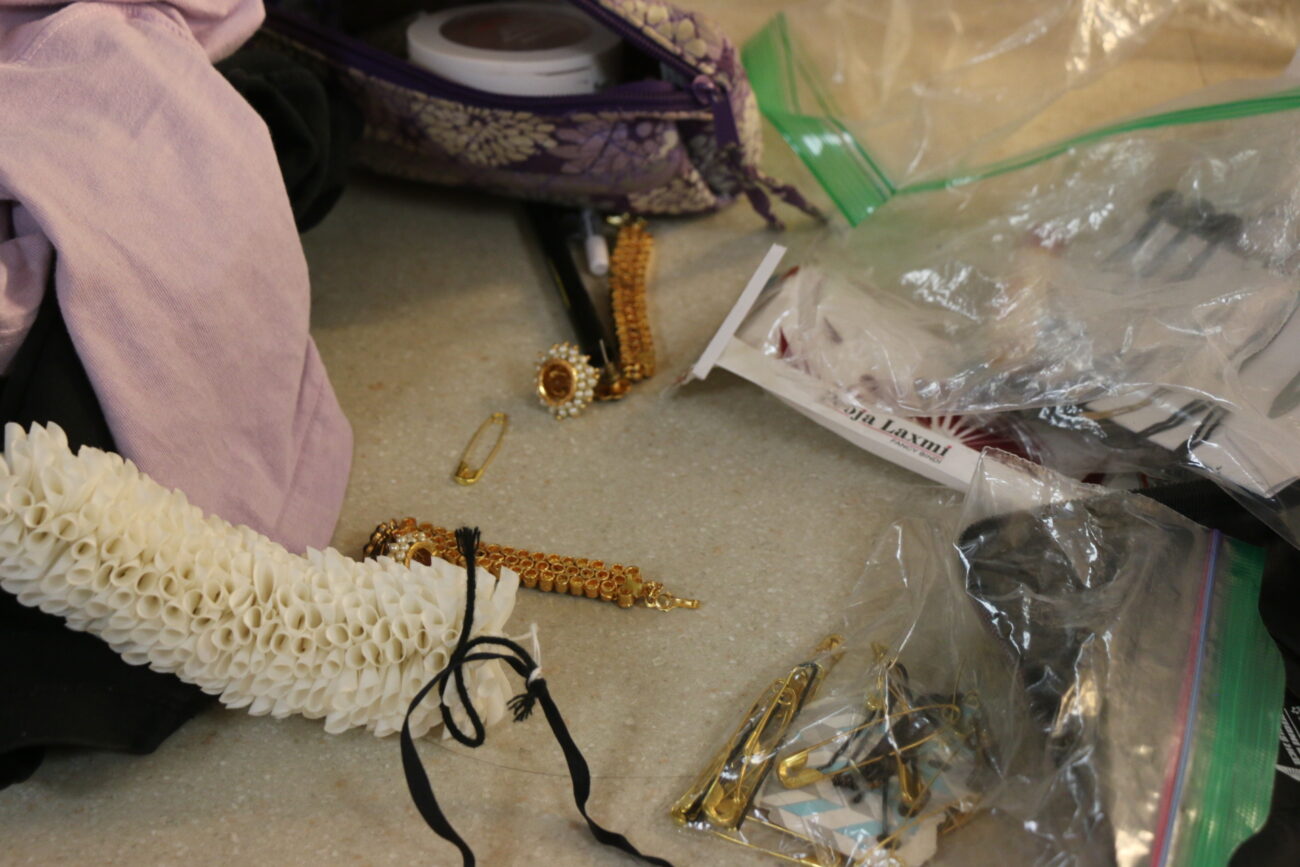
Flowers, bobby pins, earrings, and other accessories lay on the green room counter. Photo: Kavi Vidya Achar / Fulcrum 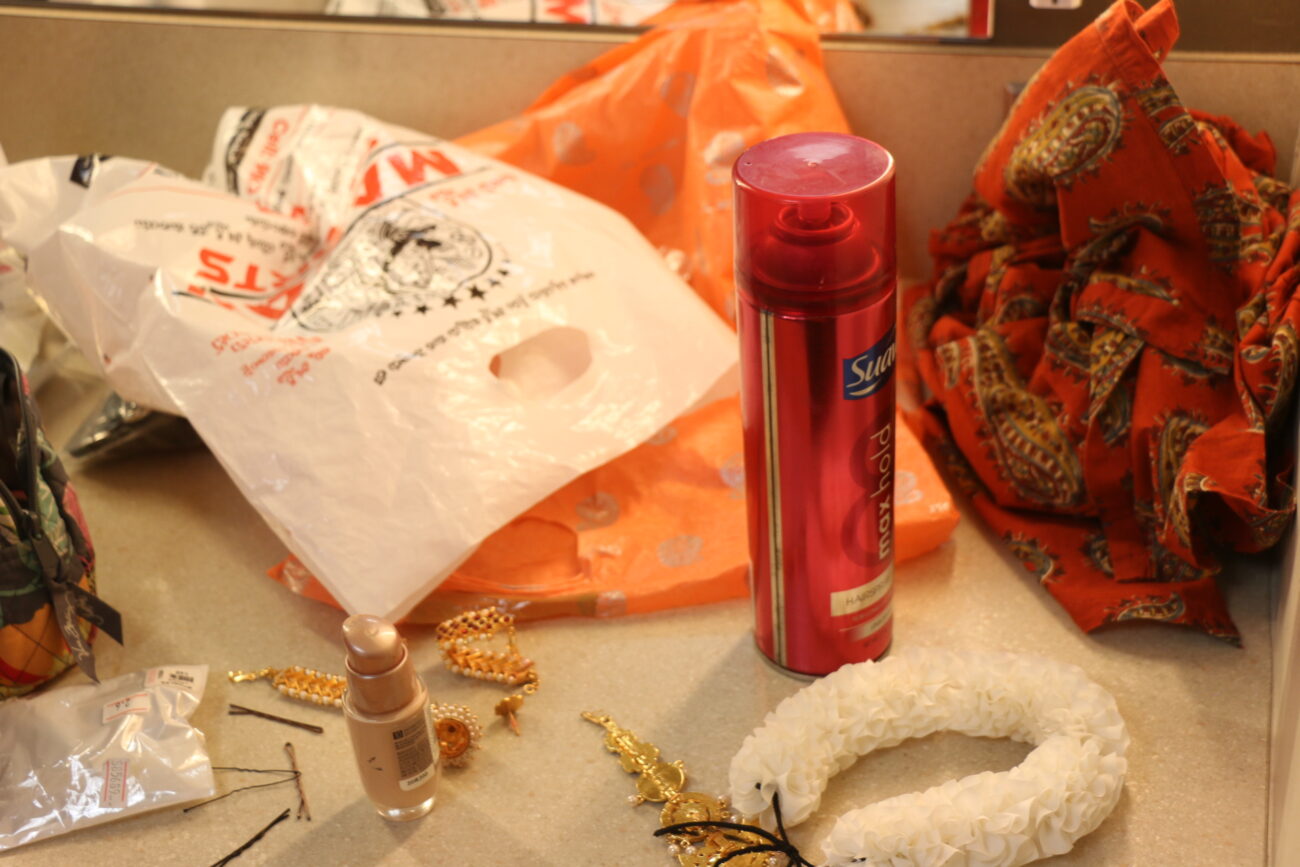
Druthi lays out her hair accessories. Photo: Kavi Vidya Achar / Fulcrum 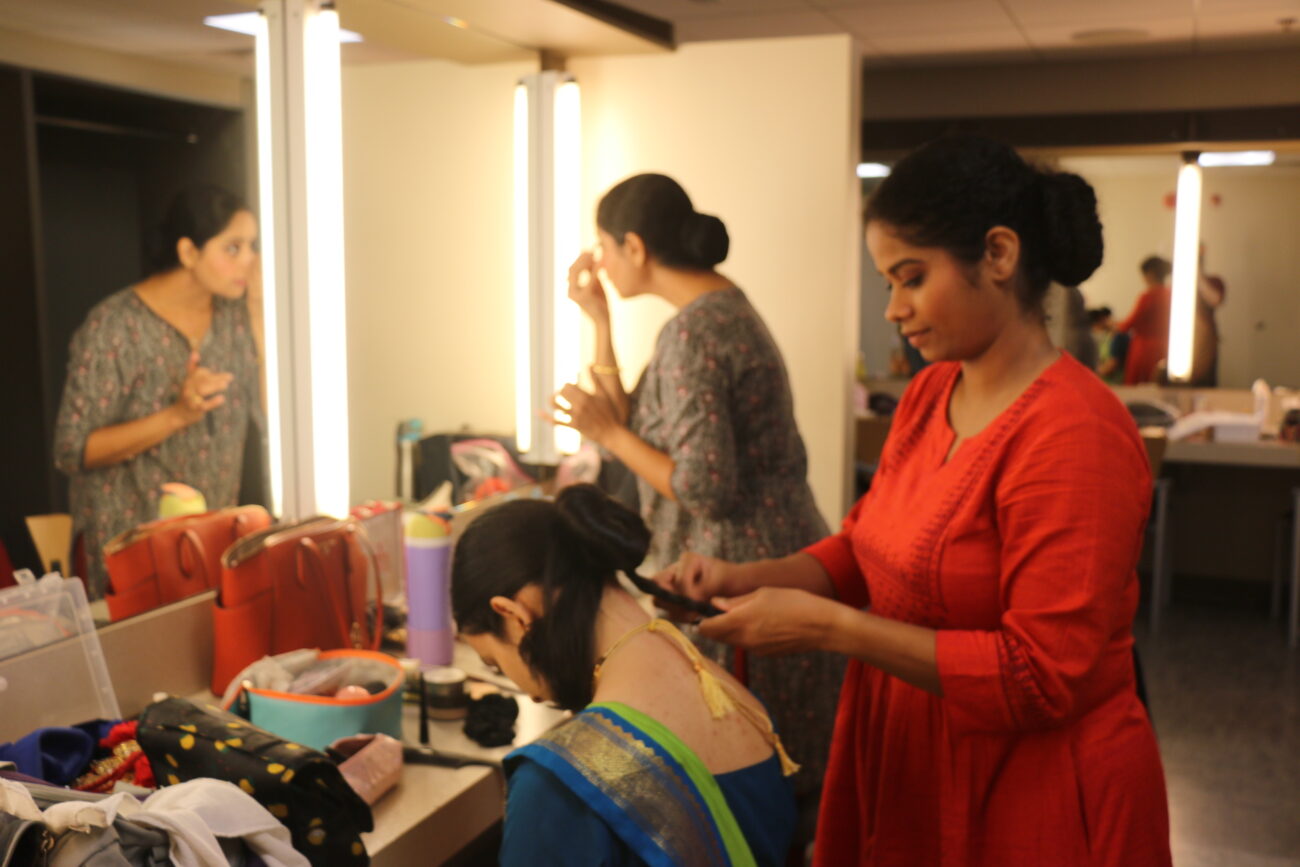
Dayalini helps Prisha with her hair. Photo: Kavi Vidya Achar / Fulcrum 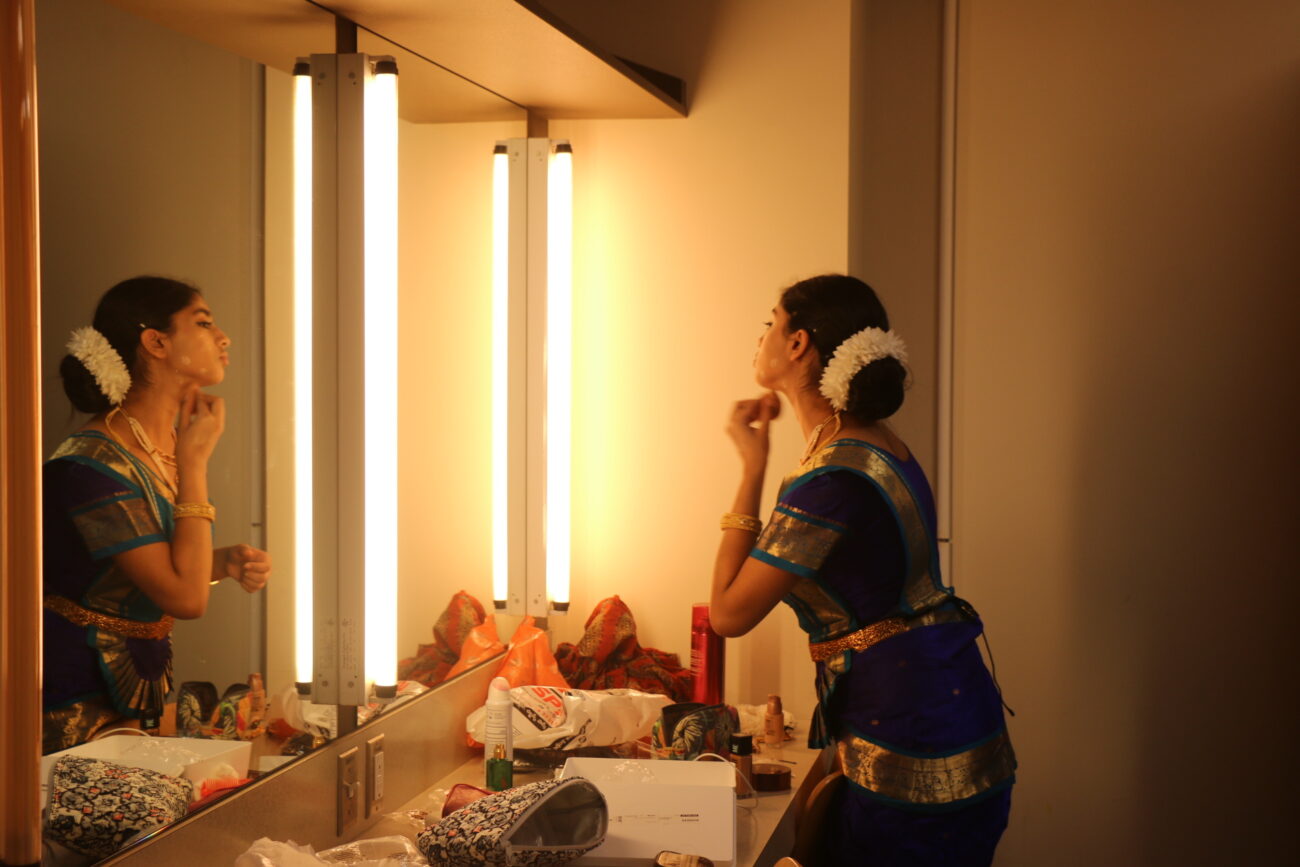
Druthi does her base makeup before the show. Photo: Kavi Vidya Achar / Fulcrum 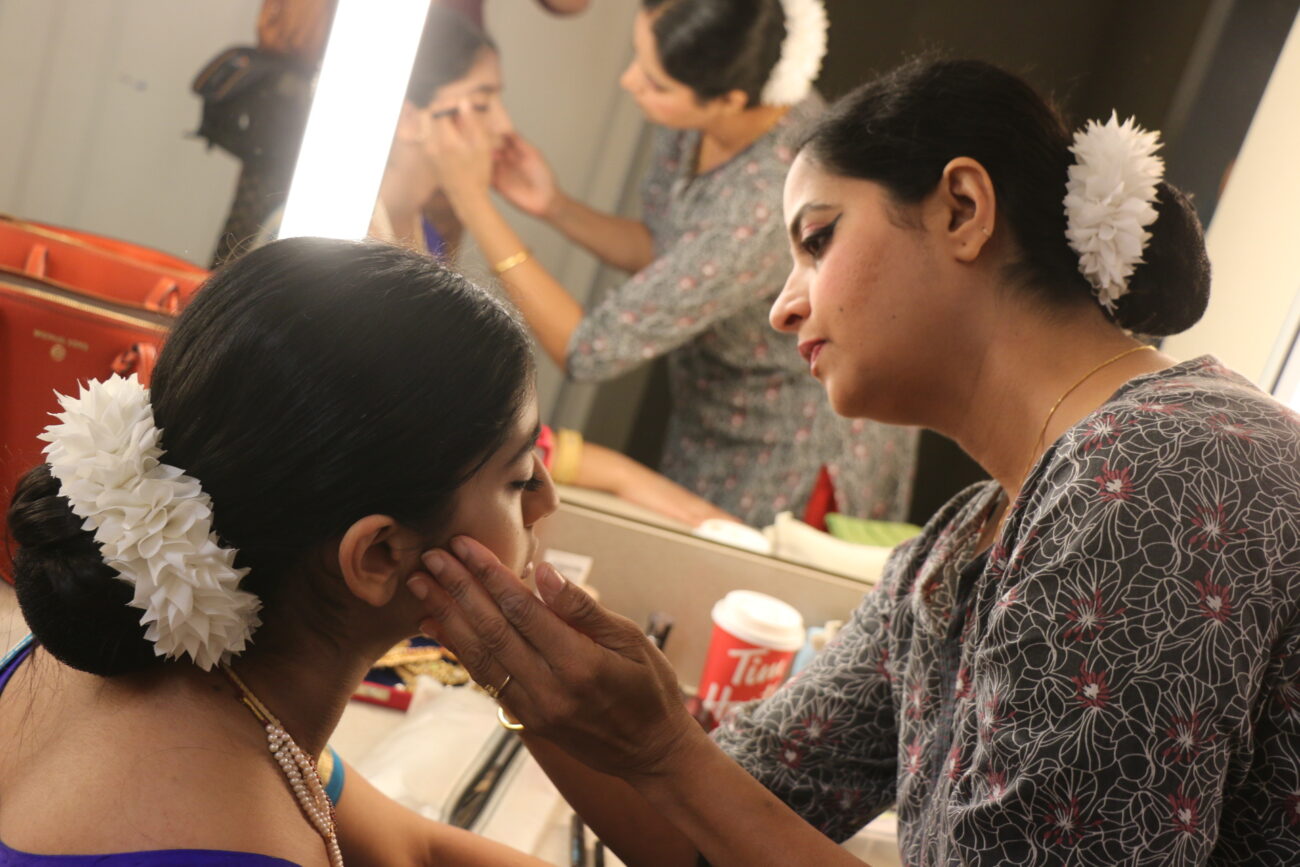
Dhanashree helps Druthi apply her makeup. Photo: Kavi Vidya Achar / Fulcrum 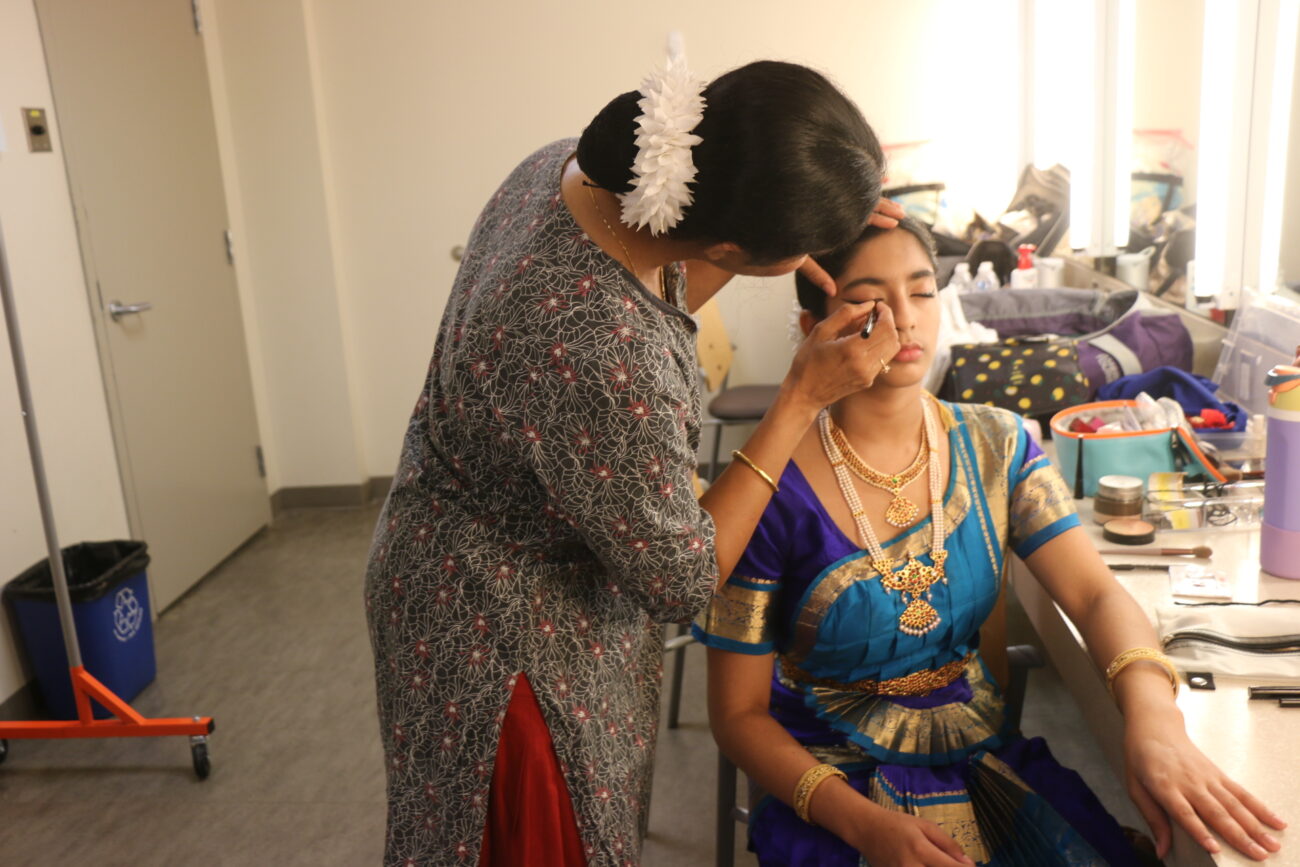
Dhanashree helps Druthi apply her makeup. Photo: Kavi Vidya Achar / Fulcrum 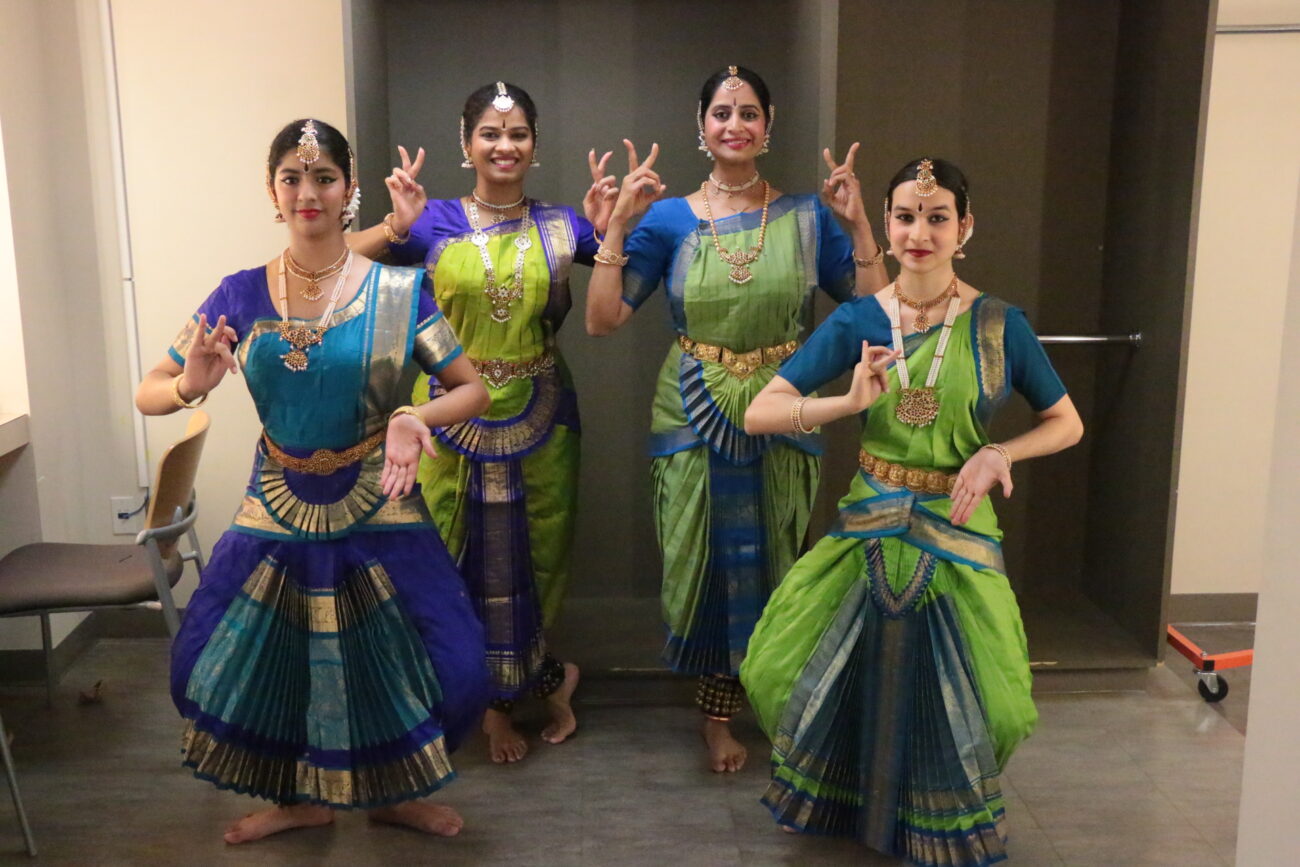
Dancers pose together backstage. Photo: Kavi Vidya Achar / Fulcrum 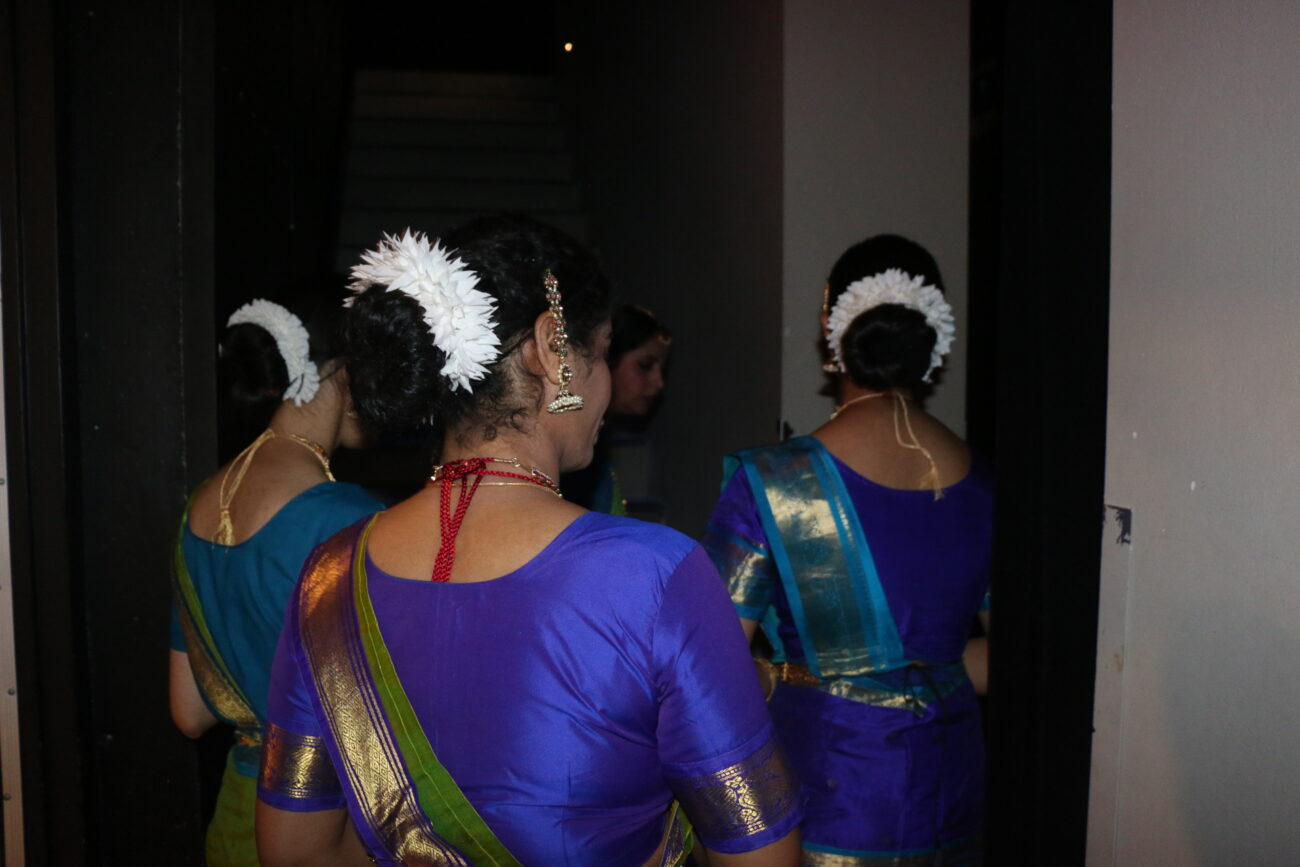
The dancers make their way into the wings, ready to go on stage. Photo: Kavi Vidya Achar / Fulcrum 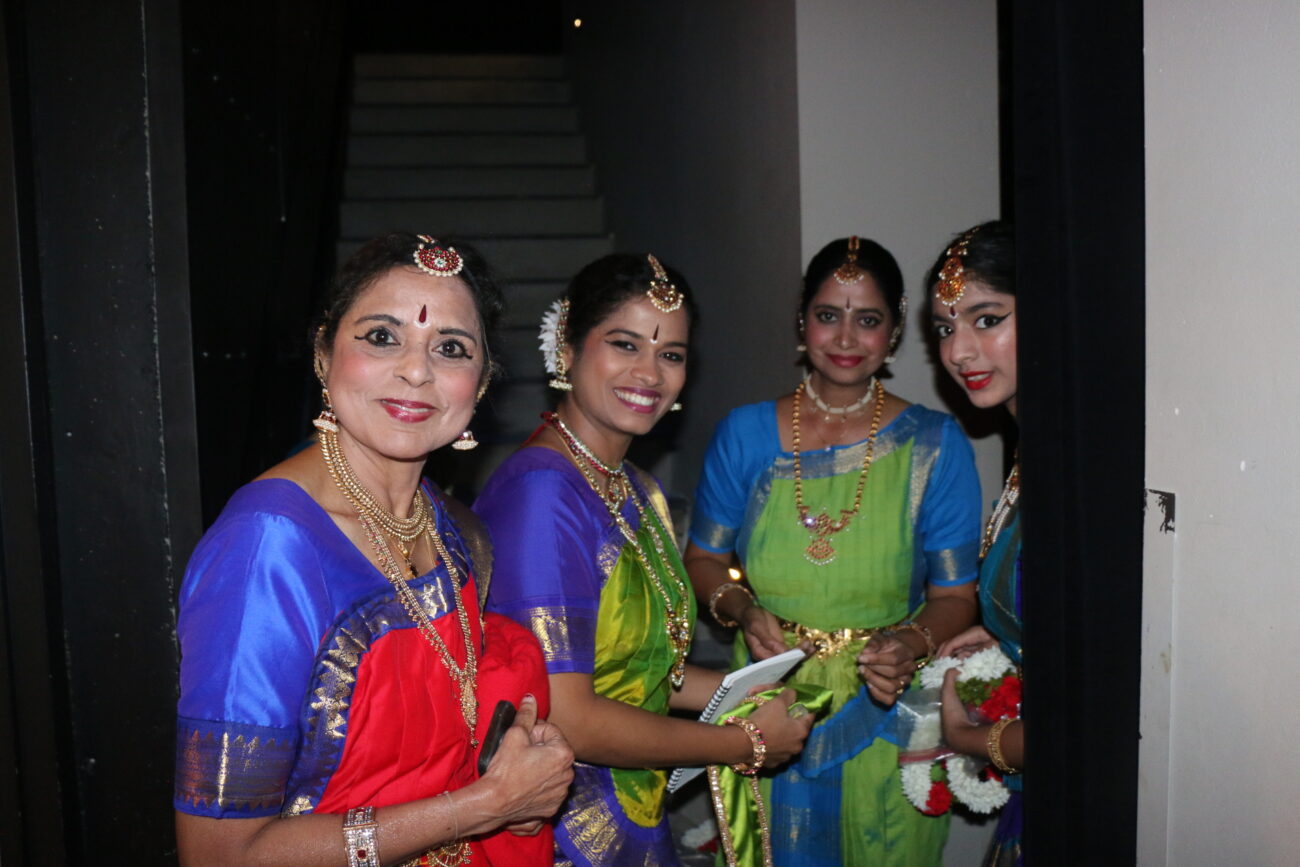
The dancers collect their props, and smile excitedly moments before taking the stage. Photo: Kavi Vidya Achar / Fulcrum
And of course, none of this would’ve happened without SICA. They’ve built a really special space here to connect with the South Asian classical arts, whether you’ve been learning for a long time, or are simply curious. SICA hosts performances, classes, workshops, and events (like Yuva Swaranjali and Nrtyanjali) that are open to the community. If you want to get involved, check out their website!