How should Ottawa manage the consequences of growth, and how quickly?
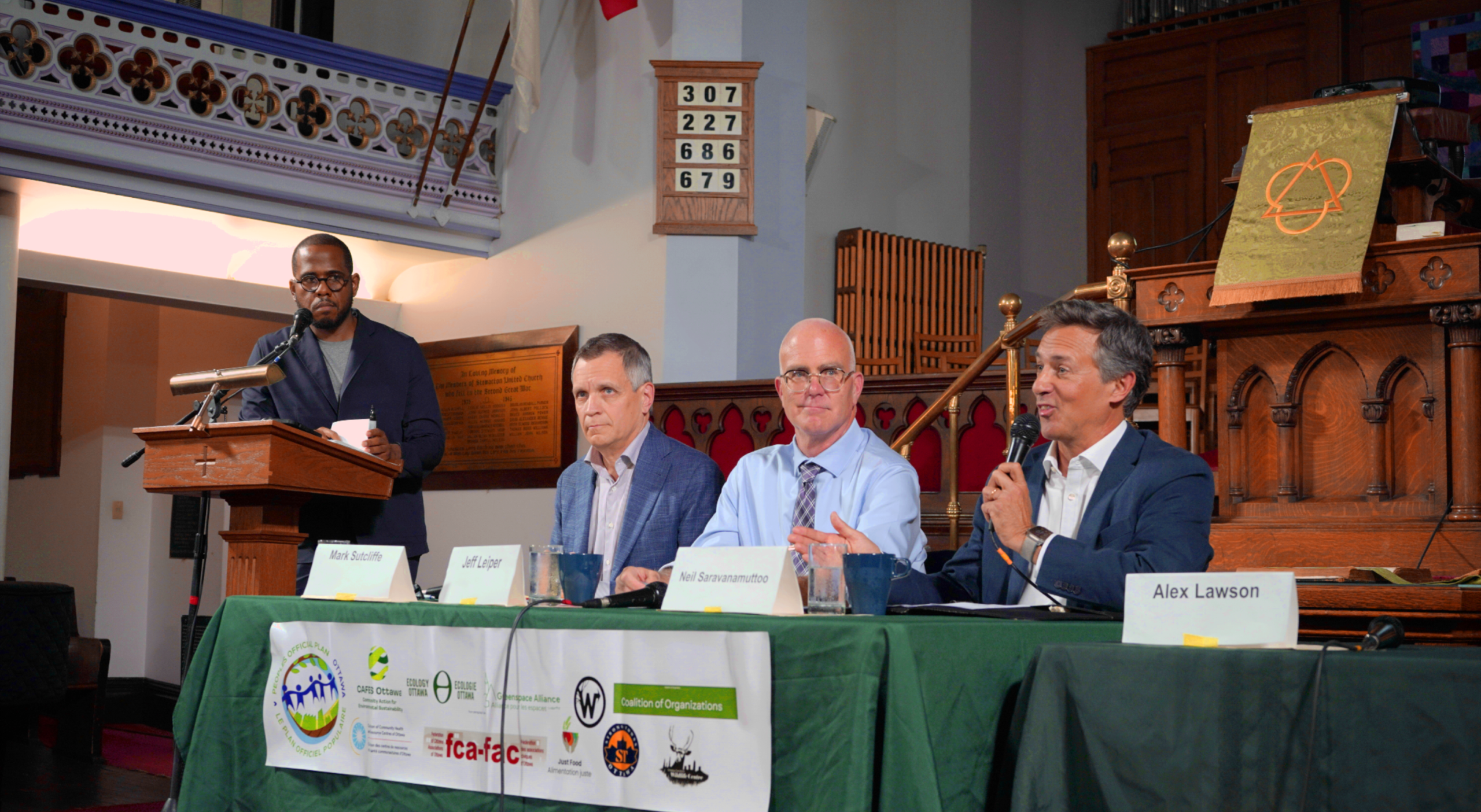
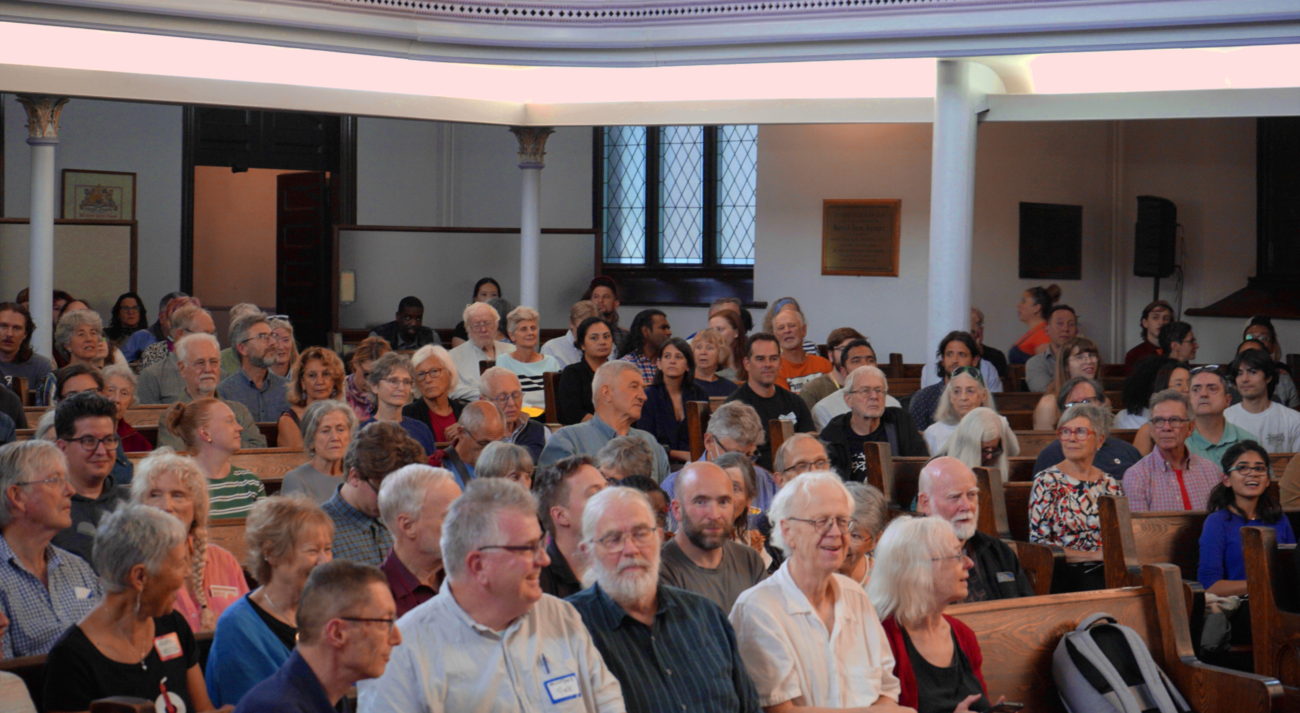
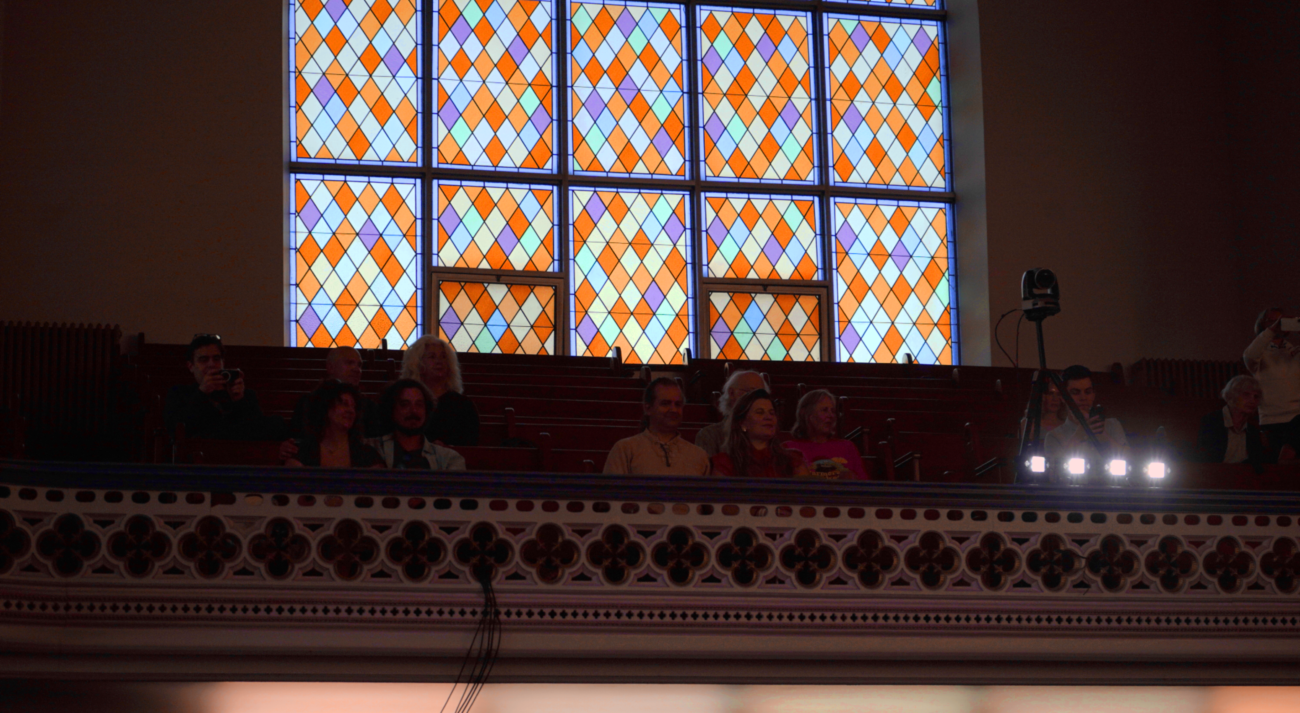
The debate was hosted by the Community Associations for Environmental Sustainability (CAFES) at Centretown United Church and was the second environment-focused mayoral debate. Private constructor and lobbyist candidate Alex Lawson was invited but did not attend.
A little after 6 p.m., incumbent Mayor Mark Sutcliffe, Kitchissippi Councillor Jeff Leiper, and economist Neil Saravanamutto dove into the debate around Ottawa’s ecological future.
The discussion grew heated when candidates were asked about the ongoing expansion of artificial intelligence and the data centres needed to support it.
Leiper called for a moratorium on new data centres, citing concerns over their demands for electricity, water, and other infrastructure.
Concerned about “the share of [Ottawa’s] power that it’s going to take,” Leiper questioned whether Ottawa has the necessary infrastructure to support the industry.
Sutcliffe took a more cautious position. Stating he is “not opposed” to a moratorium, but “there’s no current application to build a data center in Ottawa.” He said he was waiting for a staff report before determining what action the city should take, adding the city could “come up with a plan” that involves a moratorium.
Saravanamuttoo pushed back on that claim, saying Hydro Ottawa had submitted an application and citing a figure that represented data center demand equivalent to “about 86 per cent of Ottawa’s current generating capacity.”
The conversation then shifted towards a larger question facing the next mayor: how should Ottawa manage the environmental costs of new economic development before projects arrive at the municipal planning stage?
The same tensions ran through the debate over urban growth.
Sutcliffe argued that Ottawa could accommodate growth without continuing to expand its urban boundary. He said that his council had not expanded the boundary during its term and that applications to do so had been rejected. However, during his term, council did vote down a motion to reverse the approval of Tewin, an urban expansion project.
“We needed to continue to build in areas where there is already development. We need to intensify,” Sutcliffe said.
For Leiper, the issue is not simply where housing gets built. He argued that intensification can help the city address climate change by limiting urban sprawl, saying, “intensification is one of the key strategies to address climate change.”
Saravanamuttoo agreed, saying “we absolutely cannot expand [the urban boundary] beyond what it is now.” He also criticized spending on projects like the proposed $420 million Lansdowne 2.0 upgrades, arguing the money could have been directed towards other city priorities.
Opposing candidates took the opportunity to criticize the incumbent’s precarious environmental record as he aims for another term.
During the debate, Sutcliffe emphasized the investments made during his first term, saying the city had “increased infrastructure funding by 40% over the past four years”, claiming the money was used to “mitigate and improve resilience in the face of climate change.”
The other candidates questioned if Ottawa could actually sustain more infrastructure spending while maintaining a low tax rate, arguing that doing so would put pressure on other areas of the budget, including transit and sidewalk maintenance.
Sutcliffe pointed to progress on many of his 2022 environmental commitments, including the city’s transition to electric buses and investments in building retrofits. “We advanced the green fleet strategy,” Sutcliffe said. “We’re purchasing state of the art zero emission buses.” He also said the city has invested more than $100 million in building retrofits and renewals.
Sutcliffe acknowledged during the debate that some of his original environmental targets had been too ambitious, including his 2022 pledge to plant one million trees by the end of his first term. A non-partisan accountability tracker, Ottawa Accountability, currently lists the fleet electrification and building retrofit promises as “in progress” and the one million tree commitment as “stalled.” The tracker reports that roughly 104,000 trees had been planted towards the one million target, much lower than the figure Sutcliffe cited during the debate.
“It was an ambitious promise. Forgive me for aiming high,” Sutcliffe said.
The tree target became a point of attack during the debate. Leiper said he would “seek to plant the trees that Mark Sutcliffe didn’t,” while also calling for more green space and tree canopy within Ottawa’s urban core. Saravanamuttoo also called for more shade to reduce extreme heat and proposed making it easier for residents to plant trees on their properties, as well as creating community tree councils.
Trees and shade can help reduce the effects of extreme heat, but the focus on planting limits much of the climate conversation to the level of individual properties and adaptation. The debate glossed over the bigger structural questions, including emissions, transportation, and energy demand, that will truly determine the city’s long-term response to climate change.
The debate therefore became less about whether environmental concerns should shape Ottawa’s growth and more about how the city should balance them with other pressures facing council.
While Sutcliffe attended this event, unlike the student mayoral debate days prior, his interactions with the press after the debate remained brief, and the table set up for residents to ask him questions laid empty.
The Fulcrum approached Sutcliffe after the debate with several questions, alongside other reporters. Sutcliffe was quickly removed from the scrum by his campaign team, rendering us unable to question him.
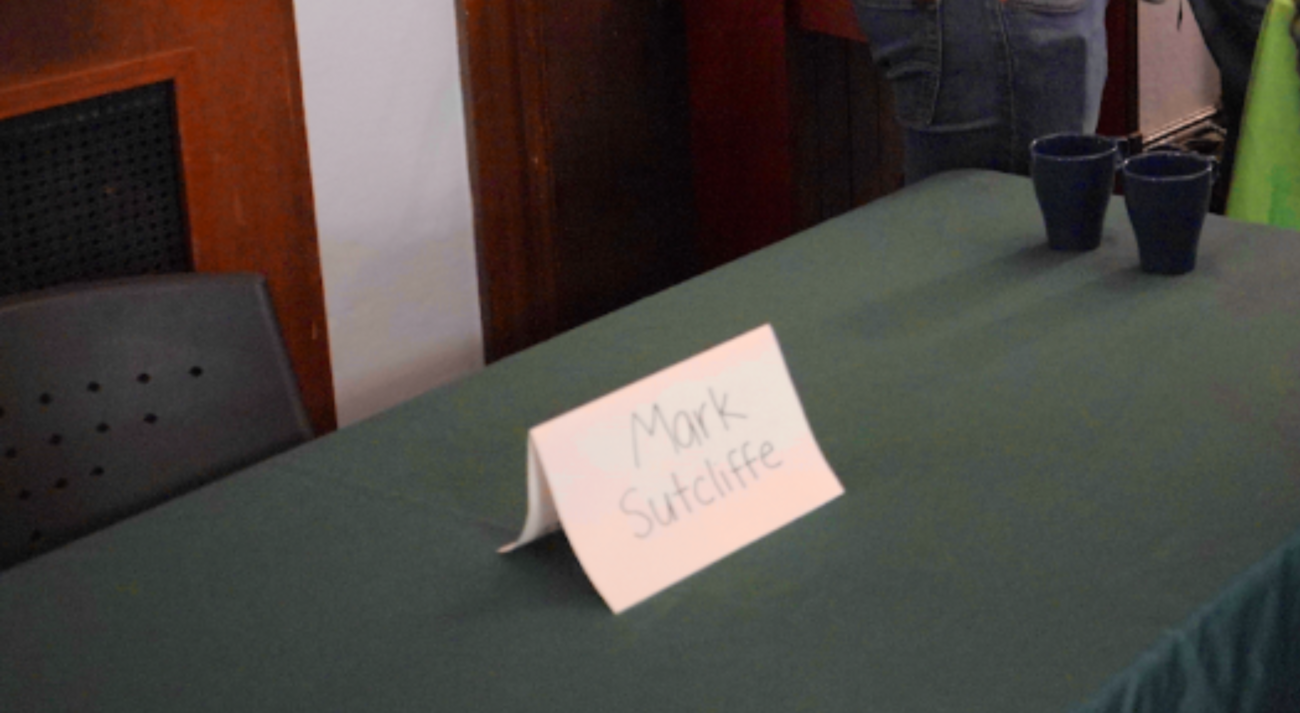
With Sutcliffe’s campaign for re-election centred on the future of the city’s growth, environment, and infrastructure, his quick departure was noticeable.
The debate showed that environmental policy is tied to decisions about where the city grows, what infrastructure it builds, and how it can adapt to climate change. As Ottawa grows and new industries such as AI demand more from the city’s electricity, water, and infrastructure, will economic growth trump sustainability at the local level?
The candidates’ answers remain unclear.
Author

- Ottawa mayoral candidates clash over the environmental costs of growth
- Student concerns take the spotlight at Carleton debate
- City of Ottawa makes it easier for eligible students to vote in the upcoming elections