
INCUMBENT MARK SUTCLIFFE NO SHOW AT STUDENT DEBATE
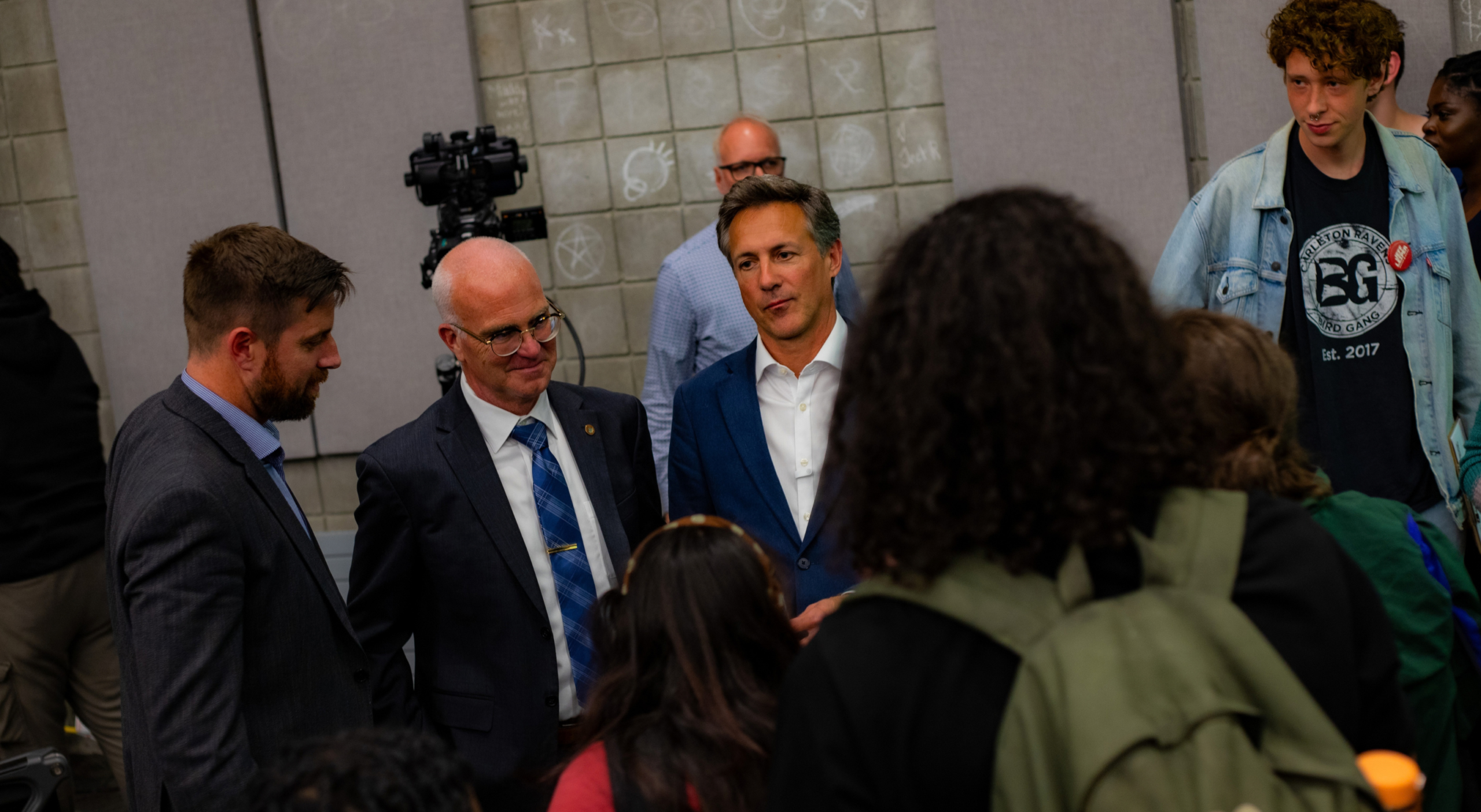
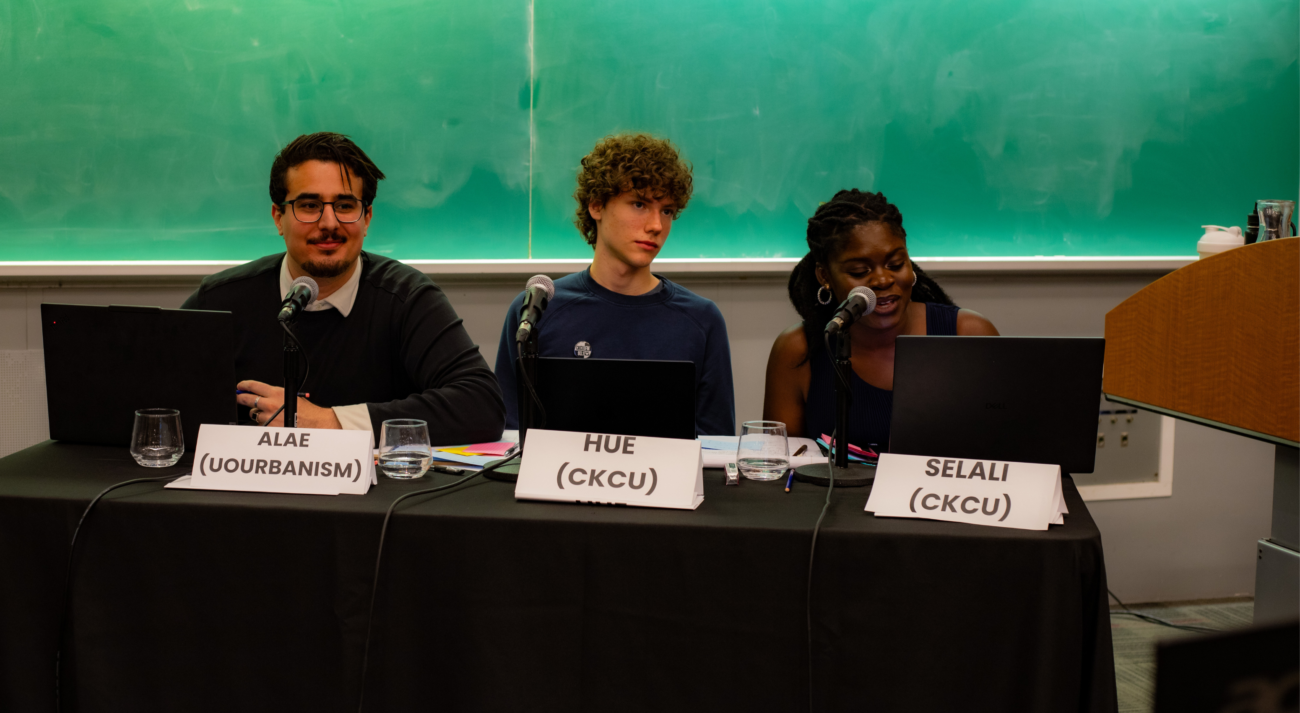
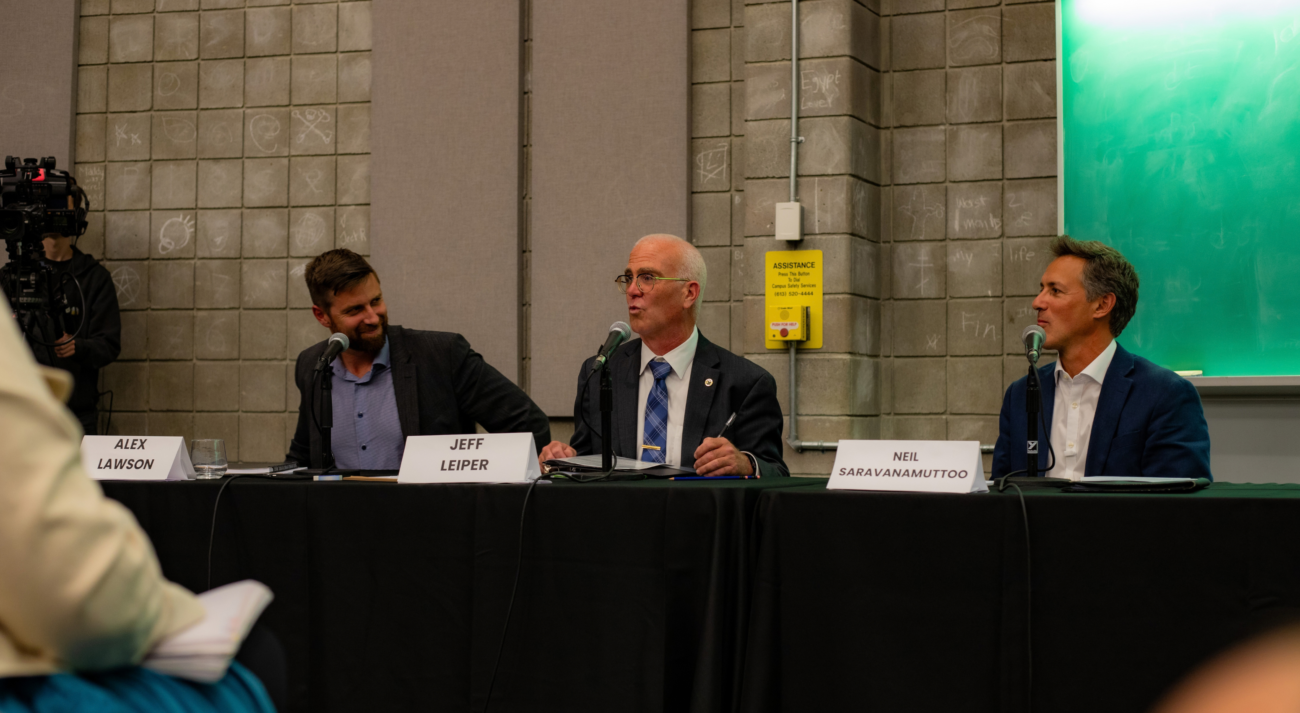
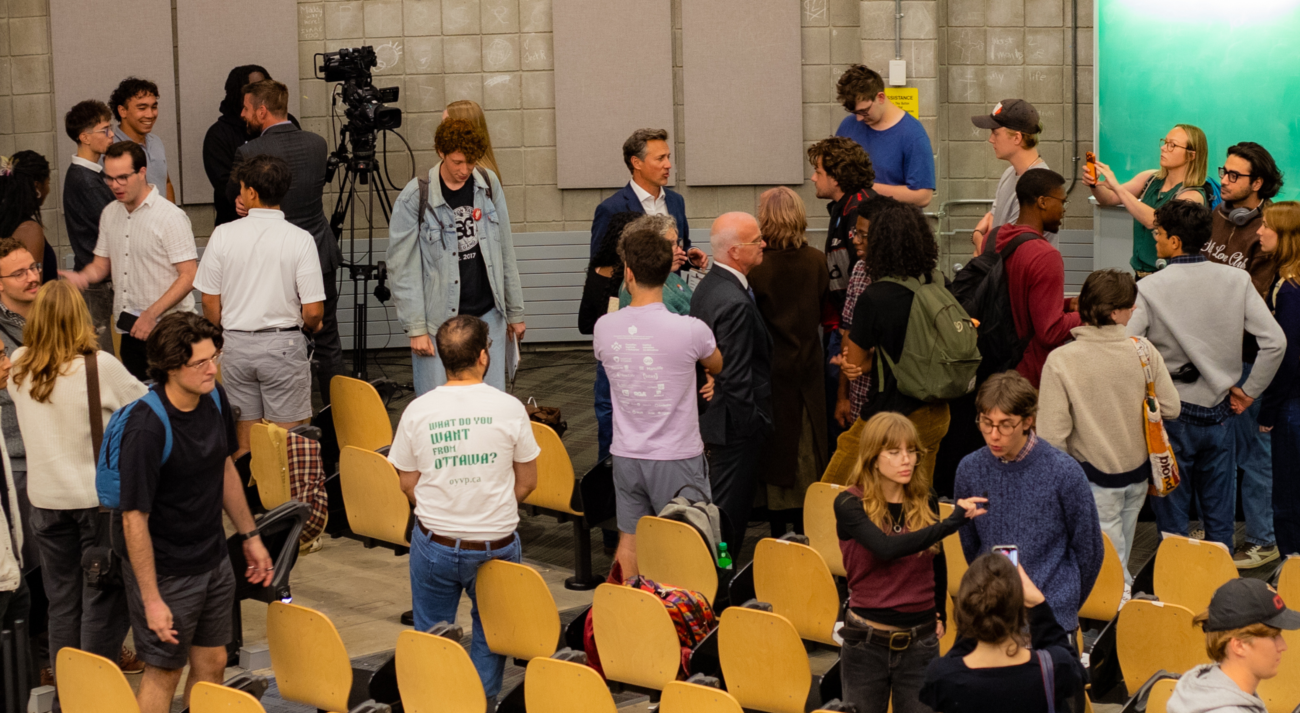
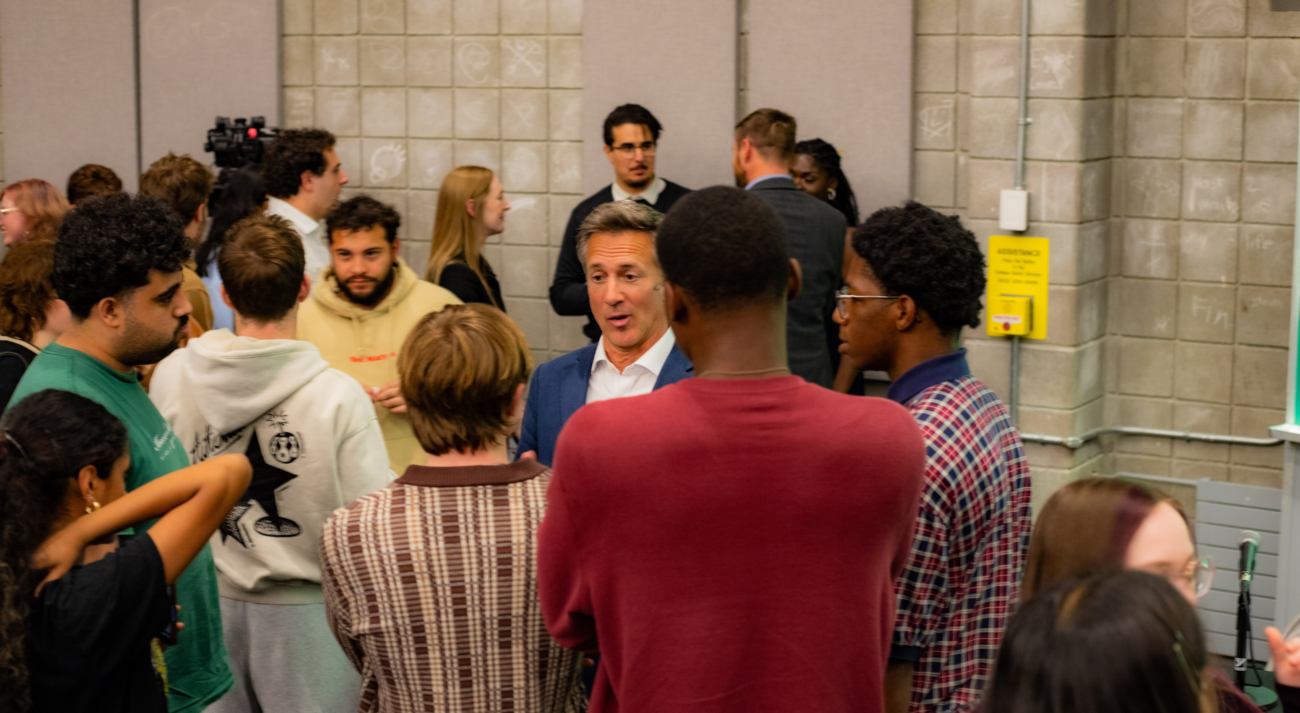
On Sept. 15, Ottawa’s leading mayoral candidates Alex Lawson, Jeff Leiper and Neil Saravanamuttoo participated in the Ottawa Student Mayoral Debate at Carleton University’s Minto Centre. The event, organized and moderated by uOUrbanism and Carleton’s radio station, CKCU, reached full capacity. Students post secondary institutions across Ottawa tuned in through campus watch parties and online livestreams. The debate was focused on housing, transit, nightlife and city services, all issues that directly affect students’ ability to live, work, study, and spend quality time in Ottawa.
Lawson is a developer and lobbyist who grew up in Heron Gate and began working in residential construction after having graduated from Ridgemont High School in Alta Vista. The avowed “builder” currently runs a construction business based in Centretown.
Leiper has served as the Kitchissippi Ward councillor since 2014, after working in journalism for the Ottawa Citizen and becoming a founding member of the Kitchissipi Times, his neighbourhood’s local paper.
Saravanamuttoo is an economist and former public servant who worked at Finance Canada and later served as chief economist at the G20 Global Infrastructure Hub.
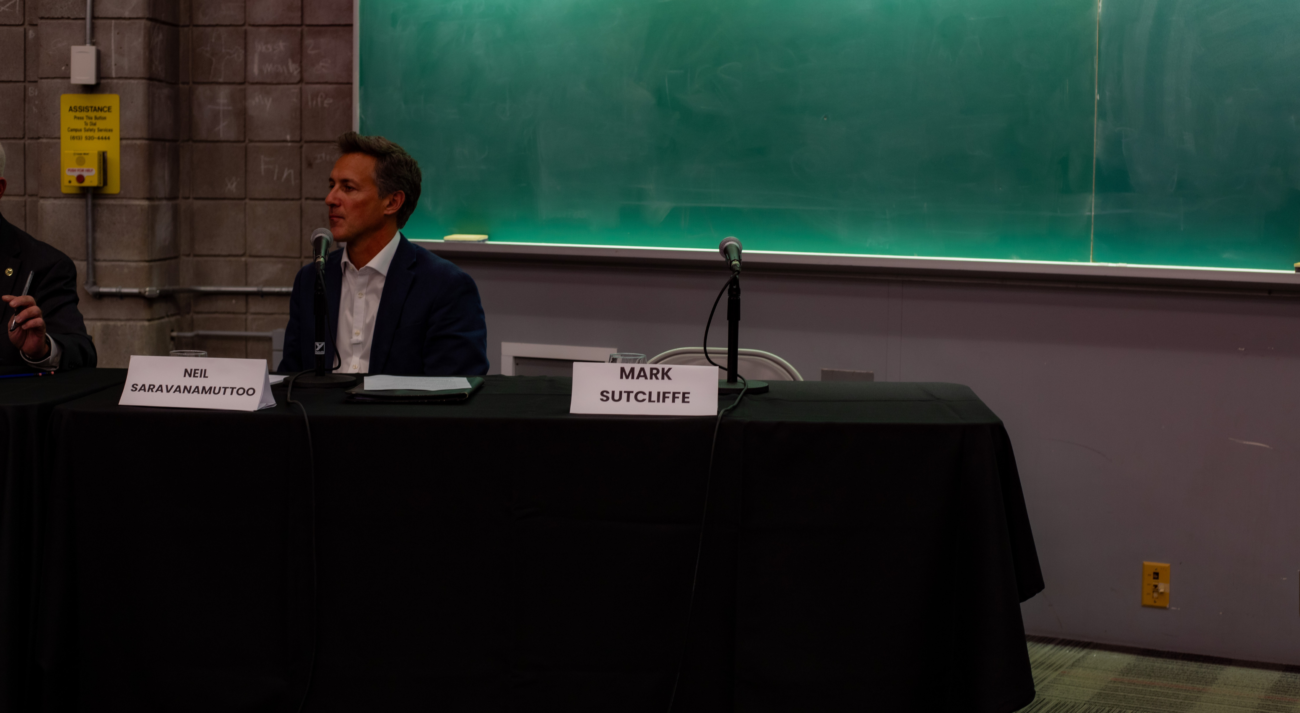
Incumbent Mark Sutcliffe was invited but did not attend, continuing a trend of dodging student-focused events in the lead-up to the election. His absence prompted murmurs around the room discussing his lack of regard for the student vote.
Leiper was quick to comment on the absence during his opening statement, saying, “I do want to make sure I ask the question: Where is Mark Sutcliffe?” He added that this was the “third or fourth debate that he has skipped out on.”
Students call for clear housing solutions
Alae Boufarrachene of uOUrbanism led the conversation surrounding housing. For students already navigating high rents and limited housing options, the candidates’ differing approaches largely boiled down to how much each candidate trusts or mistrusts the private market’s ability to deliver housing.
Lawson focused on the city’s role in zoning and development.
“Where you have the most influence as the city, it’s zoning,” Lawson said. “You decide what gets built, where it gets built, and how.”
He argued that the city should help developers by reducing the costs and barriers that come with development, while also ensuring city intervention if private development does not produce affordable housing within a 12-month time span.
Saravanamuttoo proposed bolstering Ottawa’s public housing option, arguing that increasing the amount of housing outside the private market could ease the pressure on renters.
“If there was more of a stock of public option housing, then you wouldn’t have to worry about the rent challenges,” Saravanamuttoo claimed.
Saravanamuttoo also proposed transitional housing as part of his approach to homelessness.
He described a model involving “tiny homes” made from shipping containers, citing successful launches in Gatineau. The tiny homes would provide a temporary place for people to live while they transition toward more permanent housing.
After the debate, The Fulcrum asked Saravanamuttoo how the tiny homes would provide continued support to help keep people out of homelessness.
He elaborated by describing the tiny homes as a place equipped with “wraparound support they need to be successful … to overcome addictions … and to find employment.” He also pointed to the community aspect for them, saying “it’s a lot easier to go on a journey with others … as opposed to going alone.”
Leiper placed greater emphasis on non-profit housing and preserving the existing stock of affordable units. This sentiment has been echoed by advocacy groups such as ACORN Canada for decades, noting that “between 2011–2016, 15 affordable homes disappeared for every one built.”
Leiper also said the city should support non-profit organizations in acquiring existing housing, rather than relying solely on new private construction.
“My platform is very focused on not-for-profit housing,” said Leiper. “I differ slightly from Neil in that I’m not looking for a single public builder.”
What about transit?
For students, the interconnection between transit’s affordability and reliability deeply impact their daily lives. Candidates were asked by CKCU’s Selali Ayitey-Wallace about the repercussions of missed buses and delays on students trying to get to classes, exams, and work.
Leiper argued that unreliable service itself creates an affordability problem: “When you’re taking an Uber because it’s the only way that you can ensure you’re going to get to your job or to an exam or to class, that’s a really significant affordability question that outweighs what the bus fare is.”
Leiper said his “new ways to bus” platform would reverse the cuts to bus routes and funding introduced by Mayor Sutcliffe. The platform also promises improved reliability, and introduce measures to help buses move quickly through traffic areas. To start, he says the city needs to buy more buses.
Saravanamuttoo focused on the cost of taking transit, proposing a $1 fare under “buck-a-ride.”
“With the fares where they’re set right now, we’re in a transit death spiral,” he said. “People say it’s too expensive; I might as well just get a car.”
The candidates’ disagreement over transit finances became particularly heated when they debated Neil’s proposed fare reduction and the province’s planned uploads of parts of the LRT system. Leiper questioned whether the savings from the upload would actually be available to fund lower fares, while Saravanamuttoo argued that the city could redirect those savings to riders. The exchange grew tense, with Saravanamuttoo pushing back on Leiper’s claim that the funding was uncertain.
The debate also turned to late-night transit, another issue with special relevance to students who work, attend events or socialize after regular school hours.
Leiper called for late-night bus service to better match the hours of the LRT, arguing the last train should be met with the last bus.
Saravanamuttoo emphasized reliable service along core routes while blaming OC Transpo’s decline on the LRT system.
Lawson’s response was less specific, offering smaller, more flexible transit options for periods when demand is lower, without outlining in detail how those services would be implemented.
Students want a fun nightlife
When asked by CKCU’s moderator Selali Ayitey-Wallace how Ottawa could become a more active city at night, disagreement arose as each candidate deviated in their plans for nightlife, live music, and student-oriented businesses.
For a student population that spends much of its time around campuses and downtown, the debate over nightlife is often a debate over what Ottawa should offer after regular business hours.
Leiper argued that regulations can sometimes make it difficult for existing venues to function. Such as overtly harsh by-law enforcement, and provincial regulations on business hours, which are outside the jurisdiction of the city.
“It’s not hard to see why people think that Ottawa is the city that fun forgot if our bylaw officers are ticketing live music venues,” he claimed.
He pointed to “agent of change” regulations, which are used in other cities to address conflicts between existing venues and new residential developments. Under the approach Leiper described, new developments would be for adapting to existing noise from nearby venues.
Lawson took a different approach, arguing that nightlife should largely be left to market forces. “That’s for the free market to deal with,” he said.
Saravanamuttoo focused on what he described as unnecessary friction between businesses and the city.
He pointed to parking enforcements at the ByWard market as one example of, saying, “ByWard Market shopkeepers, they tell me that parking enforcement is like their number one hit.”
The discussion suggested that the candidates differed on how Ottawa should regulate nightlife, and how much responsibility the city should take for creating the conditions for nightlife to grow.
Lawson has also proposed making all on-street parking free across Ottawa, saying praying meters can discourage people from shopping locally. His plan would replace paid parking with posted time limits of at least two hours.
The candidates also touched on how public spaces and small businesses can act as third spaces where students can spend time without having to leave the city centre. However, the conversation quickly devolved into where our unhoused population fits into this equation. Will they be welcome in our third spaces? The candidates left the answer to this question hanging in the air.
Approaches to safety and homelessness
Public safety was a prominent theme throughout the debate, honed in on as the final debate topic by Selali Ayitey-Wallace.
The issue was closely tied to another concern raised throughout the debate, that being how these candidates believed the city should respond to people experiencing homelessness and mental health crises in public.
Leiper argued that police should focus on criminal matters while other city services respond to situations involving mental health and community needs.
“It is important that police do the work that police are supposed to do, dealing with … criminal issues,” he remarked.
He also called for expanded alternatives to police responses, most notably the ANCHOR (alternate neighborhood crisis response) program in downtown Ottawa, along with outreach workers and other non-police services.
“For every increase in the police budget [that] comes forward, we need alternative responses to mental health,” Leiper said. He is also the only candidate during the debate that expressed interest in sitting on the Ottawa Police Services Board if elected mayor.
Saravanamuttoo said he also supported expanding the ANCHOR program, and described it as a way of providing an alternative response to calls that might otherwise involve police.
The candidates also connected homelessness with concerns about downtown safety and activity.
Saravanamuttoo said people are hesitant to visit areas such as the ByWard Market and Elgin Street because they do not feel safe, and argued that addressing homelessness would make those areas more vibrant.
The municipal election is set for Oct. 26
For students, the debate was ultimately about more than campaign promises. It was about the city they move through everyday; can afford, the buses they rely on, and whether there is somewhere to go once school’s out.
With Ottawa’s municipal election approaching, those everyday experiences may be what turns a mayoral platform from something students read about into something they experience.


Author

- Ottawa mayoral candidates clash over the environmental costs of growth
- Student concerns take the spotlight at Carleton debate
- City of Ottawa makes it easier for eligible students to vote in the upcoming elections