“WE ARE MUCH MORE PREPARED NOW THAN WE HAVE EVER BEEN,” SAYS ATPUO STRIKE COMMITTEE.
Teaching professors could go on strike as soon as Nov. 9, following an impasse in collective agreement negotiations between the Association of Teaching Professors of the University of Ottawa (ATPUO) and the U of O administration. The conciliator submitted a no-board application with the Ministry of Labour on Oct. 21, triggering the mandatory 17-day waiting period before it can enter a legal strike position.
In the event of a strike, courses taught by teaching professors would be cancelled, alongside the suspension of grading, academic support, and research supervision from those instructors.
“We are concerned just like the students, but it’s really up to the administration right now to come up with [collective agreement terms] that don’t threaten the quality of education,” said Émilie Bernier, ATPUO grievance officer. “We know that the administration has the resources; we know they can do it.”
Alongside demands for fair compensation and greater job security, ATPUO is seeking “improvements to working conditions” that directly affect their ability to support and instruct students.
Decrease class sizes to increase student engagement
Citing the University’s budget surplus of over $15M, ATPUO argues that the U of O is not in a financial situation that requires them to eliminate course sections and increase class sizes.
“Nevertheless, that is what we have seen,” said Bernier. “We know about pedagogy, we know how to have good interactions with students, but when you give us 200 to 300 students, what service can we offer them?”
Bernier says that even though teaching professors instruct up to seven courses with demanding class sizes, “half of them cannot make ends meet” due to inadequate compensation.
Kate Fletcher, a teaching professor in the Department of Criminology and ATPUO representative, describes how a lack of individualized support stemming from larger class sizes further jeopardizes their job security:
“If students don’t realize [why] it’s hard to access this teaching professor or [why] this professor has to rush off after class, [they may not] understand that this person might be teaching multiple courses here or teaching at other institutions to try and make ends meet. This then goes toward their student evaluations, which are then used [by the University] in ways that are oftentimes punitive.”
Bernier also added that these student evaluations can subject teaching professors to gender and racial biases:
“[In these evaluations], we are noticing that students are harder on professors that are women and professors who are racialized and have an accent. Considering this, it’s very worrying for us that when [faculties] hire for a course, there is discrimination against a candidate based on these grades.”
Teaching professors demand collegial governance
“We are very concerned that the University is being governed by bankers and consulting firms, and that the decisions being made threaten the very conditions that [teaching professors] need to do our job,” said Bernier.
Consequently, ATPUO is advocating for union representation at the U of O’s main decision-making bodies: the Board of Governors and the Senate. The union argues that the Senate should not be able to change or cancel academic programs without consulting the student body and instructors. Bernier noted that this concern was illustrated when the Greek and Roman Studies program was suddenly suspended twice in the 2025-26 school year:
“In its desire to realize profits, the administration is letting itself get seduced by promises of ‘revitalizing’ programs… But that kind of thing should be done in consultation with those who teach, those who know the students. Especially since if they decide to suspend a program, people lose their livelihoods.”
With over 2500 members, ATPUO’s teaching professors instruct over half of the courses offered at the U of O. Fletcher recognizes the ironic nature of this majority:
“The University wants [teaching professors] to have no representation within the governance structures, and yet, we’re the professors that you guys engage with the most.”
ATPUO strengthens strike preparations amid new financial backing
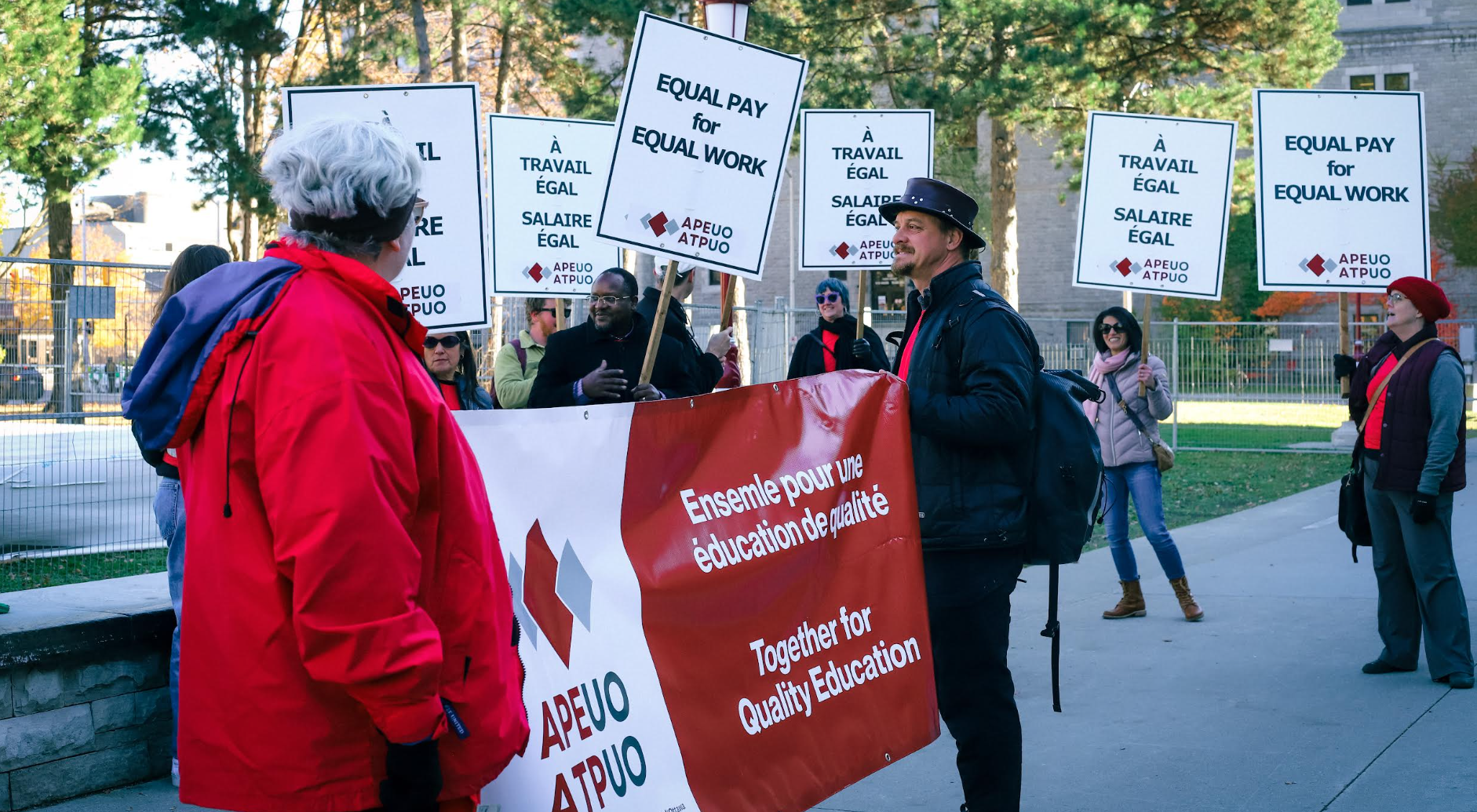
ATPUO held a practice picket outside of the Board of Governors’ meeting on Tabaret Lawn on Oct. 27. The union’s strike committee prepared picket captains and tested the routes members would follow during a potential strike.
In contrast to the 2022 negotiations, ATPUO now has support from the Canadian Association of University Teachers’ (CAUT) Defence Fund. In the event of a strike, the fund would provide financial support to union members whose pay is suspended and cover the legal and administrative costs associated with collective agreement negotiations. CAUT presented ATPUO with a symbolic blank cheque that read “Whatever it takes to win,” during the practice picket.
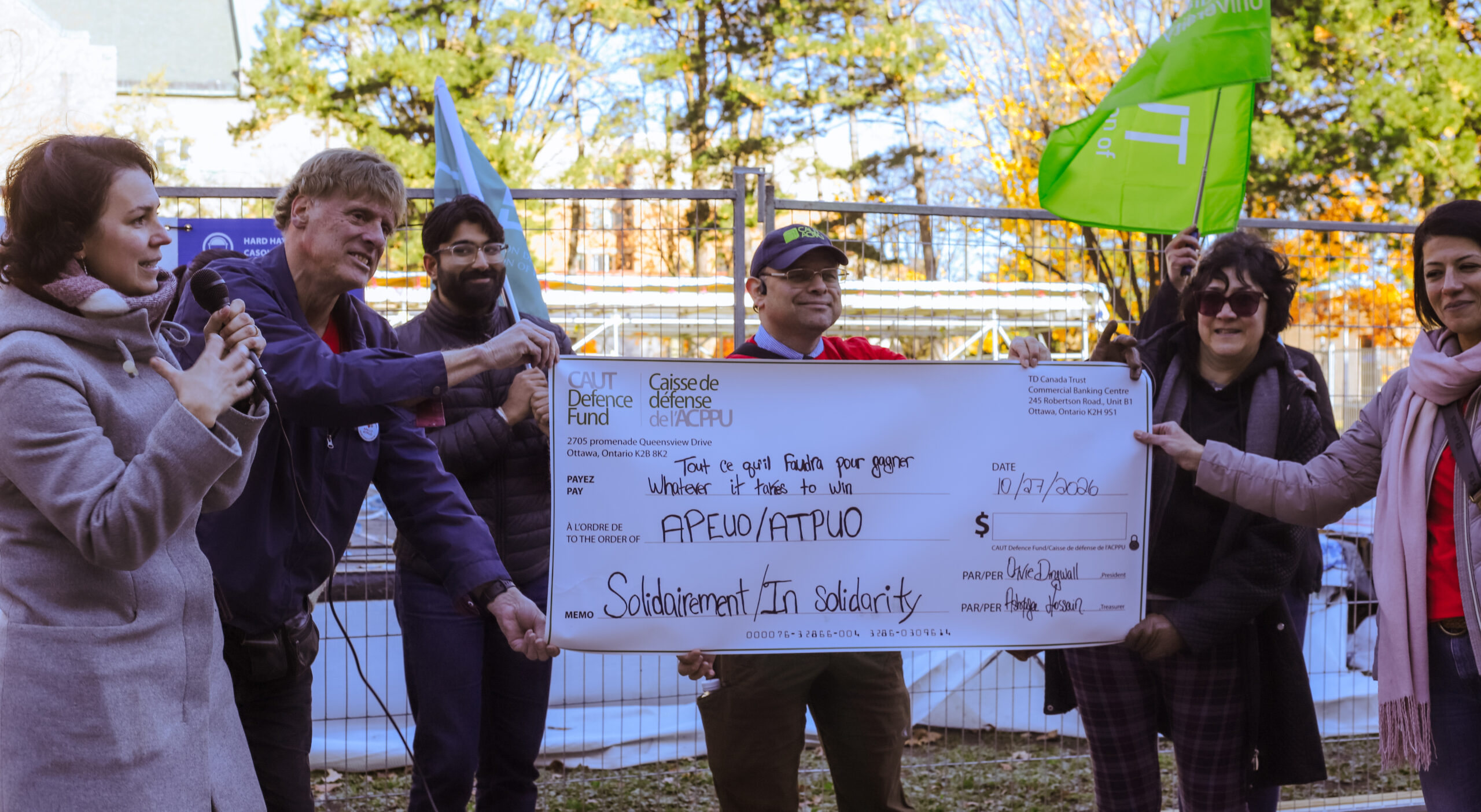
CAUT presenting Defence Fund cheque to ATPUO president and Vice-President, Membership Engagement: Nelson Arturo Ovalle Diaz and Luc Angers 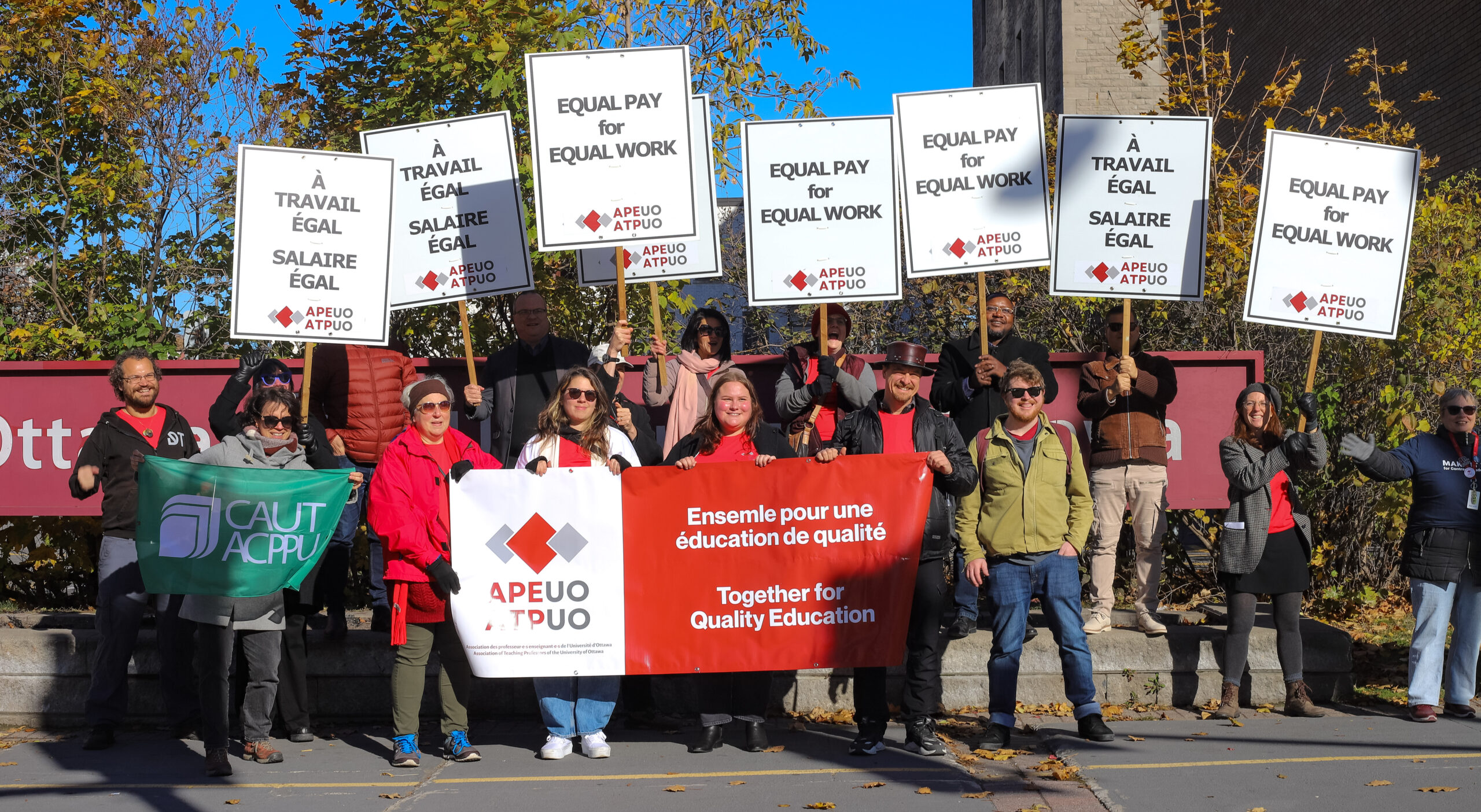
ATPUO picket captain training session. Image: Alexandrea Abungin/The Fulcrum. 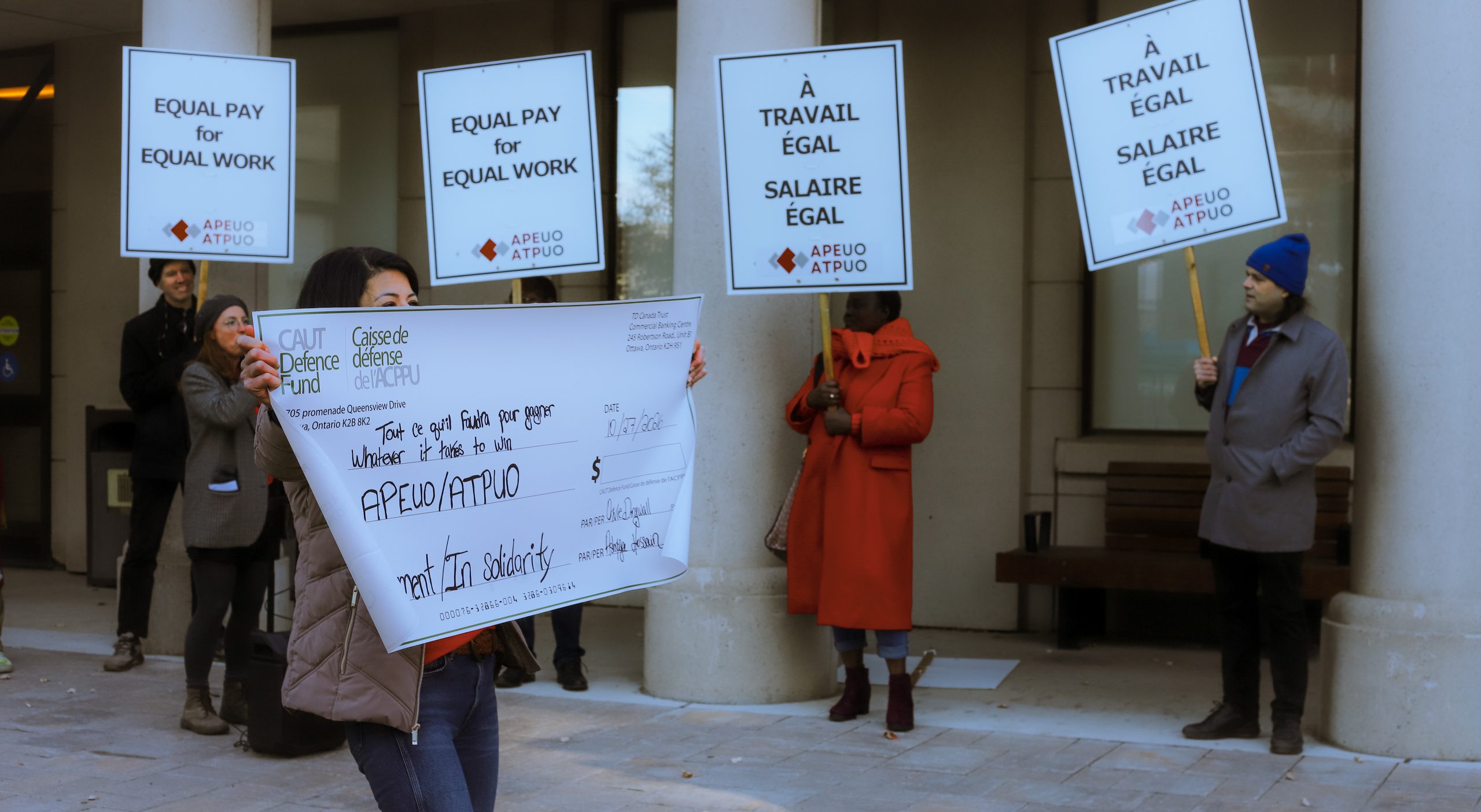
ATPUO practice picket directly outside of Board of Governors’ meeting room. Image: Alexandrea Abungin/The Fulcrum. 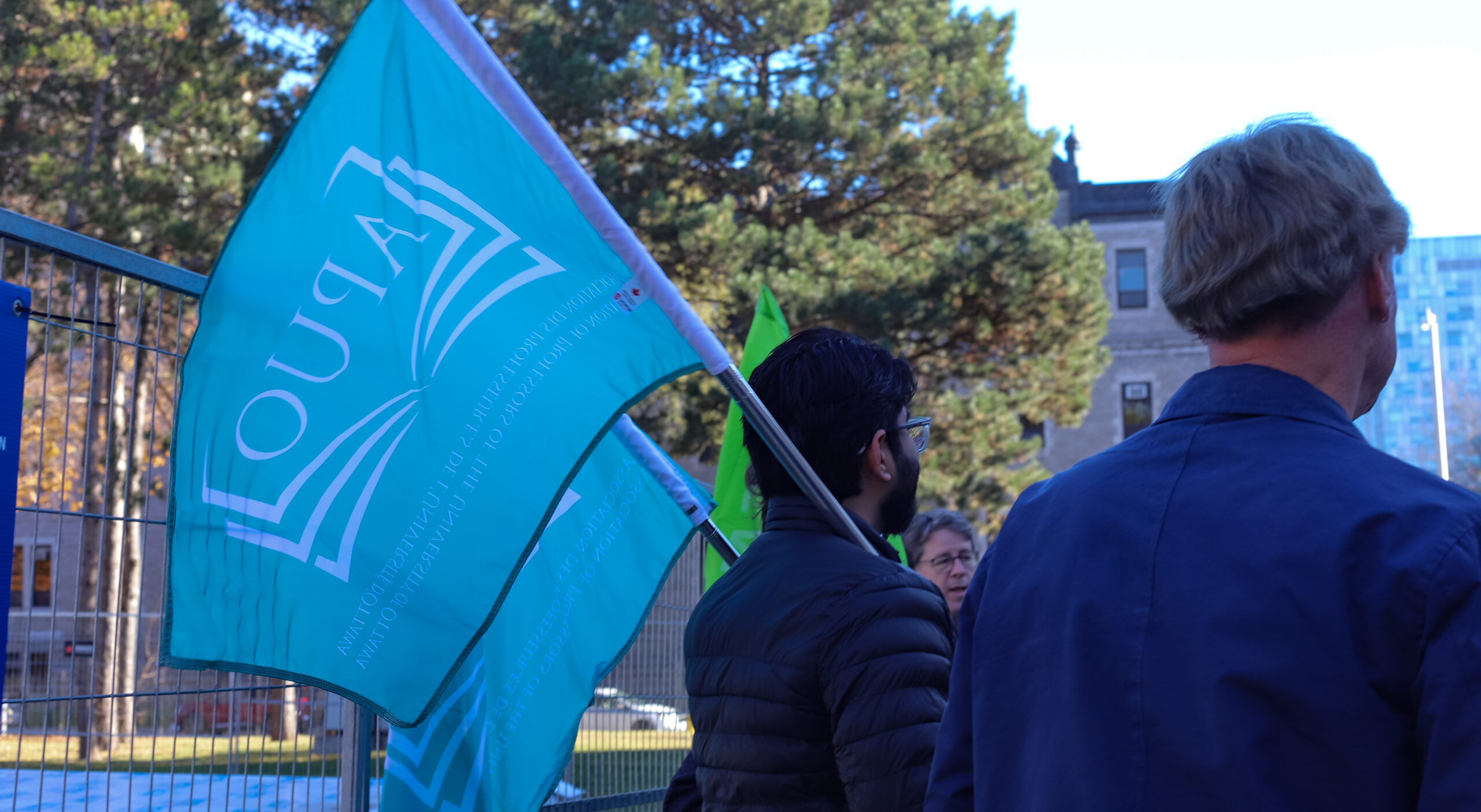
APUO shows solidarity at ATPUO practice picket. Image: Alexandrea Abungin/The Fulcrum. 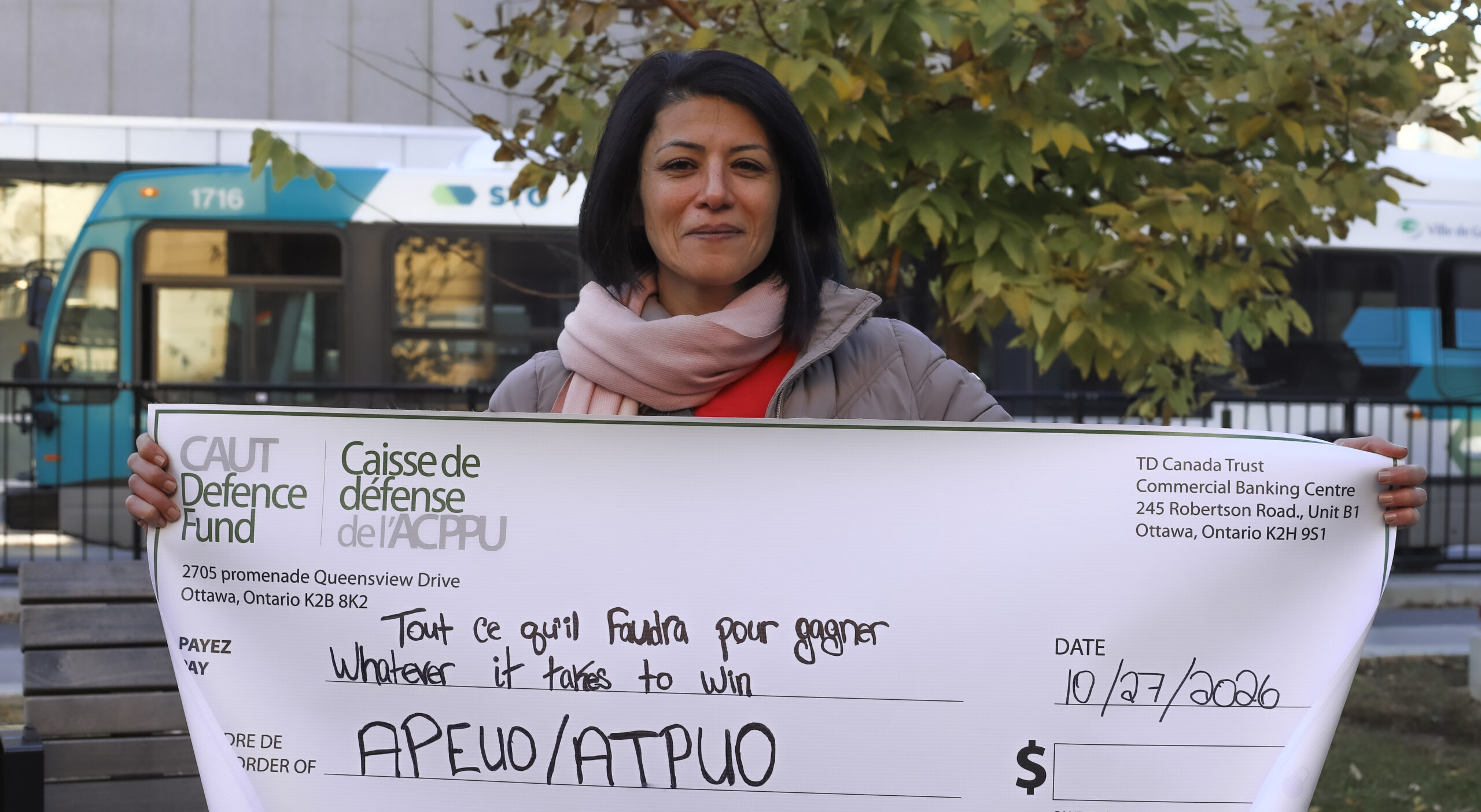
ATPUO Treasurer Lina AlHassan holding CAUT Defence Fund cheque. Image: Alexandrea Abungin/The Fulcrum.
The Association of Professors of the University of Ottawa (APUO), representing full-time professors, was also present in solidarity as it negotiates its own collective agreement with the U of O administration. Alongside the two unions, University of Ottawa Students’ Union (UOSU) president Elnaz Enayatpour voiced students’ support for ATPUO’s bargaining demands, stating that “professors’ working conditions are students’ learning conditions.”
ATPUO members have made efforts to engage the student community by hosting a packed trivia night at Nostalgica for students to learn about their teaching conditions and promoting their letter-writing campaign in their lecture halls. The union has also been working towards holding a town hall with UOSU to directly address students’ questions and concerns.
ATPUO and the U of O administration will return to the bargaining table from Oct. 29-30, moving from conciliation to mediation following the release of the no-board report.
The Fulcrum is committed to providing further coverage as the situation evolves.
With files from Manahil Elsiddig.