FOLLOWING SEVEN YEARS OF POSTERING, TWO YEARS OF CLOSED-DOOR MEETINGS, AND HOURS OF DEBATE – RBC’S LEASE ON THE UNIVERSITY OF OTTAWA CAMPUS WILL NOT BE RENEWED AT THE END OF THE SPRING
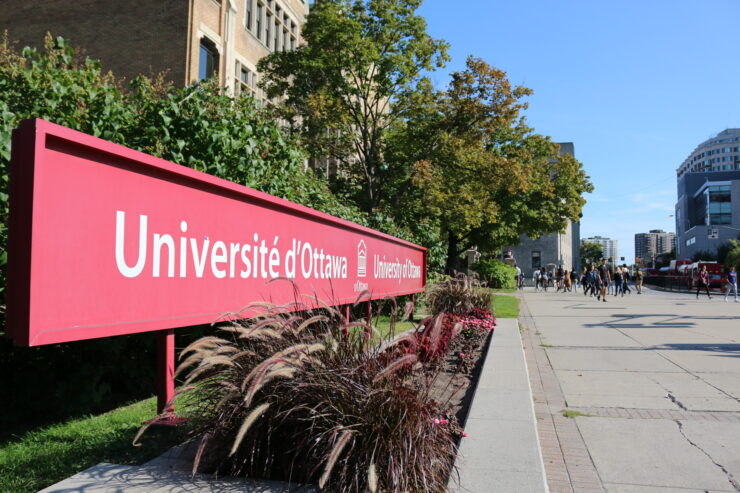
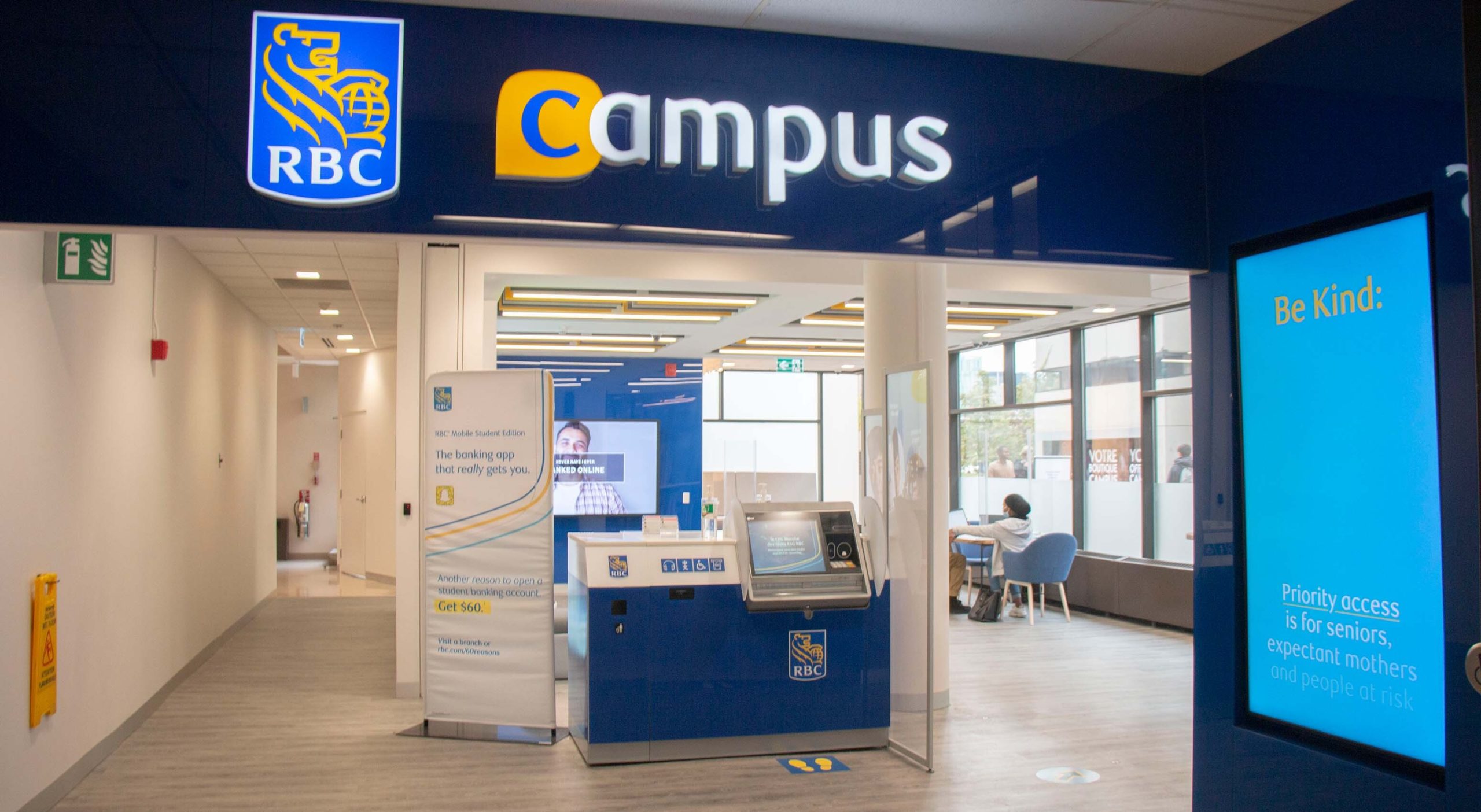
The University of Ottawa will officially close their on-campus Royal Bank of Canada (RBC) branch with their lease set to terminate in spring 2026. Following the University of Windsor’s closure in 2024, the U of O’s closure marks the second successful university in the RBC off campus movement.
The off-campus movement, organized through the grassroot organization Change Course, has been advocating to disaffiliate the Big Five banks — RBC, TD, Scotiabank, Bank of Montreal, and CIBC — from various Canadian post-secondary institutions, due to their environmental impacts.
Change Course noted that the U of O is not the only recent “win,” with successful motions for disinvesting from fossil fuels passing at Trinity College, the University of Toronto, and the reallocation of power towards students at the University of British Columbia Okanagan.
A long-term investment generated by Indigenous students
In Nov. 2024, RBC reached out to the University of Ottawa Students Union (UOSU) and other student groups, including Climate Justice uOttawa (CJUO) and the Indigenous Students Association (ISA), following their protests, pamphleting, and pledges in “putting pressure on the university to meet their disinvestment goals.”
CJUO Co-President, Grace Jeffries, recalls RBC “gaslighting” the student groups during this meeting, as RBC said, “they were doing nothing wrong, that they were really green — not really investing in fossil fuel financing — and doing a lot of good things for Indigenous communities.” Simultaneously, RBC was recognized as a major financier of the 670-kilometer Coastal GasLink pipeline through British Columbia.
Coastal GasLink claims to have “signed project agreements with all 20 elected First Nations governments along the route, and to have awarded $1.5 billion in contracts to Indigenous and local businesses,” since beginning construction in 2007.
The validity of these agreements is disputed as it excludes the consent from Wet’suwet’en Hereditary Chiefs. By disregarding the Nation’s electoral system and traditional authorities, construction of the pipeline is accused of violating Wet’suwet’en sovereignty, and deteriorating their natural resources, per CBC.
Quanah Traviss, ISA Co-President External and fifth year student heavily involved in U of O’s Off Campus movement, told the Fulcrum about meeting with RBC Senior Vice President John Stackhouse in 2024..
Traviss told Stackhouse that “choosing to work with the government installed by the Indian Act, rather than respect these people’s way of life and their traditional system of governance, while saying you’re committed to reconciliation is contradictory.”
Continuing, Traviss highlighted “if you want to act in a way that’s consistent with reconciliation, it means upholding traditional Indigenous values and governance implemented in whatever land you’re on.”
“[Stackhouse] turned red. It’s like he had no response to this,” per Traviss.
In the months following this meeting, ISA’s fight continued through the University of Ottawa’s administrative council.
While meeting with the administration, ISA would “push the perspective… that you can’t have both reconciliation and a RBC partnership,” saying that “It took them a while to accept that message,” said Traviss, noting the process spanned over two U of O presidents.
Despite the University of Ottawa’s 2020 Indigenous Action Plan pledging for “institutional efforts toward decolonial Indigenization,” the beginning of discussions was “hard times with Jacques Fremont’s administration.”
Traviss noted “towards the end [Fremont] was very receptive,” saying, “the last thing [Fremont] said to me in his capacity as president was ‘we know RBC is bad. They need to go. Keep pushing’.”
Despite the progress, the ISA noted that “it felt like it was back to square one,” when current president, Marie-Eve Sylvestre, accepted RBC’s 2 million dollar donation founding Telfer’s Green Academy in Sept. 2025 — accused by students to be another form of “greenwashing” from the bank.
In the following meetings, “not only did [Sylvestre] listen, but she explored different routes and alternatives.” According to Traviss, “she’s honest and that’s what I appreciate most in an administrator.”
Managing the U of O’s future
UOSU Advocacy Commissioner, Alex Stratas, told the Fulcrum UOSU is working with the Sustainability Development Centre to investigate the University of Ottawa’s ties to the fossil fuel industry, and produce a report like the ones published by the University of Toronto, University of British Columbia and the University of Alberta. The report is set to be released in Sept. 2026.
RBC spokesperson Lucie Caron commented to the Fulcrum that “it’s [has been] a privilege to provide students with services” and confirmed that RBC will “continu[e] to have a presence on campus through participation in university-led events, hosting financial literacy sessions, and offering career-focused workshops.”
University of Ottawa spokesperson, Jesse Robichaud, in a statement that the closure of the branch was done to “repurpos[e] spaces… to enhance the University’s commitment to enhancing student learning experience.”
Prior to becoming a bank, the space was used as a 24/7 student lounge.
According to an Instagram post made by UOSU “this decision is a powerful signal that student organization works,” calling for the university to consult students about future uses of the vacant space on campus.
Reflecting on the closure of the branch, Traviss said “there are a lot of bad guys out there, but one at a time.”
Editor’s note: On February 4, 2026, this article has been updated to include the following due to a technology copy error: University of Ottawa spokesperson, Jesse Robichaud, in a statement that the closure of the branch was done to “repurpos[e] spaces… to enhance the University’s commitment to enhancing student learning experience.” and “Prior to becoming a bank, the space was used as a 24/7 student lounge.”